

Why do girls' bikes have no bar
Girls’ bikes usually do have a frame bar, but the top tube is often lowered or sloped to make mounting and dismounting easier. That shape is called a step-through frame; it is a design choice, not a requirement for girls.
Why the upper bar is lower
Traditional bicycles commonly used a high, nearly horizontal top tube. Frames marketed to girls and women were often made with a lower top tube so riders could get on while wearing skirts or dresses. The convention remained even after clothing and bicycle designs changed.
Today, a low or sloping top tube can still provide practical clearance and make a child feel less trapped when stopping. It does not mean the bicycle has no structural frame, and a high top tube is not automatically a “boys’” feature. Either style may suit any child if its dimensions and controls fit.
What parents should measure
Start with the child’s current height, without shoes if you want a consistent measurement. Then measure inseam from the floor to the crotch while the child stands straight. Wheel-size charts provide starting points, but they cannot confirm top-tube clearance, saddle position, reach or control.
Have the child try the actual bicycle whenever possible. With the child standing over the frame, check that the top tube does not obstruct a comfortable stop. Seated, the rider should reach the handlebar without stretching, steer without strain and operate the brakes confidently. Do not choose an oversized bicycle merely to allow room for growth.
Compare wheel-size starting points
| Wheel label | Starting age | Starting rider height |
|---|---|---|
| 12 Inch | 3–4 | 34–40 in / 86–102 cm |
| 14 Inch | 3–6 | 37–45 in / 94–114 cm |
| 16 Inch | 4–7 | 40–48 in / 102–122 cm |
| 20 Inch | 7–12 | 48–60 in / 122–152 cm |
| 24 Inch | 10–14 | 54–64 in / 137–163 cm |
| 26 Inch | Youth and adults | Over 60 in / 153 cm |
Where ranges overlap, do not decide from age or wheel diameter alone. Compare how the child stands over each frame, reaches the grips, turns the handlebar and uses the brakes. Current confidence matters too: a nervous beginner may struggle with a bicycle that appears acceptable on a chart but feels difficult to control.
How the supplied girls’ bikes help with comparison
These catalog options span several wheel labels and two categories, so they help narrow the size and intended bicycle type before an individual fit check. Their listings do not provide enough frame geometry to determine top-tube clearance from the title alone.
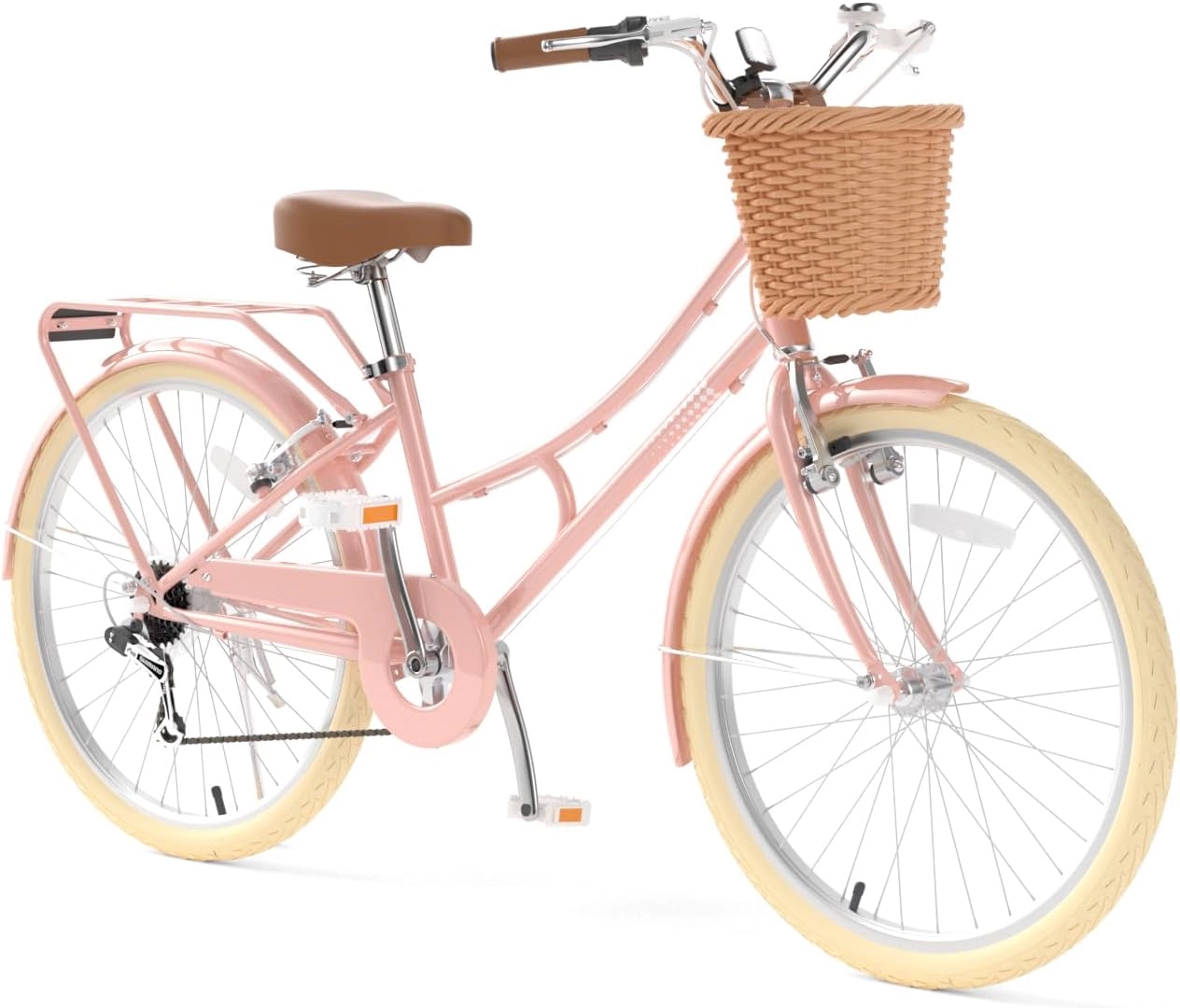 XJD Pink Beach Cruiser for Girls – Rear Rack & V-Brake
A Beach Cruiser Bikes comparison offered in 20 Inch, 24 Inch and 26 Inch labels. Use measured height to choose a starting size, then verify stand-over, reach and brake control on the exact bicycle.
 Girls' Training Wheel Bike by XJD with Basket – Purple
A Training Wheel Bikes option with 14 Inch, 16 Inch and 20 Inch labels. Its broad size span makes individual height, inseam, reach and control checks more useful than the girls’ label alone.
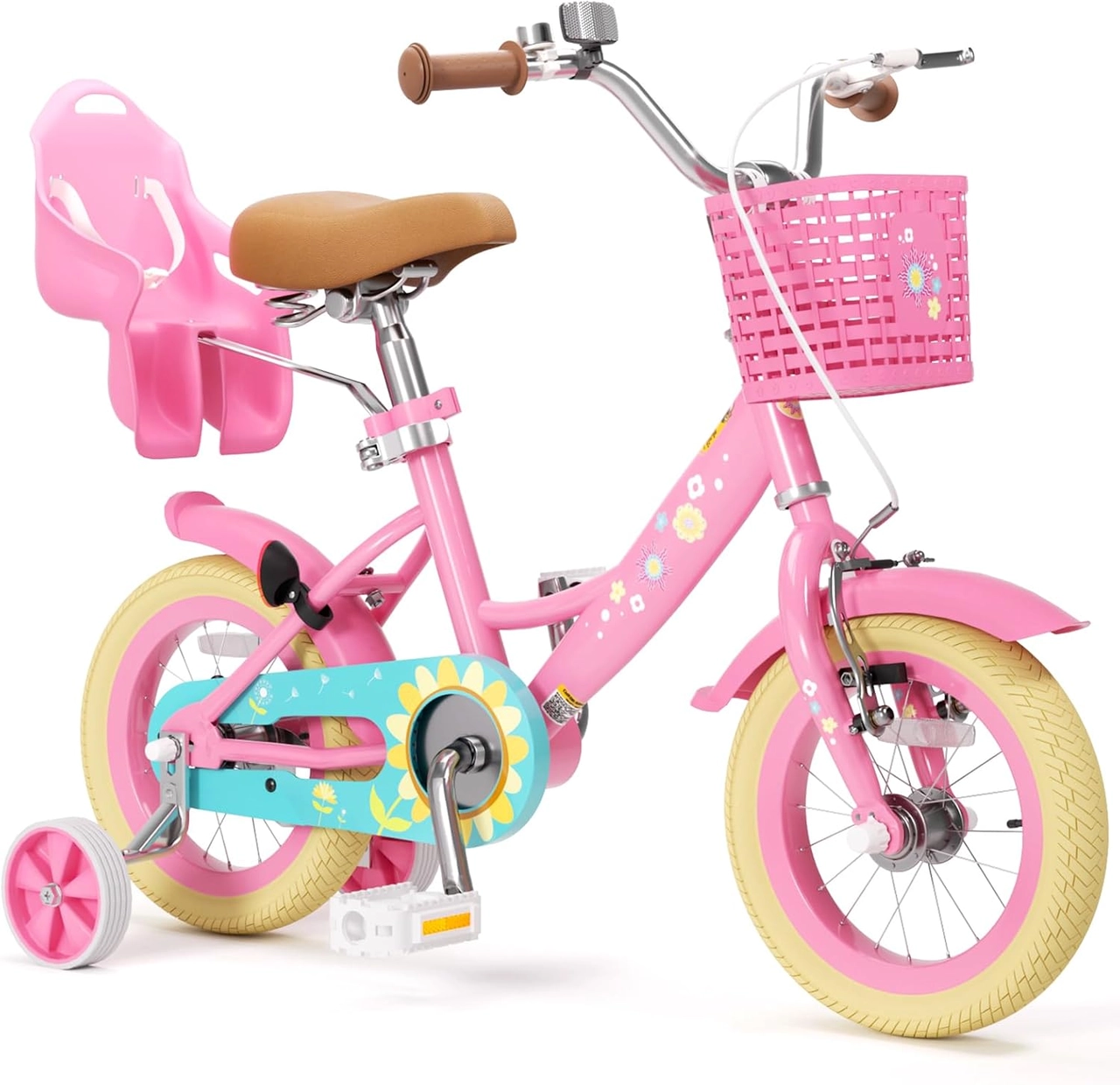 Flower Pink XJD Girls Bike with Doll Seat & Basket
A Training Wheel Bikes comparison for smaller wheel labels: 12 Inch, 14 Inch and 16 Inch. The listed size is only a starting point; confirm clearance and control with the individual rider.
XJD Pink Beach Cruiser for Girls – Rear Rack & V-Brake is a Beach Cruiser Bikes option offered in 20 Inch, 24 Inch and 26 Inch labels. Its sizes cover taller children through youth and adults under the XBikes starting points, but the rider must still try the exact size and confirm reach and brake control.
Girls' Training Wheel Bike by XJD with Basket – Purple is a Training Wheel Bikes option offered in 14 Inch, 16 Inch and 20 Inch labels. Those labels span several child-height ranges, making the measured rider height especially important when choosing among them.
Flower Pink XJD Girls Bike with Doll Seat & Basket is also in Training Wheel Bikes and comes in 12 Inch, 14 Inch and 16 Inch labels. It provides comparison points for smaller riders, but its name and wheel label do not establish that a particular child can stand over or control it.
What to check during a real fit
- Stand-over: Ask the child to stop, leave the saddle and stand astride the frame. Confirm that the frame shape allows a comfortable, controlled stance.
- Reach and steering: Check that the child can hold the grips and turn the handlebar without locking the elbows, leaning excessively or losing balance.
- Brake access: Make sure the child can reach and operate the fitted brake controls reliably from a normal riding position.
- Confidence: Watch a start, straight ride, turn and controlled stop in an appropriate supervised area. Discomfort or hesitation is a reason to compare another fit.
For assembly, adjustments, maintenance, compatibility, load limits and torque requirements, follow the exact product manual or use a qualified bicycle mechanic rather than guessing.
The final decision is about fit, not gender
A lowered bar can make stepping through and stopping more approachable, but color, category wording and “girls’ bike” labeling cannot prove fit. Compare step-through and higher-top-tube designs if available, then let the child’s measured height, inseam, stand-over clearance, reach, brake control and confidence decide.
Before riding, provide a properly fitting bicycle helmet. It should sit level and its straps should be used according to the helmet manufacturer’s instructions. Choose the specific bicycle only after the rider can comfortably clear its bar and demonstrate control; if that cannot be confirmed, do not size up or buy from the label alone.
Bikes for your next adventure
-

Kids Bike Helmet by XJD for Boys & Girls – Black, Blue, Green, Pink, Purple
The XJD Kids Bike Helmet covers a wide 2-to-8-year age range thanks to two head-…$59.99
-

Kids Bike Helmet by XJD for Girls – Pink
The XJD Kids Bike Helmet in Pink is a lightweight multi-sport helmet for girls r…$59.99
$99 -

XJD Kids Bike for Girls – Pink, 12/14/16/20 Inch with Training Wheels
The XJD Kids Bike for Girls in Pink is a training-wheel bike built to carry your…$139
$159