

What size bmx bike for 8 year old
For most 8-year-olds, start by comparing an 18-inch and a 20-inch BMX bike. Choose by measured height and an in-person fit check, not age alone.
The short sizing answer
Under the XBikes starting points, an 18-inch bike covers riders 43–52 inches (109–132 cm) tall, while a 20-inch bike covers riders 48–60 inches (122–152 cm) tall. The ranges overlap, so a child between 48 and 52 inches may need to try both sizes.
An 8-year-old below 48 inches will usually begin with the 18-inch comparison. A rider at least 48 inches tall can compare a 20-inch BMX, provided the child can stand over it, reach its controls comfortably and handle it with confidence. Do not move up merely to leave room for growth.
| Wheel size | XBikes age starting point | Rider height | Relevance at age 8 |
|---|---|---|---|
| 16 Inch | Ages 4–7 | 40–48 in / 102–122 cm | Check only if the rider is shorter than the usual 18-inch range; age alone does not decide fit. |
| 18 Inch | Ages 5–9 | 43–52 in / 109–132 cm | A likely starting comparison for a smaller 8-year-old. |
| 20 Inch | Ages 7–12 | 48–60 in / 122–152 cm | A likely starting comparison for a taller 8-year-old who can control it. |
| 24 Inch | Ages 10–14 | 54–64 in / 137–163 cm | Usually not the first age-based choice; never use height alone to justify oversizing. |
Measure before comparing bikes
Measure the child without shoes, standing straight against a wall. Record total height from the floor to the top of the head. Then measure inseam from the floor to the crotch, using a firm book held level to represent the point where the saddle meets the rider.
Height identifies the wheel sizes worth trying; inseam helps you assess clearance once the child is beside or over the actual bicycle. Wheel diameter does not reveal every frame dimension, so an inseam measurement cannot guarantee fit from a product title alone.
Check the actual fit and controls
Have the child try the bicycle rather than deciding from a chart or birthday. With the child straddling the frame, confirm there is comfortable stand-over clearance and no forced contact with the frame. Follow the exact bicycle manual when setting saddle height or making adjustments.
Next, watch the child hold the grips and operate the brakes. The rider should not have to stretch excessively, shift awkwardly or lose a secure grip to reach a control. Check that the child can start, stop, steer and put a foot down without panic or assistance. Current confidence matters: a theoretically suitable size can still be too demanding for a hesitant or inexperienced rider.
If the reach, stand-over position or brake access is uncertain, compare the neighboring wheel size and ask a qualified bicycle mechanic to assess the setup. Do not invent adjustment limits or modify components without the exact product manual.
How the supplied 20-inch BMX fits the decision
The catalog includes one relevant 20-inch option, so it helps families assess the upper of the two main starting sizes for an 8-year-old. It is relevant only when the rider falls within the 20-inch height starting range and passes the individual fit and control checks.
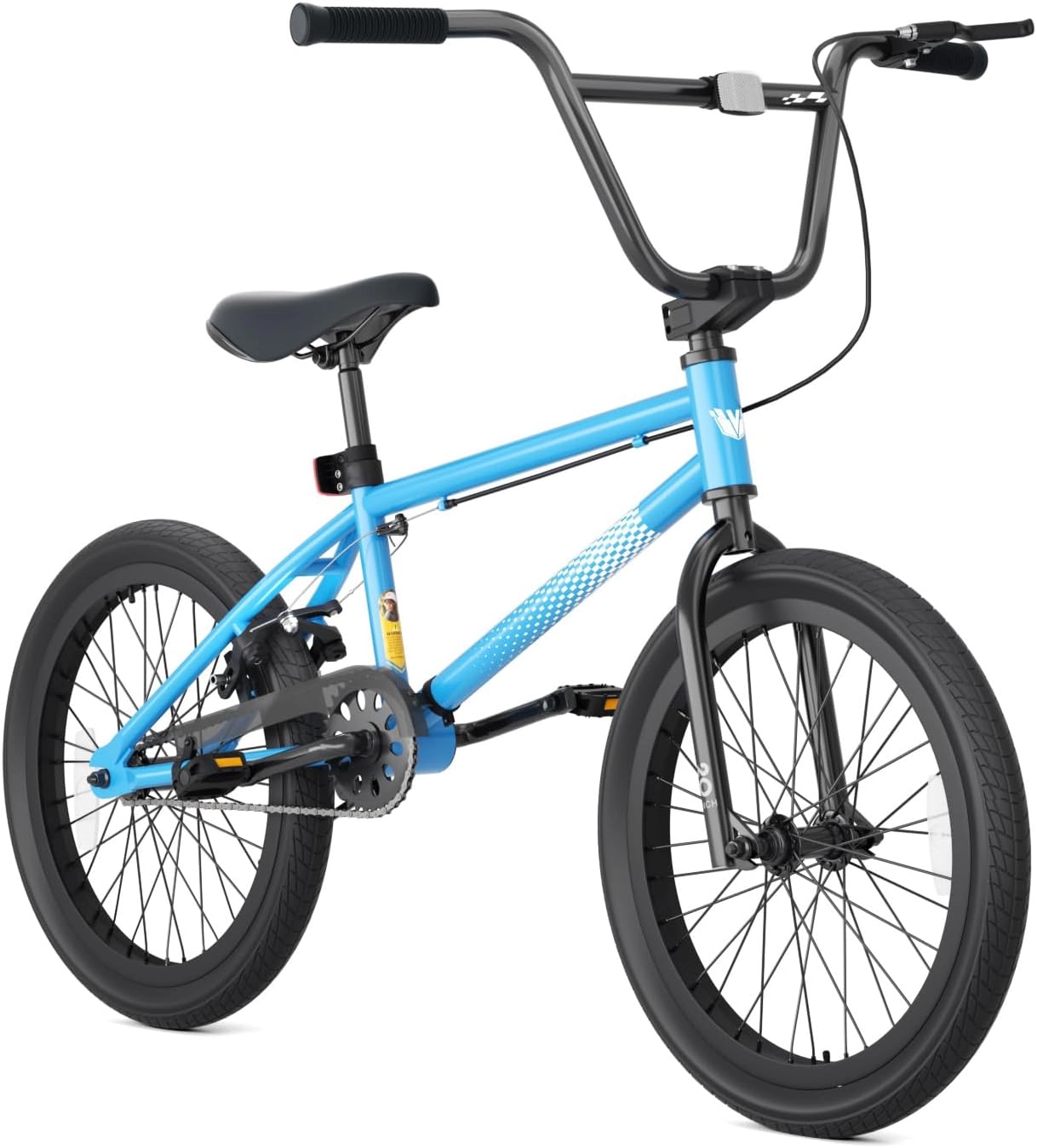
The Blue XJD Freestyle BMX Bike, 20-Inch – No Pegs is a kids’ BMX bike with 20-inch wheels and no pegs. Its listed SKU label is Default. Those facts make it a direct 20-inch comparison, but they do not establish frame clearance, reach, brake access or suitability for a particular child.
For a child under 48 inches (122 cm), this catalog option is outside the XBikes 20-inch height starting point; compare an 18-inch bicycle instead. For a child from 48 to 60 inches (122–152 cm), it is reasonable to include this model in an in-person fit check. Being within that range is a starting point, not proof of fit.
A quick decision sequence
- Measure the child’s standing height and inseam without shoes.
- If height is 43–47 inches (109–121 cm), start with an 18-inch BMX comparison.
- If height is 48–52 inches (122–132 cm), try both 18-inch and 20-inch bikes and choose by control, reach and confidence.
- If height is 53–60 inches (135–152 cm), start with a 20-inch comparison, while still checking the individual fit.
- Reject any bike the child cannot straddle comfortably, steer confidently or brake without overreaching.
Use the manufacturer’s manual or a qualified bicycle mechanic for assembly, maintenance, adjustment limits, compatibility, load limits and torque requirements that are not provided in the catalog facts.
Complete the safety check
Pair the selected bike with a bicycle helmet that fits the child properly. It should sit level, with its straps adjusted according to the helmet manufacturer’s instructions. A larger helmet bought for growth is not a substitute for correct fit.
The practical choice for an 8-year-old is therefore usually 18 inches below 48 inches tall, a direct 18-versus-20-inch trial through the overlap, or a 20-inch comparison above 52 inches—always finalized by stand-over clearance, reach, brake control and the child’s confidence.
Bikes for your next adventure
-
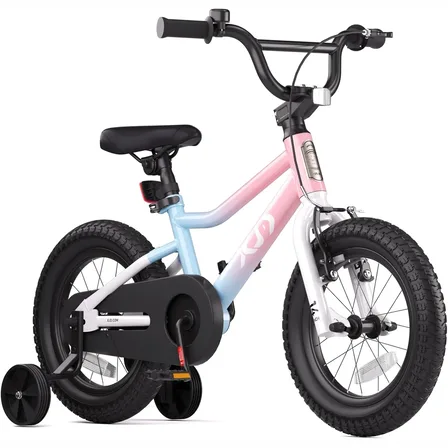
XJD Girls BMX Bike 12/14/16 Inch with Training Wheels – Pink Blue
The XJD Girls BMX Bike in Pink/Blue is built as a first pedal bike for kids roug…$99.99
$119.99 -
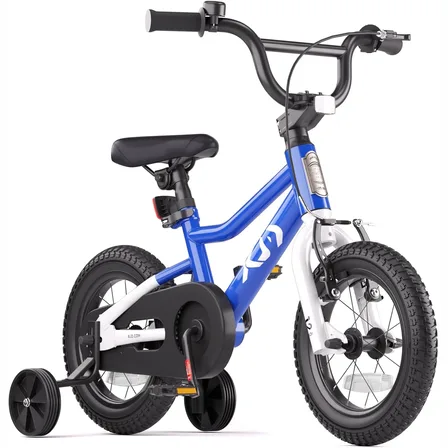
XJD Boys & Girls BMX Bike with Training Wheels, 12/14/16" – Blue
The XJD Boys & Girls BMX Bike in Blue is a first pedal bike for kids roughly age…$99.99
$119.99 -
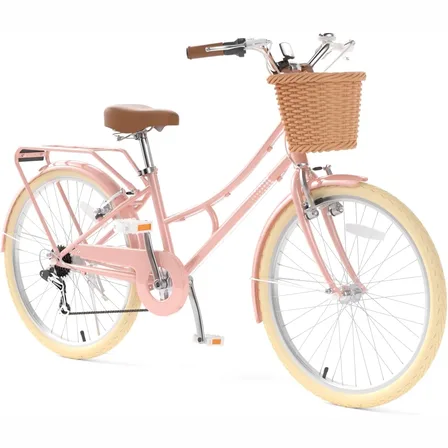
XJD Pink Beach Cruiser for Girls – Rear Rack & V-Brake
The XJD Pink Beach Cruiser for girls is the step-up bike for riders who've outgr…$179.99
$209.99