Can you put training wheels on any kids bike
No. You cannot put training wheels on every kids bike. The bike, wheel size, rear axle and training-wheel kit must be compatible, and the child must still fit and control the bicycle.
What determines whether training wheels will fit?
Training wheels need a suitable attachment point at the rear of the bicycle. Compatibility can depend on the bike’s wheel size, rear-axle design, available axle length, frame shape and clearance around nearby parts. A kit marked for one wheel size or mounting arrangement should not be assumed to fit another.
Before buying or installing anything, identify the bicycle’s exact model and wheel size. Then compare the bike manual with the training-wheel manufacturer’s compatibility instructions. Check that the specified mounting hardware is intended for that axle and that nothing obstructs the brackets.
If the manuals do not clearly confirm compatibility, ask a qualified bicycle mechanic to inspect the bike. Do not improvise with unsuitable brackets, altered hardware or an installation procedure intended for a different bicycle.
What should you measure and compare?
- Bicycle wheel size: Read the size marking and confirm it in the bicycle manual. Do not estimate it from the child’s age.
- Rear mounting area: Compare the axle and surrounding clearance with the exact diagrams and requirements supplied with the training wheels.
- Rider height and inseam: Measure the child in the footwear normally used for riding.
- Stand-over and reach: Have the child try the bicycle and confirm that mounting, stopping and reaching the controls feel manageable.
- Brake control: The child must be able to reach and operate the bicycle’s brakes confidently.
Follow the exact bicycle and accessory manuals for assembly, maintenance, compatibility and torque requirements. When those instructions are missing or conflict, use a qualified bicycle mechanic rather than guessing.
Fit the child before choosing the wheel size
Age is only a starting point. Prioritize measured height, inseam, reach, brake control and current confidence. Do not choose an oversized bicycle merely to allow room for growth.
| Wheel size | Starting age | Rider height |
|---|---|---|
| 12 Inch | 3–4 | 34–40 in / 86–102 cm |
| 14 Inch | 3–6 | 37–45 in / 94–114 cm |
| 16 Inch | 4–7 | 40–48 in / 102–122 cm |
| 18 Inch | 5–9 | 43–52 in / 109–132 cm |
| 20 Inch | 7–12 | 48–60 in / 122–152 cm |
| 24 Inch | 10–14 | 54–64 in / 137–163 cm |
| 26 Inch | Youth and adults | Over 60 in / 153 cm |
These ranges are starting points, not proof of fit. The child should try the bicycle. Check stand-over clearance, body position, steering control and brake reach before deciding.
When a complete training-wheel bike is relevant
A complete bicycle sold as a training-wheel bike can be a useful comparison when adapting an existing bike is uncertain. The supplied catalog option, XJD Boys 12/14/16" Training Wheel Bike – Blue, is in the Training Wheel Bikes category and is offered with 12 Inch, 14 Inch and 16 Inch SKU labels. Those choices let you compare three relevant wheel-size starting points, but the child still needs an individual fit check.
These particular catalog options help answer the question because they provide complete training-wheel-bike choices in three stated sizes, avoiding the unsupported assumption that a separate kit will attach to any existing bicycle.
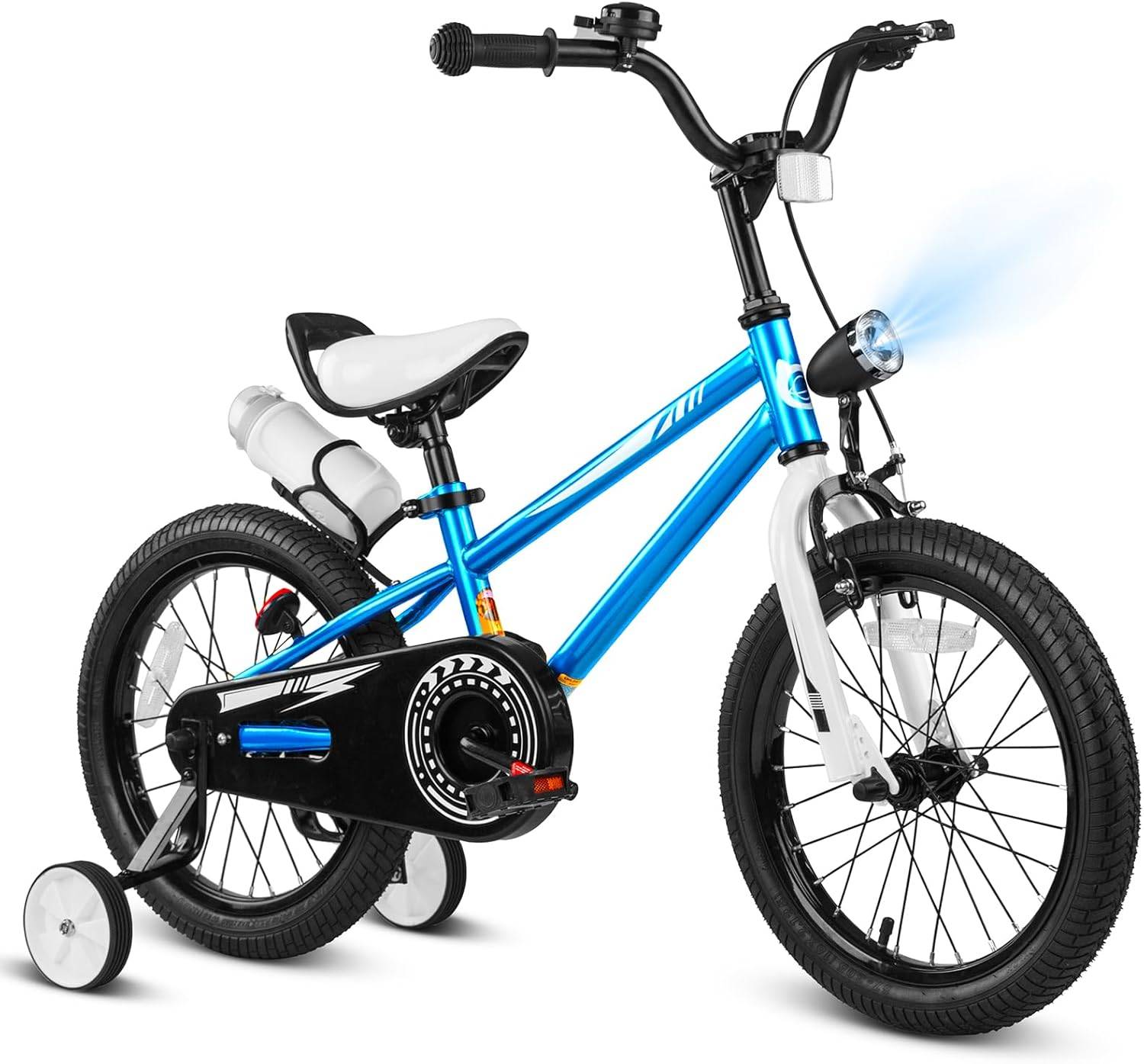
This product is relevant only when 12, 14 or 16 inches is an appropriate starting size and the actual rider can stand over, reach, steer and brake comfortably. It is not a substitute for an 18, 20, 24 or 26 Inch bicycle, and its title must not be treated as independent fit evidence.
When training wheels are not the right add-on
Do not install a kit when its instructions exclude the bicycle, when the mounting arrangement is unclear, when the brackets or hardware do not match, or when nearby components prevent the specified installation. Training wheels also do not correct a bicycle that is too large, too small or difficult for the child to control.
After a compatible installation, follow the manuals for inspection and adjustment. Before every ride, confirm the bicycle is in usable condition and provide a properly fitting bicycle helmet. The helmet should sit level and its straps should be used according to the helmet manufacturer’s instructions.
Make the decision
First measure the rider and verify stand-over, reach and brake control. Next identify the bike’s exact wheel size and rear mounting arrangement. Install training wheels only when both manuals explicitly match; otherwise have a qualified bicycle mechanic assess compatibility or choose a correctly fitted complete training-wheel bike in an available size.
Recommended products
-

Blue XJD Kids' Bike Helmet, Adjustable Fit – Sizes XS & S
The Blue XJD Kids' Bike Helmet is a lightweight, adjustable helmet for toddlers …
Bike Helmets XS (46–51 cm) -
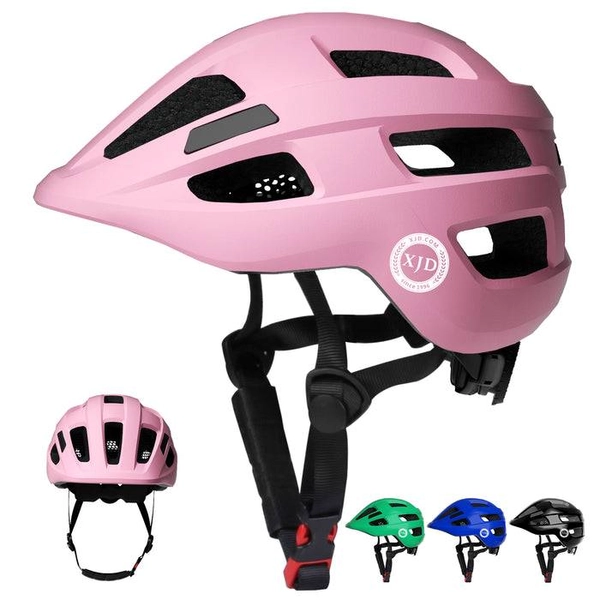
Kids Bike Helmet by XJD for Boys & Girls – Black, Blue, Green, Pink, Purple
The XJD Kids Bike Helmet covers a wide 2-to-8-year age range thanks to two head-…
Bike Helmets Pink / M:20.47"-22.05" / 52-56 cm -
Save 12%
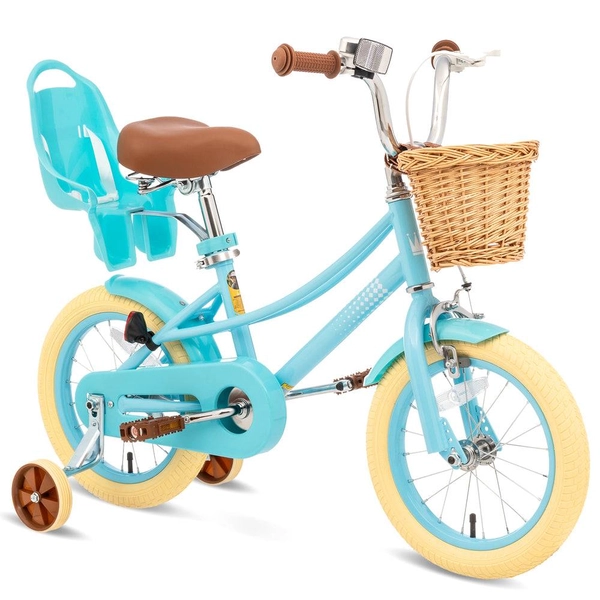
Girls' Training Wheel Bike by XJD, 12–20 Inch Wheels – Blue
This XJD girls' training wheel bike in Blue covers one of the widest fit ranges …
Training Wheel Bikes Wheel Size 12 Inch / 14 Inch / 16 Inch / 20 Inch Recommended Height 86–152 cm Training Wheels Yes 12 Inch -
Save 15%
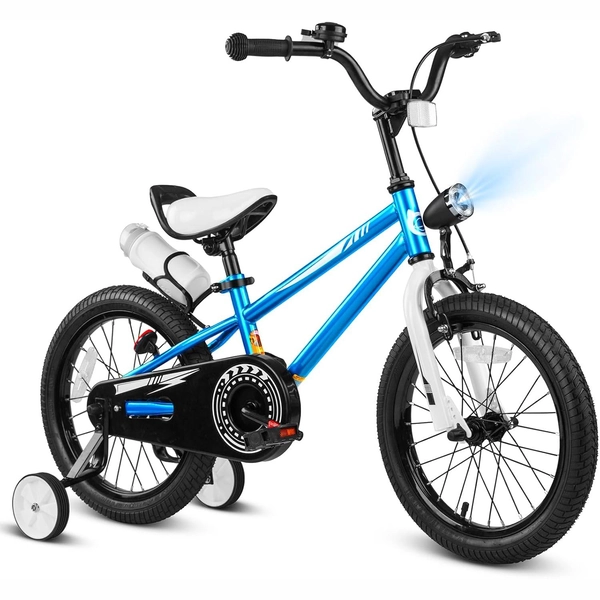
XJD Boys 12/14/16" Training Wheel Bike – Blue
The XJD Boys Bike in Blue is a training wheel bike for riders 71–122 cm tall—rou…
Training Wheel Bikes Wheel Size 12 Inch / 14 Inch / 16 Inch Recommended Height 86–122 cm Training Wheels Yes 16 Inch