How to buy training wheels for a child bike
To buy training wheels for a child bike, first measure the child’s height and inseam, then check stand-over clearance, reach and brake control on the exact bicycle. Choose a wheel size for today’s fit—not future growth—and confirm assembly and adjustment requirements in the product manual.
Measure the child before comparing bikes
Measure height without shoes against a wall. For inseam, have the child stand naturally and measure from the floor to the crotch. Record both measurements rather than relying on age or clothing size.
Height helps narrow the wheel-size range. Inseam helps you judge whether the child can stand over the bicycle comfortably. These measurements are screening tools: the child still needs to try the actual bike because frame shape, reach and controls can differ.
Use wheel size as a starting point
| Wheel size | XBikes age starting point | Rider-height starting point |
|---|---|---|
| 12 Inch | Ages 3–4 | 34–40 in / 86–102 cm |
| 14 Inch | Ages 3–6 | 37–45 in / 94–114 cm |
| 16 Inch | Ages 4–7 | 40–48 in / 102–122 cm |
| 18 Inch | Ages 5–9 | 43–52 in / 109–132 cm |
| 20 Inch | Ages 7–12 | 48–60 in / 122–152 cm |
Overlapping ranges are normal. Prioritize measured height, inseam, reach, brake control and current confidence over age alone. Do not move up merely because a child is near a birthday or because a larger bicycle might last longer.
Check the fit on the exact bicycle
Have the child try the assembled bicycle with adult supervision. A suitable candidate lets the rider stand over it with practical clearance, reach the handlebar without stretching, steer without losing posture and operate the brakes confidently. The child should not need to lean or slide forward simply to reach a control.
Reject an oversized bike if the child cannot control it now. If the fit is borderline between two sizes, compare both in person and favor the one that provides better stand-over, reach and control. Training wheels support balance while learning; they do not correct a frame that is too large or controls that are out of reach.
Compare the supplied XBikes options
The supplied catalog choices are useful because they provide overlapping 12-, 14- and 16-inch labels for direct size comparison, while one also includes a 20-inch label. This lets you shortlist only the labels that match the child’s measurements before completing an individual fit check.
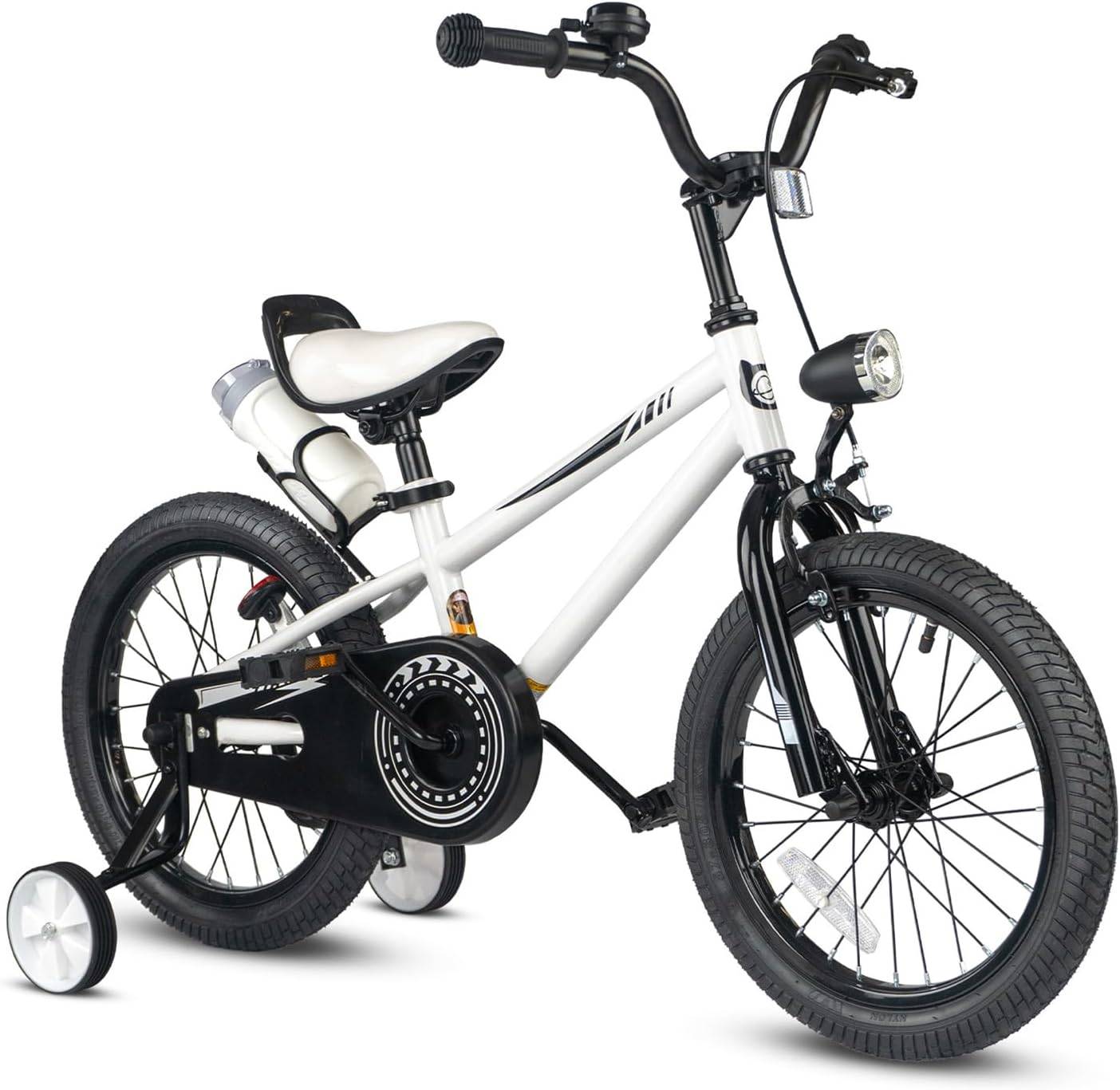 XJD Kids' Training Wheel Bike for Boys & Girls, 12/14/16 Inch – White
Available in 12 Inch, 14 Inch and 16 Inch labels, making it relevant for comparing three supplied XBikes wheel-size starting points before an individual fit check.
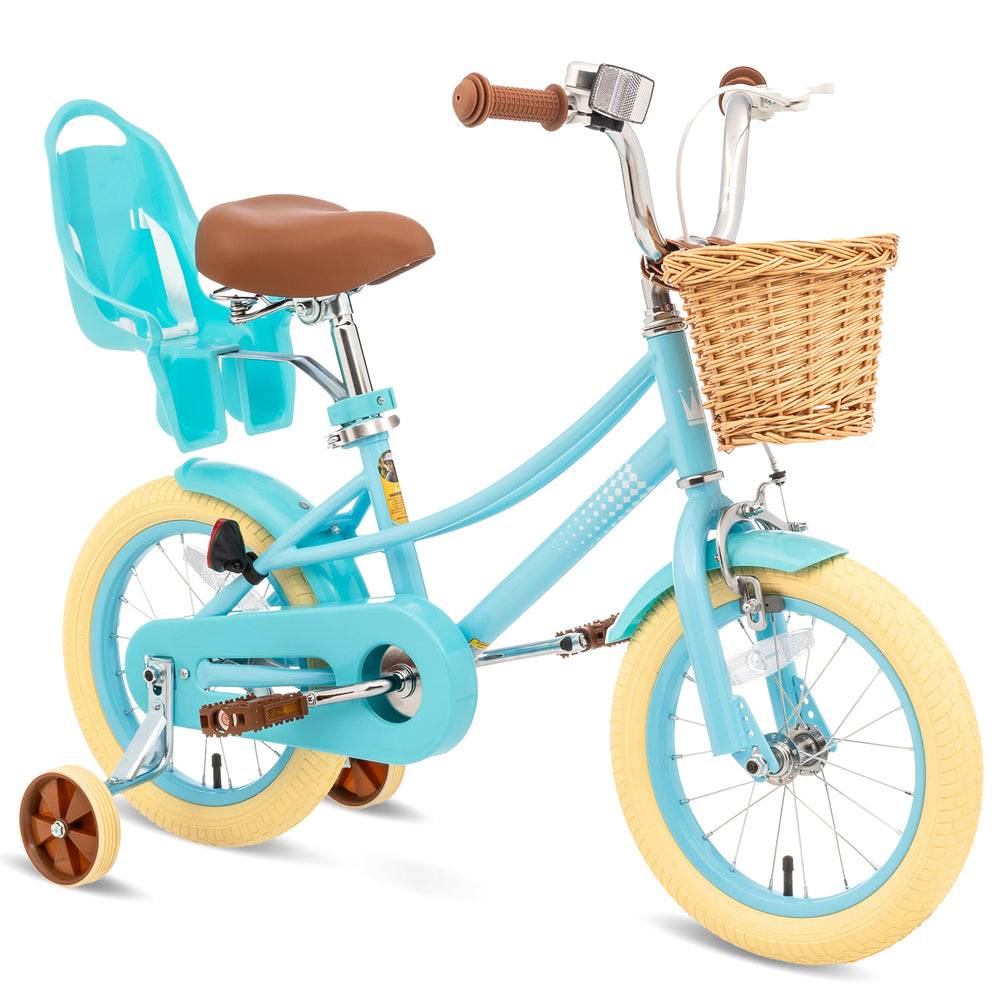 Girls' Training Wheel Bike by XJD, 12–20 Inch Wheels – Blue
Available in 12 Inch, 14 Inch, 16 Inch and 20 Inch labels, adding a larger supplied comparison while still requiring checks of height, inseam, reach and brake control.
XJD Kids' Training Wheel Bike for Boys & Girls, 12/14/16 Inch – White is listed with 12 Inch, 14 Inch and 16 Inch options. Compare those labels against the corresponding height ranges, then verify the child’s stand-over, reach and brake control on the selected configuration.
Girls' Training Wheel Bike by XJD, 12–20 Inch Wheels – Blue is listed with 12 Inch, 14 Inch, 16 Inch and 20 Inch options. Its supplied labels add a 20 Inch comparison for riders beginning around 48–60 in / 122–152 cm, but measured fit still decides.
Neither supplied product lists an 18 Inch option. If your measurements point toward 18 Inch, these products are nearest-size comparison points only; a 16- or 20-inch label is not an equivalent substitute. The supplied options also do not cover 24 Inch or 26 Inch.
Confirm training-wheel details before ordering
Wheel size alone does not confirm training-wheel adjustment, hardware compatibility, assembly steps, load limits or torque. Review the manual for the exact product and size you intend to buy. If instructions are missing, unclear or conflict with the assembled bicycle, use a qualified bicycle mechanic rather than improvising.
After assembly, follow the manual for all checks and adjustments. Confirm that controls remain reachable and usable for the child. Recheck fit as the child grows or gains confidence; readiness to progress should be based on present control, not a fixed age.
Complete the purchase decision
- Write down the child’s current height and inseam.
- Shortlist the wheel-size labels whose height ranges include that measurement.
- Have the child try each candidate and compare stand-over, reach, steering and brake operation.
- Choose a bike the child can control now, then follow its exact manual for assembly and training-wheel adjustment.
- Provide a bicycle helmet that fits properly, sits level and has straps used according to the helmet manufacturer’s instructions.
Buy only after one specific size passes the child’s fit and control check; if none does, keep looking rather than sizing up for growth.
Recommended products
-
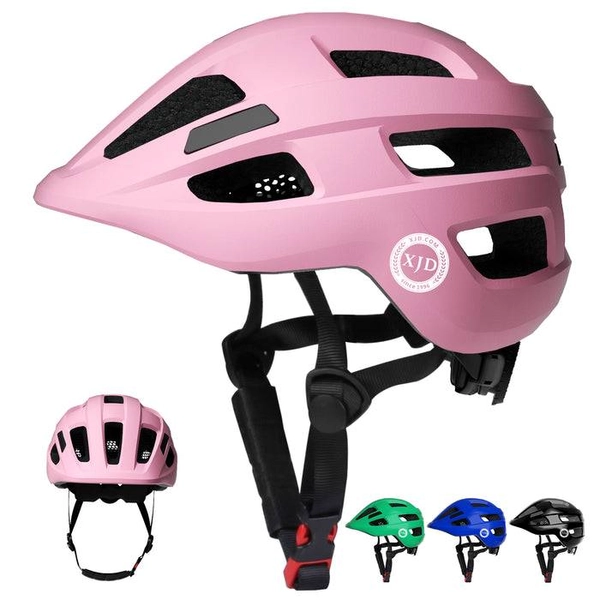
Kids Bike Helmet by XJD for Boys & Girls – Black, Blue, Green, Pink, Purple
The XJD Kids Bike Helmet covers a wide 2-to-8-year age range thanks to two head-…
Bike Helmets Pink / M:20.47"-22.05" / 52-56 cm -
Save 39%
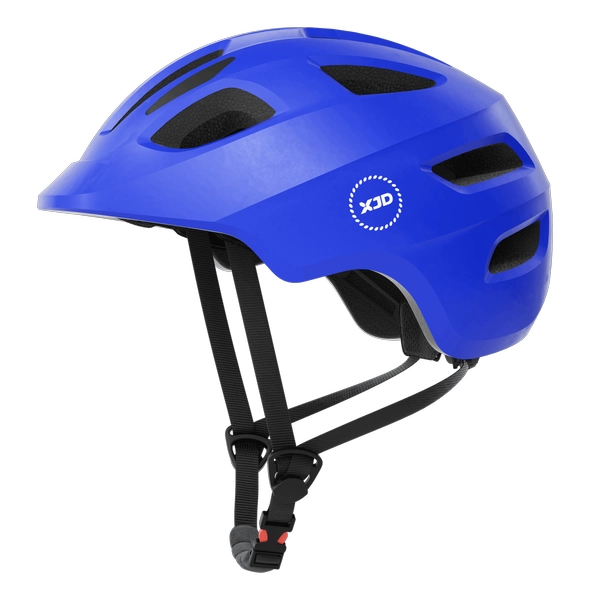
Blue XJD Kids Bike Helmet for Boys & Girls
The Blue XJD Kids Bike Helmet is a lightweight, adjustable multi-sport helmet fo…
Bike Helmets Green -
Save 16%
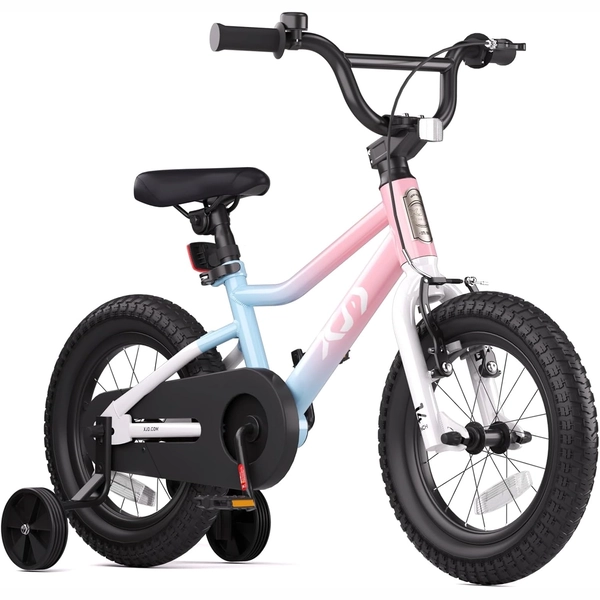
XJD Girls BMX Bike 12/14/16 Inch with Training Wheels – Pink Blue
The XJD Girls BMX Bike in Pink/Blue is built as a first pedal bike for kids roug…
Kids' BMX Bikes Wheel Size 12 Inch / 14 Inch / 16 Inch Recommended Height 86–122 cm Training Wheels Yes Single Speed 12 Inch -
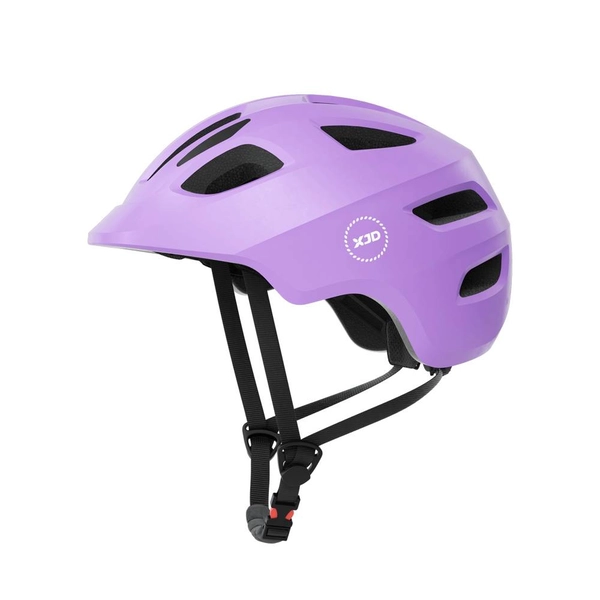
Girls' Bike Helmet from XJD – Purple
The XJD kids bike helmet in purple is a multi-sport helmet built for toddlers an…
Bike Helmets Pink / S:18.11"-20.08" / 46-51 cm