What age can kids ride a bike without training wheels
There is no single age when every child can ride a bike without training wheels. Make the change when your child fits the bike, can balance and steer, can start and stop with control, can reach and operate the brakes, and feels ready. Age is only a starting point: measure height, check the individual bike, and do not move a child onto an oversized bicycle just to allow room for growth.
What readiness looks like
A child is ready to try two wheels when they can keep the bike upright while moving, look ahead while steering, and stop on request without panic. They should also understand that slowing down, turning and stopping require their attention.
Confidence matters, but enthusiasm alone is not enough. If your child cannot control the bike or is frightened once the supports are removed, keep practicing rather than treating a birthday as a deadline. Training wheels can help with early pedaling and steering experience, but they do not prove that a child has developed independent balance.
Measure the rider before comparing bikes
Measure your child’s height without shoes. Then check inseam, reach and brake control on the actual bicycle. The child should be able to stand over it comfortably, hold the handlebar without stretching, turn it under control, and reach and operate the brakes. Have the child try the bicycle whenever possible.
Use these XBikes figures only as wheel-size starting points:
| Wheel size | Starting age | Rider height |
|---|---|---|
| 12 Inch | 3–4 | 34–40 in / 86–102 cm |
| 14 Inch | 3–6 | 37–45 in / 94–114 cm |
| 16 Inch | 4–7 | 40–48 in / 102–122 cm |
| 18 Inch | 5–9 | 43–52 in / 109–132 cm |
| 20 Inch | 7–12 | 48–60 in / 122–152 cm |
| 24 Inch | 10–14 | 54–64 in / 137–163 cm |
| 26 Inch | Youth and adults | Over 60 in / 153 cm |
Height ranges can overlap, so they do not select a bike by themselves. When two sizes appear possible, compare stand-over clearance, reach, brake access and handling on each bike. Current confidence and control should decide the next step—not the larger number.
How to try riding without training wheels
- Choose a flat, open practice area away from traffic and obstacles.
- Fit a bicycle helmet so it sits level and secure its straps according to the helmet manufacturer’s instructions.
- Confirm that your child can reach the controls and place their feet down confidently before removing or changing anything.
- Let the child practice balance, steering, starting and controlled stops in short sessions.
- Restore support and practice again later if the child repeatedly loses control or becomes distressed.
Training-wheel removal, installation and adjustment can vary by bicycle. Follow the exact product manual. If instructions are missing, parts do not align, or compatibility is uncertain, use a qualified bicycle mechanic rather than inventing a setup or torque value.
How the supplied training-wheel bikes are relevant
The Girls' Training Wheel Bike by XJD, 12–20 Inch Wheels – Blue and the XJD Girls' Bike with Training Wheels, 12/14/16/20 Inch – Purple each list 12 Inch, 14 Inch, 16 Inch and 20 Inch options. That range makes these particular catalog choices useful comparison points for a child who still needs training wheels or whose current size must be checked before attempting two-wheel riding.
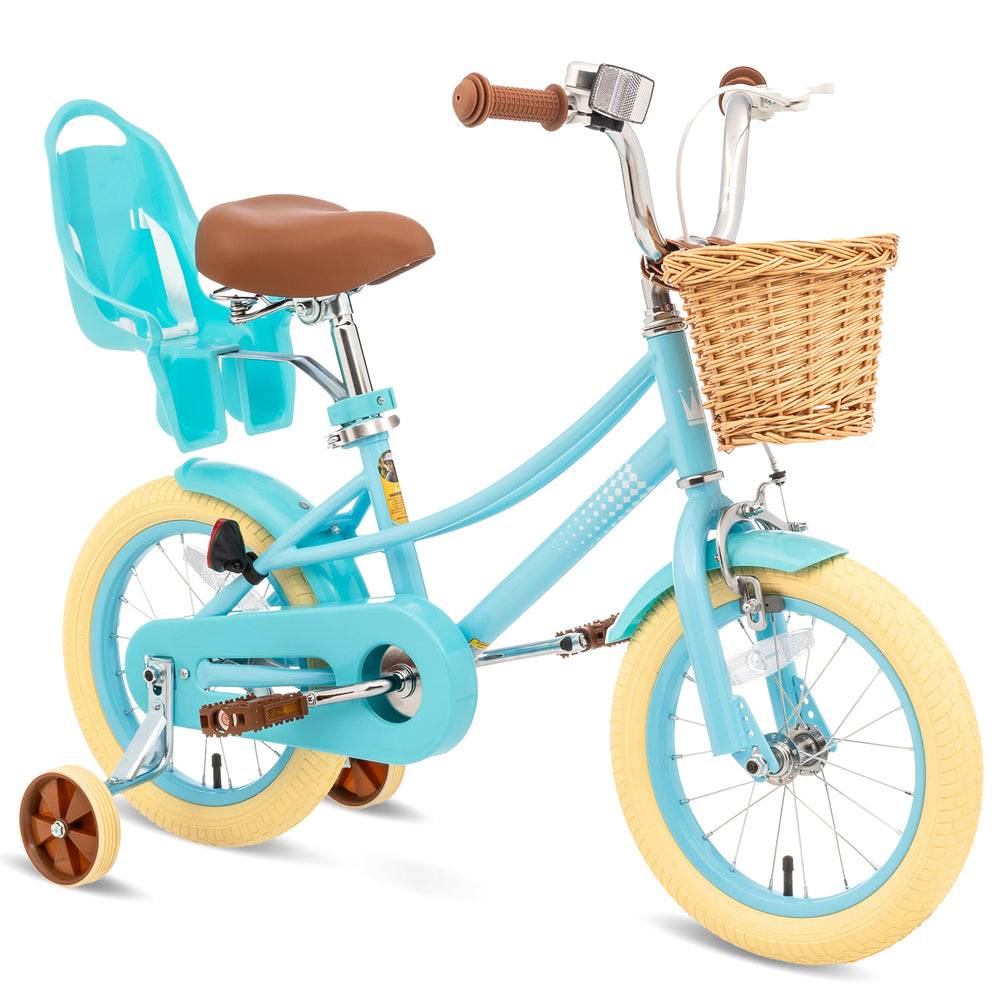 Girls' Training Wheel Bike by XJD, 12–20 Inch Wheels – Blue
Available in 12 Inch, 14 Inch, 16 Inch and 20 Inch labels, this training-wheel bike is relevant for comparing a measured rider’s height and individual fit before removing support.
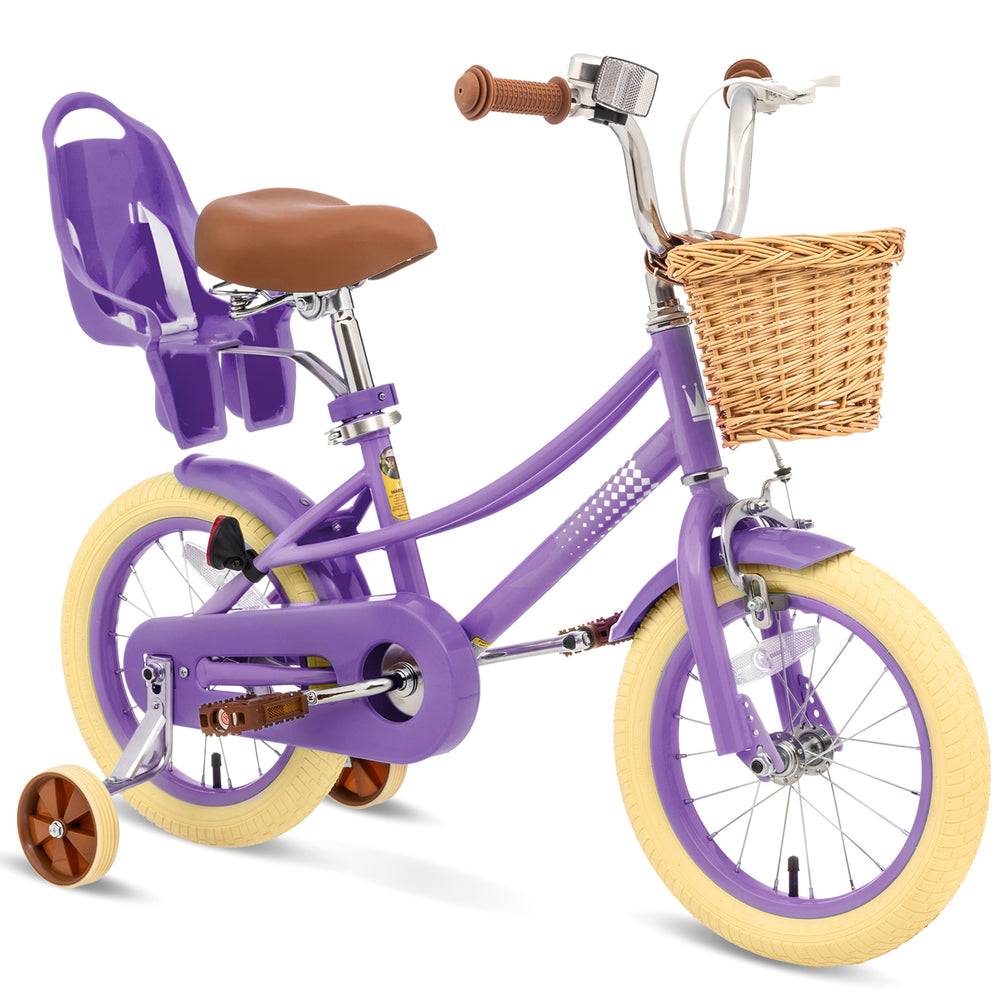 XJD Girls' Bike with Training Wheels, 12/14/16/20 Inch – Purple
This purple training-wheel bike lists 12 Inch, 14 Inch, 16 Inch and 20 Inch options. Use those sizes as starting points, then confirm stand-over, reach, brake control and confidence.
The two products have the same supplied wheel-size labels, so size alone does not distinguish them. Compare the chosen size against measured height, then verify stand-over, reach, brake control and confidence on the actual bike. No 18 Inch, 24 Inch or 26 Inch option is supplied for either product; if your child’s measurements point to one of those sizes, these products are not equal substitutes.
When training-wheel products are not the next step
A training-wheel bike may not be relevant if your child already balances, steers, starts and stops independently on a correctly fitted two-wheel bicycle. It is also the wrong choice when none of its listed sizes provides an individual fit, even if the age starting point seems to match.
Conversely, removing training wheels is premature when the child cannot reach the brakes, is stretched toward the handlebar, cannot stop predictably, or lacks the confidence to practice. Do not solve those problems by choosing an oversized bicycle.
Make the decision today
Measure height, check inseam and try the current bike first. If fit, brake reach and control are sound, schedule a short helmeted practice without the supports. If any check fails, keep the training wheels for now or compare a correctly sized option from the listed 12, 14, 16 and 20 Inch choices. The right age is the point when your child demonstrates fit, balance, control and readiness together.
Recommended products
-
Save 13%
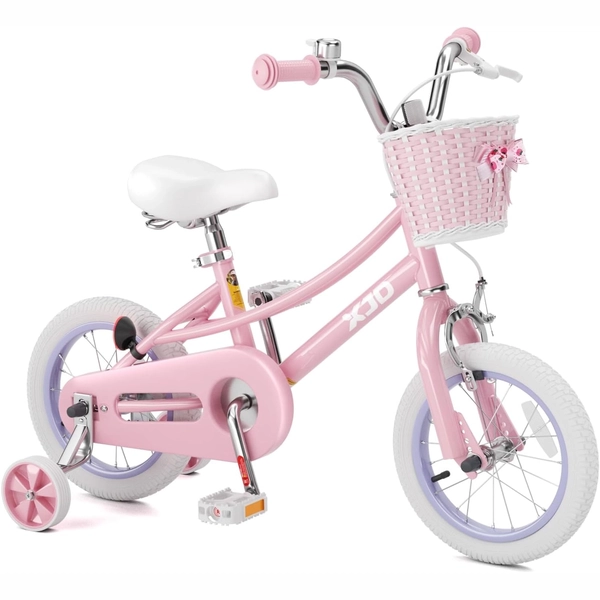
Pink 12/14/16/20" XJD Girls Bike with Training Wheels & Basket
The Pink XJD Girls Bike with Training Wheels & Basket is a first-bike pick f…
Training Wheel Bikes Wheel Size 12 Inch / 14 Inch / 16 Inch / 20 Inch Recommended Height 86–152 cm Training Wheels Yes Single Speed 12 Inch -
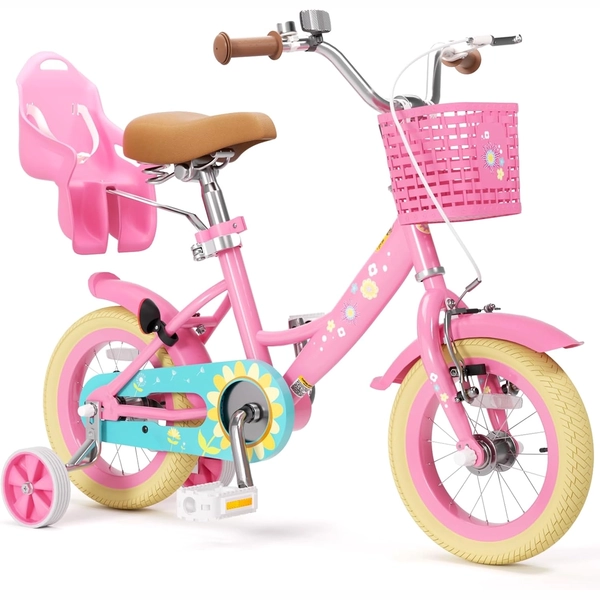
Flower Pink XJD Girls Bike with Doll Seat & Basket
The XJD Flower Pink girls' bike is made for riders 71–122 cm tall (roughly ages …
Training Wheel Bikes Wheel Size 12 Inch / 14 Inch / 16 Inch Recommended Height 86–122 cm Training Wheels Yes Geared 12 Inch -
Save 16%
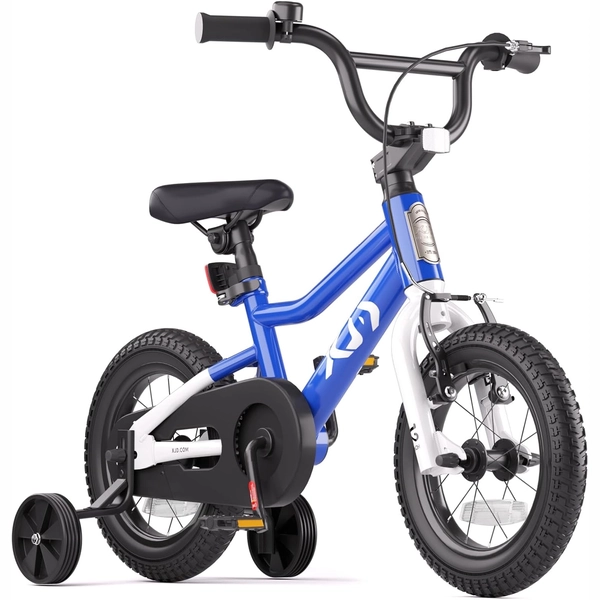
XJD Boys & Girls BMX Bike with Training Wheels, 12/14/16" – Blue
The XJD Boys & Girls BMX Bike in Blue is a first pedal bike for kids roughly age…
Kids' BMX Bikes Wheel Size 12 Inch / 14 Inch / 16 Inch Recommended Height 86–122 cm Training Wheels Yes Single Speed 12 Inch -
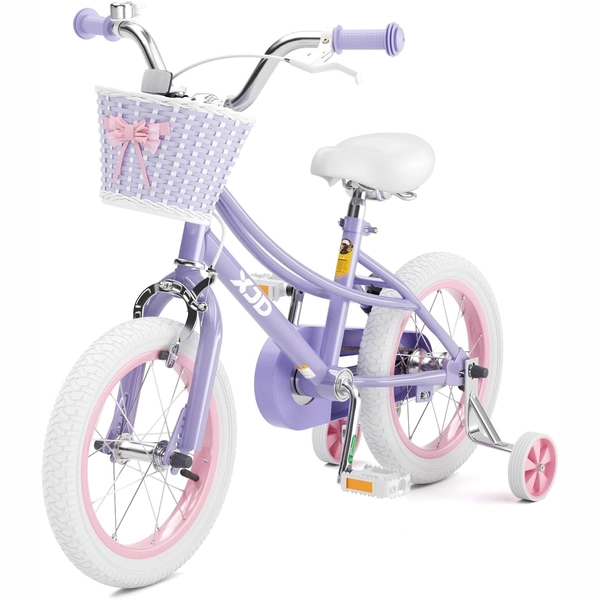
Girls' Training Wheel Bike by XJD with Basket – Purple
If you're shopping for a first bike for a girl roughly 3 to 12 years old (91–152…
Training Wheel Bikes Wheel Size 14 Inch / 16 Inch / 20 Inch Recommended Height 94–152 cm Training Wheels Yes Single Speed 14 Inch