What age can kids ride a bike with training wheels
Kids can usually start riding a bike with training wheels at about age 3, provided the bike fits and they can steer, brake and remain in control.
Age is only the first screening step
The XBikes starting points place 12-inch bikes at ages 3–4, 14-inch bikes at ages 3–6 and 16-inch bikes at ages 4–7. These ranges answer the age question broadly, but they do not establish that every three-year-old is ready or that an older child still learning cannot use training wheels.
Readiness depends more on the individual child’s measured height, inseam, reach, brake control and confidence. A child should be willing to sit on the bike, follow simple directions and keep enough control to stop when asked. Training wheels support the bike from side to side; they do not compensate for poor fit or an inability to steer and brake.
Measure before choosing a wheel size
Measure the child’s height without shoes, standing straight against a wall. Then measure inseam from the floor to the crotch while the child stands naturally. Compare height with the XBikes starting points below, but use an actual fit check to assess inseam clearance and control.
| Wheel size | Age starting point | Rider height starting point |
|---|---|---|
| 12 Inch | 3–4 | 34–40 in / 86–102 cm |
| 14 Inch | 3–6 | 37–45 in / 94–114 cm |
| 16 Inch | 4–7 | 40–48 in / 102–122 cm |
| 18 Inch | 5–9 | 43–52 in / 109–132 cm |
| 20 Inch | 7–12 | 48–60 in / 122–152 cm |
The age and height bands overlap deliberately. When a child falls into two rows, do not automatically select the larger bike. Have the child try both appropriate sizes and choose according to stand-over clearance, comfortable reach, brake access and demonstrated control. Never buy an oversized bicycle solely to leave room for growth.
Perform an individual fit check
With an adult holding the bicycle steady, check the child in ordinary riding clothes and closed-toe shoes. The child should be able to get on and off without struggling. When standing over the frame, there should be usable clearance rather than contact that makes stopping or dismounting awkward.
Next, place the child in the riding position and check these points:
- The handlebars can be reached without stretching, locking the elbows or leaning excessively.
- The child can turn the bars in both directions while remaining balanced and looking ahead.
- The child can operate the bicycle’s braking controls comfortably and stop on request.
- The seat position permits confident starts and stops appropriate to the child’s present skill.
- The child does not appear frightened, cramped or unable to control the bike’s direction.
If any control is beyond comfortable reach, try another suitable size or ask a qualified bicycle mechanic for help. Use the exact product manual for assembly, adjustments, compatibility, load limits and torque requirements.
When the supplied bike is relevant
The XJD Kids' Training Wheel Bike for Boys & Girls, 12/14/16 Inch – White is directly relevant because its available 12 Inch, 14 Inch and 16 Inch labels span the XBikes starting points from ages 3–7 and heights 34–48 in / 86–122 cm. Those choices let a parent compare overlapping starting ranges, but the title and size labels do not replace an in-person fit check.
These particular catalog options help answer the age question by offering three wheel-size comparison points within the common early-learning range. Select the label that matches the child’s measured height first, then confirm inseam clearance, reach, braking and confidence on that exact bike.
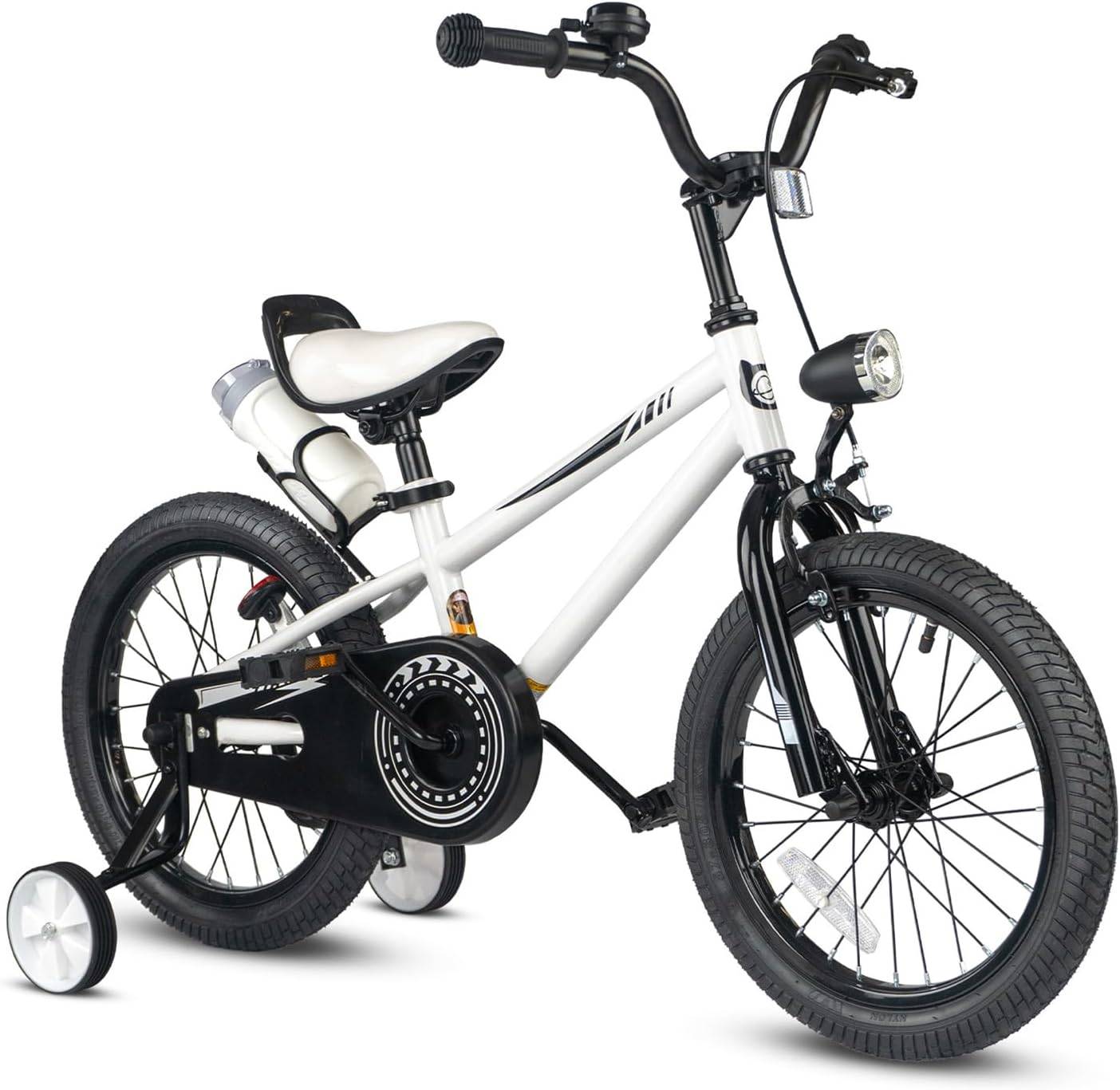
This product is not established here as suitable for a child who needs an 18-inch or larger starting point. Its supplied options stop at 16 Inch, so do not treat one of them as equal to a missing larger size or choose it merely because training wheels are desired.
Prepare a controlled first ride
Before each ride, an adult should confirm that the bicycle and training wheels are assembled and adjusted according to the exact manual. If the instructions are missing, unclear or the bike seems loose or misaligned, pause and use a qualified bicycle mechanic rather than improvising an adjustment.
Choose a flat area away from traffic, vehicles, slopes and obstacles. Stay close while the child practices looking ahead, steering smoothly, starting and stopping. A properly fitting bicycle helmet is essential: it should fit the child, sit level and have its straps positioned according to the helmet manufacturer’s instructions.
Decide from fit and control
Begin considering a training-wheel bike around age 3, but make the purchase decision only after measuring height and inseam and observing a real fit check. Choose among 12, 14 or 16 inches only when the matching starting range and the child’s stand-over clearance, reach, brake control and confidence all agree.
Recommended products
-
Save 16%
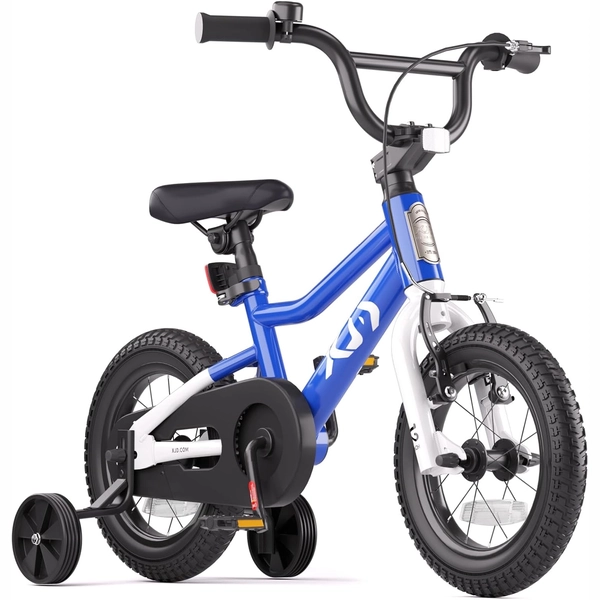
XJD Boys & Girls BMX Bike with Training Wheels, 12/14/16" – Blue
The XJD Boys & Girls BMX Bike in Blue is a first pedal bike for kids roughly age…
Kids' BMX Bikes Wheel Size 12 Inch / 14 Inch / 16 Inch Recommended Height 86–122 cm Training Wheels Yes Single Speed 12 Inch -
Save 13%
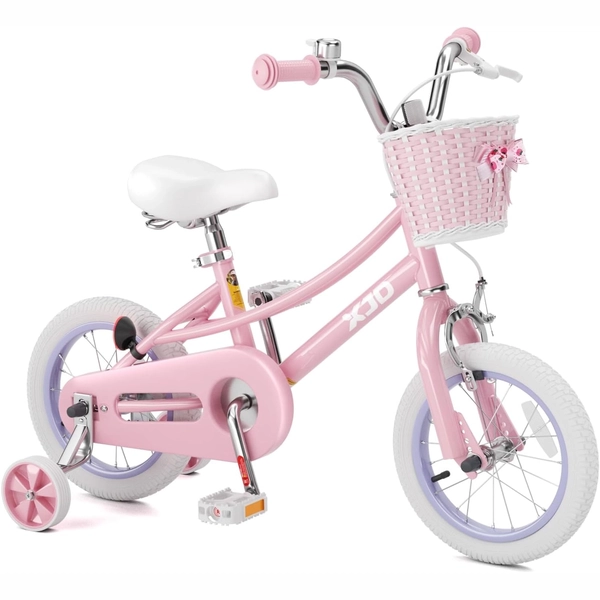
Pink 12/14/16/20" XJD Girls Bike with Training Wheels & Basket
The Pink XJD Girls Bike with Training Wheels & Basket is a first-bike pick f…
Training Wheel Bikes Wheel Size 12 Inch / 14 Inch / 16 Inch / 20 Inch Recommended Height 86–152 cm Training Wheels Yes Single Speed 12 Inch -
Save 16%
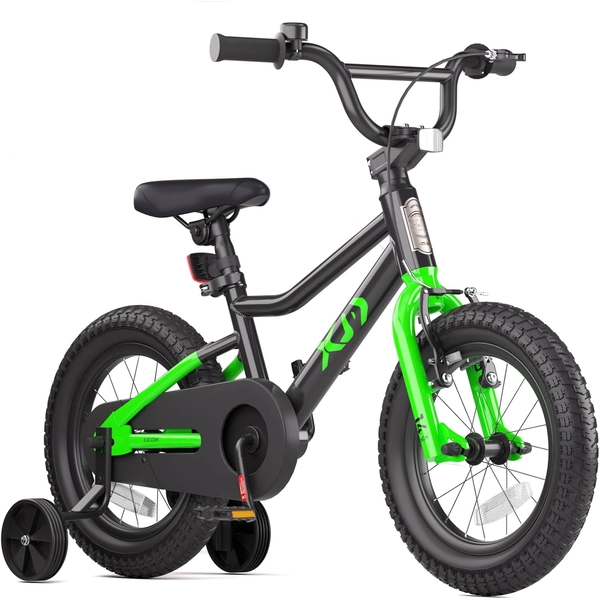
Black XJD Kids' BMX Bicycle with Training Wheels
The XJD Kids' BMX Bicycle with Training Wheels is built for children roughly 3 t…
Kids' BMX Bikes Wheel Size 12 Inch / 14 Inch / 16 Inch Recommended Height 86–122 cm Training Wheels Yes Single Speed 12 Inch -
Save 11%
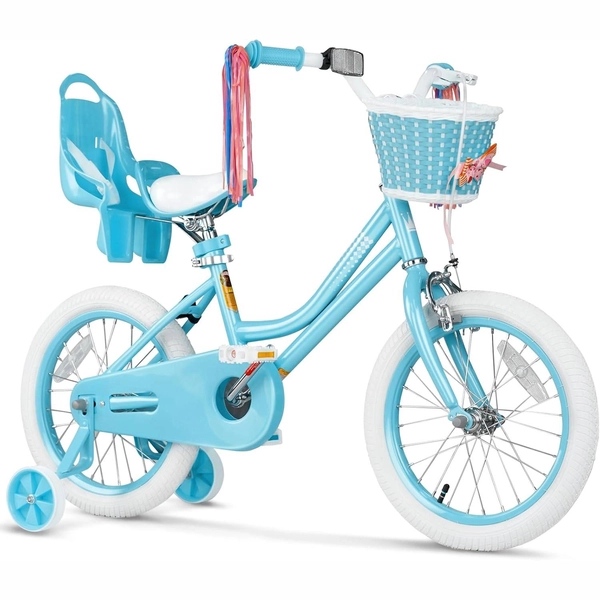
Blue XJD Girls Bike with Training Wheels – 12/14/16 Inch
If you're shopping for a first pedal bike for a daughter roughly 3 to 8 years ol…
Training Wheel Bikes Wheel Size 12 Inch / 14 Inch / 16 Inch Recommended Height 86–122 cm Training Wheels Yes 16 Inch