What age can children ride a bike without stabilisers
There is no single age when children can ride a bike without stabilisers. Remove them when your child fits the bike, can control it and is confident enough to practise balancing.
Readiness matters more than a birthday
Age can narrow down a wheel-size starting point, but it cannot tell you whether a child is ready to ride independently. Look for the ability to sit comfortably, steer where intended, start and stop under control, and use the brakes without struggling to reach them.
Confidence also matters. A child who becomes tense, looks down constantly or cannot stop reliably needs more preparation, even if their age falls within the suggested range for the bike. Another child may be ready sooner because balance and control are already familiar. Do not turn stabiliser removal into a deadline.
Measure the child and check the bicycle
Measure standing height without shoes, then measure inseam from the floor to the crotch. Compare height with the XBikes starting points below, but confirm the fit on the actual bicycle. The child should be able to stand over it, reach the handlebars without stretching, turn the bars comfortably and operate the brakes with control.
| Wheel size | Age starting point | Rider height starting point |
|---|---|---|
| 12 Inch | Ages 3–4 | 34–40 in / 86–102 cm |
| 14 Inch | Ages 3–6 | 37–45 in / 94–114 cm |
| 16 Inch | Ages 4–7 | 40–48 in / 102–122 cm |
| 18 Inch | Ages 5–9 | 43–52 in / 109–132 cm |
| 20 Inch | Ages 7–12 | 48–60 in / 122–152 cm |
These ranges overlap because children of the same age differ in height, proportions and skill. Prioritise measured height, inseam, reach, brake control and current confidence. Do not buy an oversized bicycle merely to allow room for growth; excess size can make balancing, steering and stopping harder.
A practical test before removing the stabilisers
Use a flat, open area away from traffic and obstacles. With close adult supervision, check whether the child can complete these tasks calmly:
- Mount and settle on the bicycle without fighting its size or reach.
- Look ahead while steering a controlled path.
- Reach and operate the brakes consistently.
- Stop when asked without losing control.
- Coast briefly while remaining balanced and relaxed.
If the child cannot yet coast or depends heavily on both stabilisers, continue practising rather than removing them because of age. If the bicycle permits adjustments or stabiliser removal, follow its exact manual. For uncertain assembly, compatibility or mechanical condition, use a qualified bicycle mechanic.
How the available training-wheel bikes compare
The supplied catalog options are relevant because each is a Training Wheel Bike offered in several wheel-size labels, letting you compare 12, 14 and 16 Inch starting points; one also includes 20 Inch. They help identify an appropriate size to fit-check while a child is using stabilisers and preparing to ride without them.
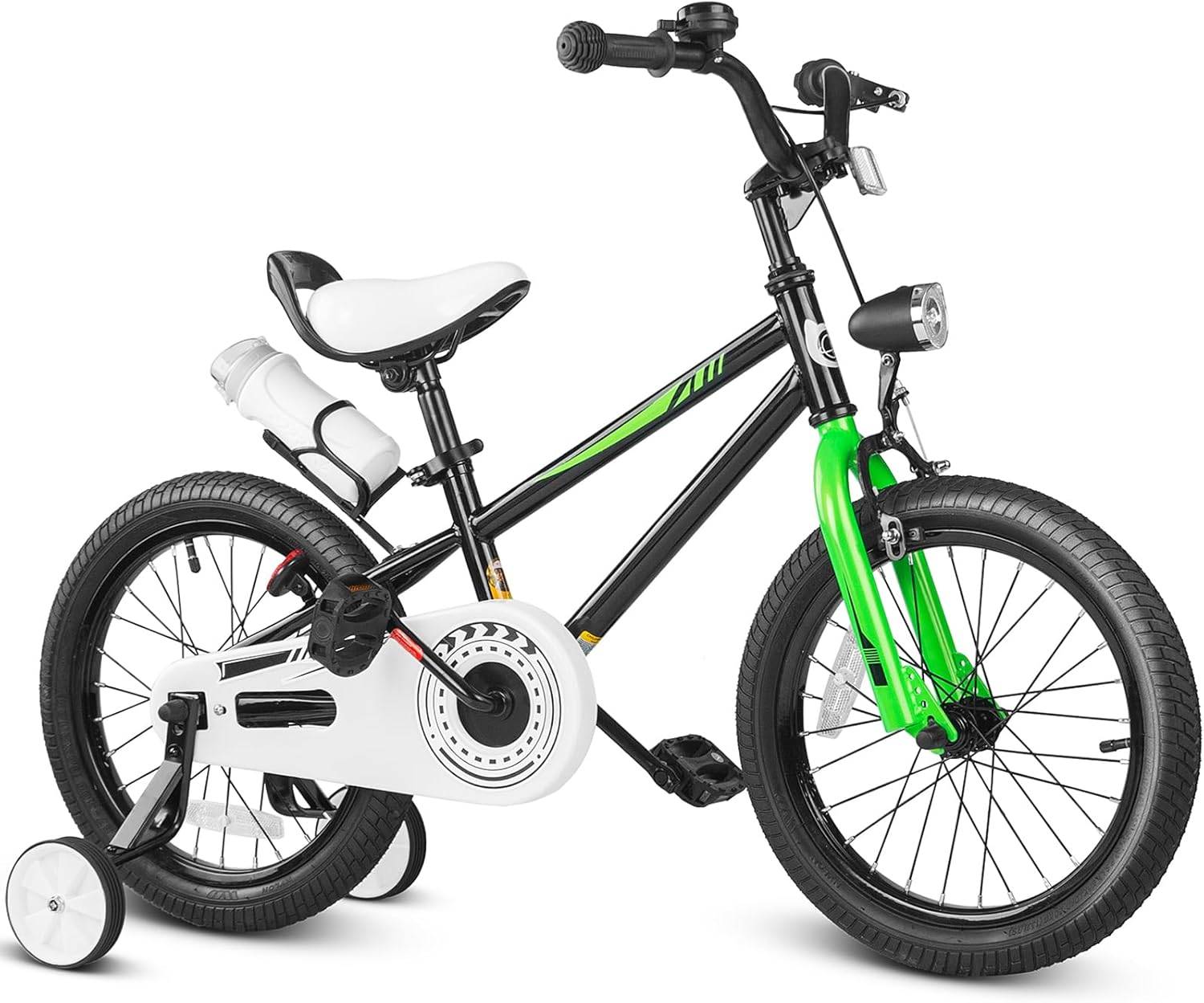 Black XJD Kids Bike for Boys – 12, 14 & 16 Inch Sizes
Available in 12, 14 and 16 Inch labels, this training-wheel bike provides three size starting points to compare against measured height before completing an individual fit and control check.
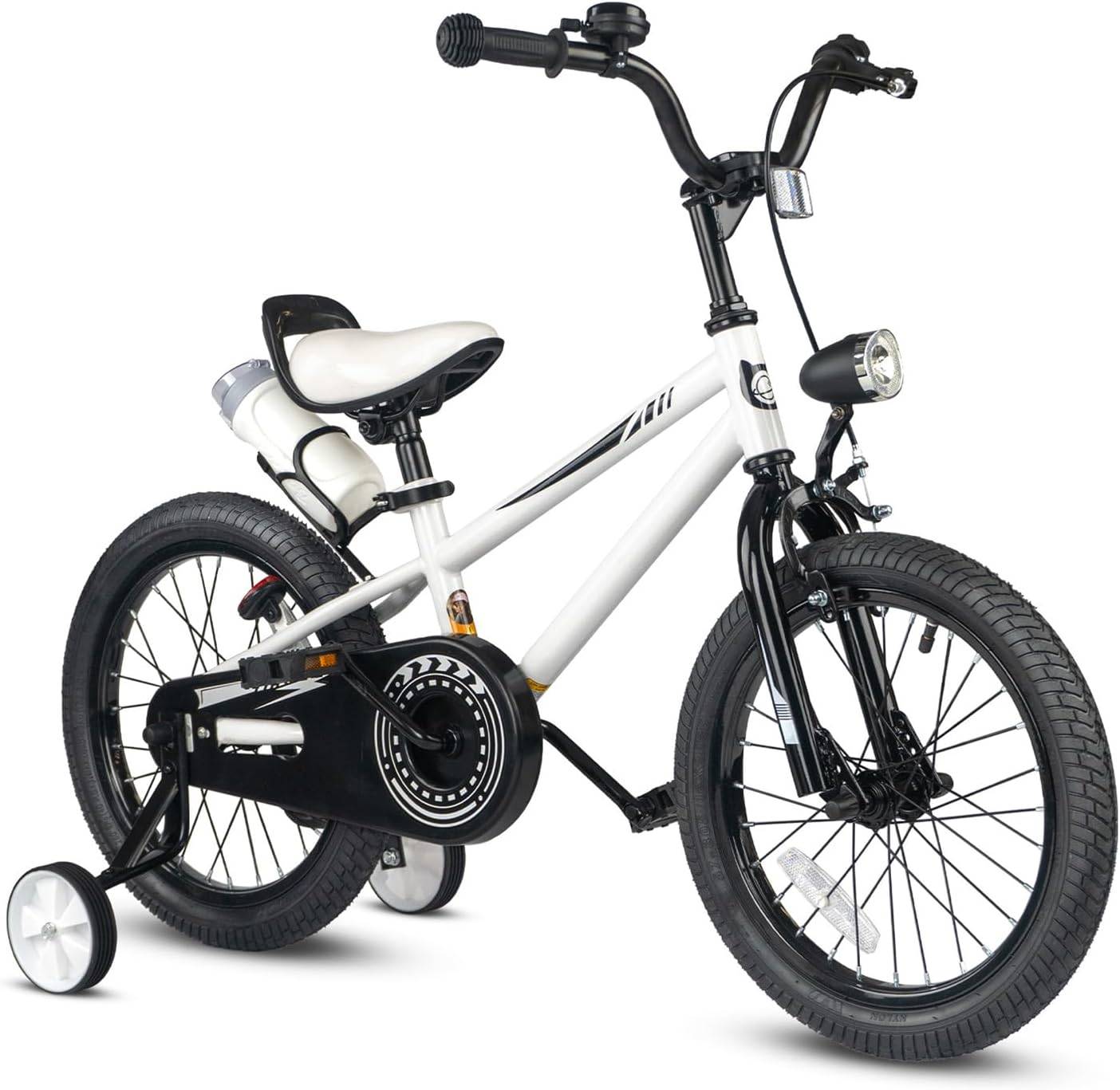 XJD Kids' Training Wheel Bike for Boys & Girls, 12/14/16 Inch – White
This Training Wheel Bike is supplied in 12, 14 and 16 Inch options. Its relevance is size comparison during the transition from stabilisers, with actual fit determined by measurements, reach, braking and confidence.
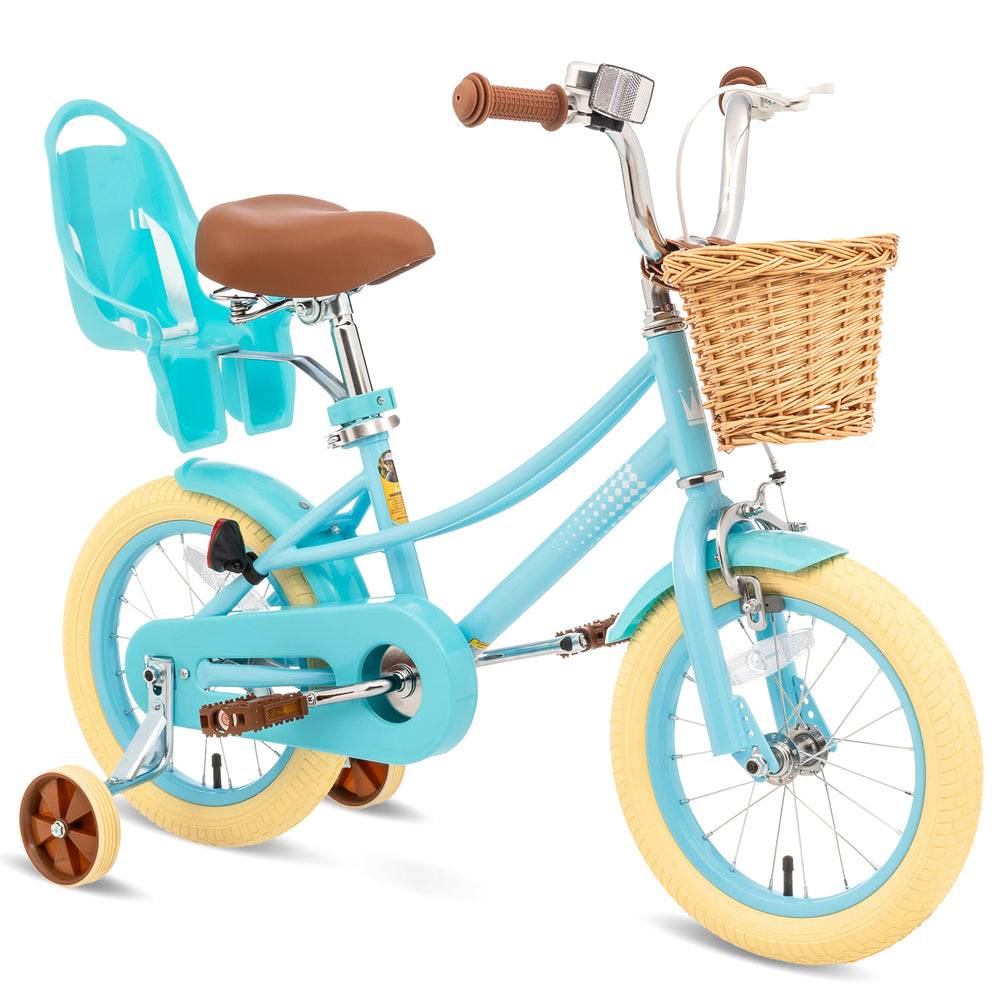 Girls' Training Wheel Bike by XJD, 12–20 Inch Wheels – Blue
Offered in 12, 14, 16 and 20 Inch labels, this Training Wheel Bike extends the comparison to the supplied 20 Inch starting range. No 18 Inch option is listed.
Black XJD Kids Bike for Boys – 12, 14 & 16 Inch Sizes is listed in 12 Inch, 14 Inch and 16 Inch options. Those labels cover overlapping XBikes starting ranges from ages 3–7 and heights 34–48 in / 86–122 cm, depending on the selected size. The title alone does not establish fit.
XJD Kids' Training Wheel Bike for Boys & Girls, 12/14/16 Inch – White has the same three supplied wheel-size labels. Compare the child’s measurements with each individual range, then check stand-over room, reach and brake use on the chosen bicycle.
Girls' Training Wheel Bike by XJD, 12–20 Inch Wheels – Blue is available in 12 Inch, 14 Inch, 16 Inch and 20 Inch labels. Its additional 20 Inch option has an XBikes starting point of ages 7–12 and 48–60 in / 122–152 cm. It does not include a supplied 18 Inch option, so it must not be treated as equivalent to that size.
Make the transition safely
When the fit and readiness checks are positive, practise in short sessions on a smooth, level, traffic-free surface. Let the child work on looking ahead, balancing and controlled stopping. Stay close enough to assist, but avoid forcing progress when confidence drops.
A bicycle helmet should fit properly, sit level and have its straps used according to the helmet manufacturer’s instructions. Before riding, follow the bicycle’s exact manual for assembly, adjustments, maintenance and stabiliser removal; use a qualified bicycle mechanic when anything is unclear.
The decision to make now
Do not choose a stabiliser-removal age first. Measure height and inseam, select a plausible wheel-size starting point, perform an individual fit check, and confirm steering, braking, stopping, balance and confidence. Remove the stabilisers only when all of those checks support the change; otherwise, keep practising and reassess later.
Recommended products
-
Save 12%
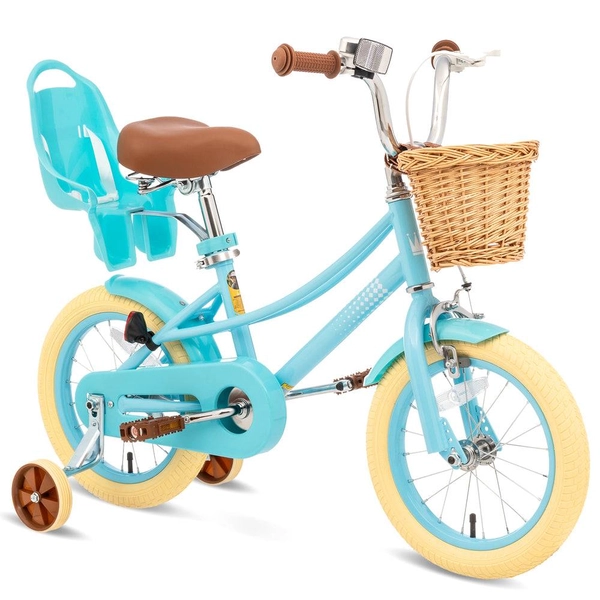
Girls' Training Wheel Bike by XJD, 12–20 Inch Wheels – Blue
This XJD girls' training wheel bike in Blue covers one of the widest fit ranges …
Training Wheel Bikes Wheel Size 12 Inch / 14 Inch / 16 Inch / 20 Inch Recommended Height 86–152 cm Training Wheels Yes 12 Inch -
Save 15%
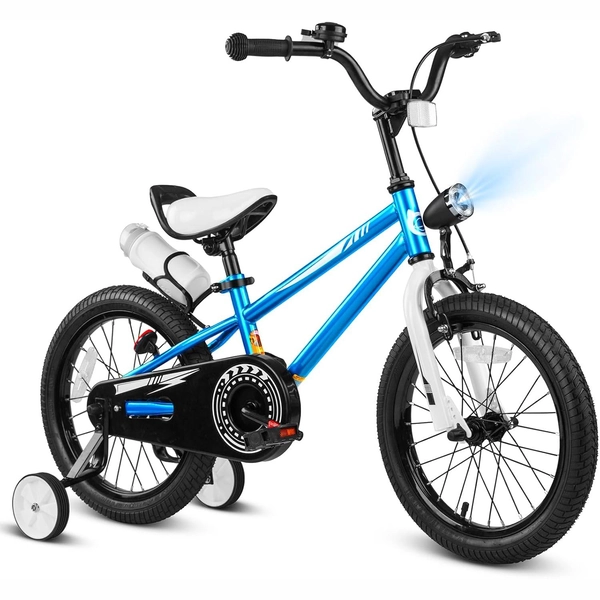
XJD Boys 12/14/16" Training Wheel Bike – Blue
The XJD Boys Bike in Blue is a training wheel bike for riders 71–122 cm tall—rou…
Training Wheel Bikes Wheel Size 12 Inch / 14 Inch / 16 Inch Recommended Height 86–122 cm Training Wheels Yes 16 Inch -
Save 15%
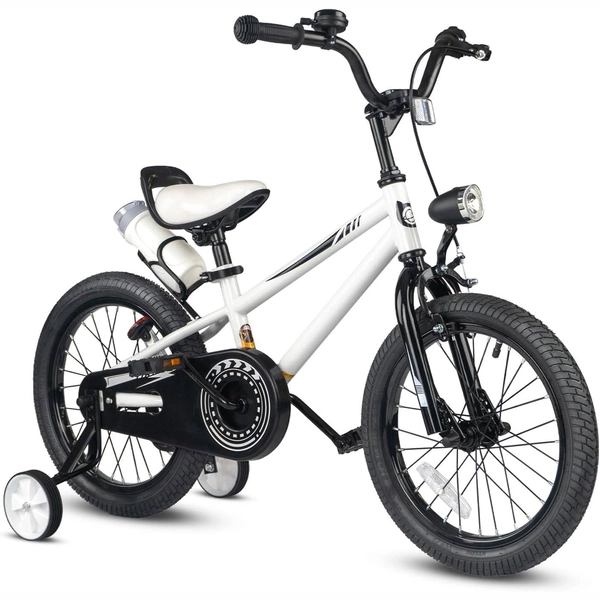
XJD Kids' Training Wheel Bike for Boys & Girls, 12/14/16 Inch – White
The XJD kids' training wheel bike in White is made for riders ages 3–8 (roughly …
Training Wheel Bikes Wheel Size 12 Inch / 14 Inch / 16 Inch Recommended Height 86–122 cm Training Wheels Yes 14 Inch -
Save 12%
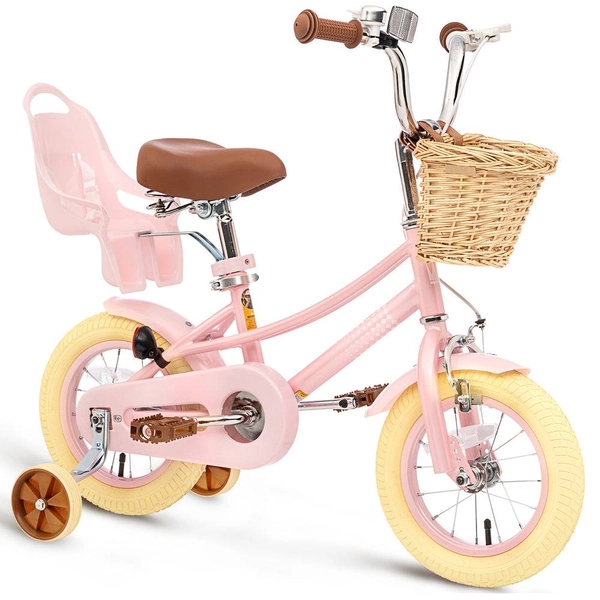
XJD Kids Bike for Girls – Pink, 12/14/16/20 Inch with Training Wheels
The XJD Kids Bike for Girls in Pink is a training-wheel bike built to carry your…
Training Wheel Bikes Wheel Size 12 Inch / 14 Inch / 16 Inch / 20 Inch Recommended Height 86–152 cm Training Wheels Yes 12 Inch