What age can a child ride a bike without stabilisers
Most children can ride a bike without stabilisers between ages 4 and 7, but there is no single correct age. Readiness depends more on fit, balance, control and confidence than birthday.
How to tell whether your child is ready
Age is only a starting point. A child is ready to try riding without stabilisers when they can sit comfortably on a correctly sized bicycle, steer a predictable line, look ahead and stop under control. They should also be willing to practise; pressure can make learning harder.
Before removing the stabilisers, check whether your child can coast briefly without leaning heavily on either side. On a training-wheel bike, watch whether the stabilisers are supporting the rider continuously or touching down mainly when balance is lost. Frequent heavy reliance suggests that more balance practice may help first.
- Measure height: compare the current measurement with the wheel-size starting points below.
- Measure inseam: use it to assess stand-over clearance on the actual bicycle.
- Check reach: the child should steer without stretching, locking their arms or sliding forward.
- Check braking: they must be able to reach and operate the bicycle's brakes reliably.
- Check confidence: they should be comfortable starting, steering, coasting and stopping before attempting longer runs.
Compare height with these starting points
Use measured height before age, then confirm the fit on the actual bicycle. Overlapping ranges are normal and do not mean two sizes fit equally well.
| Wheel size | Age starting point | Rider height |
|---|---|---|
| 12 Inch | 3–4 | 34–40 in / 86–102 cm |
| 14 Inch | 3–6 | 37–45 in / 94–114 cm |
| 16 Inch | 4–7 | 40–48 in / 102–122 cm |
| 18 Inch | 5–9 | 43–52 in / 109–132 cm |
| 20 Inch | 7–12 | 48–60 in / 122–152 cm |
| 24 Inch | 10–14 | 54–64 in / 137–163 cm |
| 26 Inch | Youth and adults | Over 60 in / 153 cm |
These figures narrow the search; they do not replace a fit check. Have the child try the bicycle. Confirm adequate stand-over clearance, comfortable reach, effective brake access and easy control. Do not choose an oversized bike merely to leave room for growth.
Where the supplied training-wheel bike is relevant
The Blue XJD Girls Bike with Training Wheels – 12/14/16 Inch offers three listed size options: 12 Inch, 14 Inch and 16 Inch. That makes it relevant for comparing training-wheel bikes across the height starting points from 34 to 48 inches / 86 to 122 cm, subject to the overlapping ranges and an individual fit check. It may suit a child who still needs stabilisers, or provide a platform for progression if its exact manual permits the intended setup.
These catalog options help answer the age question because they cover the 12-, 14- and 16-inch starting points associated with ages 3–7, while showing why age alone cannot select the correct size.
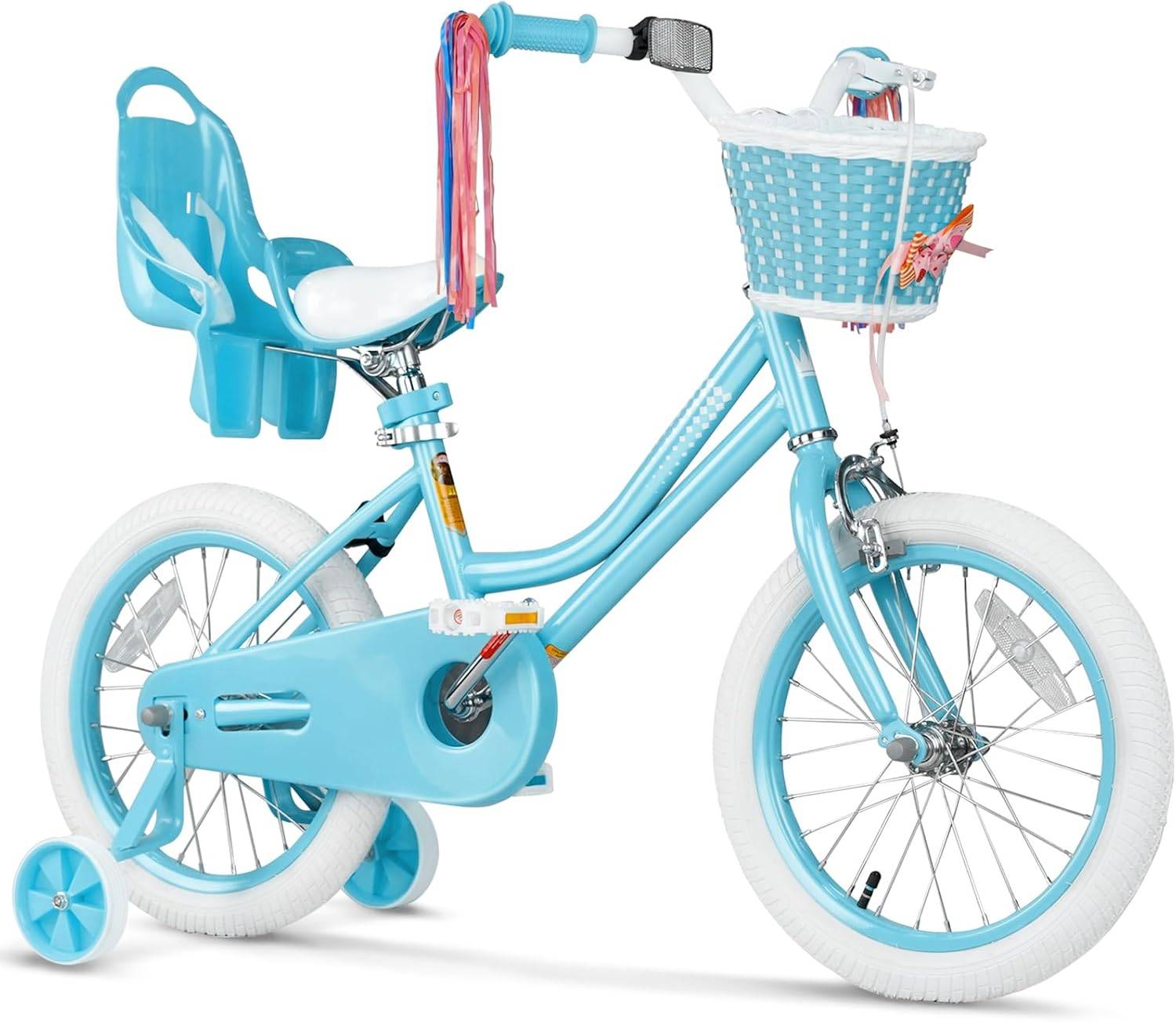
The product is not automatically relevant just because the child's age appears within one of those ranges. It is not an appropriate substitute when the child's measurements, reach, brake control or confidence point elsewhere. For assembly, stabiliser adjustment or removal, compatibility, maintenance, load limits and torque requirements, follow the exact product manual or ask a qualified bicycle mechanic.
A practical way to remove stabilisers
- Choose a correctly fitted bike and a quiet, flat practice area away from traffic and obstacles.
- Fit a properly sized bicycle helmet. It should sit level, fit securely and have its straps adjusted according to the helmet manufacturer's instructions.
- Let the child practise starts, straight coasting, gentle steering and controlled stops in short sessions.
- Stay close enough to assist, but avoid pulling the handlebar. Support only as needed so the child can feel and correct the bicycle's balance.
- Increase distance gradually once starts and stops become repeatable. If fear or repeated loss of control develops, pause and return to easier balance practice.
When to wait
Keep the stabilisers for now, or pause the transition, if the child cannot operate the brakes, cannot hold the handlebar without overreaching, tips because the bicycle is too tall, or becomes too anxious to follow instructions. A smaller correctly fitted bicycle may be more useful than waiting for the child to grow into an oversized one.
Make the decision from today's measurements and behaviour: check height and inseam, test stand-over, reach and braking, then remove the stabilisers only when the child can coast, steer and stop with calm control.
Recommended products
-
Save 12%
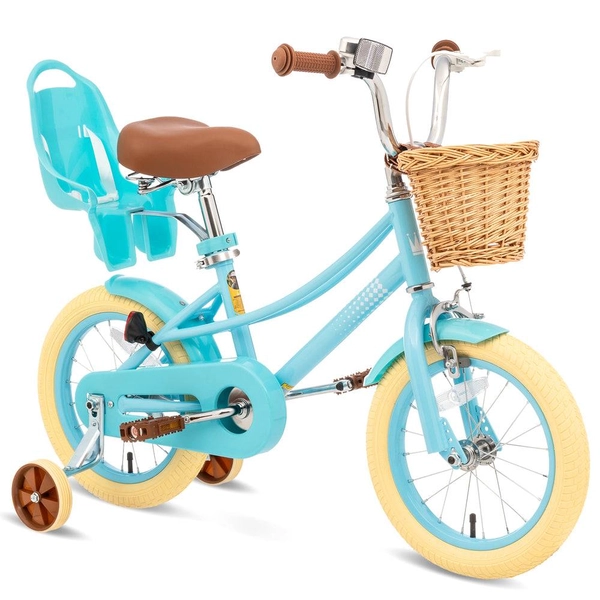
Girls' Training Wheel Bike by XJD, 12–20 Inch Wheels – Blue
This XJD girls' training wheel bike in Blue covers one of the widest fit ranges …
Training Wheel Bikes Wheel Size 12 Inch / 14 Inch / 16 Inch / 20 Inch Recommended Height 86–152 cm Training Wheels Yes 12 Inch -
Save 15%
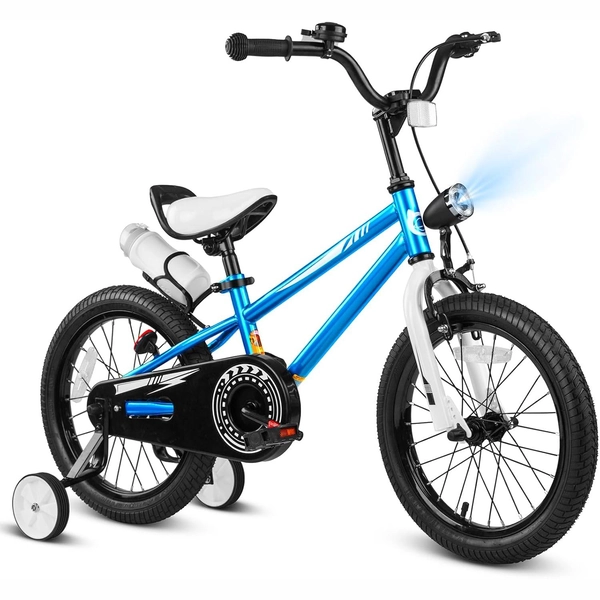
XJD Boys 12/14/16" Training Wheel Bike – Blue
The XJD Boys Bike in Blue is a training wheel bike for riders 71–122 cm tall—rou…
Training Wheel Bikes Wheel Size 12 Inch / 14 Inch / 16 Inch Recommended Height 86–122 cm Training Wheels Yes 16 Inch -
Save 15%
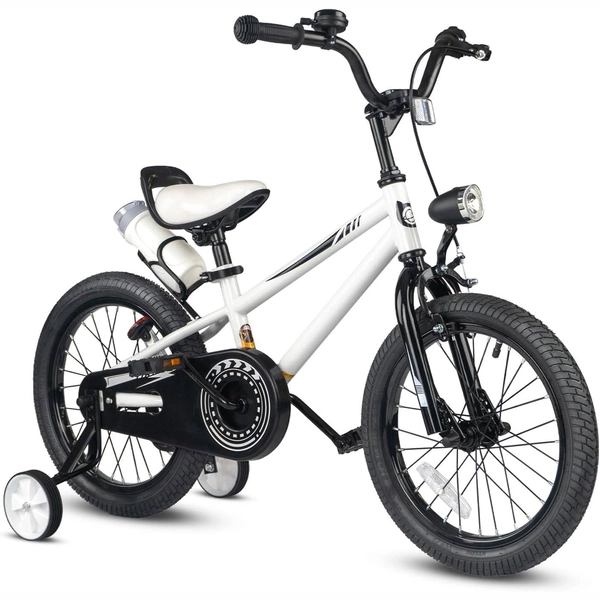
XJD Kids' Training Wheel Bike for Boys & Girls, 12/14/16 Inch – White
The XJD kids' training wheel bike in White is made for riders ages 3–8 (roughly …
Training Wheel Bikes Wheel Size 12 Inch / 14 Inch / 16 Inch Recommended Height 86–122 cm Training Wheels Yes 14 Inch -
Save 12%
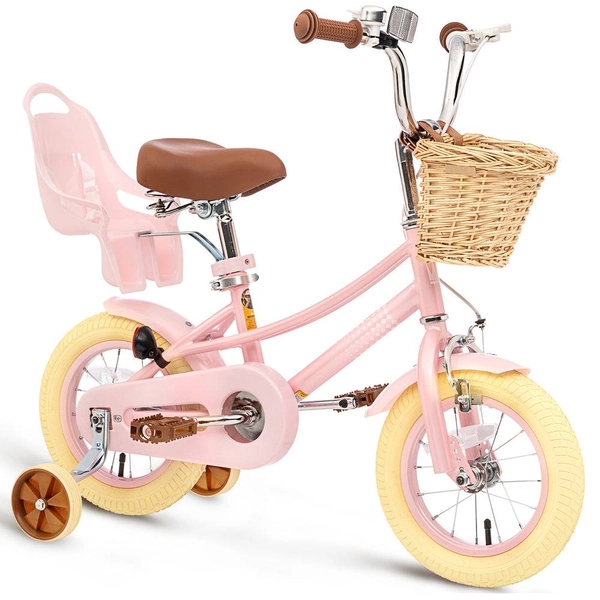
XJD Kids Bike for Girls – Pink, 12/14/16/20 Inch with Training Wheels
The XJD Kids Bike for Girls in Pink is a training-wheel bike built to carry your…
Training Wheel Bikes Wheel Size 12 Inch / 14 Inch / 16 Inch / 20 Inch Recommended Height 86–152 cm Training Wheels Yes 12 Inch