What age do kids ride bike with training wheels
There is no single correct age for training wheels. XBikes size starting points place common 12–16 inch options across ages 3–7, but your child’s measured height, inseam, reach, brake control and confidence should decide.
Start with height, not the birthday
Age is only a quick way to narrow the search. Two children of the same age can need different wheel sizes or have very different levels of control. Measure your child’s height without shoes, then compare it with the XBikes starting points below.
| Wheel size | Age starting point | Rider height |
|---|---|---|
| 12 Inch | 3–4 | 34–40 in / 86–102 cm |
| 14 Inch | 3–6 | 37–45 in / 94–114 cm |
| 16 Inch | 4–7 | 40–48 in / 102–122 cm |
| 18 Inch | 5–9 | 43–52 in / 109–132 cm |
| 20 Inch | 7–12 | 48–60 in / 122–152 cm |
| 24 Inch | 10–14 | 54–64 in / 137–163 cm |
| 26 Inch | Youth and adults | Over 60 in / 153 cm |
These ranges overlap deliberately: they are comparison points, not proof of fit. Do not move to a larger bicycle merely because your child is near the upper end of an age range.
Measure the child and check the bicycle
Height identifies likely wheel sizes, but it does not show whether the frame and controls suit the individual rider. Measure inseam from the floor to the crotch while the child stands straight. Then have the child try the exact bicycle rather than relying only on a label.
- Stand-over: Check that the child can straddle the bicycle with appropriate clearance instead of being pressed against the frame.
- Reach: The child should reach the handlebar without an exaggerated stretch or losing a comfortable, controlled posture.
- Brake control: Confirm that the child can reach and operate the bicycle’s actual braking controls reliably.
- Starting and stopping: Ask the child to demonstrate controlled starts, stops and steering in a suitable supervised area.
If any of these checks fail, compare another size or configuration. Do not treat training wheels as a remedy for a bicycle that is too large.
When training wheels are still useful
Training wheels may be relevant when a correctly fitted child’s bicycle still needs lateral support while the rider develops confidence with pedaling, steering, starting and stopping. The decision is therefore about present control, not reaching a fixed birthday.
They are less relevant once the child consistently balances, steers and stops without depending on the side wheels. Conversely, removing them solely because peers of the same age have progressed can rush a child whose confidence or control is not ready. Reassess observable skills on the child’s current, properly fitted bicycle.
How the supplied XBikes option compares
The catalog option helps because it offers three wheel-size labels within the main 3–7 age starting-point span: the Flower Pink XJD Girls Bike with Doll Seat & Basket is listed in the Training Wheel Bikes category with 12 Inch, 14 Inch and 16 Inch choices. Those labels let you compare your child’s measured height with adjacent XBikes ranges; they do not replace trying the bicycle.
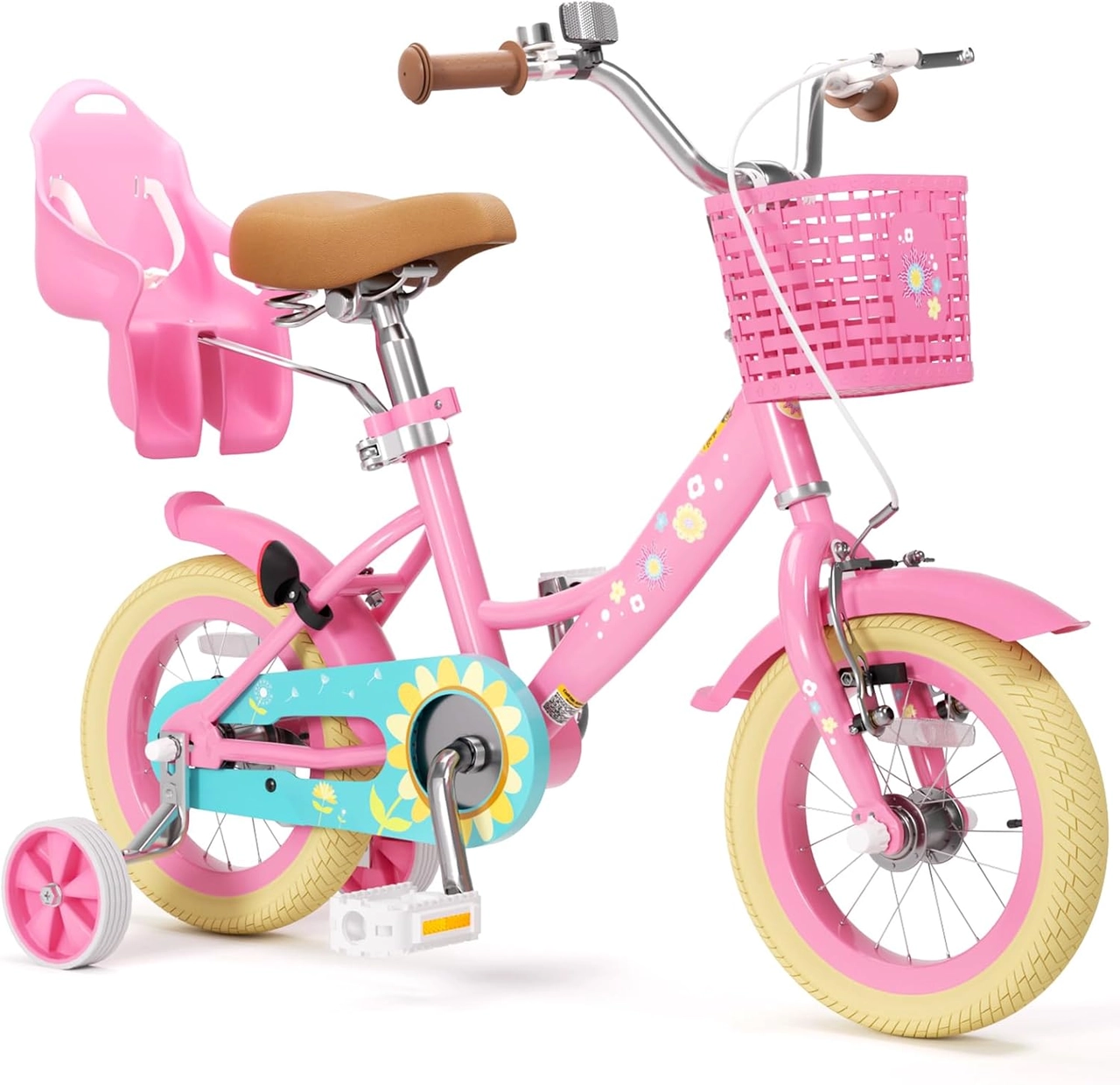
Use 12 Inch as a starting comparison for 34–40 in / 86–102 cm, 14 Inch for 37–45 in / 94–114 cm, and 16 Inch for 40–48 in / 102–122 cm. Where ranges overlap, compare stand-over, reach, braking control and confidence on the exact bicycle. The supplied catalog facts do not establish which option fits a particular child.
If your measurements point to 18 Inch or larger, this supplied product is not an equal substitute: its listed choices stop at 16 Inch. Use the larger XBikes range only as a search starting point, followed by an individual fit check.
Safety and setup before the first ride
Choose a bicycle helmet that fits properly, sits level and has its straps adjusted according to the helmet manufacturer’s instructions. Recheck the fit whenever the helmet is adjusted or worn over different clothing.
For training-wheel installation, bicycle assembly, maintenance, compatibility, load limits and torque settings, follow the exact product manual. If instructions are missing, unclear or the setup cannot be confirmed, use a qualified bicycle mechanic rather than guessing.
Make the age decision now
- Measure height and inseam without shoes.
- Use age only to identify likely wheel sizes, then prioritize the height range.
- Have the child try the exact bicycle and check stand-over, reach and brake operation.
- Choose training wheels only if the correctly fitted rider still needs lateral support for present control and confidence.
For this title’s practical answer: begin with the 12–16 inch comparisons for a child in the XBikes 3–7 starting-point span, but buy only after the individual fit and control checks succeed.
Recommended products
-
Save 16%
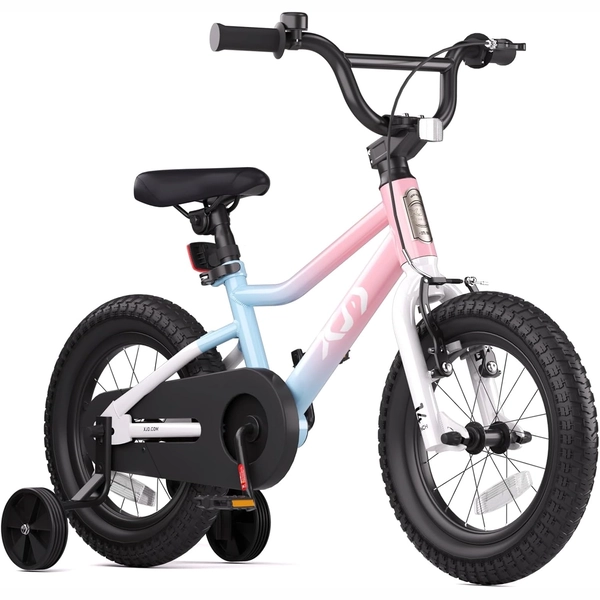
XJD Girls BMX Bike 12/14/16 Inch with Training Wheels – Pink Blue
The XJD Girls BMX Bike in Pink/Blue is built as a first pedal bike for kids roug…
Kids' BMX Bikes Wheel Size 12 Inch / 14 Inch / 16 Inch Recommended Height 86–122 cm Training Wheels Yes Single Speed 12 Inch -
Save 11%
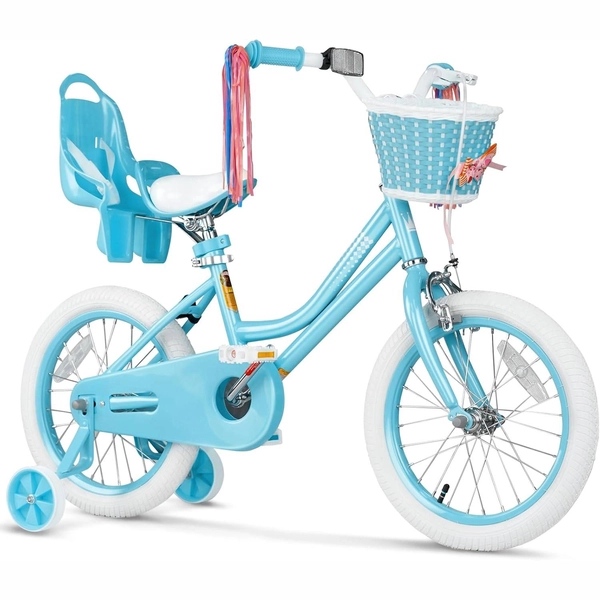
Blue XJD Girls Bike with Training Wheels – 12/14/16 Inch
If you're shopping for a first pedal bike for a daughter roughly 3 to 8 years ol…
Training Wheel Bikes Wheel Size 12 Inch / 14 Inch / 16 Inch Recommended Height 86–122 cm Training Wheels Yes 16 Inch -
Save 14%
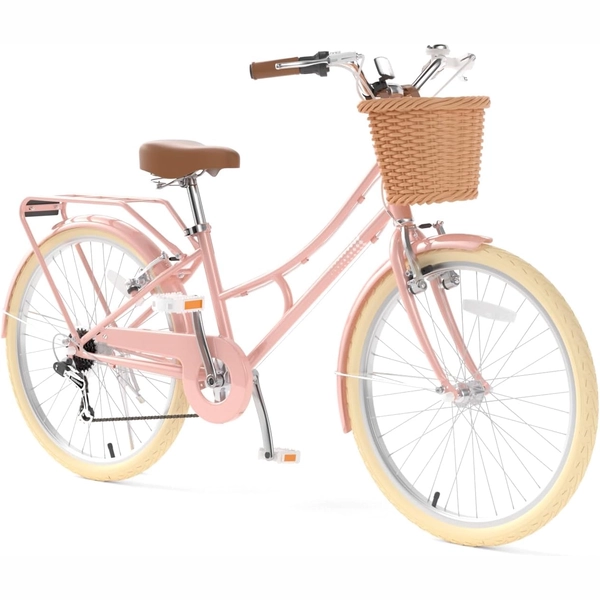
XJD Pink Beach Cruiser for Girls – Rear Rack & V-Brake
The XJD Pink Beach Cruiser for girls is the step-up bike for riders who've outgr…
Beach Cruiser Bikes Wheel Size 20 Inch / 24 Inch / 26 Inch Recommended Height 122–200 cm Training Wheels No Geared 20 Inch -
Save 5%
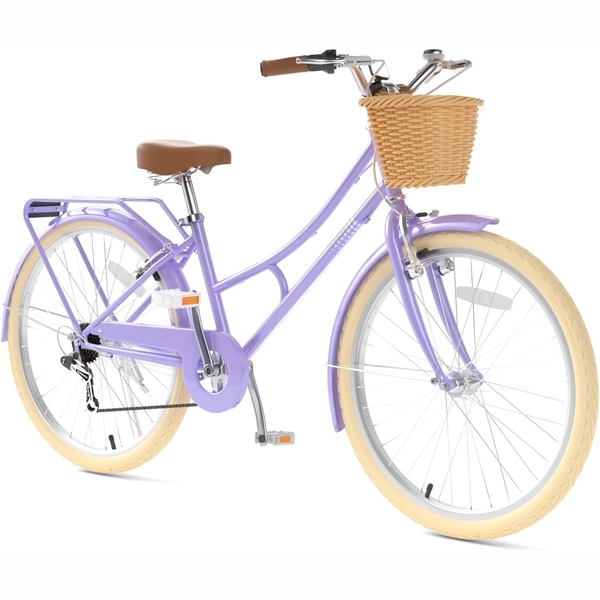
26-Inch XJD Beach Cruiser Bike for Girls – Purple, V-Brake
This XJD 26-inch purple beach cruiser is sized for big kids and teens — suggeste…
Beach Cruiser Bikes Wheel Size 20 Inch / 24 Inch / 26 Inch Recommended Height 122–200 cm Training Wheels No Geared Purple / 26 Inch