What age do kids start riding bikes with training wheels
Most kids start riding a bike with training wheels around ages 3–4, often on a 12-inch bike. Readiness and a hands-on fit check matter more than age.
When is a child ready for training wheels?
Age is only a starting point. A child is more likely to be ready when they want to ride, can follow simple directions, and can sit on the bicycle without becoming overwhelmed. They should also be able to hold the handlebar, look ahead, steer deliberately and operate the brakes within their current ability.
Training wheels provide side-to-side support, but they do not correct a bicycle that is too large or difficult to control. Do not size up merely to leave room for growth. The child should try the bicycle before it is chosen.
Measure before comparing wheel sizes
Measure the child’s height without shoes, standing upright against a wall. Measure inseam from the floor to the crotch while the child stands naturally. Height helps narrow the wheel-size range; inseam helps you judge stand-over clearance and whether the child can get on, stop and stabilize comfortably.
Use these XBikes starting points only to identify sizes worth trying:
| Wheel size | Starting age | Rider height |
|---|---|---|
| 12 Inch | 3–4 | 34–40 in / 86–102 cm |
| 14 Inch | 3–6 | 37–45 in / 94–114 cm |
| 16 Inch | 4–7 | 40–48 in / 102–122 cm |
| 20 Inch | 7–12 | 48–60 in / 122–152 cm |
The overlapping ranges are intentional starting points, not proof that either size fits. If a child falls within two ranges, compare both bicycles in person and choose according to stand-over clearance, reach, brake access, control and confidence—not the larger number.
Perform a practical fit check
Have the child try the exact bicycle while an adult steadies it. Check these points before riding:
- Stand-over: The child can straddle the bicycle with useful clearance rather than being pressed against the frame.
- Starting and stopping: They can get into position, stop and put a foot down without struggling against the bicycle’s size.
- Reach: They can hold the handlebar and steer without stretching, locking their elbows or losing an upright, controlled posture.
- Brake control: Their hands can reach and operate the bicycle’s brakes. Confirm the actual setup on the exact model rather than assuming how it works.
- Confidence: They remain attentive and willing to practice at a slow pace.
If any of these checks fail, do not rely on training wheels to compensate. Try another size or seek help from a qualified bicycle mechanic.
How the catalog options compare
These three Training Wheel Bikes help answer the sizing question because their supplied options cover 12, 14 and 16 inches, while one also offers 20 inches. That lets parents compare relevant starting points against a child’s measurements before arranging an individual fit check.
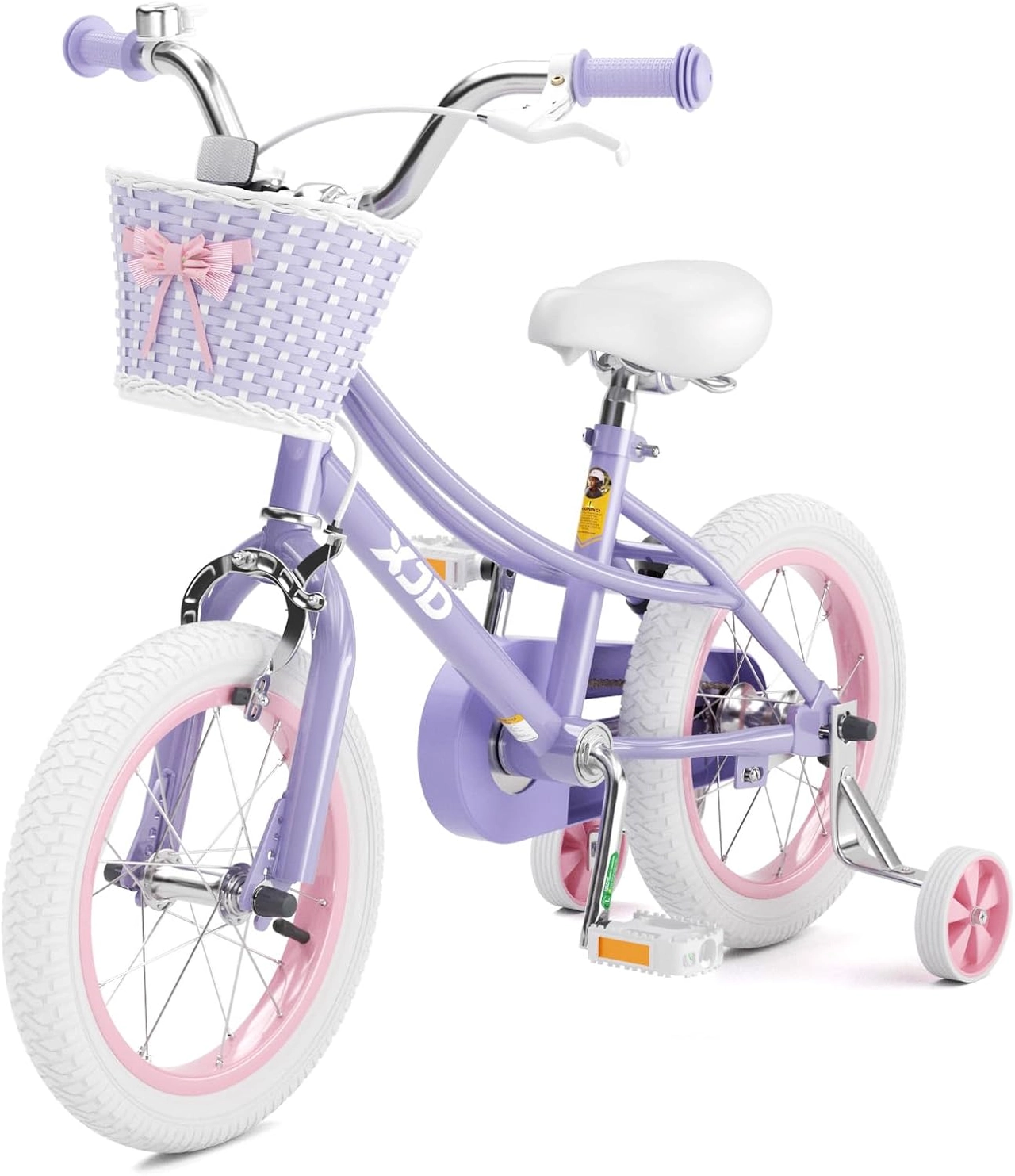 Girls' Training Wheel Bike by XJD with Basket – Purple
Available in 14, 16 and 20 Inch options, making it relevant for comparing measured riders whose height and hands-on fit point beyond the smallest 12-inch starting range.
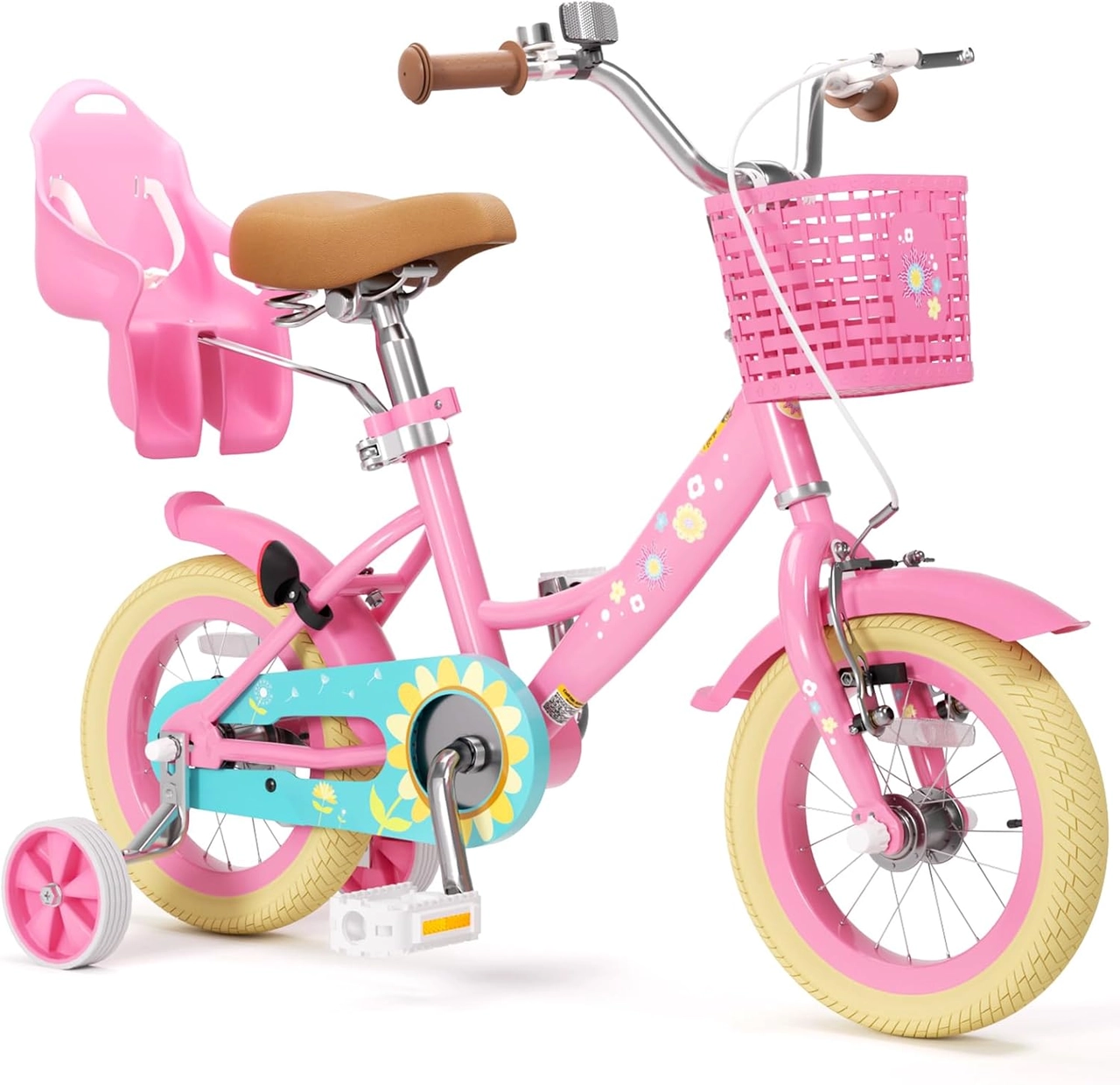 Flower Pink XJD Girls Bike with Doll Seat & Basket
Its 12, 14 and 16 Inch options cover the principal starting-size comparisons for younger riders, but the child’s measured height, stand-over, reach and brake control must determine fit.
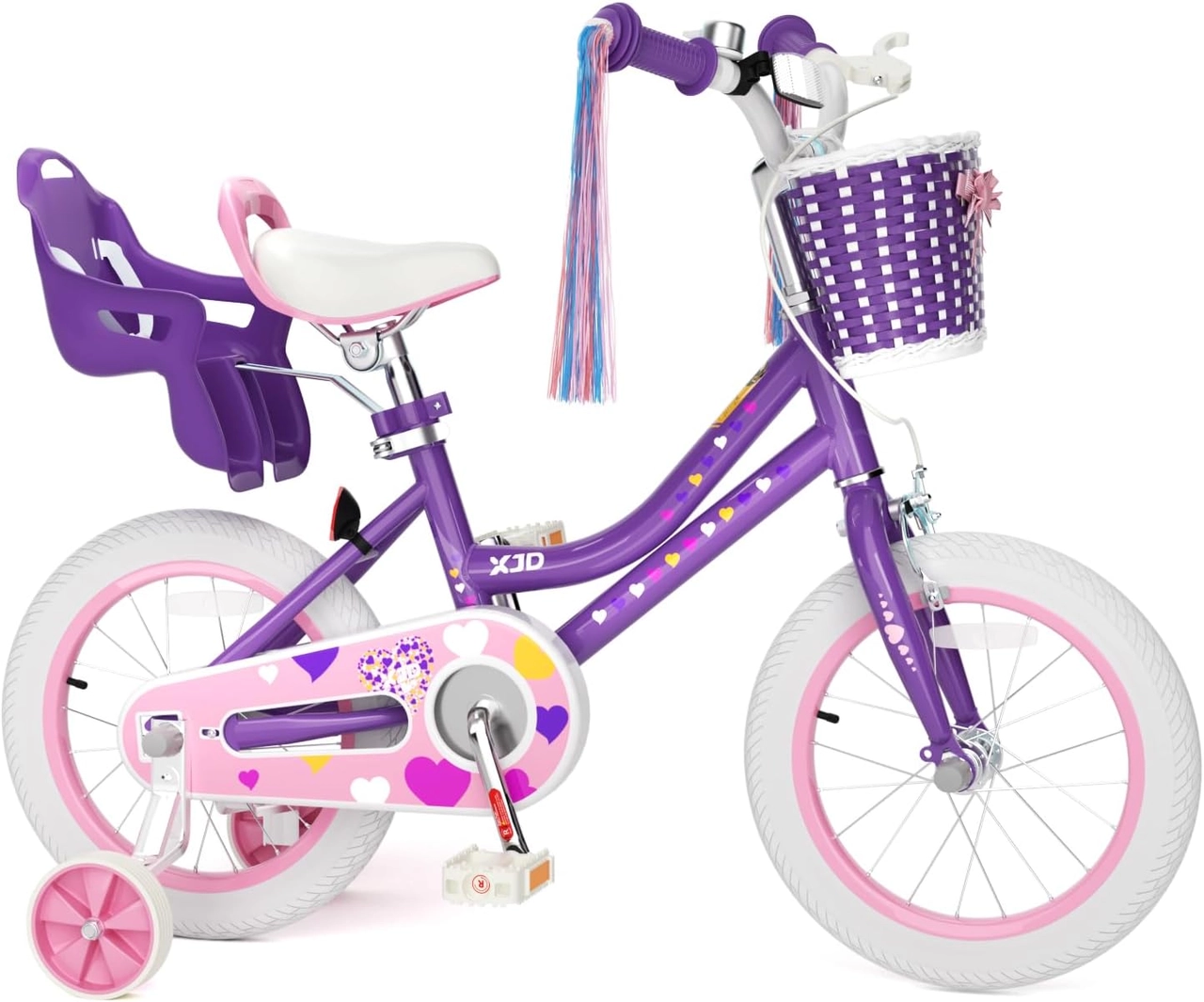 Purple XJD Girls' Bike with Doll Seat & Basket
Listed in 12, 14 and 16 Inch sizes, this is relevant when comparing early training-wheel size ranges after measuring the child and arranging an individual fit check.
Flower Pink XJD Girls Bike with Doll Seat & Basket and Purple XJD Girls' Bike with Doll Seat & Basket are each listed in 12 Inch, 14 Inch and 16 Inch. Their 12-inch options align with the age 3–4 and height 34–40 in / 86–102 cm starting point commonly relevant to a first training-wheel bicycle. Their larger listed sizes may suit measured riders in the corresponding ranges, subject to the same fit test.
Girls' Training Wheel Bike by XJD with Basket – Purple is listed in 14 Inch, 16 Inch and 20 Inch. It has no supplied 12-inch option, so it is not a direct 12-inch substitute for a smaller beginning rider. Its listed sizes become relevant only when the child’s measured height and hands-on control point toward those ranges.
Colors, baskets and doll seats may help distinguish the listings, but they do not establish fit. The supplied catalog facts do not specify price, stock, brake type, weight, materials, load limits or certification, so those details should not be inferred.
Prepare for the first ride
Use a properly fitting bicycle helmet every time. It should sit level and its straps should be adjusted according to the helmet manufacturer’s instructions. Begin in a flat area away from traffic and obstacles, with close adult supervision. Let the child practice starting, steering, braking and putting a foot down before attempting longer rides.
Follow the exact product manual for assembly, training-wheel adjustment, maintenance, compatibility and torque requirements. If the manual is missing or anything feels loose, misaligned or unclear, stop and use a qualified bicycle mechanic rather than inventing an adjustment.
Make the age decision
For a typical 3- or 4-year-old, begin by measuring height and inseam and comparing a 12-inch bicycle if height is 34–40 in / 86–102 cm. Then require a successful stand-over, reach and brake-control check. If the measurements or trial do not work, wait or compare the next appropriate listed size—never choose by birthday alone.
Recommended products
-
Save 16%
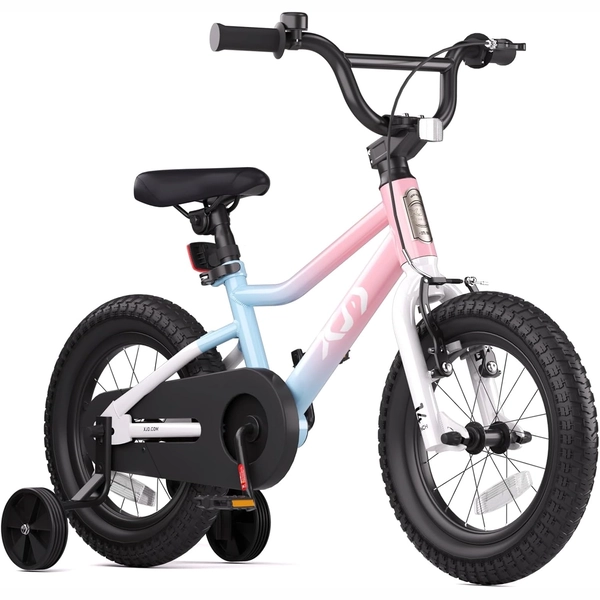
XJD Girls BMX Bike 12/14/16 Inch with Training Wheels – Pink Blue
The XJD Girls BMX Bike in Pink/Blue is built as a first pedal bike for kids roug…
Kids' BMX Bikes Wheel Size 12 Inch / 14 Inch / 16 Inch Recommended Height 86–122 cm Training Wheels Yes Single Speed 12 Inch -
Save 11%
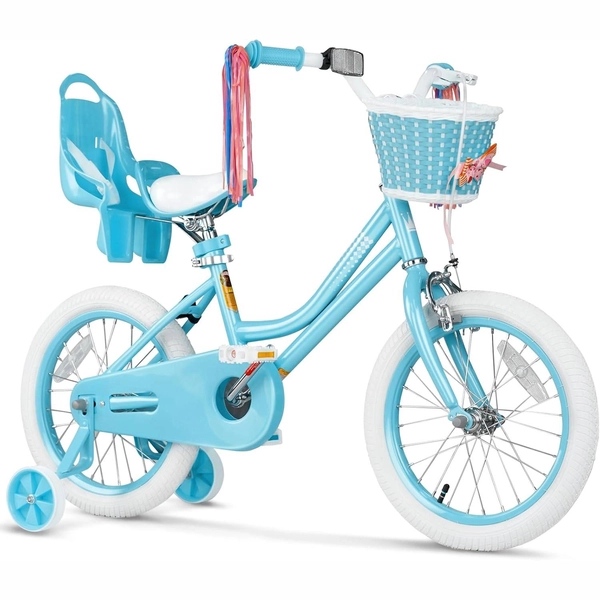
Blue XJD Girls Bike with Training Wheels – 12/14/16 Inch
If you're shopping for a first pedal bike for a daughter roughly 3 to 8 years ol…
Training Wheel Bikes Wheel Size 12 Inch / 14 Inch / 16 Inch Recommended Height 86–122 cm Training Wheels Yes 16 Inch -
Save 5%
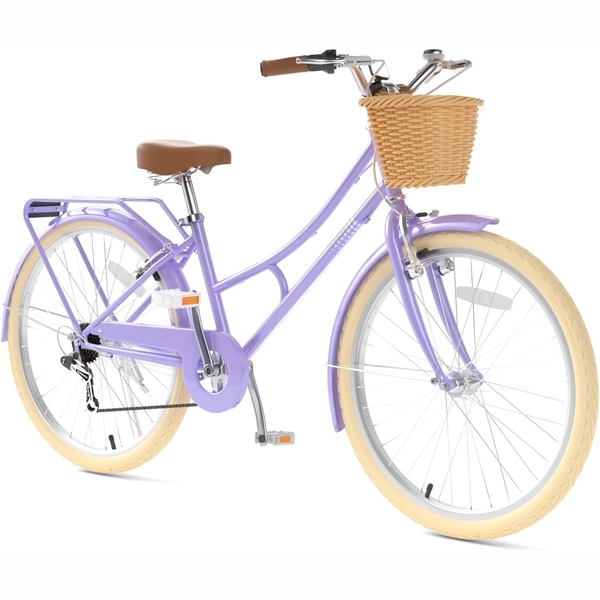
26-Inch XJD Beach Cruiser Bike for Girls – Purple, V-Brake
This XJD 26-inch purple beach cruiser is sized for big kids and teens — suggeste…
Beach Cruiser Bikes Wheel Size 20 Inch / 24 Inch / 26 Inch Recommended Height 122–200 cm Training Wheels No Geared Purple / 26 Inch -
Save 14%
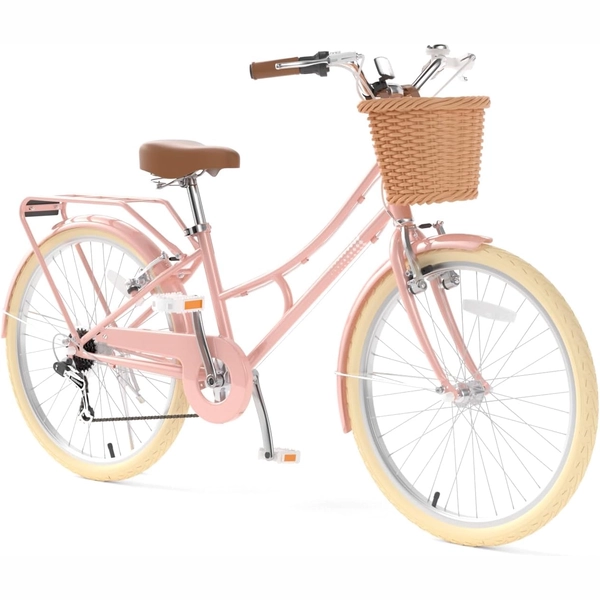
XJD Pink Beach Cruiser for Girls – Rear Rack & V-Brake
The XJD Pink Beach Cruiser for girls is the step-up bike for riders who've outgr…
Beach Cruiser Bikes Wheel Size 20 Inch / 24 Inch / 26 Inch Recommended Height 122–200 cm Training Wheels No Geared 20 Inch