When can a child ride a bike with stabilisers
A child can ride a bike with stabilisers when they can sit securely, steer, operate the brakes and follow simple instructions on a correctly fitted bike.
Readiness matters more than a birthday
Age is only a starting point. Before riding, the child should be able to hold the handlebar comfortably, look ahead while steering, keep both feet supported on the pedals and respond when asked to slow down or stop. They should also be willing to practise; stabilisers cannot compensate for fear, poor control or a bike that does not fit.
Start in a flat, open area away from traffic, slopes and obstacles. Stay close enough to intervene, and keep early sessions short. A properly fitting bicycle helmet should sit level and be secured with its straps according to the helmet manufacturer's instructions.
Measure height, then check the individual bike
Measure the child without shoes, standing upright against a wall. Record their total height. Then measure inseam from the floor to the crotch using a book held level between the legs. Height helps identify a possible wheel size; inseam helps you judge stand-over clearance and whether the child can mount and stop confidently.
Use the XBikes figures below only as starting points:
| Wheel size | Starting age | Rider height |
|---|---|---|
| 12 Inch | 3–4 | 34–40 in / 86–102 cm |
| 14 Inch | 3–6 | 37–45 in / 94–114 cm |
| 16 Inch | 4–7 | 40–48 in / 102–122 cm |
Where ranges overlap, do not choose by age or wheel diameter alone. Have the child try the exact bicycle. They need suitable stand-over clearance, a comfortable reach to the handlebar, access to the brake controls and enough control to start, steer and stop. Never buy an oversized bicycle merely for the child to grow into.
What to compare during a fit check
- Stand-over: The child should be able to straddle the bike securely rather than being forced onto tiptoes or against the frame.
- Reach: They should hold the handlebar without stretching, locking their elbows or leaning excessively forward.
- Brake control: Check that they can reach and operate the fitted brake controls while maintaining their grip and direction.
- Confidence: Ask them to mount, start, steer around a wide turn and stop under close supervision.
If any of these checks fail, adjust the bicycle only as its manual permits, try another suitable size, or ask a qualified bicycle mechanic for help. Do not treat stabilisers as a remedy for poor stand-over, excessive reach or inaccessible controls.
How stabilisers should help
Stabilisers can support a child who is ready to pedal and steer but is not yet confident balancing independently. They do not remove the need to learn controlled starting, turning and braking. Watch whether the child relies heavily on one stabiliser, tips during turns or cannot keep a predictable line; these signs call for a pause and a check of fit, setup and riding environment.
Follow the exact bicycle manual for assembly, stabiliser positioning, fastener checks, maintenance and compatibility. If the instructions are missing or the setup seems uneven or loose, use a qualified bicycle mechanic rather than guessing at a procedure or torque.
How the supplied XBikes options relate
The two catalog options help because each is offered in 12 Inch, 14 Inch and 16 Inch labels, covering the three smallest XBikes starting ranges shown above. The XJD Girls Bike for Kids Ages 3-8, 12/14/16 Inch with Training Wheels – Purple and Girls 12/14/16 Inch Kids Bike by XJD with Training Wheels – Peach therefore allow comparison at the candidate wheel size identified from measured height. Any age wording in a product title is a catalog label, not proof of fit.
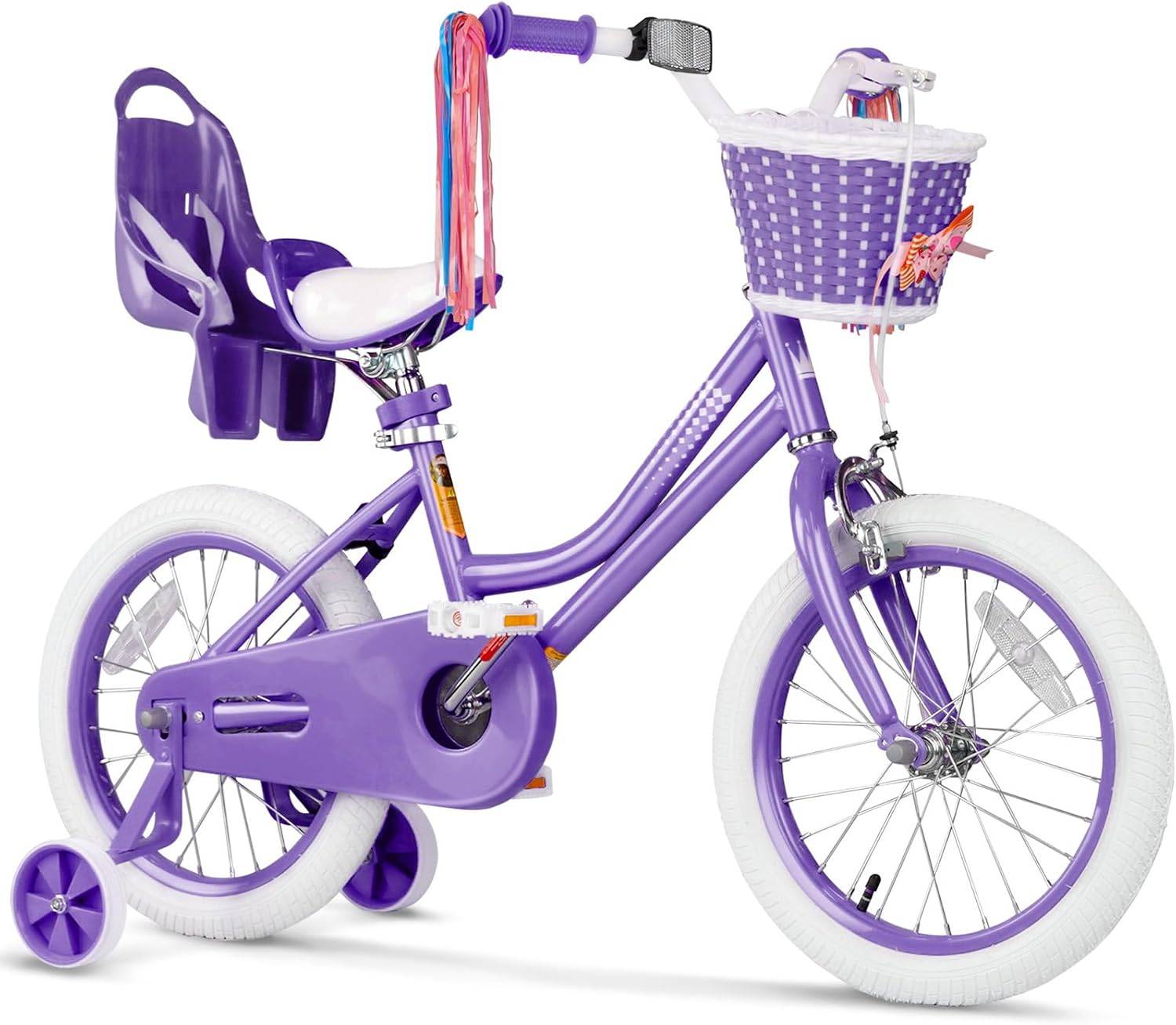 XJD Girls Bike for Kids Ages 3-8, 12/14/16 Inch with Training Wheels – Purple
Available in 12 Inch, 14 Inch and 16 Inch labels with training wheels. Use the child’s measured height to select a candidate size, then verify stand-over, reach and brake control on the exact bike.
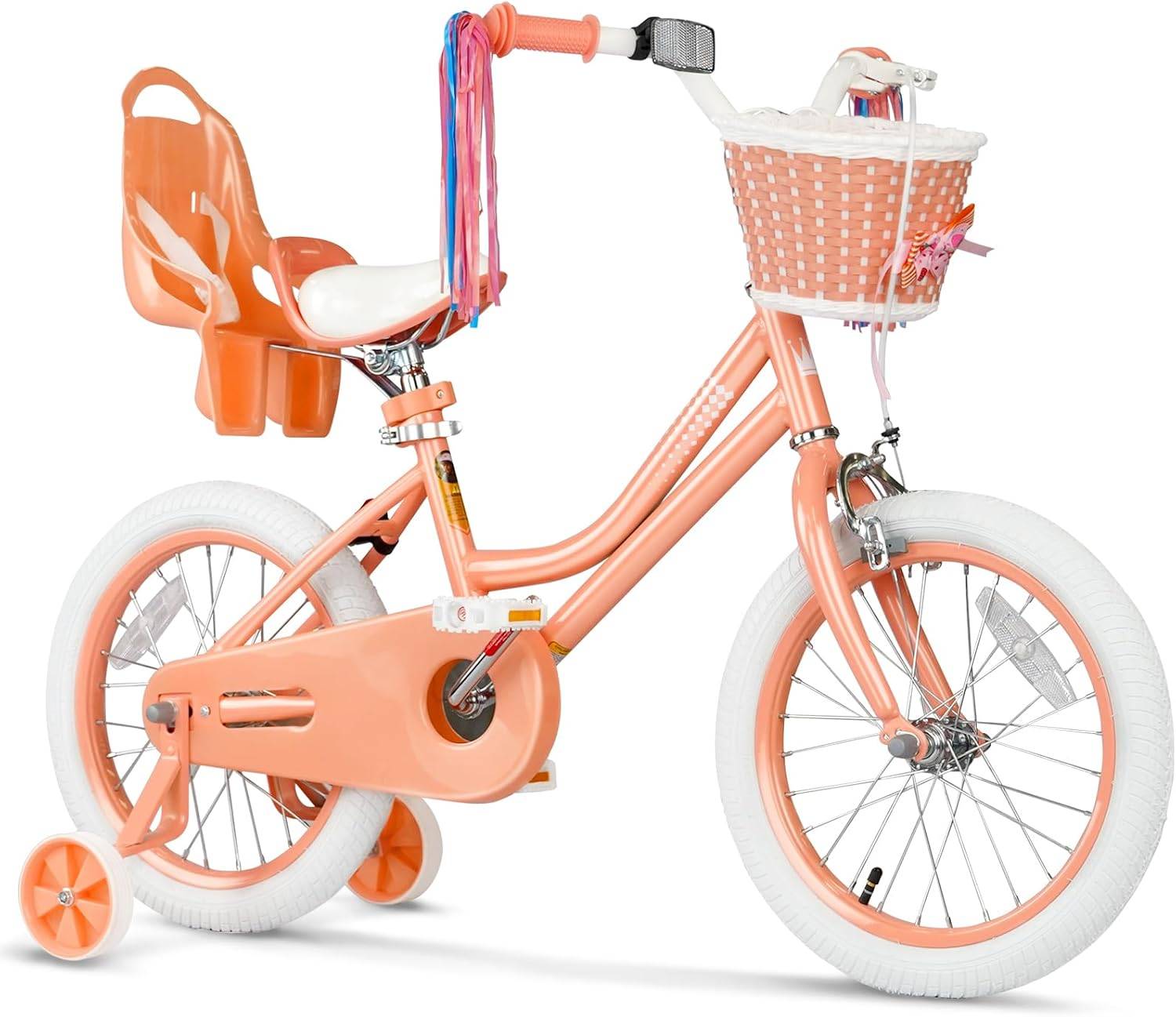 Girls 12/14/16 Inch Kids Bike by XJD with Training Wheels – Peach
This peach XJD option lists 12 Inch, 14 Inch and 16 Inch sizes with training wheels. Its title’s age wording is a catalog label; measured height and an individual fit check should guide selection.
Between these products, the supplied facts establish differences in exact title and colour wording, while both list the same three wheel-size options and training wheels. They do not establish dimensions such as stand-over or reach, brake type, weight, load limit or compatibility details. Confirm those points on the exact variant and in its manual before choosing.
Decide what to do next
- Measure the child's height and inseam.
- Use the table to identify a candidate wheel size, prioritising measured height over age.
- Have the child try that exact bicycle and check stand-over, reach, brake access and basic control.
- Confirm assembly and stabiliser setup from the product manual, or consult a qualified mechanic.
- Begin only on a flat, traffic-free practice area with a correctly fitted helmet and close adult supervision.
A child is ready to ride with stabilisers only when both parts of the decision agree: the child can control the bicycle, and the exact bicycle fits them now.
Recommended products
-
Save 12%
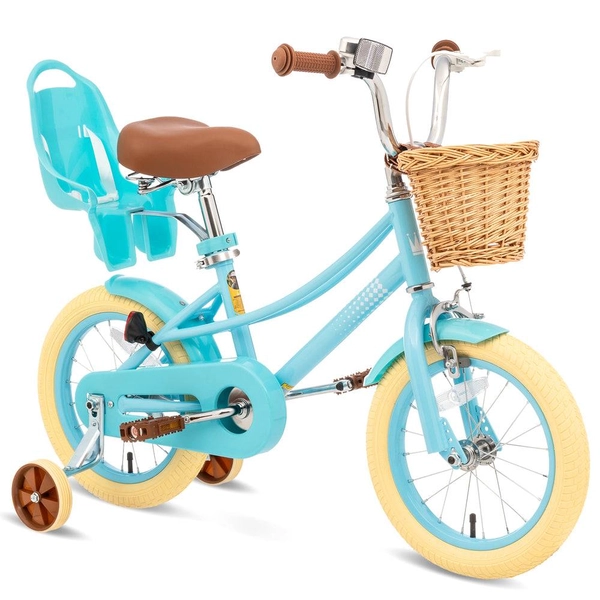
Girls' Training Wheel Bike by XJD, 12–20 Inch Wheels – Blue
This XJD girls' training wheel bike in Blue covers one of the widest fit ranges …
Training Wheel Bikes Wheel Size 12 Inch / 14 Inch / 16 Inch / 20 Inch Recommended Height 86–152 cm Training Wheels Yes 12 Inch -
Save 15%
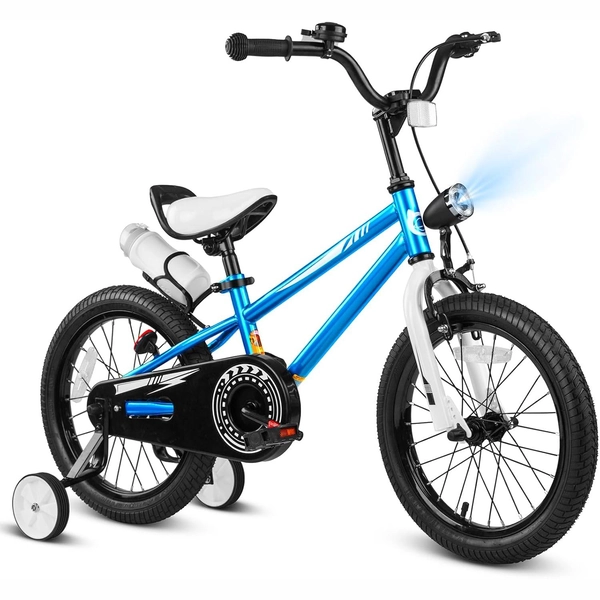
XJD Boys 12/14/16" Training Wheel Bike – Blue
The XJD Boys Bike in Blue is a training wheel bike for riders 71–122 cm tall—rou…
Training Wheel Bikes Wheel Size 12 Inch / 14 Inch / 16 Inch Recommended Height 86–122 cm Training Wheels Yes 16 Inch -
Save 15%
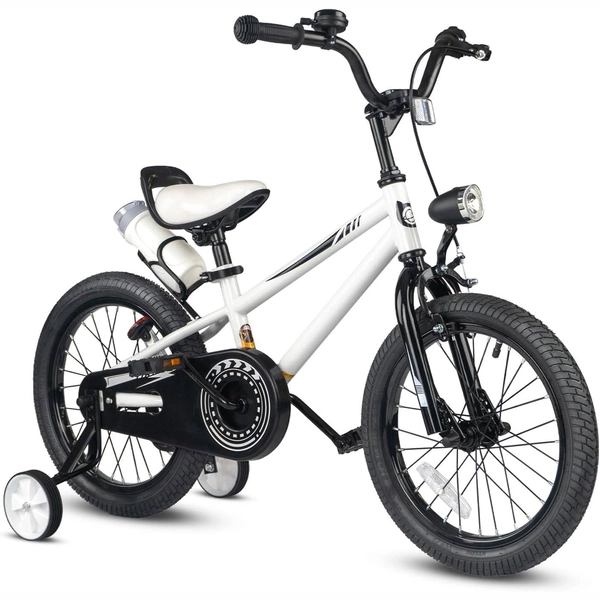
XJD Kids' Training Wheel Bike for Boys & Girls, 12/14/16 Inch – White
The XJD kids' training wheel bike in White is made for riders ages 3–8 (roughly …
Training Wheel Bikes Wheel Size 12 Inch / 14 Inch / 16 Inch Recommended Height 86–122 cm Training Wheels Yes 14 Inch -
Save 12%
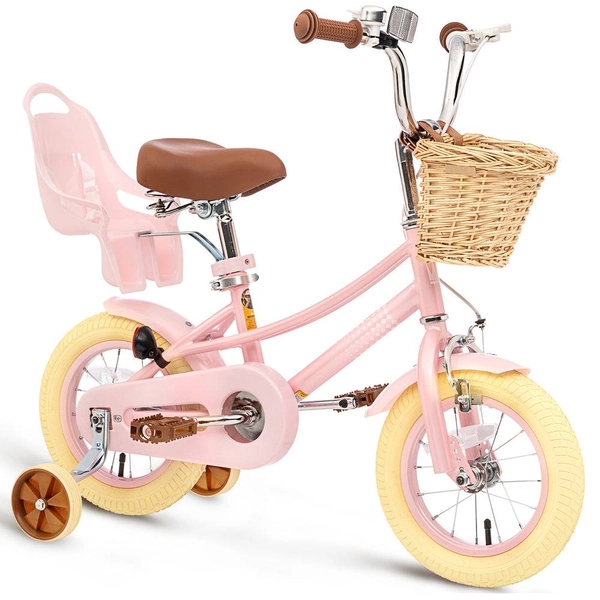
XJD Kids Bike for Girls – Pink, 12/14/16/20 Inch with Training Wheels
The XJD Kids Bike for Girls in Pink is a training-wheel bike built to carry your…
Training Wheel Bikes Wheel Size 12 Inch / 14 Inch / 16 Inch / 20 Inch Recommended Height 86–152 cm Training Wheels Yes 12 Inch