When do kids ride a bike with training wheels
Kids ride a bike with training wheels when they fit the bicycle, can reach its controls, and need support while learning to pedal and steer. Age is only a starting point: measure the child and check the actual bike before deciding.
When training wheels make sense
Training wheels are relevant when a child is ready to practice pedaling, steering and stopping but cannot yet keep a two-wheel bicycle balanced confidently. They should support learning, not compensate for a bicycle that is too large.
A child should be able to get on and off without struggling, remain comfortably positioned, steer without overreaching and operate the brakes with control. If fear, poor reach or an awkward riding position prevents those actions, reconsider the fit before assuming training wheels will solve the problem.
Measure before choosing a wheel size
- Measure standing height: Have the child stand straight without shoes against a wall. Record the measurement rather than relying on clothing size or age.
- Measure inseam: Measure from the floor to the crotch while the child stands naturally. Compare it with the stand-over space and usable seat adjustment on the exact bicycle.
- Check reach: On the bike, the child should reach the handlebar and turn it without stretching, locking the arms or losing a stable position.
- Check brake control: Confirm that the child can reach and operate the provided braking controls. Control matters more than merely touching them.
- Observe confidence: Look for calm starts, purposeful steering and willingness to stop on request. Hesitation may call for more supported practice or a fit reassessment.
The American Academy of Pediatrics advises having the child try the bicycle and avoiding an oversized model bought for future growth. Stand-over clearance, overall control and brake reach must be checked on the individual bike.
Compare the XBikes starting points
| Wheel size | Age starting point | Rider-height starting point |
|---|---|---|
| 12 Inch | 3–4 | 34–40 in / 86–102 cm |
| 14 Inch | 3–6 | 37–45 in / 94–114 cm |
| 16 Inch | 4–7 | 40–48 in / 102–122 cm |
These ranges overlap deliberately: two children of the same age may need different sizes. Start with measured height, then compare inseam, stand-over position, reach, brake operation and confidence on the exact model. Do not move up simply because the child is near a birthday or because a larger frame appears to offer longer use.
How the supplied bikes relate
The supplied catalog options help because both are training-wheel bikes offered in 12 Inch, 14 Inch and 16 Inch SKU labels, covering the three smallest XBikes starting points shown above. They let a parent compare listed sizes after measuring the rider; their catalog titles alone do not prove fit.
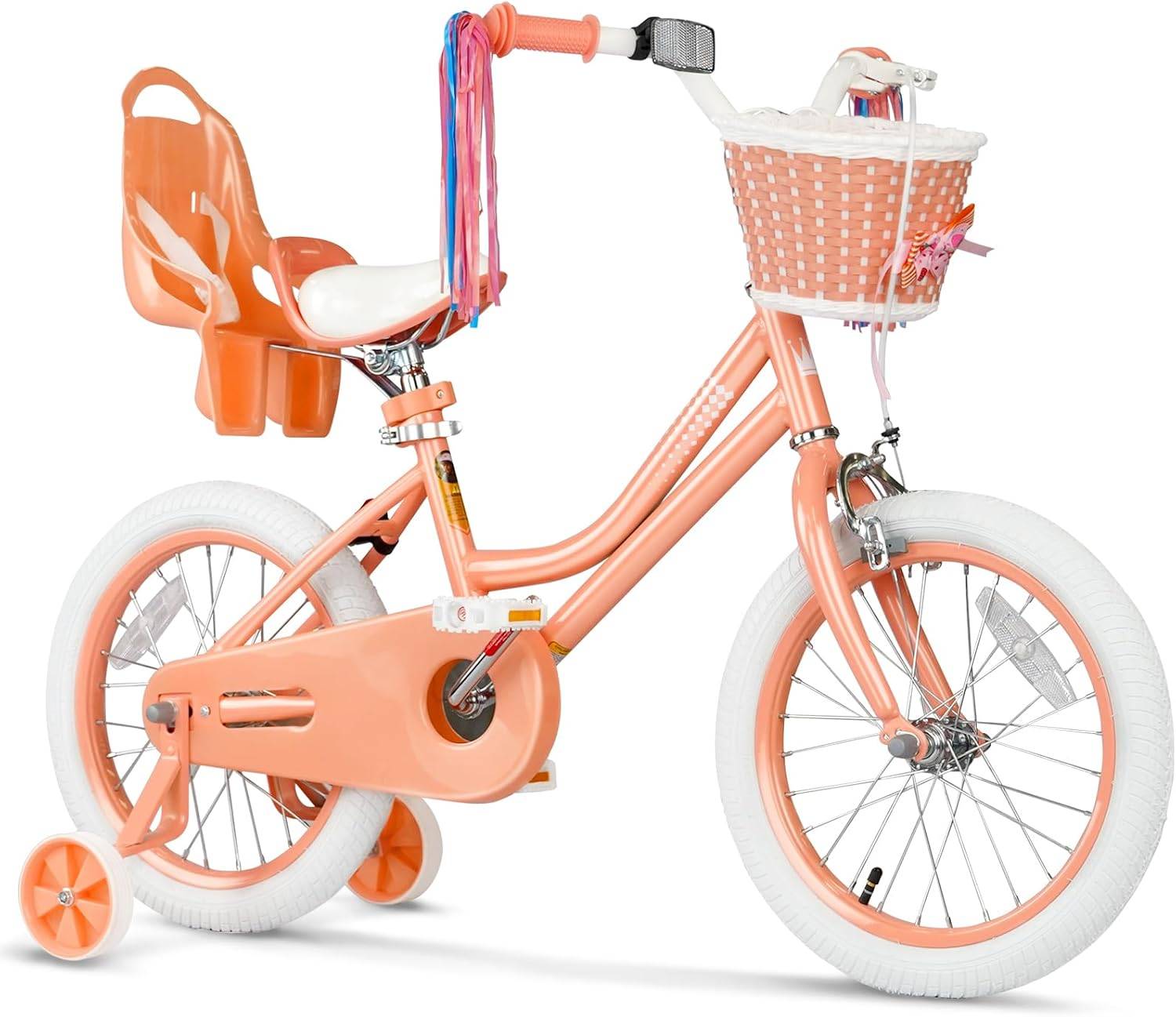 Girls 12/14/16 Inch Kids Bike by XJD with Training Wheels – Peach
A training-wheel bike with supplied 12 Inch, 14 Inch and 16 Inch options. Use the rider’s measured height and an individual fit check to identify which listed size may be relevant.
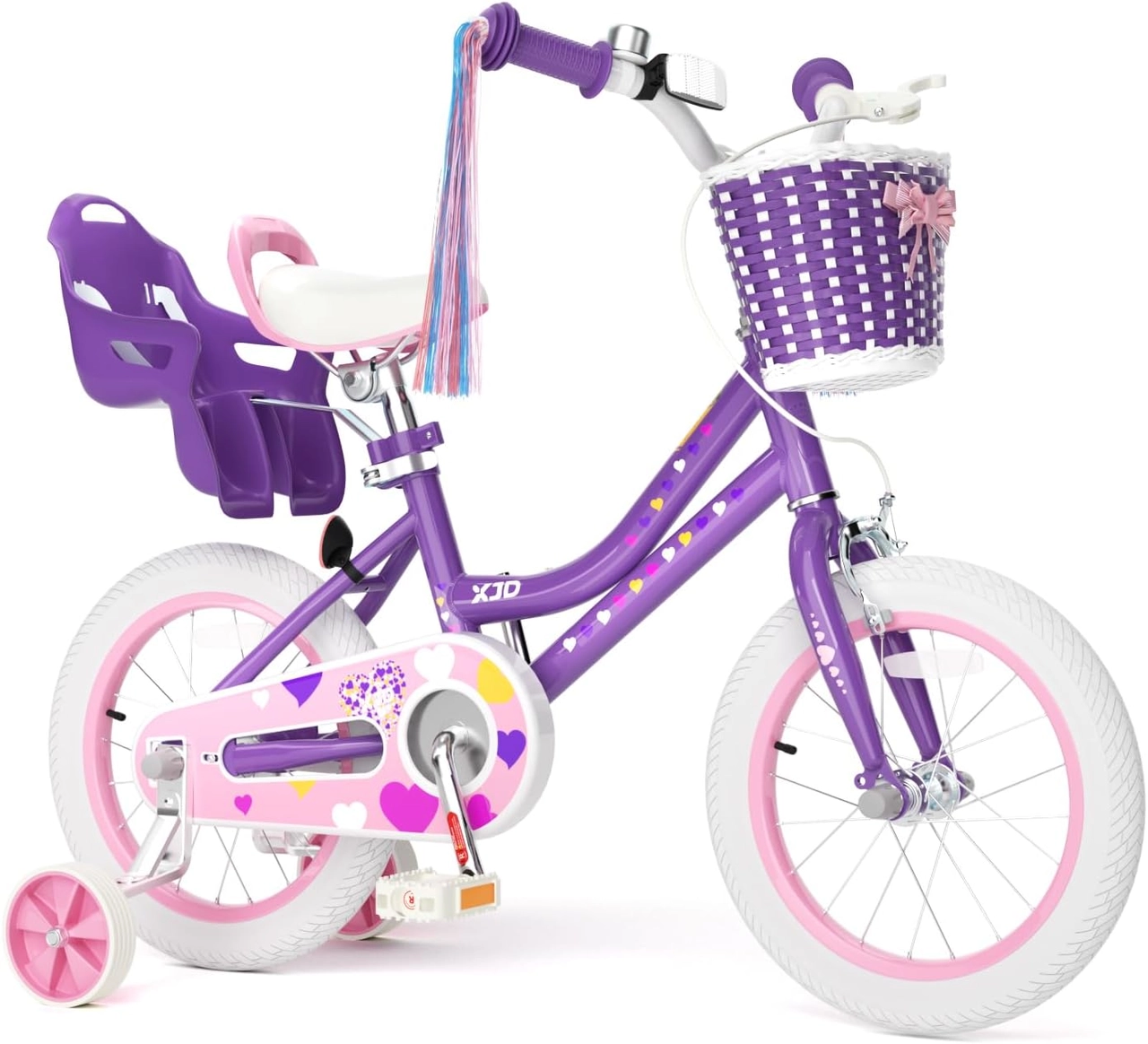 XJD Light Purple Girls Bike with Basket, Training Wheels, 12/14/16/20 Inch
A basket-equipped training-wheel listing with supplied 12 Inch, 14 Inch and 16 Inch options. Its title mentions 20 Inch, but that size is not among the supplied available SKU labels.
Girls 12/14/16 Inch Kids Bike by XJD with Training Wheels – Peach is available in supplied 12 Inch, 14 Inch and 16 Inch labels. Compare the rider’s measurements with the relevant starting range, then verify control on that exact bicycle.
XJD Light Purple Girls Bike with Basket, Training Wheels, 12/14/16/20 Inch also has supplied available SKU labels of 12 Inch, 14 Inch and 16 Inch. Although “20 Inch” appears in its exact catalog title, 20 Inch is not included in the supplied available labels, so do not assume that size is selectable.
Neither title establishes an age range, brake type, construction, weight or other fit detail. The colors and basket wording can distinguish the listings, but they do not replace the physical checks that determine whether a child should ride the bike.
Check readiness in a controlled practice area
- Choose a level area away from traffic, slopes and obstacles.
- Use a properly fitting bicycle helmet. The U.S. Consumer Product Safety Commission advises that it sit level, fit correctly and use its straps according to the helmet manufacturer’s instructions.
- Supervise the child and confirm that they can start, steer and stop at a manageable pace.
- Stop if the child repeatedly loses access to the controls, cannot remain properly positioned or appears overwhelmed.
Assembly and training-wheel setup can affect how the bicycle behaves. Follow the exact product manual for assembly, maintenance, compatibility and adjustments. If instructions are missing or the setup is uncertain, use a qualified bicycle mechanic rather than guessing at a procedure or torque.
When to move beyond training wheels
Consider removing the training wheels when the child pedals smoothly, steers where intended, stops on request and shows growing balance and confidence. Do not use a birthday as the deadline. Some children need more practice; others become ready quickly.
Before changing the setup, consult the exact bicycle manual or a qualified mechanic. After any change, repeat the fit and control checks in a level, traffic-free area with close supervision.
The next decision is simple: measure height and inseam today, compare 12, 14 or 16 Inch only where the measured range applies, and let the child try the exact bike. Choose training wheels only if the bike fits and balance support—not extra bicycle size—is what the child currently needs.
Recommended products
-
Save 11%
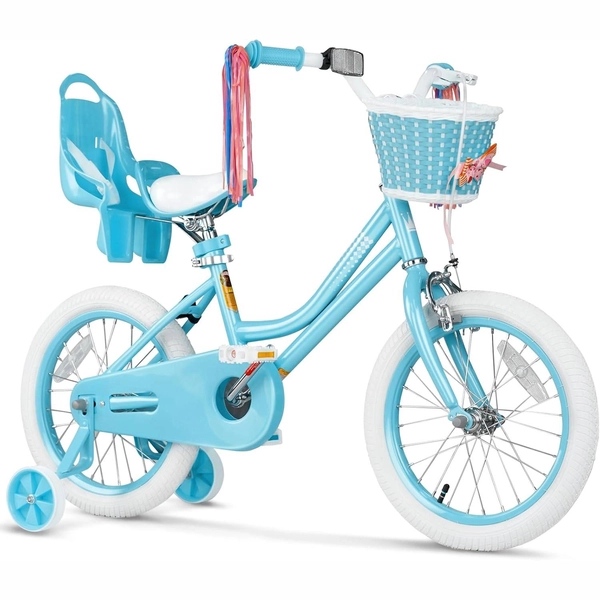
Blue XJD Girls Bike with Training Wheels – 12/14/16 Inch
If you're shopping for a first pedal bike for a daughter roughly 3 to 8 years ol…
Training Wheel Bikes Wheel Size 12 Inch / 14 Inch / 16 Inch Recommended Height 86–122 cm Training Wheels Yes 16 Inch -
Save 16%
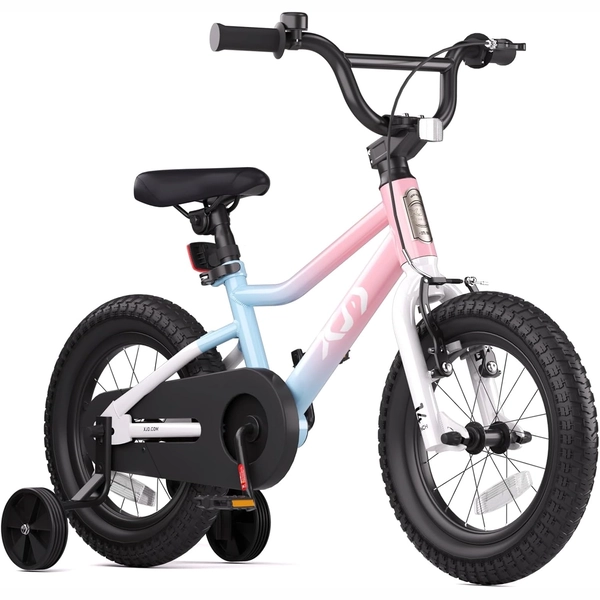
XJD Girls BMX Bike 12/14/16 Inch with Training Wheels – Pink Blue
The XJD Girls BMX Bike in Pink/Blue is built as a first pedal bike for kids roug…
Kids' BMX Bikes Wheel Size 12 Inch / 14 Inch / 16 Inch Recommended Height 86–122 cm Training Wheels Yes Single Speed 12 Inch -
Save 5%
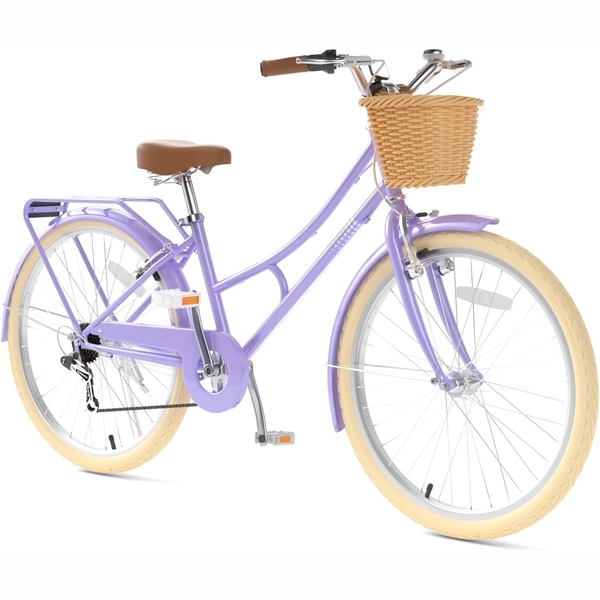
26-Inch XJD Beach Cruiser Bike for Girls – Purple, V-Brake
This XJD 26-inch purple beach cruiser is sized for big kids and teens — suggeste…
Beach Cruiser Bikes Wheel Size 20 Inch / 24 Inch / 26 Inch Recommended Height 122–200 cm Training Wheels No Geared Purple / 26 Inch -
Save 14%
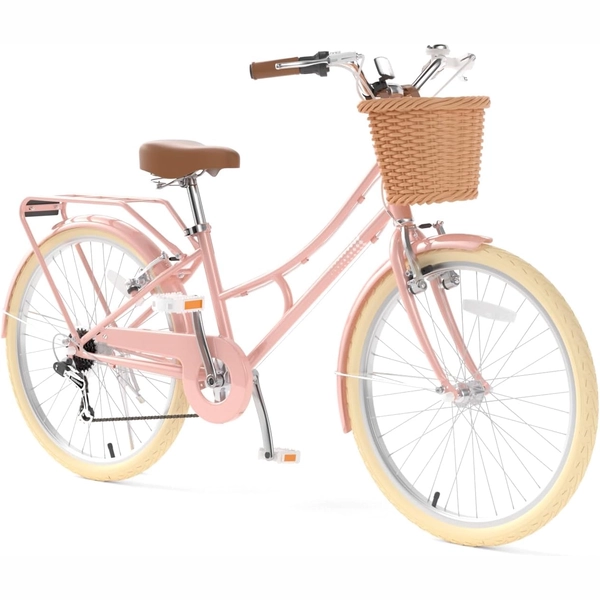
XJD Pink Beach Cruiser for Girls – Rear Rack & V-Brake
The XJD Pink Beach Cruiser for girls is the step-up bike for riders who've outgr…
Beach Cruiser Bikes Wheel Size 20 Inch / 24 Inch / 26 Inch Recommended Height 122–200 cm Training Wheels No Geared 20 Inch