When do kids ride a bike without training wheels
Kids ride without training wheels when they can balance, steer, brake and stop with control—not when they reach one fixed age. Fit and confidence matter most.
Look for skills, not a birthday
A child is ready to try two wheels when they can keep the bicycle upright while moving, look ahead while steering, and stop on purpose without panic. They should also understand basic directions and be willing to practise. Pressure or comparison with other children usually makes the transition harder.
Training wheels prevent the bicycle from leaning normally through turns, so using them successfully does not by itself prove that a child can balance. A more useful test is whether the rider can coast briefly with stable steering and place both feet down promptly when needed.
Measure the rider and check the bicycle
Measure the child's standing height without shoes. Also measure inseam from the floor to the crotch, then compare those measurements with the bicycle's actual geometry. Age is only a starting point.
Have the child try the bicycle. They need comfortable stand-over clearance, an unstrained reach to the handlebar, and reliable access to the brakes. They should be able to start, steer, stop and dismount without stretching or losing control. Do not choose an oversized bicycle merely to allow room for growth.
| Wheel size | XBikes age starting point | Rider-height starting point |
|---|---|---|
| 12 Inch | 3–4 | 34–40 in / 86–102 cm |
| 14 Inch | 3–6 | 37–45 in / 94–114 cm |
| 16 Inch | 4–7 | 40–48 in / 102–122 cm |
| 18 Inch | 5–9 | 43–52 in / 109–132 cm |
| 20 Inch | 7–12 | 48–60 in / 122–152 cm |
These ranges overlap because children have different proportions and abilities. Prioritize measured height, inseam, reach, brake control and present confidence over the age column.
Use a simple readiness check
Before removing the training wheels, watch the child complete these tasks in a flat, open area away from traffic:
- Start moving without needing to be pushed for the whole launch.
- Keep eyes forward and steer along a chosen path.
- Use the brakes deliberately and stop where requested.
- Put feet down and step off without falling over.
- Coast with steady posture rather than depending heavily on the training wheels.
If several of these remain difficult, continue building control. If the child can do them calmly and wants to proceed, a supervised two-wheel attempt is reasonable.
Make the first no-training-wheel session manageable
- Choose a smooth, level, traffic-free practice area with plenty of space.
- Fit a bicycle helmet so it sits level and secure, with its straps adjusted according to the helmet manufacturer's instructions.
- Keep sessions short. Practise controlled starts, straight coasting, gentle turns and purposeful stops.
- Support the child lightly at the torso if necessary, then release gradually. Avoid steering the handlebar for them because they need to feel and correct the bicycle's balance.
- Stop before fatigue or frustration begins to undermine control.
Any removal, adjustment or reinstallation of training wheels must follow the exact bicycle manual. If instructions are missing, parts do not align, or assembly is uncertain, use a qualified bicycle mechanic rather than improvising a procedure or torque setting.
How the supplied training-wheel bikes compare
These catalog options are relevant when a child still needs a training-wheel bicycle or when you are comparing available wheel-size labels before an individual fit check. Together they cover supplied 12, 14, 16 and 20 Inch choices, but their labels do not establish that a particular child is ready to ride without training wheels.
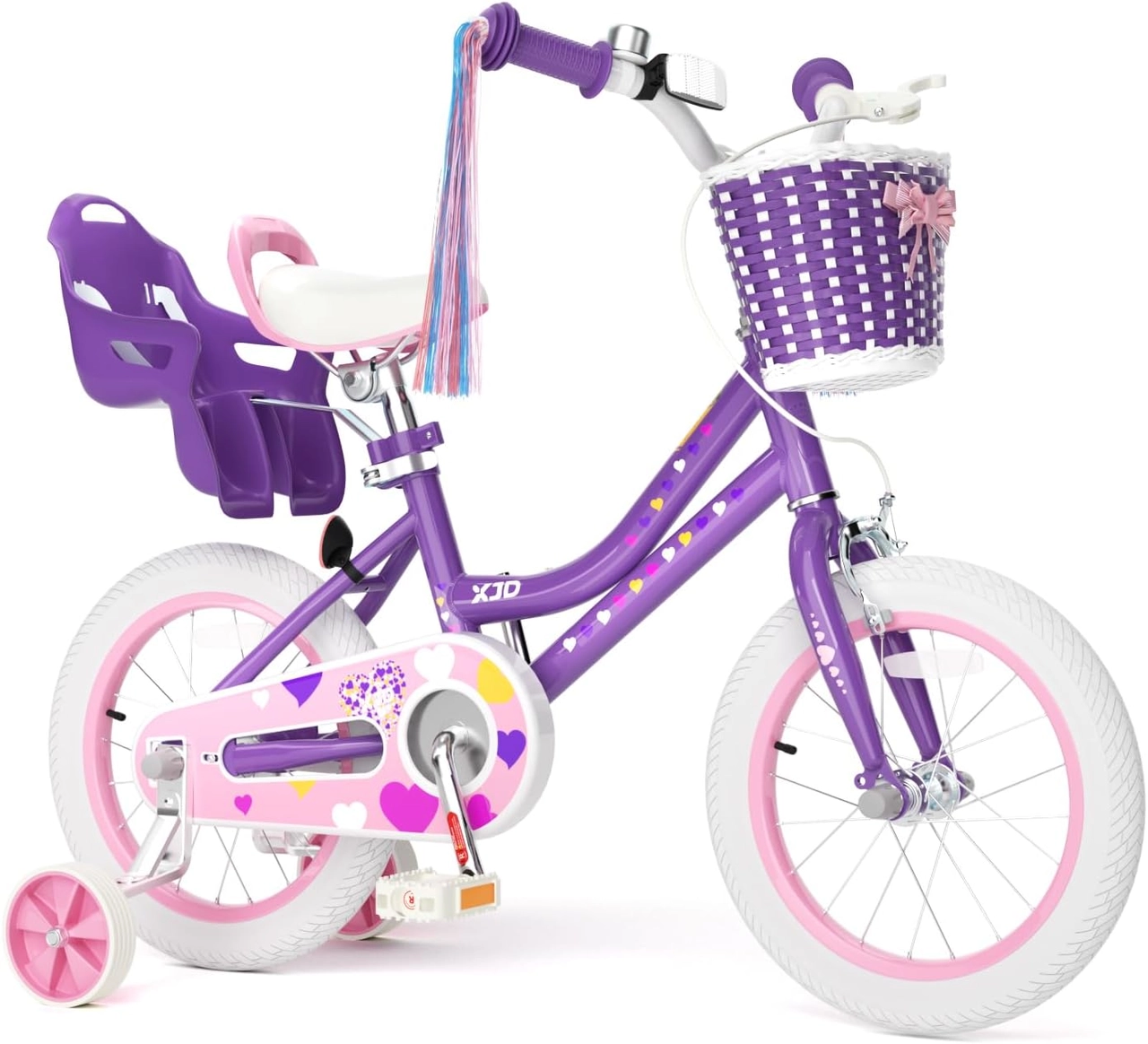 XJD Light Purple Girls Bike with Basket, Training Wheels, 12/14/16/20 Inch
Available in 12, 14 and 16 Inch SKUs, this training-wheel bike provides three catalog size labels to compare with the rider's measured height and individual fit.
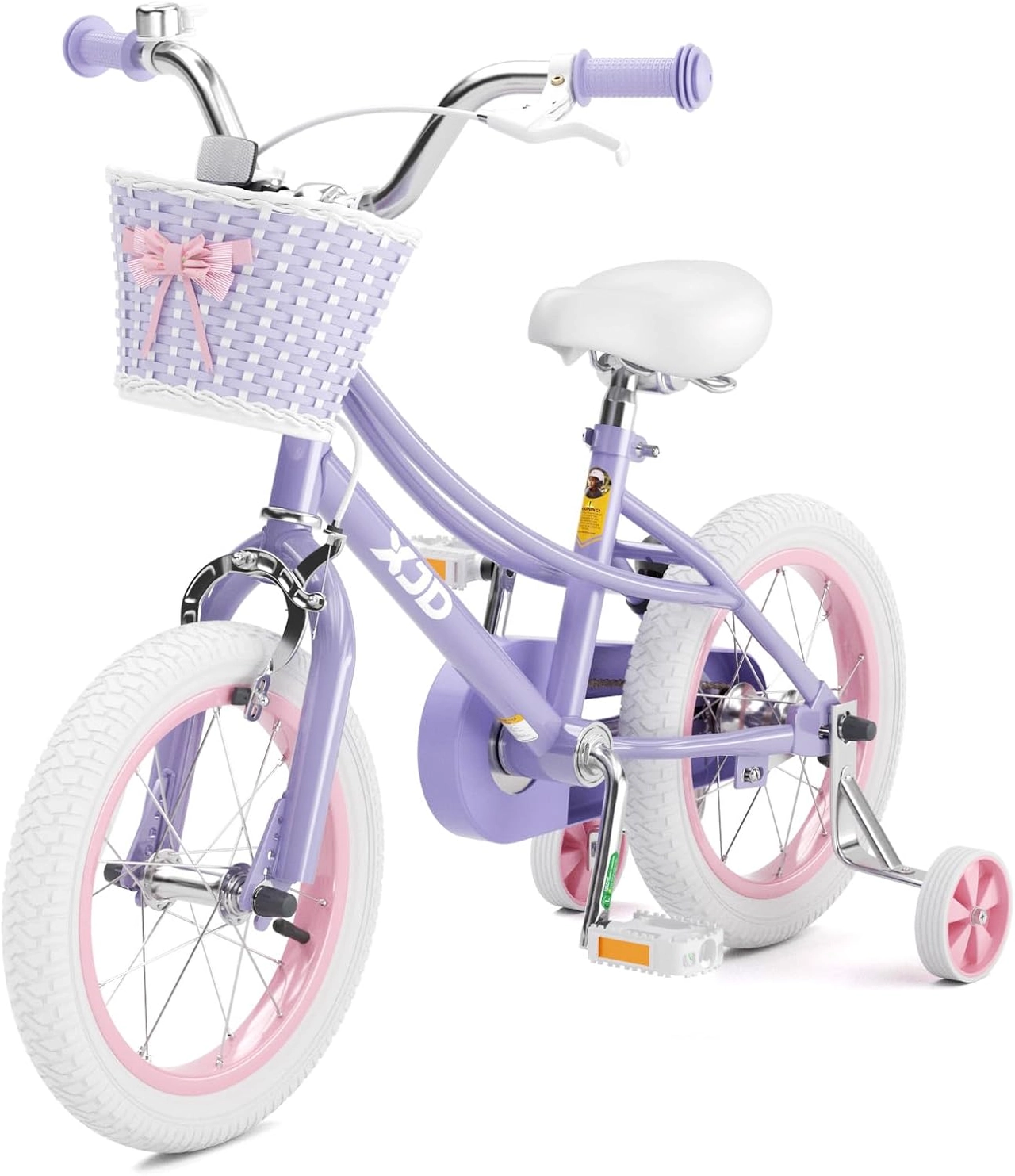 Girls' Training Wheel Bike by XJD with Basket – Purple
Its available 14, 16 and 20 Inch SKUs make this training-wheel bike relevant for comparing larger supplied size labels, subject to height, inseam, reach and control checks.
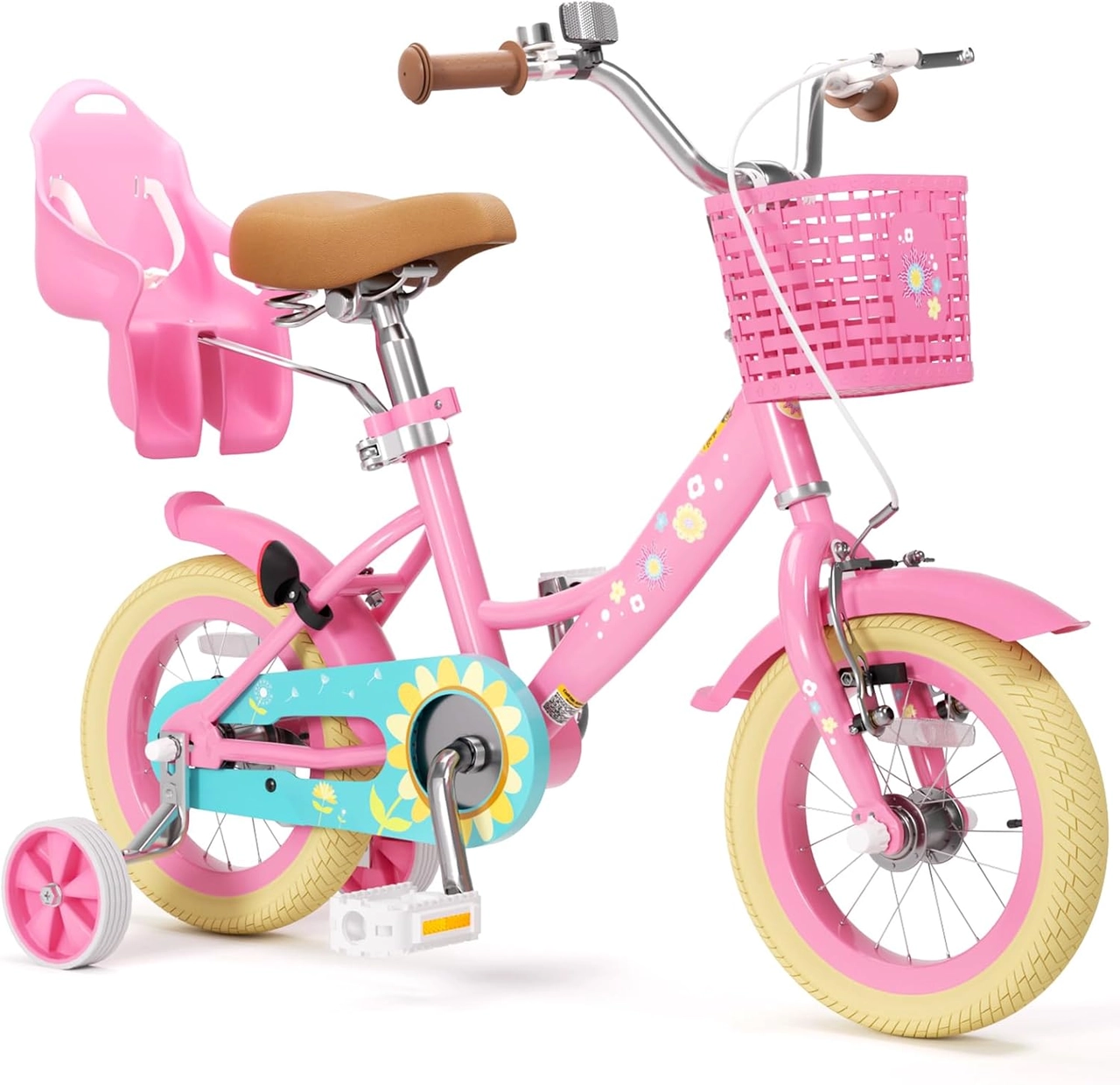 Flower Pink XJD Girls Bike with Doll Seat & Basket
Listed in 12, 14 and 16 Inch SKUs, this training-wheel bike is a comparison option for riders whose measurements align with those XBikes starting points and pass an individual fit check.
XJD Light Purple Girls Bike with Basket, Training Wheels, 12/14/16/20 Inch is listed in 12, 14 and 16 Inch SKUs. Girls' Training Wheel Bike by XJD with Basket – Purple is listed in 14, 16 and 20 Inch SKUs. Flower Pink XJD Girls Bike with Doll Seat & Basket is listed in 12, 14 and 16 Inch SKUs.
Compare the available label with the rider-height starting points, then confirm inseam, stand-over clearance, reach and brake control on the exact bicycle. A basket or doll seat may affect preference, but the supplied facts do not show that either feature changes fit or readiness.
Know when to wait or step back
Replace or retain the training wheels if the rider cannot stop reliably, cannot reach the controls comfortably, repeatedly tips while merely standing over the bicycle, or becomes frightened. Also pause if the bicycle is visibly damaged or its setup is uncertain; consult its manual or a qualified mechanic.
The decision is straightforward: remove the training wheels only after the child fits the bicycle, controls starting and braking, shows emerging balance, and willingly attempts two wheels in a protected practice area.
Recommended products
-
Save 11%
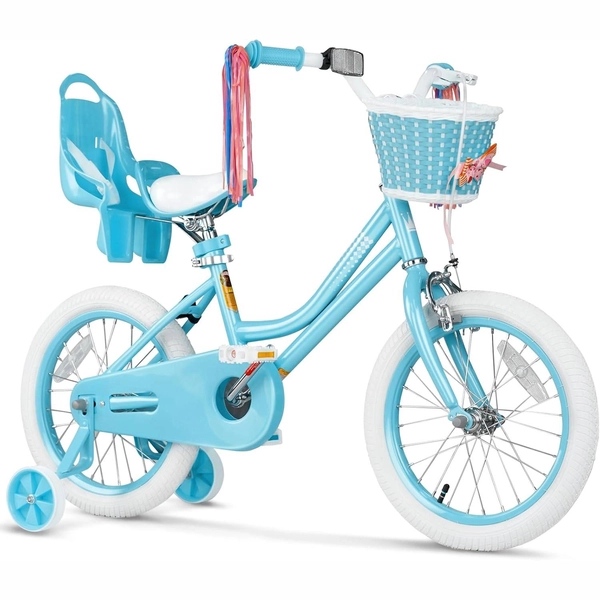
Blue XJD Girls Bike with Training Wheels – 12/14/16 Inch
If you're shopping for a first pedal bike for a daughter roughly 3 to 8 years ol…
Training Wheel Bikes Wheel Size 12 Inch / 14 Inch / 16 Inch Recommended Height 86–122 cm Training Wheels Yes 16 Inch -
Save 16%
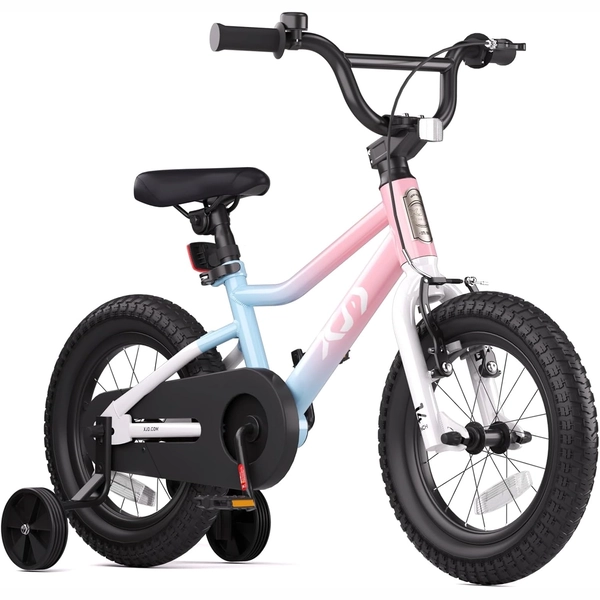
XJD Girls BMX Bike 12/14/16 Inch with Training Wheels – Pink Blue
The XJD Girls BMX Bike in Pink/Blue is built as a first pedal bike for kids roug…
Kids' BMX Bikes Wheel Size 12 Inch / 14 Inch / 16 Inch Recommended Height 86–122 cm Training Wheels Yes Single Speed 12 Inch -
Save 5%
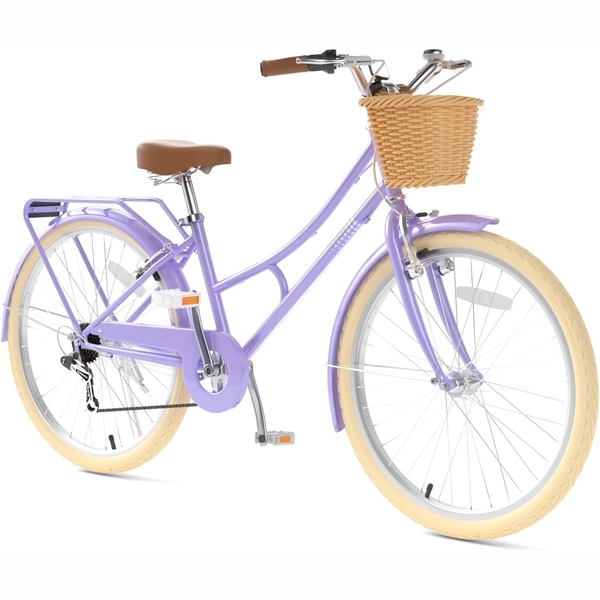
26-Inch XJD Beach Cruiser Bike for Girls – Purple, V-Brake
This XJD 26-inch purple beach cruiser is sized for big kids and teens — suggeste…
Beach Cruiser Bikes Wheel Size 20 Inch / 24 Inch / 26 Inch Recommended Height 122–200 cm Training Wheels No Geared Purple / 26 Inch -
Save 14%
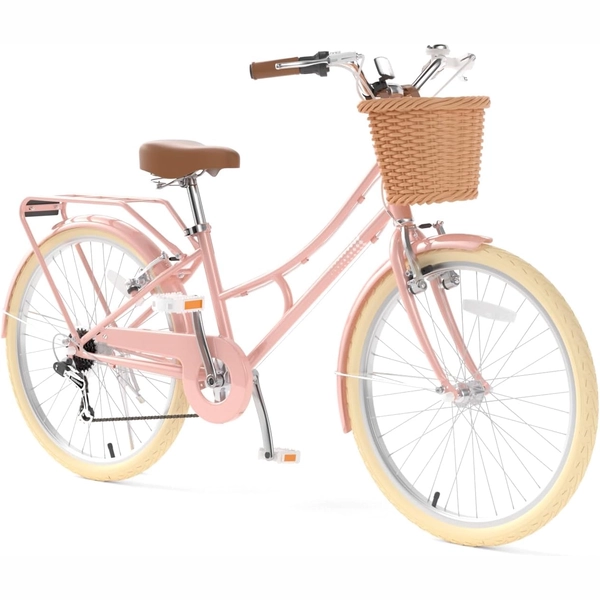
XJD Pink Beach Cruiser for Girls – Rear Rack & V-Brake
The XJD Pink Beach Cruiser for girls is the step-up bike for riders who've outgr…
Beach Cruiser Bikes Wheel Size 20 Inch / 24 Inch / 26 Inch Recommended Height 122–200 cm Training Wheels No Geared 20 Inch