

What inch bike does a 4 year old need
Most 4-year-olds need a 12-, 14-, or 16-inch bike. Measure your child’s height first, then confirm inseam clearance, reach, braking control, and confidence on the actual bike.
Choose the wheel size from measured height
Age gives you a starting point, but height narrows the choice more reliably. Under the XBikes starting points, a 4-year-old may fall within three overlapping sizes:
| Wheel size | Starting age range | Rider height |
|---|---|---|
| 12 Inch | 3–4 | 34–40 in / 86–102 cm |
| 14 Inch | 3–6 | 37–45 in / 94–114 cm |
| 16 Inch | 4–7 | 40–48 in / 102–122 cm |
Measure the child without shoes, standing upright against a wall. Compare that measurement with the ranges above. If the child is under 40 inches, begin by trying 12- or 14-inch bikes. At 40 inches or taller, include a 16-inch bike in the fit comparison.
The ranges overlap deliberately: wheel diameter alone does not establish fit, and two bicycles with the same wheel label can feel different. Never move up solely because the child has turned four or because a larger bicycle might last longer.
Measure inseam and check stand-over clearance
For inseam, have the child stand against a wall with feet slightly apart. Place a rigid book between the legs, raise it gently to simulate a saddle, and measure from the floor to the book’s top edge. Keep this measurement available when checking the exact bicycle or its manual.
Have the child straddle the bicycle while standing over its frame. There should be usable clearance rather than contact with the frame. The child should also be able to mount and dismount without the bicycle becoming difficult to control. Because no model-specific stand-over measurements are supplied here, compare the measured inseam directly with the actual assembled bicycle instead of assuming that a wheel label guarantees clearance.
Confirm reach, brakes, and control
A suitable bicycle lets the child sit in a stable position, reach the handlebar without an exaggerated forward stretch, and turn it comfortably. If the bicycle has hand-operated brake controls, the child must be able to reach and operate them while maintaining control. Check the exact product manual for model-specific operation and adjustment information.
Ask the child to start, stop, steer, and get on and off in a controlled area. Current confidence matters: a hesitant beginner may control a smaller fitting option more easily than a larger one within the same height overlap. Do not buy an oversized bicycle for growth. If neither candidate permits comfortable control, keep looking rather than treating the size chart as permission to compromise.
How the supplied XBikes options compare
Both supplied catalog models offer the three sizes most relevant to a 4-year-old comparison. The Light Pink XJD Girls' Bicycle with Basket & Training Wheels has 12 Inch, 14 Inch, 16 Inch, and 20 Inch SKU labels. The Blue XJD Girls Bike with Training Wheels – 12/14/16 Inch has 12 Inch, 14 Inch, and 16 Inch SKU labels.
These particular options help answer the title because each lets you compare 12-, 14-, and 16-inch labeled choices against the child’s measurements; both are categorized as Training Wheel Bikes. The first model also has a 20 Inch option, but the XBikes starting point for 20 Inch is ages 7–12 and heights 48–60 in / 122–152 cm, so it is not the normal starting comparison for a 4-year-old.
 Light Pink XJD Girls' Bicycle with Basket & Training Wheels
Offers 12 Inch, 14 Inch, and 16 Inch labels relevant to the usual comparison for a 4-year-old, plus a 20 Inch label that should be considered only against the supplied height standard and an individual fit check.
 Blue XJD Girls Bike with Training Wheels – 12/14/16 Inch
Its available 12 Inch, 14 Inch, and 16 Inch labels cover the three XBikes starting ranges that can include age four. The correct choice still depends on measured height, inseam, reach, brake control, and confidence.
Training wheels do not make an incorrectly sized bicycle fit. Choose the wheel-size label only after checking the individual bicycle for stand-over clearance, reach, brake control, and manageable handling. Follow the exact product manual for assembly and maintenance, or use a qualified bicycle mechanic where needed.
Complete the fit and helmet check
- Record the child’s standing height and inseam.
- Use height to shortlist 12, 14, or 16 Inch.
- Have the child try each plausible size rather than ordering larger for future growth.
- Check stand-over clearance, mounting, reach, steering, stopping, and brake operation.
- Choose only the size the child can control confidently now.
A bicycle helmet is essential, but its label alone is not enough: it must fit properly, sit level, and have its straps used according to the helmet manufacturer’s instructions. Recheck the fit before every ride.
For this 4-year-old, the next step is simple: measure height and inseam today, shortlist the matching 12-, 14-, or 16-inch options, and select only after a successful hands-on fit and control check.
Bikes for your next adventure
-
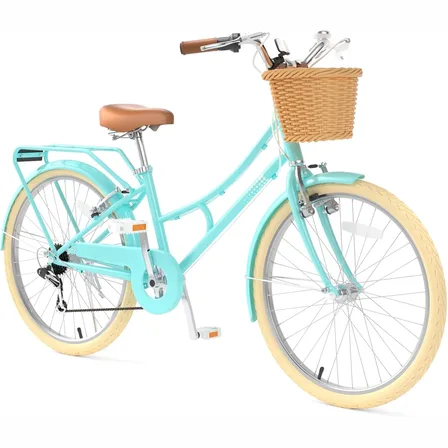
XJD 24-Inch Green Beach Cruiser Bike with U-Brake
This XJD 24-inch beach cruiser in green is made for riders about 4'8" to 5'4" ta…$159.99
$199.99 -
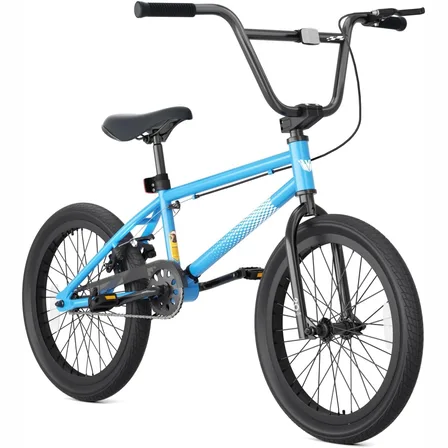
Blue XJD Freestyle BMX Bike, 20-Inch – No Pegs
The XJD 20-Inch Blue Freestyle BMX is an entry-level BMX bike for boys and girls…$189.99
-

Light Purple XJD Toddler Bike Helmet, Adjustable, Size XS (46–51 cm)
This Light Purple XJD toddler bike helmet is made for the smallest riders — the …$20.39