

What inch bike for 4 year old
For most 4-year-olds, start by comparing a 12-inch and 14-inch bike. Consider 16-inch only if the child is at least 40 inches (102 cm) tall and passes an individual fit check.
Choose by measured height, not birthday
Wheel size is a useful starting point, but age alone cannot determine fit. Measure the child without shoes, standing straight against a wall, from the floor to the top of the head. Then compare that result with the XBikes ranges below.
| Wheel size | XBikes age starting point | Rider height |
|---|---|---|
| 12 Inch | Ages 3–4 | 34–40 in / 86–102 cm |
| 14 Inch | Ages 3–6 | 37–45 in / 94–114 cm |
| 16 Inch | Ages 4–7 | 40–48 in / 102–122 cm |
A child between 37 and 40 inches falls within both the 12-inch and 14-inch starting ranges. That overlap is a signal to try both sizes, not a reason to choose the larger one automatically. At 40 inches or taller, 16-inch becomes a comparison option, but it should not replace an actual fit and control check.
Measure inseam and check stand-over
Height narrows the options; inseam helps reveal whether the frame is manageable. With the child wearing normal riding shoes, have them stand with their feet slightly apart. Place a firm, thin book between the legs, gently raise it to simulate a saddle, and measure from the floor to the book's top edge.
Compare that measurement with the bicycle's stand-over and saddle information from the exact product manual. The child should be able to straddle the bicycle comfortably rather than being forced against the frame. Because the supplied catalog facts do not include frame geometry or saddle-height ranges, wheel diameter alone cannot confirm this part of the fit.
Do a hands-on control check
Have the child try the assembled bicycle before deciding whenever possible. Stabilize it while they sit naturally, place their hands on the grips and turn the handlebar in both directions. Check that they can reach and operate the brakes without stretching, twisting their wrists awkwardly or losing their grip.
Also watch their reach to the handlebar and their general confidence while starting, stopping and steering. A bike that matches the height chart can still be unsuitable if the child cannot control it. Do not buy an oversized bicycle merely to allow room for growth; manageable fit now matters more than predicted future use.
How the supplied bikes help with the comparison
All three supplied catalog options are training-wheel bikes with 12-inch, 14-inch and 16-inch SKU labels, so they let a parent compare the three sizes most likely to surround a 4-year-old's measurements. Their titles and size labels identify comparison choices, but they do not establish individual fit.
 XJD Kids' Training Wheel Bike for Boys & Girls, 12/14/16 Inch – White
Offers supplied 12-inch, 14-inch and 16-inch SKU labels, making it relevant for comparing the principal XBikes size starting points around age four. Individual height, inseam, reach and control still determine fit.
 Girls' Training Wheel Bike by XJD, 12–20 Inch Wheels – Blue
Includes supplied 12-inch, 14-inch, 16-inch and 20-inch SKU labels. The first three may merit comparison for a 4-year-old; the 20-inch XBikes starting range begins at ages 7–12 and 48 inches tall.
 XJD Girls' Bike with Training Wheels, 12/14/16/20 Inch – Purple
Provides supplied 12-inch, 14-inch, 16-inch and 20-inch choices. Its smaller three labels help compare likely options, while the child's measurements and hands-on control check must decide suitability.
XJD Kids' Training Wheel Bike for Boys & Girls, 12/14/16 Inch – White is listed with 12-inch, 14-inch and 16-inch options. It is relevant when the child's measured height places those sizes under consideration.
Girls' Training Wheel Bike by XJD, 12–20 Inch Wheels – Blue also supplies 12-inch, 14-inch and 16-inch choices, plus a 20-inch SKU. The 20-inch option is not a normal match for this question: the XBikes starting point for 20-inch is ages 7–12 and heights of 48–60 inches (122–152 cm).
XJD Girls' Bike with Training Wheels, 12/14/16/20 Inch – Purple has the same supplied size-label range: 12, 14, 16 and 20 inches. For a typical 4-year-old comparison, focus on the child's measured fit among the first three rather than treating every listed SKU as age-appropriate.
Training wheels do not correct poor fit
Training wheels may be part of these products' format, but they do not make an oversized frame, long reach or inaccessible brake controls suitable. Current confidence should influence the decision alongside height and inseam. A hesitant rider may handle a correctly fitted smaller option more comfortably than a larger bicycle selected for future growth.
For assembly, adjustment, maintenance, load limits, compatibility and torque requirements, follow the exact product manual or use a qualified bicycle mechanic. Those details are not present in the supplied catalog facts and should not be guessed.
Make the final 12-, 14- or 16-inch decision
- Measure standing height and inseam.
- Use 12-inch at 34–40 inches, 14-inch at 37–45 inches and 16-inch at 40–48 inches only as starting points.
- Try each plausible size and compare stand-over, handlebar reach, steering, brake reach and the child's confidence.
- Reject any option the child cannot comfortably control, even if its age range appears to match.
Before riding, provide a bicycle helmet that fits properly, sits level and has its straps adjusted according to the helmet manufacturer's instructions. For a 4-year-old, choose the 12-, 14- or 16-inch bike that fits and can be controlled today—not the largest size they may eventually grow into.
Bikes for your next adventure
-

Pink Girls' 12/14/16" Bike by XJD – Basket & Doll Seat
The XJD Pink Girls' Bike with Basket & Doll Seat is made for riders 71–122 cm ta…$75.99
$99.99 -

XJD Girls Bike for Kids Ages 3-8, 12/14/16 Inch with Training Wheels – Purple
The XJD Girls Bike in Purple is a training-wheel bicycle for kids ages 3 to 8, f…$149
$169 -
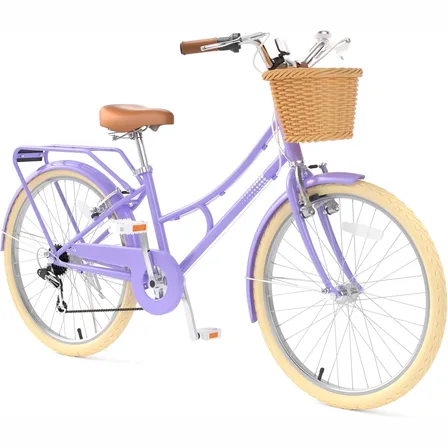
24-Inch Purple XJD Beach Cruiser Bike with U-Brake
The XJD 24-Inch Purple Beach Cruiser is built for girls and young women roughly …$159.99