

What inch bike for a 4 year old
For a 4-year-old, start with a 14-inch bike at 37–45 in (94–114 cm) tall or a 16-inch bike at 40–48 in (102–122 cm). A smaller rider at 34–40 in (86–102 cm) may still fit a 12-inch bike. Measure first, then confirm the child can stand over, reach, steer and brake comfortably.
Choose the starting size by measured height
Age four sits where three XBikes size ranges overlap. That is why age alone cannot settle the choice. Measure the child without shoes, standing straight against a wall, and compare the result with these starting points:
| Wheel size | XBikes age starting point | Rider height |
|---|---|---|
| 12 Inch | Ages 3–4 | 34–40 in / 86–102 cm |
| 14 Inch | Ages 3–6 | 37–45 in / 94–114 cm |
| 16 Inch | Ages 4–7 | 40–48 in / 102–122 cm |
Use the child’s actual height, not the upper end they may reach later. If the measurement falls within two ranges, compare both sizes in person rather than automatically selecting the larger one.
Measure inseam and check stand-over
Height narrows the options, but inseam helps reveal whether the frame is manageable. With the child wearing normal riding shoes, measure from the floor to the crotch. When trying the bike, have the child straddle the top tube with both feet on the ground.
They should be able to stand over the frame without the bicycle forcing them onto their toes or pressing uncomfortably upward. Frame shapes vary, so wheel diameter and the height table cannot guarantee stand-over clearance. Do not buy an oversized bicycle merely to leave growing room.
Test reach, steering and brake control
Seat the child in a normal riding position while an adult steadies the bicycle. The child should reach the handlebars without stretching, locking the elbows or leaning far forward. Ask them to turn the bars both ways and check that their knees and body remain comfortable.
Next, confirm that the child can operate the bicycle’s actual brakes. Their hands must reach and control the available brake controls without losing their grip or shifting into an unstable position. Follow the exact product manual for brake adjustment, assembly, compatibility, maintenance and any torque or load requirements; use a qualified bicycle mechanic when the instructions or fit are uncertain.
How confidence changes the decision
Current confidence matters alongside body measurements. A cautious beginner needs a bike that feels easy to hold upright, start, stop and steer. A confident rider still needs proper stand-over clearance, reach and brake control; confidence does not make an oversized frame suitable.
Let the child try each plausible size in a controlled area. Have them demonstrate a stable start, a deliberate stop, a turn in each direction and the ability to put a foot down promptly. If control deteriorates on the larger option, choose the smaller properly fitting bike rather than buying ahead for growth.
Relevant 12-, 14- and 16-inch catalog options
The XJD Pink Girls' Bike – Kids 12/14/16 Inch Training Wheel Bicycle is relevant because its supplied size labels include all three wheel sizes commonly worth comparing for a four-year-old: 12 Inch, 14 Inch and 16 Inch. These are separate size choices, not interchangeable fits, and the product is categorized as a training wheel bike.
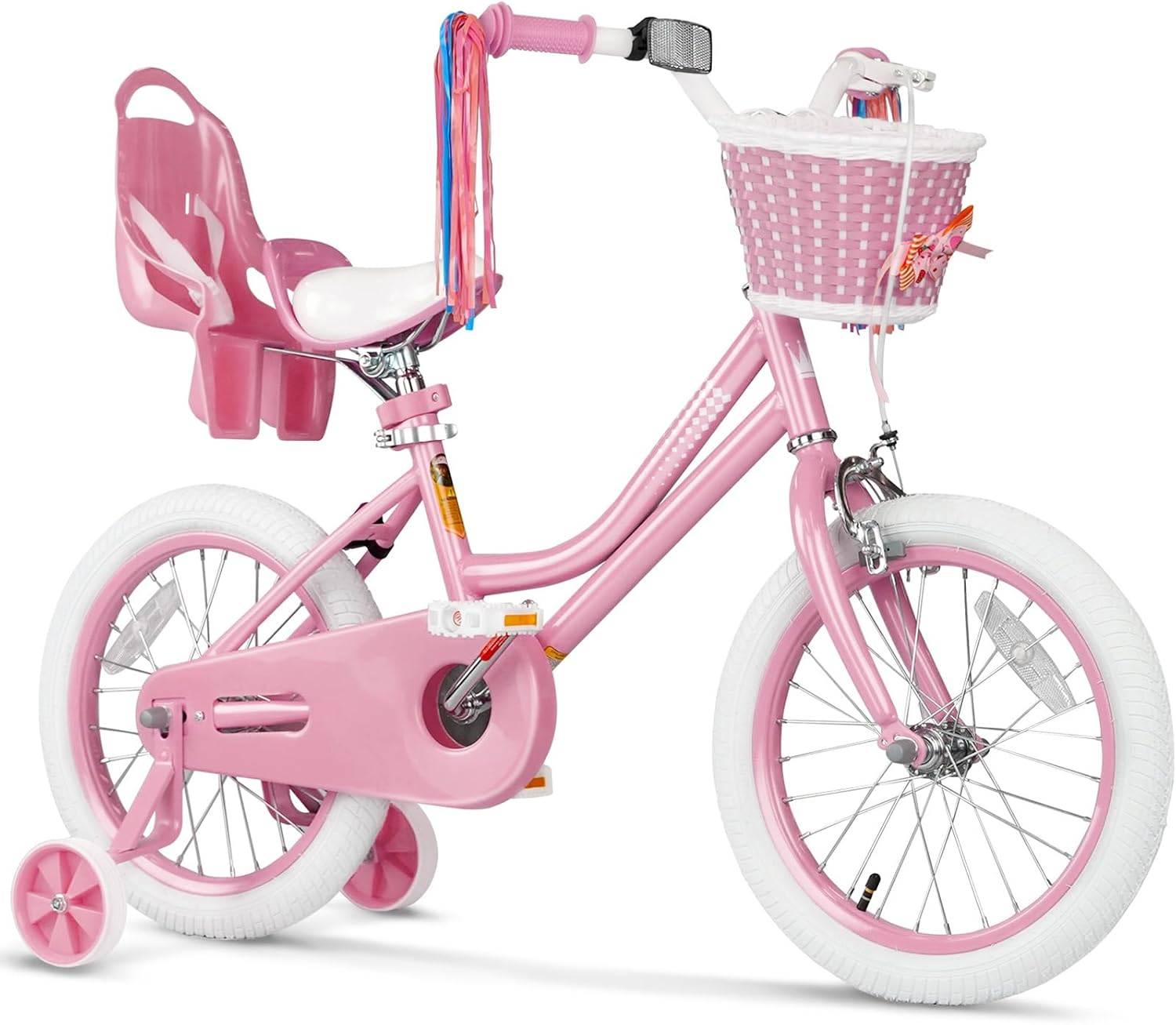
Begin with the SKU label matching the child’s measured-height range, then confirm the individual fit checks above. The product title is only its exact catalog name; it does not provide additional fit evidence. The catalog facts do not specify brake type, frame dimensions, weight, materials, load limit, assembly details or training-wheel compatibility procedures, so consult the exact manual or a qualified bicycle mechanic for those points.
Helmet check before the first ride
A bicycle helmet must fit the individual child properly. It should sit level on the head, and its straps should be positioned and fastened according to the helmet manufacturer’s instructions. Recheck the fit rather than assuming an older helmet still fits after growth or adjustment.
Use a controlled riding area away from traffic while the child becomes familiar with starting, steering and stopping. Adult supervision and a helmet do not correct a poor bicycle fit, so resolve any trouble reaching the ground, handlebars or brakes before riding.
The decision for your 4-year-old
Choose 12 Inch if the child measures 34–40 in (86–102 cm), 14 Inch at 37–45 in (94–114 cm), or 16 Inch at 40–48 in (102–122 cm) as a starting point. Where ranges overlap, try both. Buy only the size on which your four-year-old can stand over comfortably, reach naturally, steer confidently and control the brakes now.
Bikes for your next adventure
-

Pink Girls' 12/14/16" Bike by XJD – Basket & Doll Seat
The XJD Pink Girls' Bike with Basket & Doll Seat is made for riders 71–122 cm ta…$75.99
$99.99 -

XJD Girls Bike for Kids Ages 3-8, 12/14/16 Inch with Training Wheels – Purple
The XJD Girls Bike in Purple is a training-wheel bicycle for kids ages 3 to 8, f…$149
$169 -

Blue XJD Freestyle BMX Bike, 20-Inch – No Pegs
The XJD 20-Inch Blue Freestyle BMX is an entry-level BMX bike for boys and girls…$189.99