

What size of bike does a 4 year old need
Most 4-year-olds should start by trying a 12-inch or 14-inch bike. Measure your child first: height, inseam, reach and control matter more than age.
Choose the starting size from measured height
Use age only to narrow the first comparison. Under the XBikes starting points, a 12-inch bike covers ages 3–4 and heights of 34–40 in (86–102 cm). A 14-inch bike covers ages 3–6 and heights of 37–45 in (94–114 cm). A taller 4-year-old may also overlap with the 16-inch range: ages 4–7 and heights of 40–48 in (102–122 cm).
That overlap does not mean all three sizes fit equally well. Begin with the range containing your child’s measured height, then have the child try that bicycle. Compare adjacent sizes only when the height ranges overlap and the child can comfortably manage both.
| Wheel size | XBikes starting age | XBikes starting height | Relevance at age 4 |
|---|---|---|---|
| 12 Inch | 3–4 | 34–40 in / 86–102 cm | Common starting point for a smaller rider |
| 14 Inch | 3–6 | 37–45 in / 94–114 cm | Common comparison where height overlaps |
| 16 Inch | 4–7 | 40–48 in / 102–122 cm | Consider only for a child within this height range who passes the fit check |
Measure before comparing bikes
Measure your child’s height without shoes, standing upright against a wall. Then measure inseam from the floor to the crotch while the child stands naturally. Record both measurements rather than relying on clothing size or a recent age milestone.
Height identifies a sensible wheel-size range; inseam helps you assess stand-over and whether the child can get on, stop and steady the bicycle comfortably. Frame shapes and adjustment ranges can differ, so wheel diameter alone cannot confirm fit.
Perform an individual fit and control check
Have your child try the exact bicycle with ordinary riding shoes. A suitable candidate should let the rider stand over the bike without the frame obstructing them. The child should be able to sit in a controlled position, reach the handlebars without stretching and turn them smoothly while remaining balanced.
Check every brake control fitted to the particular bike. The child must be able to reach and operate it confidently while keeping control of the handlebar. Also watch a supervised start, straight ride, turn and stop in an appropriate traffic-free area. If the child looks strained, cannot stop reliably or becomes less confident, that size is not a good choice even when the age or height table appears to match.
Do not select an oversized bicycle simply to allow room for growth. A bike that will fit later does not fit now. If the child falls between practical options, favor the bicycle they can presently mount, steer and stop with better control, and repeat the check as they grow.
How the supplied XBikes option helps
The catalog option below is useful because it provides 12 Inch, 14 Inch and 16 Inch variants—the three relevant starting comparisons for many 4-year-olds—as well as a 20 Inch variant. Choose among its SKU labels only after measuring and checking the exact bicycle; the shared product title does not prove that every variant suits this child.

The Pink 12/14/16/20" XJD Girls Bike with Training Wheels & Basket is listed under Training Wheel Bikes and offers 12 Inch, 14 Inch, 16 Inch and 20 Inch SKU labels. For this question, its 12-inch and 14-inch versions are the primary comparisons. Its 16-inch version is relevant only when the rider is 40–48 in (102–122 cm) and can control the fitted bike.
The 20-inch version is not an appropriate age-based substitute: the XBikes starting point for 20 Inch is ages 7–12 and a rider height of 48–60 in (122–152 cm). Even if a child is unusually tall, measured fit, reach, braking and confidence must still decide. Follow the exact product manual for assembly, adjustment, maintenance, compatibility and load limits; use a qualified bicycle mechanic when needed.
Make the final decision
Bring the recorded height and inseam to the comparison. Start with 12 Inch at 34–40 in (86–102 cm), 14 Inch at 37–45 in (94–114 cm), or 16 Inch at 40–48 in (102–122 cm), then reject any bicycle the child cannot comfortably stand over, reach, steer or stop.
Complete the setup with a properly fitting bicycle helmet. It should sit level and its straps should be used according to the helmet manufacturer’s instructions. The answer for your 4-year-old is therefore not age alone: select the matching height range, try the exact bike, and buy only the size the child can control confidently today.
Bikes for your next adventure
-

Light Purple XJD Toddler Bike Helmet, Adjustable, Size XS (46–51 cm)
This Light Purple XJD toddler bike helmet is made for the smallest riders — the …$20.39
-

XJD Boys 12/14/16" Training Wheel Bike – Blue
The XJD Boys Bike in Blue is a training wheel bike for riders 71–122 cm tall—rou…$169
$199 -
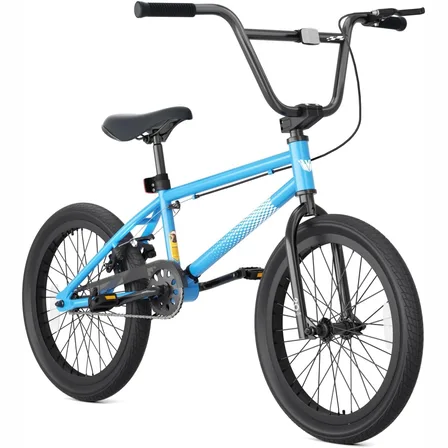
Blue XJD Freestyle BMX Bike, 20-Inch – No Pegs
The XJD 20-Inch Blue Freestyle BMX is an entry-level BMX bike for boys and girls…$189.99