

Beach Cruiser V-Brake Noodle: Understand the Release Before Wheel Service
A beach cruiser V-brake noodle is the curved guide where cable housing meets one brake arm. On common linear-pull designs, the connection can be released to open the brake for wheel service. That release is part of a specific assembly procedure, not a way to leave rubbing pads permanently farther apart. Identify the brake and its instructions before moving the connection, and plan the reconnection check before starting.
Locate the beach cruiser V-brake noodle and carrier
With the bicycle parked and unoccupied, identify the outer housing, curved guide, receiving carrier and bare cable continuing toward the other arm. Compare the actual components with their service diagram. A rubber boot can cover part of the junction, but its outside position does not establish that the metal connection is seated correctly. The Mint Green XJD cruiser lists V-brakes; the delivered components still need to be identified before their release method is used.

Keep release separate from cable adjustment
The noodle connection and the bolt anchoring the inner cable serve different tasks. Opening an approved brake release should follow the actual instructions; loosening the cable anchor changes the brake setting and creates a separate service job. Do not turn an unidentified fastener simply because the wheel needs more clearance. If the release will not operate through its intended method, stop and investigate the adjustment or condition instead of bending the receiving carrier.
Plan the wheel operation as a separate stage
Before removing a wheel, understand its axle retention and the brake steps required on that bicycle. Rear-wheel work can also involve the geared drivetrain and attached accessories. Keep released components protected and children away from the work area. A brake opening large enough for the tire does not establish that the wheel can be removed by a generic quick-release procedure. Use the actual wheel and bicycle instructions or arrange competent service for the whole task.
Restore the complete supported connection
After the wheel is correctly refitted, reconnect the brake through its instructions. Confirm the housing end, noodle and carrier are fully seated in their intended relationships. A connection perched on an edge needs correction before a lever is used as reassurance. Keep the boot in its correct position without letting it hide an uncertain junction. Do not use wire, a cable tie or a bent carrier to hold together a connection that does not fit properly.
Verify braking beyond a visual glance
Complete the instructed lever, attachment, pad-contact, clearance and release checks with the bicycle stationary and through suitable controlled walking checks. Both brakes need normal operation before riding. If the complaint that prompted service was rubbing or weak response, assess that original issue too. Leaving the noodle disconnected is not a solution to rubbing. Record any replaced parts and ask for instruction on the actual release if the owner cannot confidently recognize its fully seated state.
Model details relevant to this task
The current Mint Green cruiser family lists a geared drivetrain, a rear rack and V-brakes. No specific noodle angle, replacement brand, cable setting or universal torque is established here. Its catalog photograph identifies the complete bicycle; the actual brake diagram governs the working connection. The linked model details are available for XJD Kids Beach Cruiser Bicycle, Rear Rack & V-Brakes, Mint Green.
Quick checklist
- Identify guide and receiving carrier.
- Distinguish release from cable anchor.
- Use the actual wheel procedure.
- Confirm complete reconnection.
- Verify brake engagement and release.
Common questions
Can the noodle remain open to stop brake rubbing?
No. Restore the complete working brake and resolve the rubbing through proper service.
Must the inner-cable anchor be loosened for every release?
Do not assume so. Follow that brake’s intended release procedure; changing the anchor changes adjustment.
Does a rubber boot prove the connection is seated?
No. Check the actual guide and carrier relationship rather than judging from the boot alone.
Related collections
The cruiser brake and utility layouts and other family bicycle configurations provide further model details. Check the exact selected configuration when planning fit, handling and care.
Before the next outing
Understand the beach cruiser V-brake noodle before releasing it for service. Preserve the intended cable setting, reconnect every supported part correctly and verify the complete brake before the bicycle is used again.
Bikes for your next adventure
-

XJD Pink Beach Cruiser for Girls – Rear Rack & V-Brake
The XJD Pink Beach Cruiser for girls is the step-up bike for riders who've outgr…$179.99
$209.99 -

26-Inch XJD Beach Cruiser Bike for Girls – Purple, V-Brake
This XJD 26-inch purple beach cruiser is sized for big kids and teens — suggeste…$218.49
$229.99 -
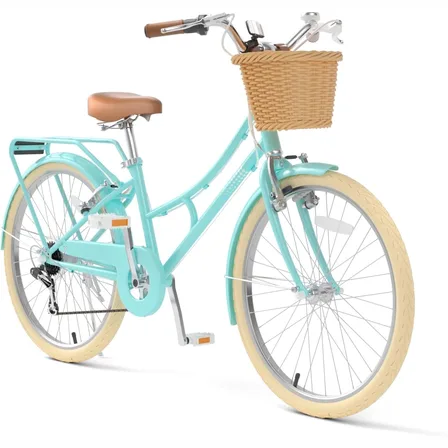
XJD Kids Beach Cruiser Bicycle, Rear Rack & V-Brakes, Mint Green
The XJD Beach Cruiser in Mint Green is a geared, multi-speed cruiser bike for ol…$179.99
$209.99