

How should a toddler bike helmet fit
A toddler bike helmet should sit level, stay snug without painful pressure, and remain stable when the child moves their head. Measure head circumference first, compare it with the exact SKU range, then confirm the fit on the child.
Measure the head before choosing a size
Use a flexible tape measure around the widest part of the child’s head. Keep the tape level and pass it above the eyebrows and around the fullest area at the back. It should touch the hair without compressing it. Record the result in centimeters because the supplied helmet sizes use centimeters.
Measure more than once to catch a tilted or loose tape. If the readings differ, repeat the measurement rather than selecting from an estimate. Hair should be arranged as it will be while riding; bulky hairstyles or accessories can change how the helmet sits.
Compare the measurement with the exact SKU
Choose a listed range that contains the measured circumference. Do not assume that every XS or S means the same thing: the supplied options include XS ranges of 46–51 cm and 48–50 cm, plus S ranges of 51–54 cm, 52–56 cm and 46–51 cm. The numbers attached to the specific SKU matter more than the size letter or wording in a product title.
A measurement near a boundary deserves an especially careful try-on. Do not automatically size up for growth. A larger range is useful only if the helmet can be adjusted to fit securely now according to its manual. Likewise, being inside a printed range does not guarantee that the helmet’s shape suits the child’s head.
Check the helmet on the child
- Place it level: The helmet should not tip back and expose the forehead or lean forward into the child’s view.
- Adjust the internal fit system: Follow the manufacturer’s instructions until the helmet feels evenly snug, without a concentrated pressure point.
- Set and fasten the straps: Route and adjust them exactly as the manufacturer directs. They should hold the level position without twisting.
- Test stability: With the helmet fastened, ask the child to look up, down and from side to side. The helmet should remain level rather than sliding substantially.
- Ask how it feels: Remove it after several minutes and check for discomfort. Pain, pinching, impaired vision or persistent pressure means the fit needs adjustment or a different size or shape.
The U.S. Consumer Product Safety Commission’s central fit principles are that a bicycle helmet must fit properly, sit level and have its straps used according to the manufacturer’s instructions. If the manual’s fitting sequence differs from a general checklist, follow the manual.
How the two catalog options compare
The Black XJD Toddler Bike Helmet, Adjustable – Kids' Protective Helmet is listed with four available SKU labels: XS (46–51 cm), XS (48–50 cm), S (51–54 cm) and S (52–56 cm). The White Astronaut Bike Helmet for Kids by XJD – Toddler to Youth Sizes lists S at 46–51 cm and M at 52–56 cm, with corresponding inch labels of 18.11–20.08 inches and 20.47–22.05 inches.
These particular catalog options are useful comparison points because their stated circumference ranges let a parent match a fresh head measurement to an exact SKU before conducting the essential try-on. Their title wording is a catalog label, not proof that either one fits a particular toddler.
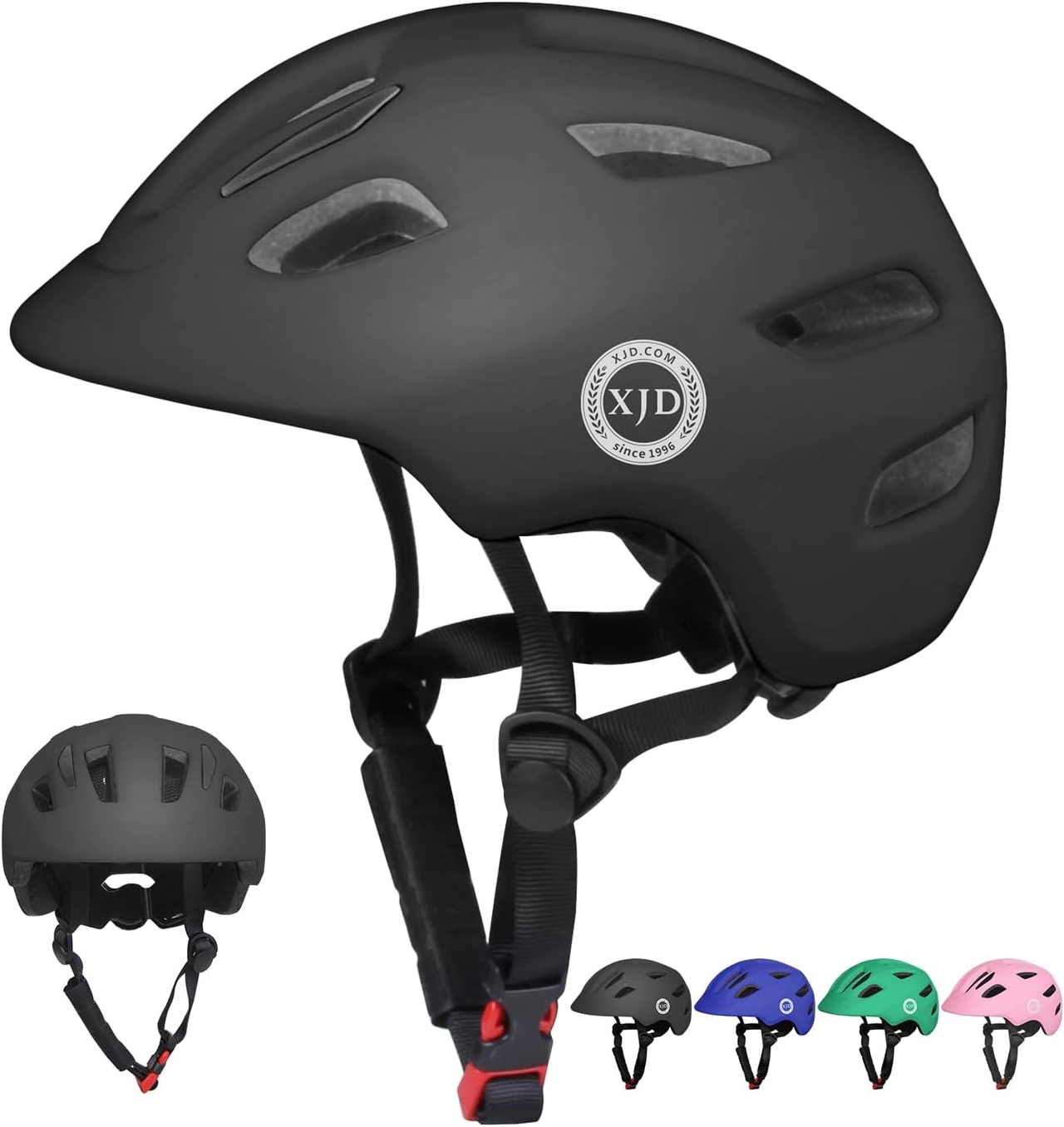 Black XJD Toddler Bike Helmet, Adjustable – Kids' Protective Helmet
Offers four supplied circumference labels spanning XS 46–51 cm or 48–50 cm and S 51–54 cm or 52–56 cm; select by the exact range, then verify fit on the child.
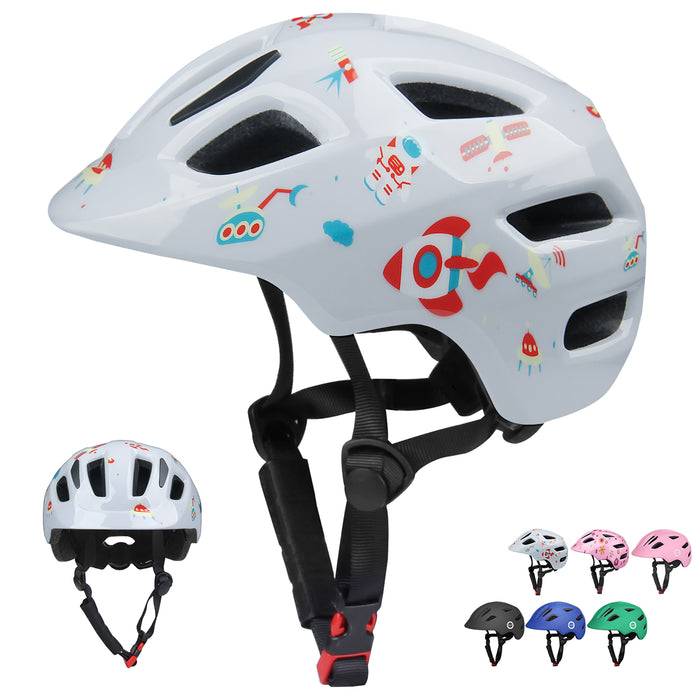 White Astronaut Bike Helmet for Kids by XJD – Toddler to Youth Sizes
Provides supplied S 46–51 cm and M 52–56 cm options, also labeled in inches. Its toddler wording is not fit evidence; measure first and confirm a level, stable fit.
If the child measures 46–51 cm, both product titles include at least one SKU with that range. A 51–54 cm measurement appears within a listed option for the black helmet, while 52–56 cm appears among the listings for both products. At overlapping boundaries, compare the exact SKU labels and physical fit; do not choose solely by the letter printed beside the range.
Know when neither option is suitable
Neither product should be selected if the child’s measurement falls outside the chosen SKU range, the helmet cannot remain level, the straps cannot be configured as its instructions require, or the child reports pain or obstructed vision. A matching circumference is only the first screening step.
Do not improvise padding, alter the shell or guess at an unfamiliar adjustment. Consult the exact product manual for its fitting, adjustment, care and replacement instructions. If the fit remains uncertain, use a qualified bicycle mechanic or another qualified helmet-fitting resource.
Make the final decision
Write down the child’s centimeter measurement, shortlist only exact SKUs that contain it, and try each candidate with the child’s normal riding hairstyle. Keep the helmet only if it sits level, adjusts evenly, stays stable through head movement and remains comfortable. If those checks fail, reject that size even when its label says “toddler.”
Bikes for your next adventure
-

Kids Bike Helmet by XJD for Boys & Girls – Black, Blue, Green, Pink, Purple
The XJD Kids Bike Helmet covers a wide 2-to-8-year age range thanks to two head-…$59.99
-
White Astronaut Bike Helmet for Kids by XJD – Toddler to Youth Sizes
4 reviews
The XJD White Astronaut kids' bike helmet is made for toddlers through younger e…$59.99
-
XJD Kids Bike Helmet for Boys & Girls, B White / Pink White
The XJD Kids Bike Helmet covers a wide age range — suggested for ages 2 through …$59.99