

How to fit toddler bike helmet
Measure your toddler’s head circumference, choose a helmet whose stated range includes that measurement, then fit it level and snug with flat, correctly adjusted straps.
Measure before choosing a helmet
Use a soft measuring tape around the widest part of the child’s head. Run it just above the eyebrows and ears and around the fullest point at the back. Keep the tape level, close to the skin and comfortably snug rather than tight.
Record the result in centimetres and repeat the measurement. If the two results differ, measure again instead of averaging them. Hair should be arranged as it will be while riding, without bulky clips, thick hats or anything that changes how the helmet sits.
Compare the confirmed measurement with the complete size range printed for the helmet. The measurement must fall inside that range. Do not choose a larger helmet merely to leave growing room: adjustment systems can refine an appropriate size, but they cannot make an oversized shell fit correctly.
Set the helmet level and snug
- Place the helmet level on the head, covering the forehead rather than tilting it back. It should not obstruct the child’s vision.
- Follow the manufacturer’s instructions to open or loosen the adjustment system, position the helmet, and tighten it evenly.
- Check for firm, even contact around the head. The helmet should feel secure without creating painful pressure points.
- Ask the child to shake and nod their head gently before fastening the chin strap. A suitable helmet should remain substantially in position rather than sliding over the eyes or rocking toward the back.
If the helmet cannot sit level, leaves obvious gaps, shifts substantially at its tightest usable setting or hurts at its loosest secure setting, try another size or shape.
Adjust the straps in the right order
Straighten every strap so it lies flat and is not twisted. Position the side-strap junctions according to the helmet manual so the front and rear straps hold the helmet level. Then fasten and adjust the chin strap as directed by the manufacturer.
The buckle should close securely, and the strap should be snug without pinching the skin or interfering with comfortable breathing and swallowing. Recheck the helmet after fastening: it should not roll forward over the eyes or expose the forehead by rolling backward.
Have the toddler open their mouth, turn their head and look up and down. Stop if the buckle, strap or shell causes pain. Never modify the shell, padding, buckle or straps to force a fit; consult the exact product manual or a qualified bicycle mechanic if the adjustment is unclear.
Use the catalog size as a comparison
The Light Purple XJD Toddler Bike Helmet, Adjustable, Size XS (46–51 cm) is relevant when the child’s measured circumference is within 46–51 cm. Its toddler wording is part of the exact catalog title, not proof that it fits every toddler. The supplied facts establish an adjustable XS size and that stated range, but do not provide certification, material, weight or compatibility details.
This catalog option helps answer the fitting question because it gives a concrete helmet range to compare with the child’s measured head, while the final decision still depends on an individual try-on and correct strap adjustment.
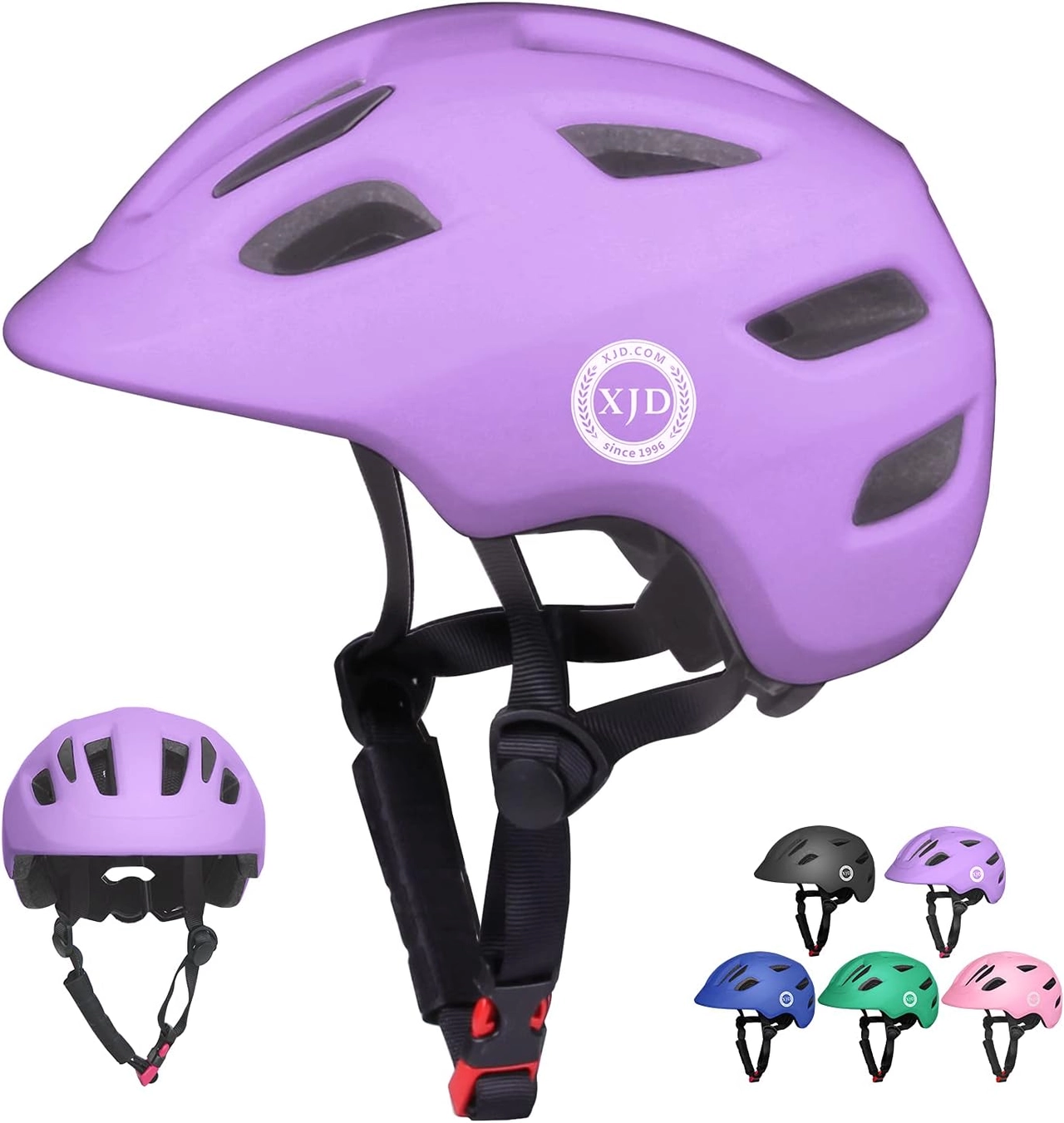
If the measurement is below 46 cm, above 51 cm or the helmet will not remain level and snug, this product is not an appropriate match based on the supplied range and fit check. Look for a helmet with a stated range that includes the measurement and confirm its fit in person.
Complete a fit check before every ride
- Position: The helmet sits level and covers the forehead.
- Stability: Gentle head movement does not make it slide or rock substantially.
- Comfort: Contact is even, with no painful pressure or large gaps.
- Straps: They lie flat, hold the helmet in position and are adjusted according to the manufacturer’s instructions.
- Buckle: It is fully fastened and does not pinch.
Repeat the check whenever the child’s hairstyle changes, after someone else wears the helmet, and as the child grows. Replace or stop using a helmet when the manufacturer’s instructions require it, including after an impact if directed; use the exact manual because no maintenance or replacement interval is supplied here.
Make the fit decision
Measure first, compare the number with the full labeled range, and then judge the actual fit—not the child’s age or the word “toddler.” Choose the Light Purple XJD Toddler Bike Helmet, Adjustable, Size XS (46–51 cm) only if the measured head is within 46–51 cm and the helmet can sit level, snug and stable with its straps correctly secured. Otherwise, select a different stated size range and repeat the same hands-on check.
Bikes for your next adventure
-

Kids Bike Helmet by XJD for Boys & Girls – Black, Blue, Green, Pink, Purple
The XJD Kids Bike Helmet covers a wide 2-to-8-year age range thanks to two head-…$59.99
-
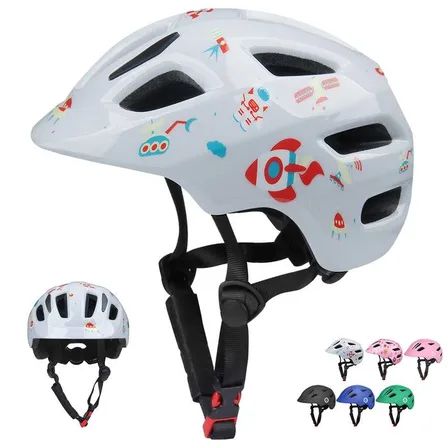
White Astronaut Bike Helmet for Kids by XJD – Toddler to Youth Sizes
4 reviews
The XJD White Astronaut kids' bike helmet is made for toddlers through younger e…$59.99
-
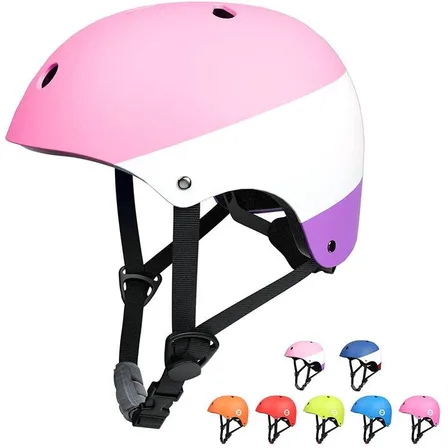
XJD Kids Bike Helmet for Boys & Girls, B White / Pink White
The XJD Kids Bike Helmet covers a wide age range — suggested for ages 2 through …$59.99