

How to fit toddler helmet
To fit a toddler helmet, measure the widest part of the child’s head, choose a size range containing that measurement, then adjust the helmet level and snug.
Measure the head before choosing a size
Use a flexible measuring tape. Wrap it around the widest circumference of the head, passing just above the eyebrows and ears and around the fullest part at the back. Keep the tape level and comfortably close to the skin without pulling it tight.
Record the measurement in centimetres and repeat it once to catch positioning errors. Compare that number with the helmet’s stated size range. Do not choose by the word toddler, the child’s age, hair volume or an estimate based on another helmet.
If the measurement falls outside every available range, do not force a choice. Find a helmet whose published sizing includes the measured circumference. If it lies near a boundary, try the relevant sizes and judge the actual fit rather than automatically buying the larger one for growth.
Compare the two XBikes size options
Both supplied XJD helmets have the same available labels: XS covers 46–51 cm, while S covers 52–56 cm. The child’s measured head circumference therefore determines which option is relevant. These ranges do not overlap, and neither size should be treated as equivalent to the other.
| Measured circumference | Catalog size to consider | Next step |
|---|---|---|
| 46–51 cm | XS | Try it on and complete the fit checks below. |
| 52–56 cm | S | Try it on and complete the fit checks below. |
| Below 46 cm or above 56 cm | Neither supplied size | Choose a different helmet with a matching published range. |
Blue XJD Kids' Bike Helmet, Adjustable Fit – Sizes XS & S and Pink Adjustable Kids Helmet by XJD – Toddler Bike Helmet, XS & S are useful comparison options because each offers the same two stated circumference ranges. Their supplied facts support a comparison by size and title only; colour or age wording does not prove fit.
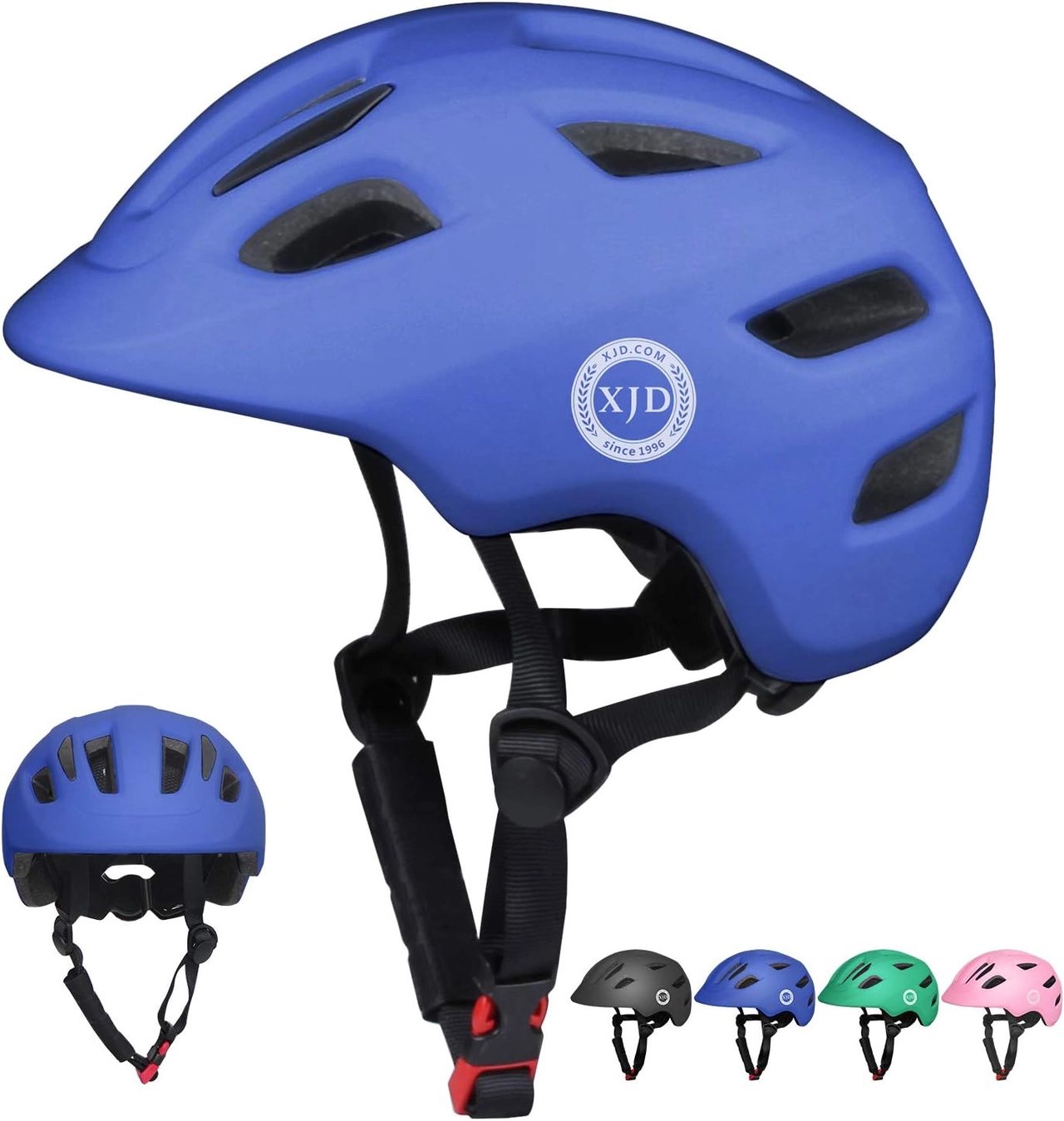 Blue XJD Kids' Bike Helmet, Adjustable Fit – Sizes XS & S
Relevant when the measured head circumference falls within its available XS (46–51 cm) or S (52–56 cm) label; an individual try-on and adjustment check are still required.
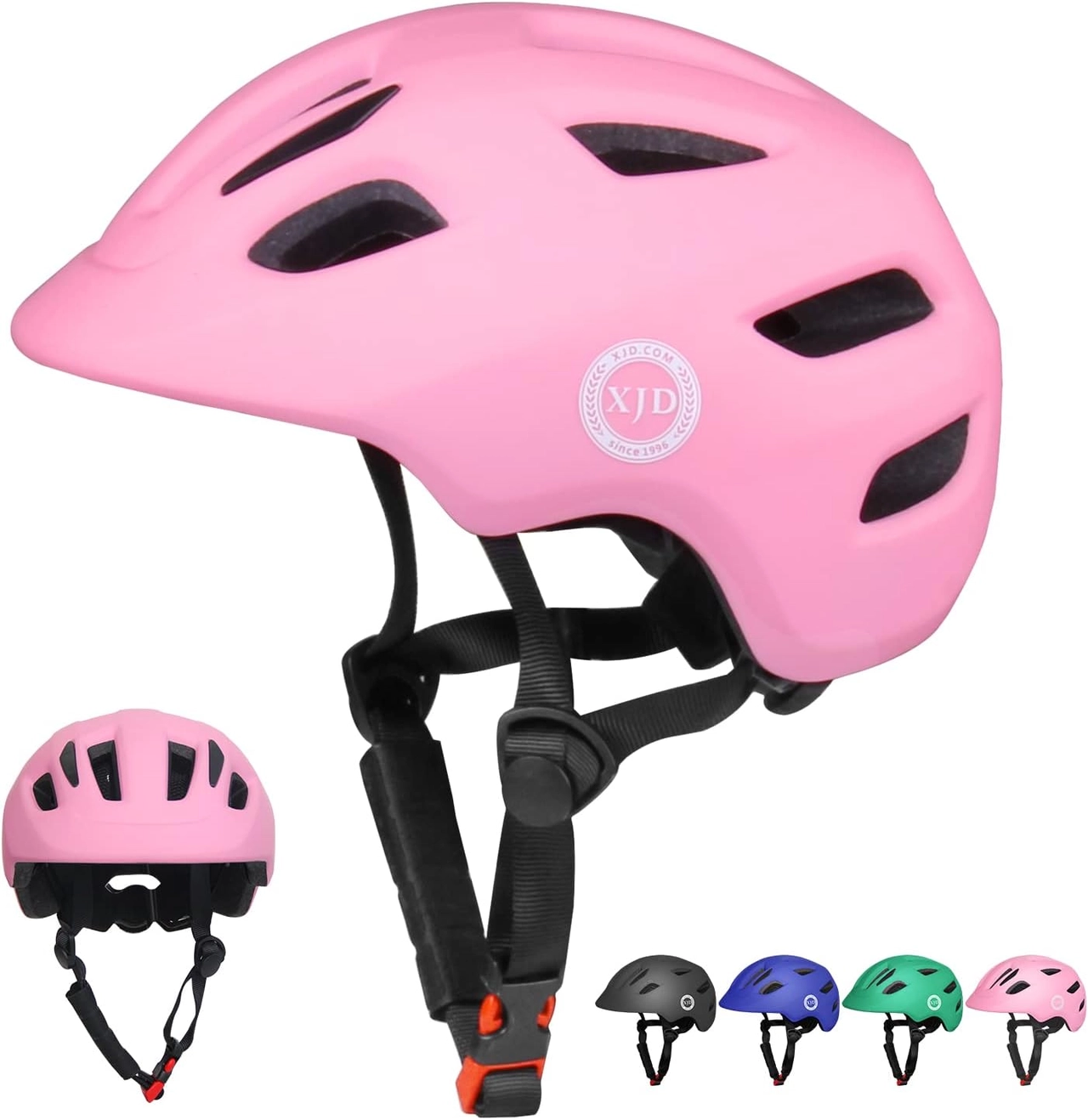 Pink Adjustable Kids Helmet by XJD – Toddler Bike Helmet, XS & S
Offers XS (46–51 cm) and S (52–56 cm). The word “Toddler” is part of its catalog title, not proof that it fits a particular child.
Position the helmet correctly
Place the helmet on the child’s head so it sits level, rather than tipped back to expose the forehead or pushed forward over the eyes. Centre it from side to side. The shell should feel stable and should not depend on an overtightened chin strap to stay in position.
Use the helmet’s adjustment system and straps exactly as its manufacturer instructs. Adjust gradually while the child is still. The fit should be snug around the head without creating painful pressure. Hair styles, thick clips, hats and bulky layers can change the fit, so check the helmet in the same condition in which it will be worn.
Check stability, straps and comfort
Once adjusted, run a short fit check:
- Confirm that the helmet remains level and covers the forehead appropriately according to its manual.
- Ask the child to look up, down and from side to side. The helmet should remain stable rather than sliding freely.
- Arrange and fasten the straps according to the manufacturer’s diagram. They should lie flat, without twists.
- Check that the buckle is secure and comfortable and that no strap presses painfully against the neck or ears.
- Ask about pinching, pressure or blocked vision. A toddler’s discomfort is a reason to stop and readjust, not something to dismiss.
Then gently try to shift the helmet forward, backward and sideways. If it readily changes position, exposes the forehead, obstructs vision or cannot be made snug with the provided adjustments, it does not fit properly. Try the correct alternative size or a different helmet shape.
Know when not to use these products
The two supplied products are relevant only when the child’s measurement is within 46–51 cm for XS or 52–56 cm for S and the chosen helmet passes an individual try-on. The word Kids' in the blue product title and Toddler in the pink product title are catalog labels, not evidence that either one will fit a particular child.
Do not select either helmet solely because the child rides a particular bicycle wheel size. Bicycle sizing and helmet sizing answer different questions: wheel-size guidance uses rider height and handling checks, while helmet selection uses head circumference and an actual fit check.
These catalog facts do not specify certification, materials, weight, maintenance procedures or replacement rules. Consult the exact product manual for those details. If the adjustment system appears damaged, parts are missing, or the instructions cannot be followed, do not improvise; contact the manufacturer or ask a qualified bicycle mechanic for help.
Make the final fit decision
Measure first, shortlist only the range containing that measurement, and try the helmet on. Keep it only if it can sit level, remain snug and stable, allow clear vision, and use every strap and buckle as directed. Recheck the fit before each ride and after changes in hair, adjustment or growth. If XS or S does not meet all those conditions, neither supplied helmet is the right fit for this toddler.
Bikes for your next adventure
-

Kids Bike Helmet by XJD for Boys & Girls – Black, Blue, Green, Pink, Purple
The XJD Kids Bike Helmet covers a wide 2-to-8-year age range thanks to two head-…$59.99
-
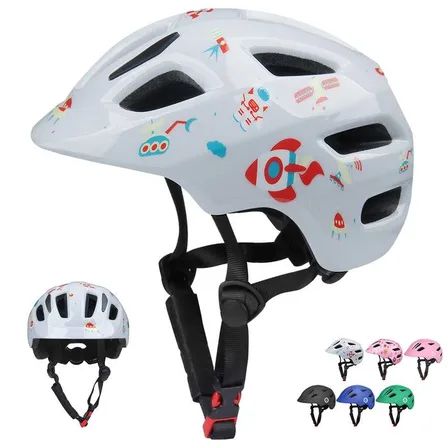
White Astronaut Bike Helmet for Kids by XJD – Toddler to Youth Sizes
4 reviews
The XJD White Astronaut kids' bike helmet is made for toddlers through younger e…$59.99
-
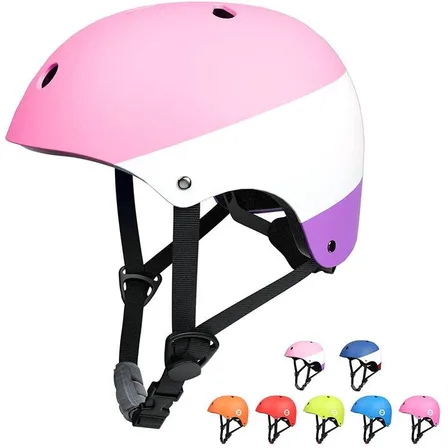
XJD Kids Bike Helmet for Boys & Girls, B White / Pink White
The XJD Kids Bike Helmet covers a wide age range — suggested for ages 2 through …$59.99