

What size bike helmet for a 2 year old
There is no universal bike helmet size for a 2-year-old. Measure the child’s head circumference, compare it with the helmet’s stated range, and confirm the fit on the child.
Measure before choosing a size
Use a flexible measuring tape around the widest part of the head. Position it above the eyebrows and ears and around the fullest area at the back. Keep the tape level and comfortably snug, without pulling it tight. Record the result in centimetres because the supplied helmet ranges use centimetres as well as inches.
Measure more than once to catch an angled or loose reading. Do not choose from age alone: children of the same age can have different head circumferences, and the word kids in a product title is only a catalog label. The measured circumference is the useful starting point.
Compare the measurement with the actual range
The relevant catalog choices begin at different measurements. The smallest supplied option is S at 46–51 cm (18.11–20.08 inches). Other supplied sizes are M at 52–56 cm (20.47–22.05 inches) and L at 55–58 cm (21.65–22.83 inches).
| Measured head circumference | Supplied range to investigate | What to do |
|---|---|---|
| Below 46 cm | None | Do not buy one of these sizes hoping adjustments will compensate. Find a helmet whose stated range includes the measurement. |
| 46–51 cm | S | Try the supplied S option and perform a complete on-head fit check. |
| 52–54 cm | M | Try M and verify its position and straps on the child. |
| 55–56 cm | M and L overlap | Try both where available; the printed range alone cannot decide which fits better. |
| 57–58 cm | L | Only the supplied L range includes the measurement; an on-head check is still required. |
A gap appears between the listed S and M labels: S ends at 51 cm, while M starts at 52 cm. If the child’s reading falls between the printed boundaries, do not round it into a size. Consult the exact product instructions or select a helmet with a range that clearly includes the measurement.
How the supplied helmets compare
The Kids Bike Helmet by XJD for Boys & Girls – Black, Blue, Green, Pink, Purple is the only supplied product with S options covering 46–51 cm; it also has M options covering 52–56 cm. Its five listed colors have the same two size ranges.
The 7-in-1 Kids Helmet & Protective Gear Set from XJD – Black or Blue starts at M, covering 52–56 cm, and also offers L at 55–58 cm. The supplied facts identify it as a protective gear set, but they do not provide component details, certification, materials or an age range.
The XJD Kids Bike Helmet for Boys & Girls, B White / Pink White likewise comes in M at 52–56 cm and L at 55–58 cm. Its listed choices are B White and Pink White. For either M/L product, a head below 52 cm is outside every supplied size.
These particular catalog options help answer the question because their printed ranges show whether a measured head can be considered for S, M or L—and when none is relevant. They are comparison choices, not proof of fit without trying the helmet on.
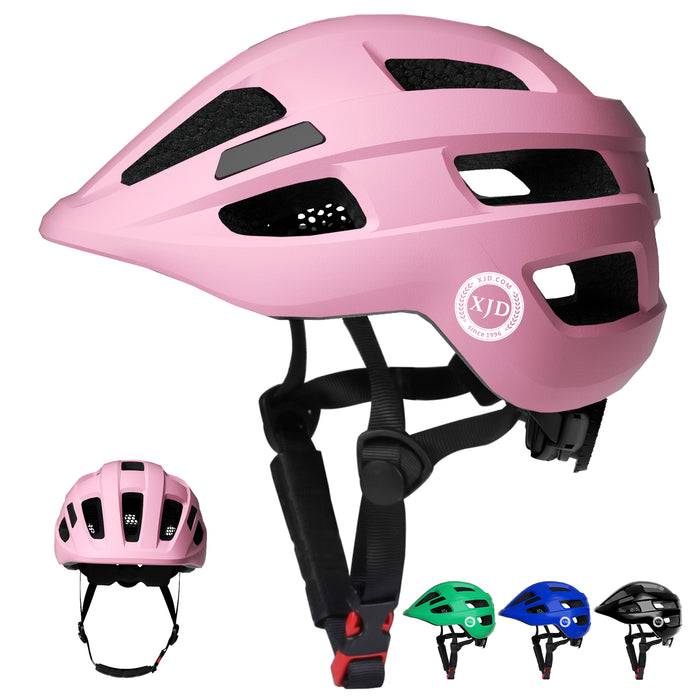 Kids Bike Helmet by XJD for Boys & Girls – Black, Blue, Green, Pink, Purple
The only supplied helmet offering S at 46–51 cm, plus M at 52–56 cm. Its Black, Blue, Green, Pink and Purple choices share those listed size ranges.
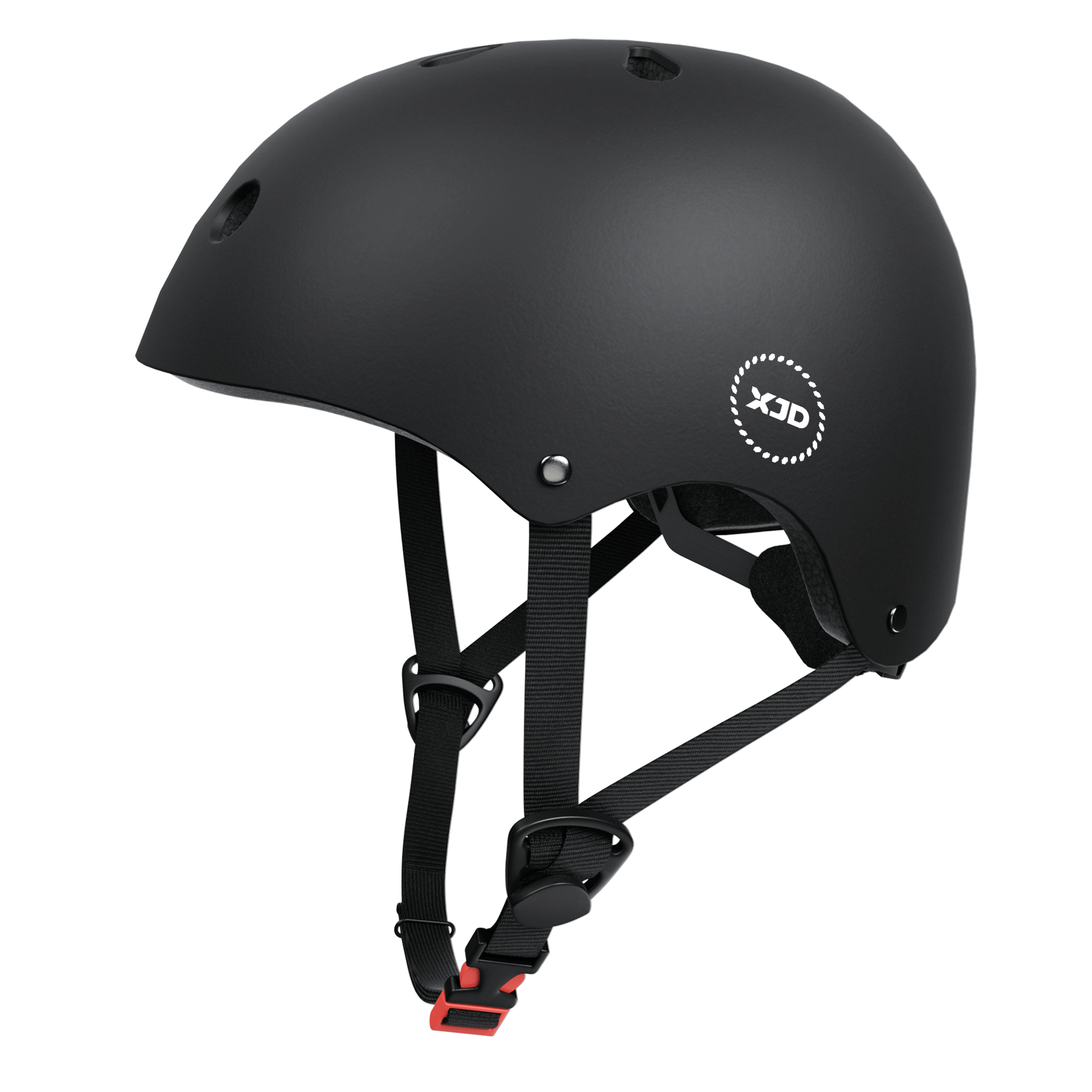 7-in-1 Kids Helmet & Protective Gear Set from XJD – Black or Blue
This protective gear set is relevant only when the measured head fits its supplied M 52–56 cm or L 55–58 cm range; no smaller size is listed.
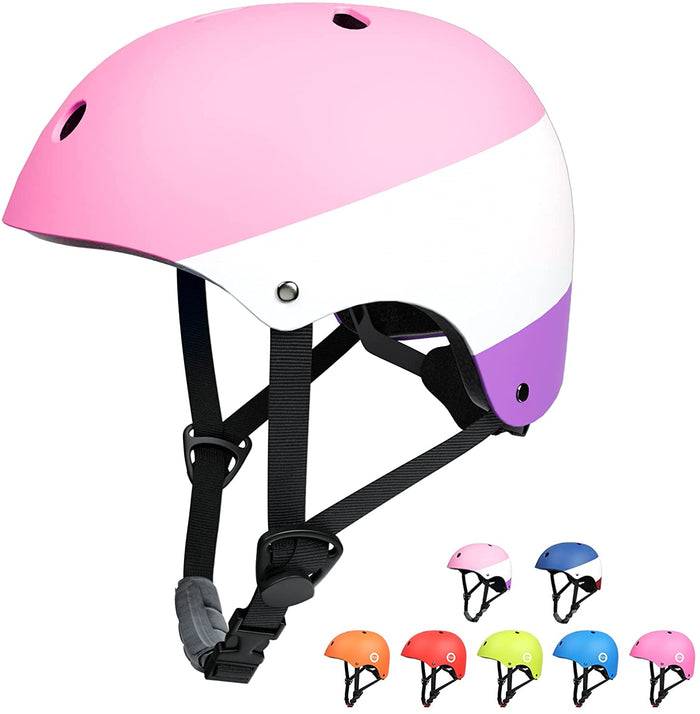 XJD Kids Bike Helmet for Boys & Girls, B White / Pink White
Available in B White or Pink White, with supplied M 52–56 cm and L 55–58 cm ranges. It is not a listed option for measurements below 52 cm.
Check the helmet on the child
A circumference match only identifies a candidate. Place the helmet on the child and follow the manufacturer’s fitting instructions exactly. It should sit level rather than tipped backward or forward, remain properly positioned, and use its straps as directed. Check the fit while the child is calm enough for an accurate adjustment.
Reject a helmet that cannot sit level, shifts out of position, creates an obviously unsuitable fit, or requires the straps or adjustment system to be used contrary to the manual. Do not move up to an oversized helmet merely to allow room for growth. If the correct setup is unclear, use the exact product manual or ask a qualified bicycle mechanic for help.
What bicycle size does—and does not—tell you
Bike wheel size does not determine helmet size. XBikes lists a 12-inch bicycle as a starting point for ages 3–4 and rider height 34–40 inches (86–102 cm), but that is not a recommendation for every child and does not establish head circumference. The supplied bicycle chart has no starting point specifically for age two.
If choosing a bicycle as well, measure the rider and have the child try it. Prioritize height, inseam, reach, brake control and current confidence over age. Check stand-over room and the child’s ability to control the bicycle and reach its brakes; do not buy an oversized bicycle for growth.
The decision for your 2-year-old
Measure now. If the result is 46–51 cm, the supplied S helmet is the relevant candidate. At 52–56 cm, compare the supplied M options; at 55–58 cm, L is also available. If the measurement is outside every stated range—or no candidate passes the level-position and strap check—choose a different helmet range rather than forcing one of these sizes to work.
Bikes for your next adventure
-

Light Purple XJD Toddler Bike Helmet, Adjustable, Size XS (46–51 cm)
This Light Purple XJD toddler bike helmet is made for the smallest riders — the …$20.39
-

Black XJD Toddler Bike Helmet, Adjustable – Kids' Protective Helmet
The XJD Toddler Bike Helmet in black is an adjustable protective helmet for kids…$20.39
-

Kids Bike Helmet by XJD for Girls – Pink
The XJD Kids Bike Helmet in Pink is a lightweight multi-sport helmet for girls r…$59.99
$99