

What size bicycle for 3 year old
For most 3-year-olds, start by comparing a 12-inch bicycle. XBikes places 12-inch bikes at ages 3–4 and heights 34–40 in (86–102 cm), but measured fit and control decide.
Measure your child before choosing
Age narrows the search; it does not confirm bicycle size. Measure your child’s standing height without shoes, then measure the inseam from the floor to the crotch while the child stands upright. Use the height range to identify a starting wheel size and the inseam during an actual stand-over check.
A 3-year-old who measures 34–40 in (86–102 cm) should begin with a 12-inch comparison. A taller child measuring at least 37 in (94 cm) also enters the XBikes 14-inch starting range of ages 3–6 and heights 37–45 in (94–114 cm). Because those ranges overlap, height alone does not make a 14-inch bike the right choice.
Use this size comparison
| Wheel size | XBikes starting point | What it means for a 3-year-old |
|---|---|---|
| 12 Inch | Ages 3–4; 34–40 in / 86–102 cm | The usual first size to try when the rider falls within the height range. |
| 14 Inch | Ages 3–6; 37–45 in / 94–114 cm | A comparison for a taller 3-year-old, but only if stand-over, reach and control all work. |
| 16 Inch | Ages 4–7; 40–48 in / 102–122 cm | Not the age-based starting point for a 3-year-old; do not size up merely for growth. |
The American Academy of Pediatrics guidance summarized by HealthyChildren supports having the child try the bicycle rather than buying an oversized one for future growth. Even when a child reaches the bottom of a height range, choose the bike the child can control now.
Check the fit on the actual bicycle
Have your child wear ordinary riding shoes and try the exact model and wheel size. Then check all of the following:
- Stand-over: The child can straddle the bicycle securely rather than being forced onto tiptoes or against the frame.
- Reach: The child can hold the handlebar without stretching, locking the elbows or leaning far forward.
- Brake control: If the bicycle has hand-operated controls, the child can reach and operate them reliably. Follow the exact product manual for the model’s controls.
- Starting and stopping: The child can get into position, steer, stop and get off without the bicycle overwhelming them.
- Confidence: The rider stays attentive and comfortable during the check rather than appearing frightened or unable to manage the bike.
If any check fails, do not accept the size simply because the age or height table seems to match. Compare a smaller option or a different frame design. For assembly, adjustments, compatibility, maintenance, load limits or torque, follow the exact product manual or ask a qualified bicycle mechanic.
How the supplied XBikes options compare
The supplied catalog choices are relevant because all three offer a 12-inch option, the principal starting comparison for many 3-year-olds, plus larger labeled sizes for a careful side-by-side fit check where appropriate.
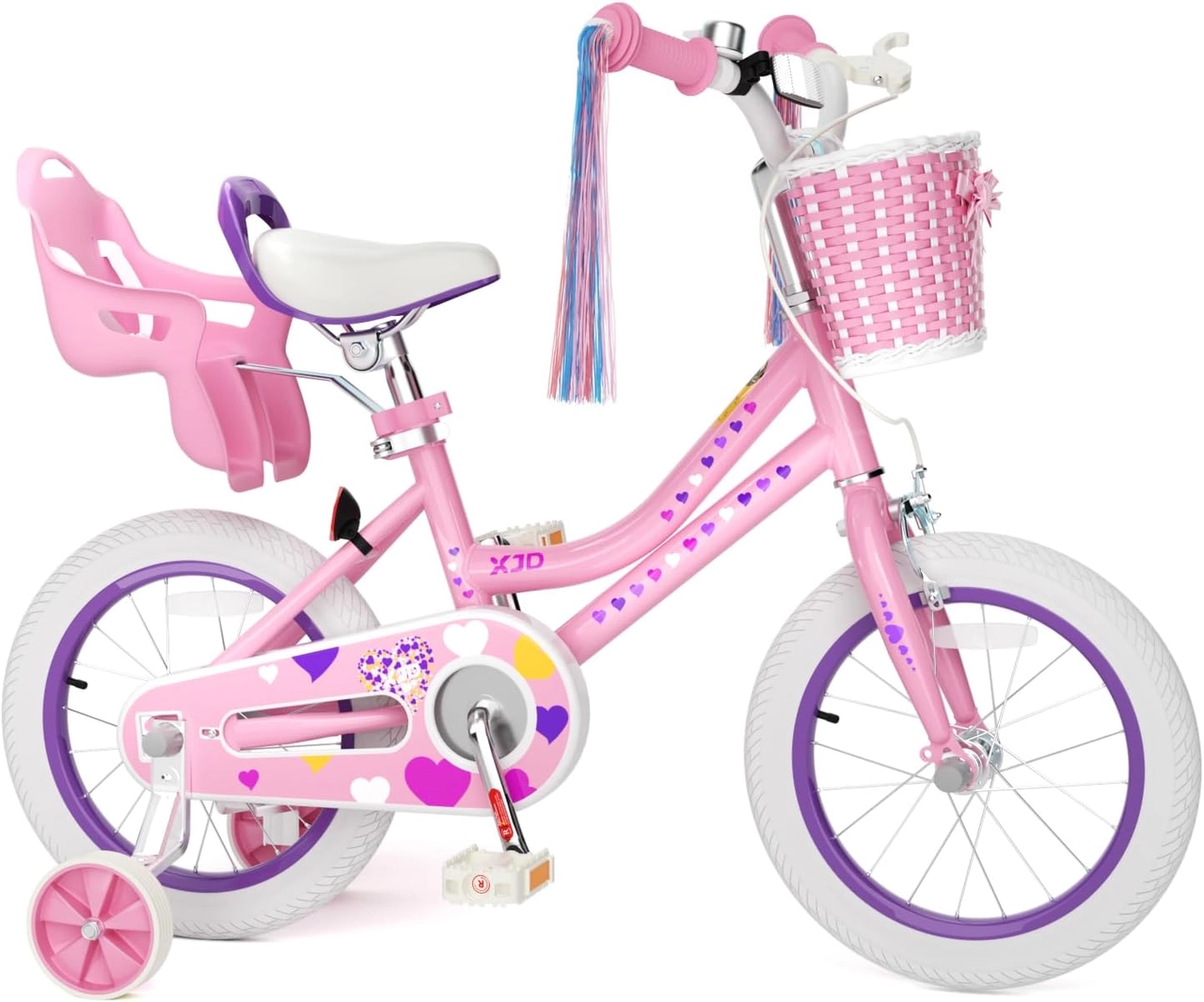 Pink Girls' 12/14/16" Bike by XJD – Basket & Doll Seat
A Training Wheel Bikes listing with 12 Inch, 14 Inch and 16 Inch labels. Its 12 Inch option is the first relevant comparison for many 3-year-olds, subject to measured height and a hands-on fit check.
 Pink 12/14/16/20" XJD Girls Bike with Training Wheels & Basket
Offers 12 Inch, 14 Inch, 16 Inch and 20 Inch labels in Training Wheel Bikes. For a 3-year-old, the 12 Inch option is the main starting comparison; larger labels require the supplied height guidance and individual fit checks.
 Black XJD Kids Bike for Boys – 12, 14 & 16 Inch Sizes
This Training Wheel Bikes product has 12 Inch, 14 Inch and 16 Inch labels. Compare 12 Inch first for a 3-year-old, using the child’s measured height, inseam, reach, brake control and confidence to decide.
Pink Girls' 12/14/16" Bike by XJD – Basket & Doll Seat is listed under Training Wheel Bikes and has 12 Inch, 14 Inch and 16 Inch SKU labels. For this question, begin with its 12 Inch option; consider 14 Inch only when the child is at least 37 in (94 cm) tall and passes every hands-on check.
Pink 12/14/16/20" XJD Girls Bike with Training Wheels & Basket is also a Training Wheel Bikes listing. Its supplied labels are 12 Inch, 14 Inch, 16 Inch and 20 Inch. The 16- and 20-inch labels do not make those sizes suitable for a typical 3-year-old: XBikes starts 16 Inch at ages 4–7 and 20 Inch at ages 7–12.
Black XJD Kids Bike for Boys – 12, 14 & 16 Inch Sizes appears in the same category with 12 Inch, 14 Inch and 16 Inch options. Treat wording in a catalog title as identification, not proof of fit. Compare its 12-inch version first, then judge the actual frame by the child’s stand-over, reach and control.
Complete the decision safely
Once the child has passed the fit check, add a properly fitting bicycle helmet. U.S. Consumer Product Safety Commission guidance says the helmet should sit level and its straps should be used according to the helmet manufacturer’s instructions.
Your next step is simple: record height and inseam, try a 12-inch bike first, and compare a 14-inch bike only if the child is at least 37 in (94 cm) and controls it comfortably. Reject any bicycle the child cannot straddle, reach, brake, steer and stop confidently today.
Bikes for your next adventure
-

XJD Girls Bike for Kids Ages 3-8, 12/14/16 Inch with Training Wheels – Purple
The XJD Girls Bike in Purple is a training-wheel bicycle for kids ages 3 to 8, f…$149
$169 -

Pink Girls' 12/14/16" Bike by XJD – Basket & Doll Seat
The XJD Pink Girls' Bike with Basket & Doll Seat is made for riders 71–122 cm ta…$75.99
$99.99 -

Light Purple XJD Toddler Bike Helmet, Adjustable, Size XS (46–51 cm)
This Light Purple XJD toddler bike helmet is made for the smallest riders — the …$20.39