

How to find the right size bike for a boy
Measure your boy’s height and inseam, use height to choose a likely wheel size, then have him try the bike to confirm stand-over clearance, reach, steering and brake control. Do not size up simply for growing room.
Measure the rider before comparing bikes
Use current measurements rather than clothing size or age alone. Measure height with the child standing straight against a wall, without a hat, and record the result in inches or centimetres.
For inseam, have him stand in the shoes he will normally wear while riding. Place a firm book level between his legs, gently raised to represent the saddle area, then measure from the floor to the top of the book. This helps you judge whether he can stand over and mount the actual bicycle comfortably.
Also notice his present confidence. A new rider who is still learning to start, stop or balance needs especially easy ground access and predictable control. Experience does not make an oversized frame fit.
Use height to find a starting wheel size
Compare the measured height with the XBikes ranges below. Overlapping ranges are intentional: wheel diameter narrows the search, but it does not establish that a particular frame will fit.
| Wheel size | Starting age | Rider height |
|---|---|---|
| 12 Inch | 3–4 | 34–40 in / 86–102 cm |
| 14 Inch | 3–6 | 37–45 in / 94–114 cm |
| 16 Inch | 4–7 | 40–48 in / 102–122 cm |
| 18 Inch | 5–9 | 43–52 in / 109–132 cm |
| 20 Inch | 7–12 | 48–60 in / 122–152 cm |
| 24 Inch | 10–14 | 54–64 in / 137–163 cm |
| 26 Inch | Youth and adults | Over 60 in / 153 cm |
Prioritise measured height over age. If his height falls in two rows, keep both sizes under consideration until the physical fit check. Inseam, body proportions, reach and confidence can make the smaller or larger option more manageable.
Check the fit on the actual bicycle
Have the child try the bicycle whenever possible. Check these points with normal riding shoes:
- Stand-over: He should be able to straddle the frame with useful clearance rather than being pressed against it.
- Starting and stopping: He should be able to get on, set off and come to a controlled stop without the bicycle feeling unwieldy.
- Reach: He should hold the handlebar without locking his elbows, stretching his torso or losing a stable seated position.
- Steering: He should turn the handlebar both ways while remaining balanced and in control.
- Brakes: Where hand controls are fitted, he must be able to reach and operate them confidently. Confirm all braking controls on the exact bicycle.
If one of these checks fails, do not assume he will soon grow into the bike. Compare another frame or wheel size. Follow the exact product manual for adjustment and assembly requirements, or ask a qualified bicycle mechanic when the correct setup is uncertain.
When the supplied 12, 14 and 16 Inch options are relevant
The two supplied catalog options help when the rider’s measured height points toward 12, 14 or 16 Inch wheels and an individual fit check confirms control. They do not cover riders whose measurements indicate 18 Inch or larger wheels.
XJD Boys & Girls BMX Bike with Training Wheels, 12/14/16" – Blue is cataloged under Kids’ BMX Bikes and has 12 Inch, 14 Inch and 16 Inch SKU labels. Black XJD Kids Bike for Boys – 12, 14 & 16 Inch Sizes is cataloged under Training Wheel Bikes and offers the same three size labels. Those facts let you compare the required wheel-size label and category; they do not prove frame fit, brake reach or suitability for a particular rider.
 XJD Boys & Girls BMX Bike with Training Wheels, 12/14/16" – Blue
Available with 12 Inch, 14 Inch and 16 Inch SKU labels, this Kids’ BMX Bikes option is relevant only when the rider’s measured height and individual control checks support one of those sizes.
 Black XJD Kids Bike for Boys – 12, 14 & 16 Inch Sizes
Cataloged under Training Wheel Bikes with 12 Inch, 14 Inch and 16 Inch size labels; compare the rider’s height first, then confirm stand-over, reach, steering and brake control on the actual bicycle.
Choose among overlapping sizes
When two listed sizes match his height, test both if possible. Favour the bicycle on which he can straddle, reach, steer and stop with greater control now. A larger wheel label is not an advantage when it compromises confidence or handling.
Training wheels do not correct an oversized bicycle. If they are part of the intended setup, verify their installation, adjustment and compatibility in the exact product manual. Use a qualified bicycle mechanic rather than guessing about missing assembly or torque details.
Complete the decision safely
- Record the rider’s current height and inseam.
- Identify the matching XBikes wheel-size row or overlapping rows.
- Shortlist only products offered in those wheel-size labels.
- Have him perform the stand-over, reach, steering and brake-control checks.
- Select the size he controls comfortably today, not one bought mainly for future growth.
Before riding, provide a bicycle helmet that fits properly, sits level and has its straps used according to the helmet manufacturer’s instructions. The right size bike for a boy is therefore the height-matched option he can physically straddle, reach, steer and stop on with confidence now.
Bikes for your next adventure
-
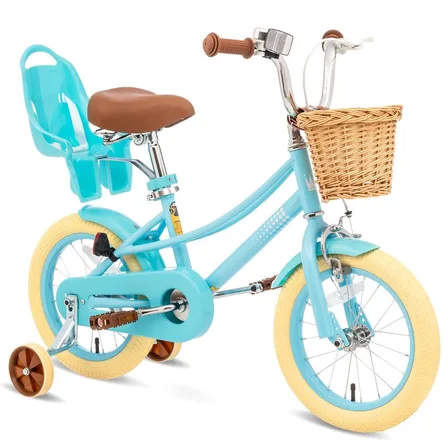
Girls' Training Wheel Bike by XJD, 12–20 Inch Wheels – Blue
This XJD girls' training wheel bike in Blue covers one of the widest fit ranges …$139
$159 -
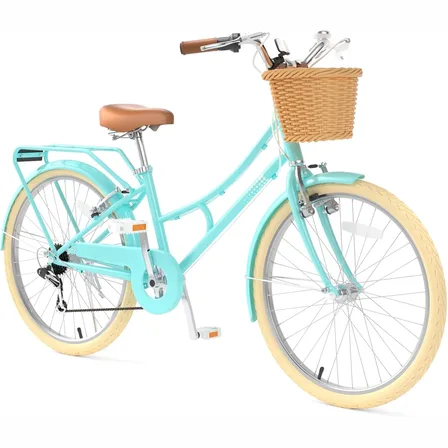
XJD 24-Inch Green Beach Cruiser Bike with U-Brake
This XJD 24-inch beach cruiser in green is made for riders about 4'8" to 5'4" ta…$159.99
$199.99 -

Kids Bike Helmet by XJD for Boys & Girls – Black, Blue, Green, Pink, Purple
The XJD Kids Bike Helmet covers a wide 2-to-8-year age range thanks to two head-…$59.99