

What bike size for 10 year old boy
For a 10-year-old boy, start by comparing 20-inch and 24-inch bikes. Choose by measured height and an actual fit check: 20-inch suits 48–60 in (122–152 cm), while 24-inch suits 54–64 in (137–163 cm).
Measure him before choosing
Age narrows the search, but it does not determine the correct bike. Measure your child barefoot, standing straight against a wall, from the floor to the top of his head. Then measure his inseam from the floor to the crotch while he stands naturally.
Use height to select a likely wheel size. Keep the inseam measurement available when checking the bicycle’s stand-over clearance and saddle adjustment. Frame shapes vary, so two bicycles with the same wheel size can fit differently.
| Wheel size | XBikes starting point | Meaning for a 10-year-old |
|---|---|---|
| 20 Inch | Ages 7–12; 48–60 in / 122–152 cm | Start here if his height falls within this range, especially if he is less confident. |
| 24 Inch | Ages 10–14; 54–64 in / 137–163 cm | Consider this size when his measured height and control both support it. |
| 26 Inch | Youth and adults over 60 in / 153 cm | Only consider it above this height threshold and after a successful fit check. |
The 20-inch and 24-inch ranges overlap from 54 to 60 inches. In that overlap, do not automatically choose the larger bicycle. Current confidence, reach, stand-over clearance and brake control should settle the decision.
Do this fit check in person
Have him try the exact bicycle rather than relying only on its wheel label. The American Academy of Pediatrics advises against buying an oversized bike merely for future growth. A bike he cannot control comfortably now is not the right fit.
- Check stand-over: With him straddling the bicycle, confirm that he can stand securely rather than being forced onto tiptoe or against the frame.
- Check reach: He should hold the handlebar without stretching, locking his elbows or losing a stable riding position.
- Check brake access: From his normal hand position, he must be able to reach and operate the brake controls confidently.
- Check handling: Ask him to start, steer, stop and dismount under close adult supervision in a traffic-free area.
If he appears cramped on a 20-inch bike and controls a 24-inch bike comfortably, the 24-inch option may be appropriate. If the 24-inch bike makes starting, stopping or reaching difficult, choose the better-controlled 20-inch fit.
How the supplied bikes relate to this question
The catalog options below provide 20-inch and 24-inch choices that match the main starting ranges for many 10-year-olds, plus a 26-inch label for taller riders. Their colors or gender wording do not establish fit; measurements and control do. They are useful comparison candidates only if their styling and category suit the rider.
 XJD Pink Beach Cruiser for Girls – Rear Rack & V-Brake
Available in 20 Inch, 24 Inch and 26 Inch labels, this beach cruiser enables comparison across the likely size range. Its girls’ wording and pink color are not fit evidence; verify height, stand-over, reach and brake control.
 Girls' Training Wheel Bike by XJD with Basket – Purple
The 20 Inch version overlaps the XBikes 48–60 inch rider-height starting range. The smaller 14 Inch and 16 Inch labels are outside the usual height-based starting point for most 10-year-olds.
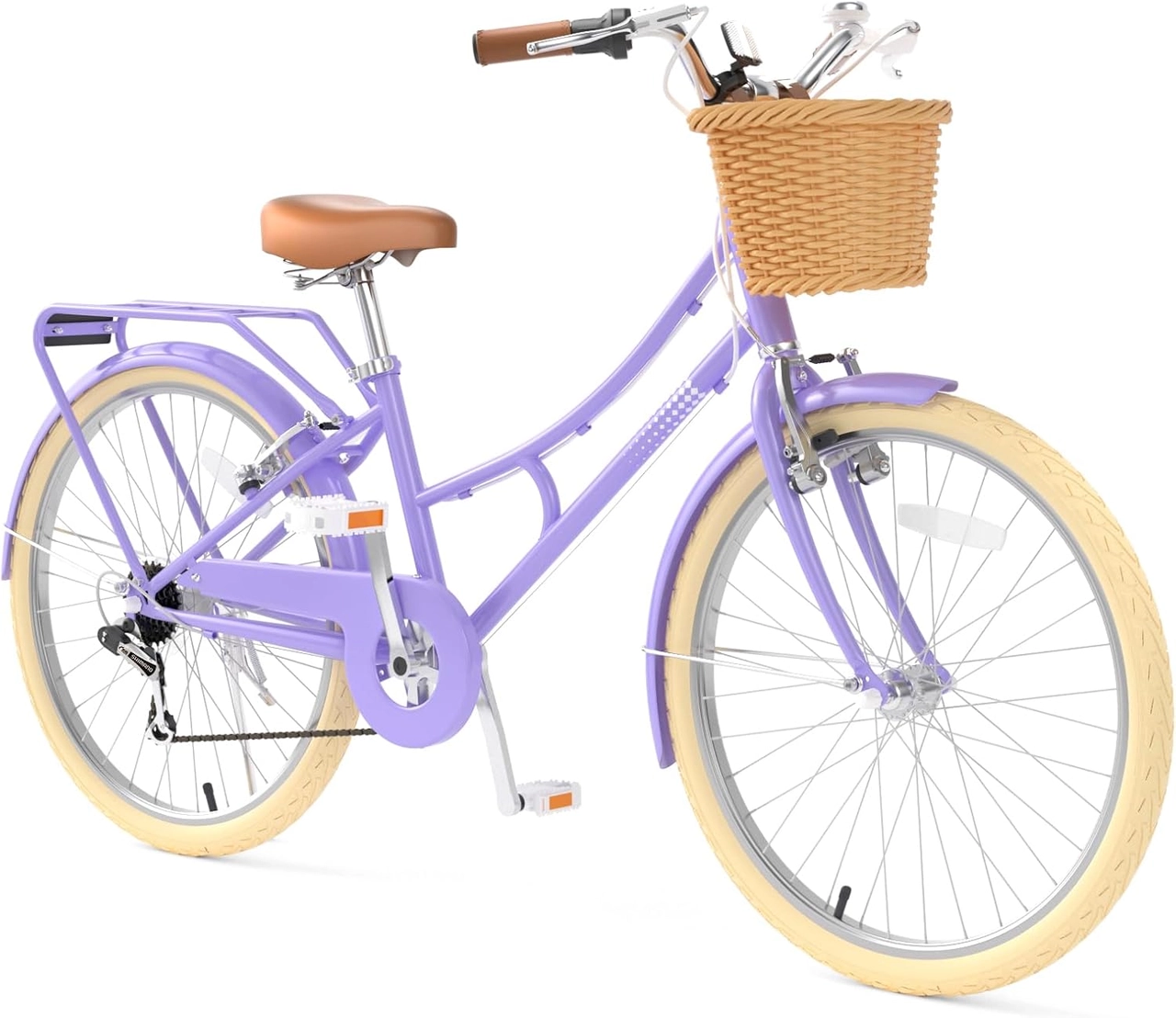 24-Inch Purple XJD Beach Cruiser Bike with U-Brake
This 24-inch beach cruiser is relevant when the rider measures 54–64 inches tall. Confirm stand-over clearance, reach, current confidence and ability to operate its U-brake before choosing it.
XJD Pink Beach Cruiser for Girls – Rear Rack & V-Brake has 20 Inch, 24 Inch and 26 Inch SKU labels. That makes it the broadest supplied wheel-size comparison, but each size still needs its own fit check. Its girls’ wording and pink color are catalog presentation, not evidence that it will or will not fit a boy.
Girls' Training Wheel Bike by XJD with Basket – Purple is offered with 14 Inch, 16 Inch and 20 Inch labels. For this question, only its 20-inch option overlaps the usual starting range for a 10-year-old. Consider it only if the rider’s height, confidence and preferences make that particular category relevant.
24-Inch Purple XJD Beach Cruiser Bike with U-Brake is specifically a 24-inch beach cruiser. Compare it when the child measures 54–64 inches (137–163 cm), then verify stand-over, reach and his ability to use its brake control. The wheel label alone is not enough.
Do not size up for growth
A larger bike may last longer in theory, but that is not a sound reason to accept poor control today. Warning signs include difficulty standing securely over the bicycle, an overextended reach, uncertain steering, or trouble accessing and operating the brakes. Return to the smaller candidate if it gives him noticeably better command.
If neither candidate permits a comfortable, controlled position, do not force a choice from the supplied products. Try another bicycle within the height-appropriate wheel range and repeat the same checks. Follow the exact product manual or use a qualified bicycle mechanic for assembly, adjustments, compatibility, maintenance and torque requirements.
Make the final 20-inch or 24-inch decision
Measure height and inseam first. Shortlist 20 inches at 48–60 inches tall or 24 inches at 54–64 inches tall, then let the supervised ride decide. Choose the size on which your 10-year-old can stand over, reach, steer, brake and dismount with confidence—not the size he may grow into.
Before riding, add a properly fitting bicycle helmet. It should sit level, and its straps should be used according to the helmet manufacturer’s instructions.
Bikes for your next adventure
-

Light Purple XJD Toddler Bike Helmet, Adjustable, Size XS (46–51 cm)
This Light Purple XJD toddler bike helmet is made for the smallest riders — the …$20.39
-

Black XJD Toddler Bike Helmet, Adjustable – Kids' Protective Helmet
The XJD Toddler Bike Helmet in black is an adjustable protective helmet for kids…$20.39
-

XJD Girls Bike for Kids Ages 3-8, 12/14/16 Inch with Training Wheels – Purple
The XJD Girls Bike in Purple is a training-wheel bicycle for kids ages 3 to 8, f…$149
$169