

What size bicycle for a 61 inches boy
For a boy who is 61 inches tall, compare a 24-inch bicycle with a 26-inch bicycle. XBikes places 61 inches within both starting ranges, but the right choice depends on his inseam, stand-over clearance, reach, brake control and confidence—not height alone.
Why both 24-inch and 26-inch bikes are possibilities
The XBikes starting point for a 24-inch bicycle is a rider height of 54–64 inches (137–163 cm), generally ages 10–14. The 26-inch starting point is for youth and adults over 60 inches (153 cm). At 61 inches, he sits inside the 24-inch range and just above the threshold for considering a 26-inch bike.
That overlap does not mean the sizes fit equally. Wheel size is only a screening tool; frame shape and riding position can differ between bicycles with the same wheel size. Age is also secondary to his current measurements and ability to control the actual bike.
Measure height and inseam first
- Confirm standing height: Have him stand barefoot against a wall, looking straight ahead, and measure from the floor to the top of his head. Recheck that the result is 61 inches.
- Measure inseam: With shoes off and feet slightly apart, place a rigid book between his legs to represent the saddle area. Measure vertically from the floor to the top edge of the book.
- Bring the measurements: Compare them with the sizing guidance for the exact bicycle or frame. If that guidance is missing or unclear, consult the product manual, seller or a qualified bicycle mechanic.
Inseam is important because two children of equal height can have different leg and torso proportions. Do not infer adequate clearance from height alone.
Do a hands-on fit check
Have him try each candidate bicycle. The American Academy of Pediatrics recommends trying the bike, checking stand-over and control, and avoiding an oversized bicycle bought merely for future growth.
- Stand-over: He should be able to straddle the bicycle securely. Use the exact model’s fit guidance rather than assuming one clearance number applies to every frame.
- Starting and stopping: He should mount, begin riding, stop and dismount without struggling against the bicycle’s size.
- Steering and reach: He should hold the grips and turn the handlebar without stretching excessively or losing a stable riding position.
- Brake control: He must reach and operate the brake controls confidently with his hands in a normal position.
- Confidence: Watch for hesitation, awkward leaning or difficulty making controlled turns. A technically plausible size is still wrong if it overwhelms him.
If the 26-inch bicycle compromises any of these checks while the 24-inch bicycle is easy to control, choose the 24-inch option. If both fit correctly, compare them through supervised riding rather than choosing solely for room to grow.
How the supplied bicycles help with the comparison
The supplied catalog choices include 24-inch and 26-inch options, so they are relevant candidates for a 61-inch rider’s two likely starting sizes. They help you compare actual fit across the overlap instead of treating the sizing ranges as a final answer.
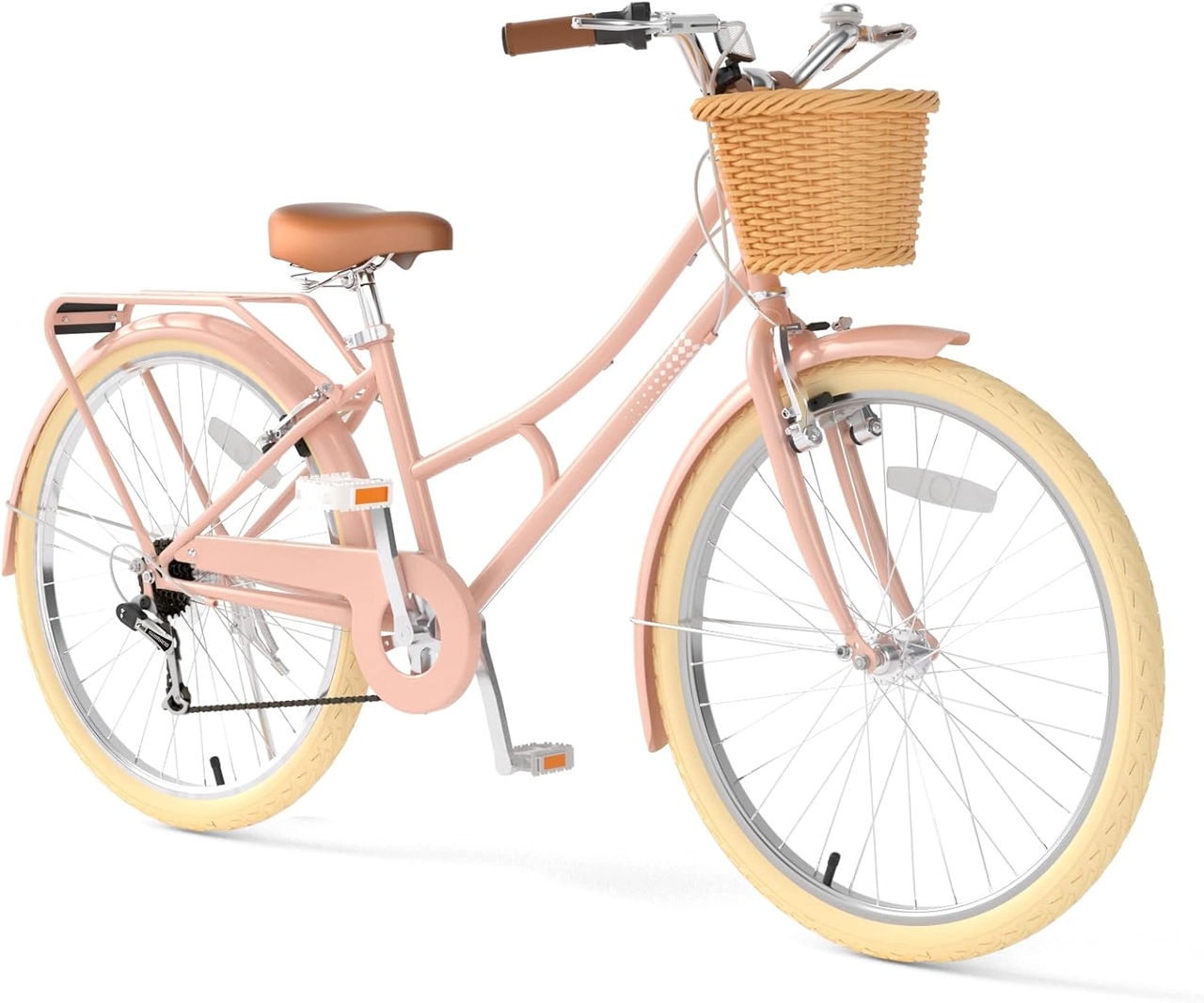 Pink XJD Beach Cruiser Bike, 24"/26", U-Brake
Available in 24 Inch and 26 Inch labels, this beach cruiser listing supports a direct hands-on comparison of the two starting sizes relevant to a 61-inch rider.
 XJD Kids Beach Cruiser Bicycle, Rear Rack & V-Brakes, Mint Green
Its 24 Inch and 26 Inch labels are relevant comparison points for a 61-inch rider; its 20 Inch label falls below the supplied height starting point for this measured height.
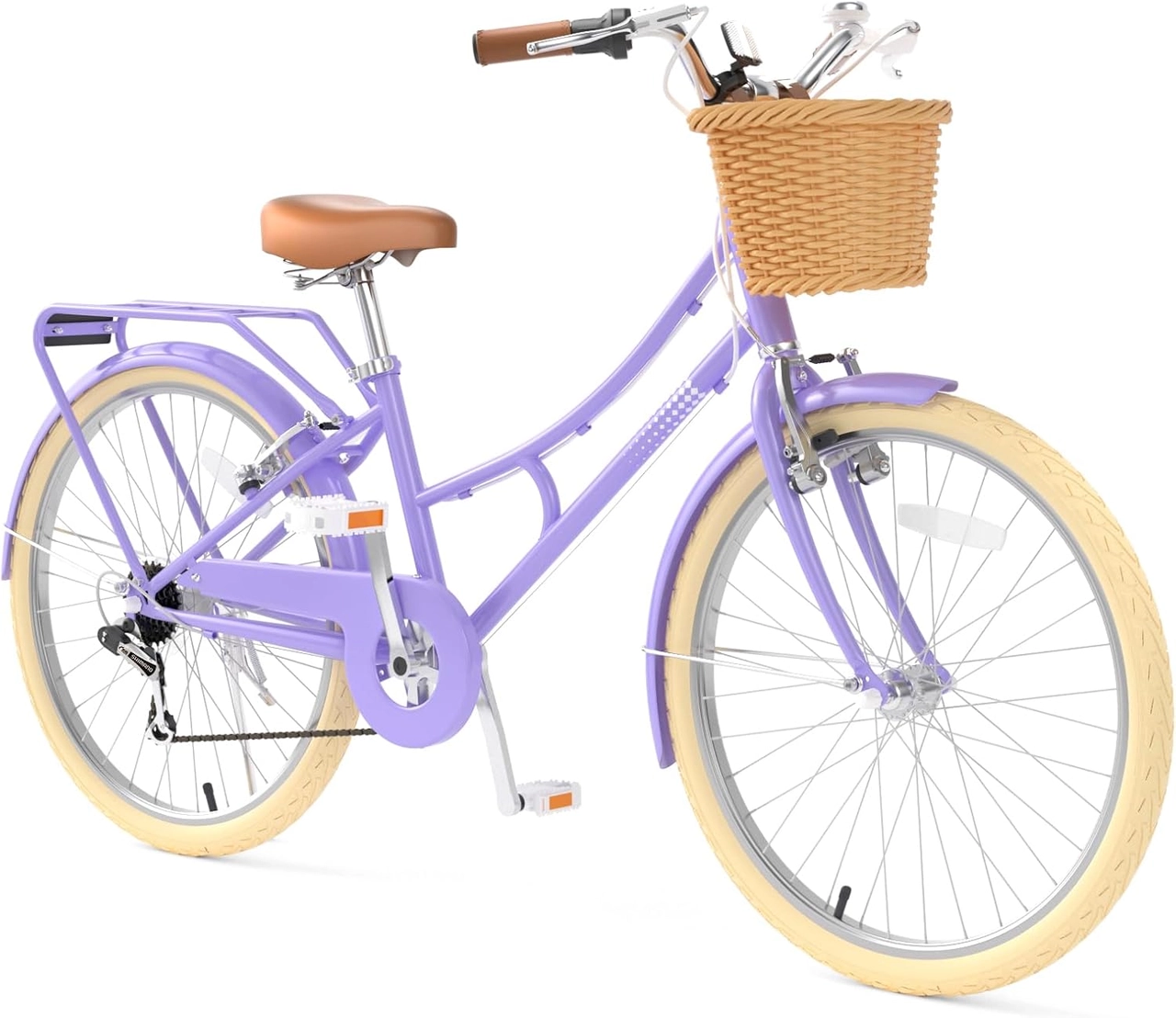 24-Inch Purple XJD Beach Cruiser Bike with U-Brake
This 24-inch beach cruiser is a relevant fit-check candidate because 61 inches falls within the supplied 24-inch rider-height range. Its available SKU label is Default.
The Pink XJD Beach Cruiser Bike, 24"/26", U-Brake is offered with 24 Inch and 26 Inch SKU labels, making it useful for a direct comparison between the two wheel sizes within one catalog listing.
The XJD Kids Beach Cruiser Bicycle, Rear Rack & V-Brakes, Mint Green has 20 Inch, 24 Inch and 26 Inch SKU labels. For a measured height of 61 inches, focus the fit comparison on its 24 Inch and 26 Inch options; the XBikes 20-inch range ends at 60 inches.
The 24-Inch Purple XJD Beach Cruiser Bike with U-Brake provides a 24-inch comparison point. Its available SKU label is Default, so confirm the exact configuration shown at selection and use the product manual for details not stated in the catalog facts.
These beach cruiser bicycles should not be assumed interchangeable simply because their wheel labels match. Compare the child’s position and control on the exact model and selected size.
Reject a size that is hard to control
Do not move up to 26 inches merely because 61 inches exceeds its starting threshold. A bicycle is too large if he cannot straddle it appropriately, reach the controls naturally, steer steadily, or stop confidently. Likewise, do not automatically select 24 inches without a trial; reach and frame proportions still need checking.
For assembly, adjustment, maintenance, compatibility, load limits or torque, follow the manual for the exact product or use a qualified bicycle mechanic. Do not improvise settings from another bicycle’s instructions.
Make the final 61-inch decision
Start by trying a 24-inch bicycle, then compare a 26-inch bicycle because 61 inches falls in the overlap. Select the one he can straddle, reach, steer, brake, start and stop with confident control today. Finish by fitting a bicycle helmet so it sits level and its straps are used according to the helmet manufacturer’s instructions.
Bikes for your next adventure
-
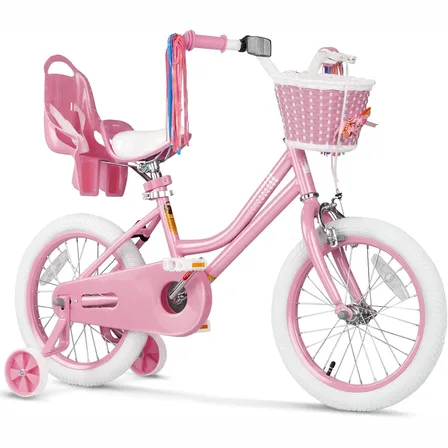
XJD Pink Girls' Bike – Kids 12/14/16 Inch Training Wheel Bicycle
The XJD Pink Girls' Bike is a training-wheel bicycle for girls ages 3 to 8 (ride…$149
$169 -

XJD Girls Bike for Kids Ages 3-8, 12/14/16 Inch with Training Wheels – Purple
The XJD Girls Bike in Purple is a training-wheel bicycle for kids ages 3 to 8, f…$149
$169 -

Light Pink XJD Girls' Bicycle with Basket & Training Wheels
The Light Pink XJD Girls' Bicycle with Basket & Training Wheels is a retro-style…$109.99
$129.99