

What size bike 10 year old boy
For most 10-year-old boys, start by comparing 20-inch and 24-inch bikes. Measure his height and inseam, then confirm stand-over clearance, reach and brake control on the actual bike.
Use height before age
Age gives you a starting point, not a final size. Under the XBikes wheel-size guide, a 20-inch bike generally corresponds to ages 7–12 and rider heights of 48–60 inches (122–152 cm). A 24-inch bike generally corresponds to ages 10–14 and heights of 54–64 inches (137–163 cm).
This means many 10-year-olds fall near the overlap. A boy measuring under 54 inches should usually begin his comparison with a 20-inch bike. At 54 inches or taller, compare both sizes and let actual control decide. Do not automatically choose 24 inches because he has reached age 10.
| Measured rider height | Starting comparison |
|---|---|
| 48–53 inches (122–136 cm) | 20-inch bike |
| 54–60 inches (137–152 cm) | Compare 20-inch and 24-inch bikes |
| 61–64 inches (155–163 cm) | 24-inch bike |
| Over 60 inches (153 cm) | 26-inch may also be relevant for youth and adults; require an individual fit check |
The ranges overlap intentionally. Wheel diameter alone does not establish whether a particular frame will fit.
Measure him before shopping
Have him stand upright without shoes, with his back against a wall. Measure from the floor to the top of his head for height. For inseam, place a firm, thin book between his legs so it meets the body similarly to a saddle, then measure from the floor to the top edge of the book.
Record both measurements rather than relying on clothing size or a previous bicycle. Compare his height with the XBikes ranges above. Because no numerical inseam standard has been supplied here, use the inseam measurement during the physical stand-over check instead of converting it into a wheel size.
Check the actual bicycle
Have the child try each candidate bicycle. The American Academy of Pediatrics advises against buying an oversized bike merely for future growth. A bike that is difficult to mount, balance, steer or stop is not made suitable by the expectation that he will grow into it.
- Stand-over: With both feet on the ground and the bike upright, confirm that he can straddle it without the frame pressing into his body.
- Reach: Seated in a normal riding position, he should reach the handlebar without excessive stretching, locked elbows or loss of balance.
- Brake control: He must be able to reach and operate the fitted brake controls confidently while keeping control of the handlebar.
- Confidence: Ask him to start, steer, turn and stop in a controlled area. Hesitation caused by the bike’s size matters even when his height falls within the listed range.
If either size prevents reliable control, reject it and try a different fit. For assembly, adjustments, torque, maintenance, load limits or compatibility, follow the exact product manual or consult a qualified bicycle mechanic.
How the two catalog bikes help
The supplied choices provide direct 20-inch and 24-inch comparison points for the sizes most relevant to this question. The Blue XJD Freestyle BMX Bike, 20-Inch – No Pegs is in the Kids' BMX Bikes category and represents the smaller starting size. The XJD 24-Inch Green Beach Cruiser Bike with U-Brake is in the Beach Cruiser Bikes category and is available with a Green / 24 Inch label; it represents the larger starting size. Their different categories also mean wheel size should not be treated as proof of identical geometry, reach or riding position.
 Blue XJD Freestyle BMX Bike, 20-Inch – No Pegs
A 20-inch Kids' BMX Bikes option that provides a relevant comparison point for riders within the supplied 48–60 inch height starting range, subject to an individual fit and control check.
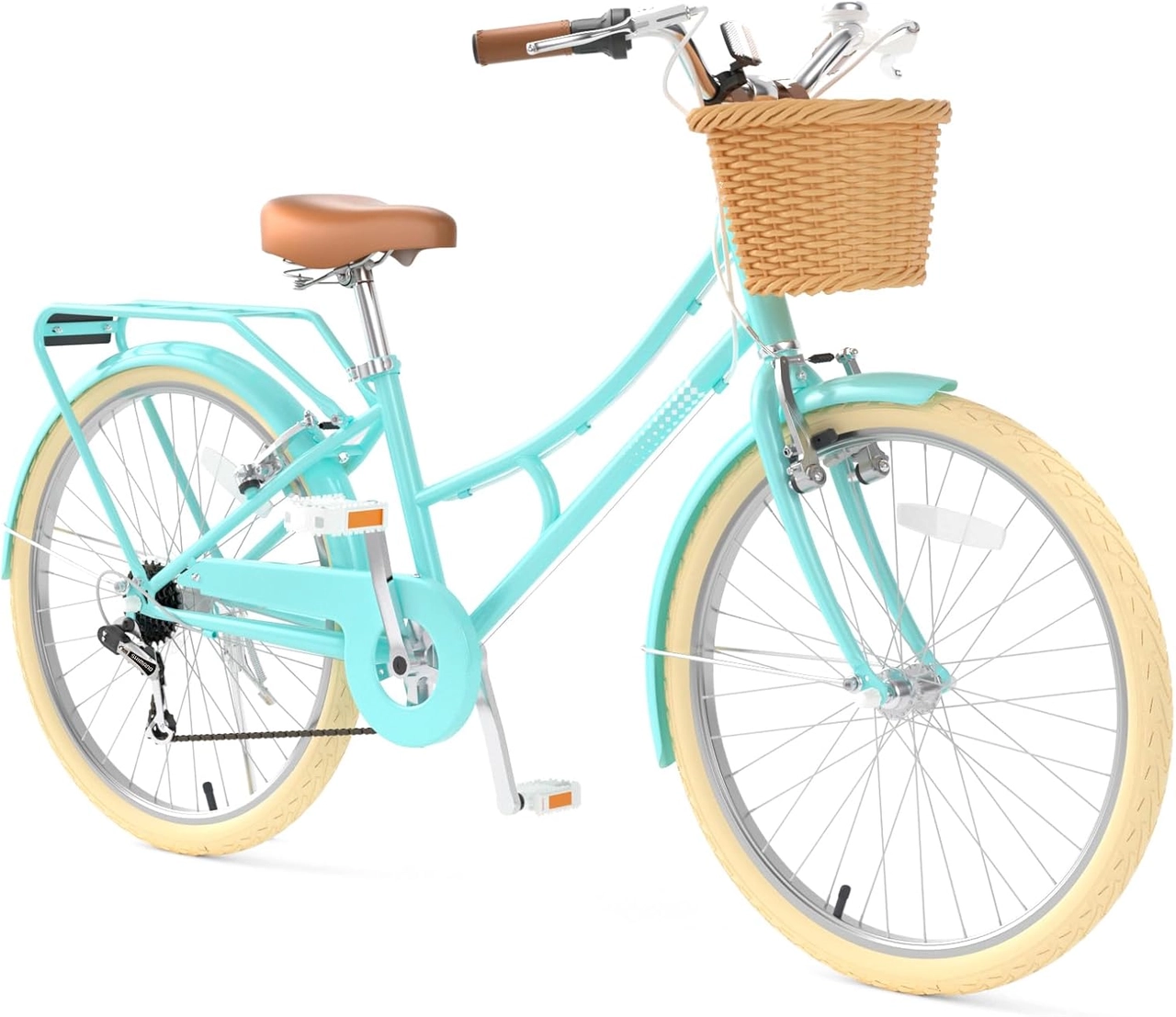 XJD 24-Inch Green Beach Cruiser Bike with U-Brake
A 24-inch Beach Cruiser Bikes option, available with a Green / 24 Inch label, for comparison when the rider falls within the supplied 54–64 inch height range and passes an individual fit check.
Use these products only when their labeled wheel size matches the child’s measured-height starting range and the individual checks succeed. The 20-inch BMX option may be relevant across the 48–60 inch range; the 24-inch cruiser option may be relevant across the 54–64 inch range. Neither product title proves fit for a particular 10-year-old.
Make the final decision
Choose the smallest candidate that provides an appropriate height starting point while allowing comfortable stand-over, natural reach, dependable brake operation and confident control. Do not size up solely for growing room.
Before riding, add a bicycle helmet that fits properly. Following U.S. Consumer Product Safety Commission guidance, it should sit level and its straps should be used according to the helmet manufacturer’s instructions.
For a 10-year-old boy, measure first: begin with 20 inches below 54 inches tall, compare 20 and 24 inches from 54–60 inches, and favor neither until he can comfortably straddle, steer and stop the actual bike.
Bikes for your next adventure
-

Light Purple XJD Toddler Bike Helmet, Adjustable, Size XS (46–51 cm)
This Light Purple XJD toddler bike helmet is made for the smallest riders — the …$20.39
-

Black XJD Toddler Bike Helmet, Adjustable – Kids' Protective Helmet
The XJD Toddler Bike Helmet in black is an adjustable protective helmet for kids…$20.39
-

XJD Girls Bike for Kids Ages 3-8, 12/14/16 Inch with Training Wheels – Purple
The XJD Girls Bike in Purple is a training-wheel bicycle for kids ages 3 to 8, f…$149
$169