

What size bike frame for 13 year old boy
For a 13-year-old boy, start with a 24-inch bike at 54–64 in (137–163 cm), or a 26-inch bike if he is over 60 in (153 cm). Because those ranges overlap, measure him and confirm stand-over clearance, reach, brake control and confidence on the actual bicycle before choosing a frame.
Measure the rider before comparing bikes
Age narrows the search, but it does not determine fit. Measure his height without shoes while he stands straight against a wall. Then measure his inseam from the floor to the top of the inside leg, using a firm, level book to represent the saddle area.
Record both measurements in inches or centimeters. Height identifies the XBikes wheel-size starting point; inseam helps you assess whether he can straddle a particular frame comfortably. Frame geometry can differ between bicycles with the same wheel size, so a wheel label cannot replace an individual fit check.
Compare his height with the XBikes starting points
| Wheel size | XBikes age starting point | Rider-height starting point | Meaning for a 13-year-old |
|---|---|---|---|
| 20 Inch | Ages 7–12 | 48–60 in / 122–152 cm | Below the usual age starting point; consider only if his measurements and an actual fit check support it. |
| 24 Inch | Ages 10–14 | 54–64 in / 137–163 cm | The main starting point when his measured height falls in this range. |
| 26 Inch | Youth and adults | Over 60 in / 153 cm | A possible starting point once he is over 60 inches, subject to full control on the exact bike. |
A rider between 60 and 64 inches falls within both the 24-inch range and the 26-inch starting point. Do not resolve that overlap by age or by choosing the larger bike for future growth. Compare both in person and select the one he can control now.
Check the frame on the actual bicycle
Have him try each candidate bike. The American Academy of Pediatrics advises against buying an oversized bicycle merely for growth. Use these checks to decide whether the frame and controls suit him:
- Stand-over: He should be able to straddle the bicycle without the frame preventing a stable stance. Use his inseam measurement as a screening aid, then verify it physically.
- Reach: From a normal riding position, he should reach the handlebar without stretching, locking his elbows or losing a balanced posture.
- Brake control: He should reach and operate the brake controls confidently while keeping control of the handlebar.
- Starting and stopping: He should mount, start, steer, turn and stop without the bicycle feeling unwieldy.
- Confidence: If he looks tense or cannot make controlled low-speed movements, try a different frame or wheel size rather than expecting him to grow into it.
Saddle adjustment can refine a suitable fit, but it cannot make an excessively long, tall or hard-to-control frame appropriate. Follow the exact bicycle manual for assembly and adjustments, or ask a qualified bicycle mechanic; do not guess at torque or setup procedures.
How the supplied 24-inch option relates
The 24-Inch Purple XJD Beach Cruiser Bike with U-Brake is the supplied catalog option relevant to this question because its 24-inch wheel size matches the XBikes starting range for riders 54–64 inches tall and ages 10–14. It is a beach cruiser bike, so compare its actual stand-over, reach and brake access with the rider rather than treating the wheel size alone as proof of fit.
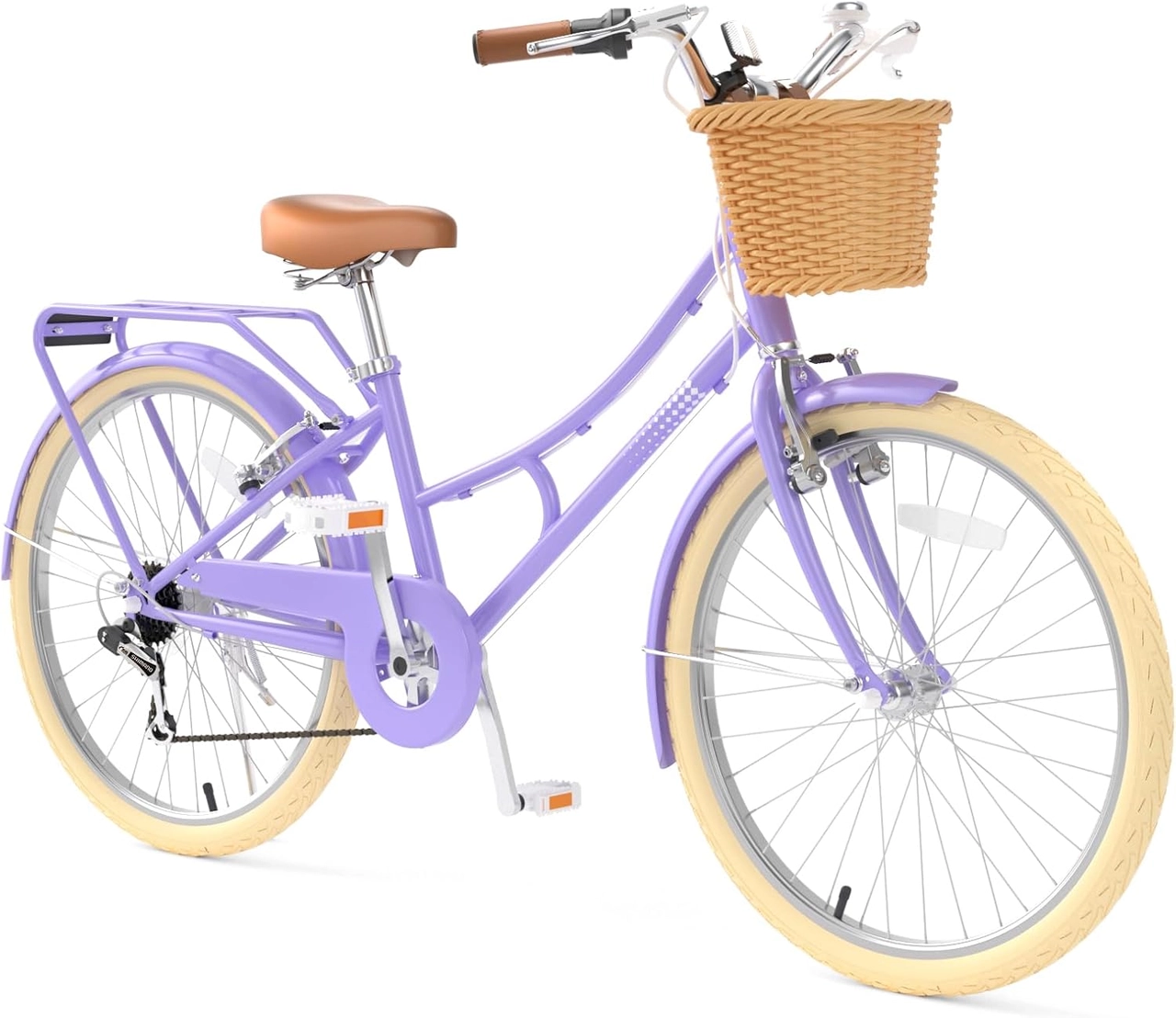
This product is relevant when the boy measures within the 24-inch height range and can demonstrate comfortable control during a hands-on fit check. If he is over 60 inches, it can also serve as a direct 24-inch comparison against a 26-inch candidate. It is not automatically preferable simply because age 13 falls within the stated starting range.
Make the final 24-inch versus 26-inch decision
- Measure height and inseam without shoes.
- If height is 54–60 inches, begin the fit check with a 24-inch bicycle.
- If height is 60–64 inches, compare 24-inch and 26-inch bicycles directly.
- If height is over 64 inches, begin with a 26-inch bicycle rather than assuming a 24-inch model remains suitable.
- Reject any candidate he cannot straddle, reach, steer and brake confidently.
Complete the setup with a properly fitting bicycle helmet. The U.S. Consumer Product Safety Commission advises that the helmet sit level and that its straps be used according to the helmet manufacturer’s instructions.
For this 13-year-old, choose the frame attached to the 24-inch or 26-inch starting point that matches his measured height and lets him control the exact bike now—not the larger frame he might grow into later.
Bikes for your next adventure
-

XJD Girls Bike for Kids Ages 3-8, 12/14/16 Inch with Training Wheels – Purple
The XJD Girls Bike in Purple is a training-wheel bicycle for kids ages 3 to 8, f…$149
$169 -

Pink Girls' 12/14/16" Bike by XJD – Basket & Doll Seat
The XJD Pink Girls' Bike with Basket & Doll Seat is made for riders 71–122 cm ta…$75.99
$99.99 -

Light Purple XJD Toddler Bike Helmet, Adjustable, Size XS (46–51 cm)
This Light Purple XJD toddler bike helmet is made for the smallest riders — the …$20.39