

What size bike should a 13 year old boy have
Most 13-year-old boys should start by trying a 24-inch bike if they are 54–64 in (137–163 cm) tall; over 60 in (153 cm), compare 26-inch bikes too.
Choose by measurement, not age alone
Age identifies a useful starting point, but it cannot confirm fit. Measure the boy’s height without shoes, standing straight against a wall. Then measure his inseam from the floor to the crotch while he stands with feet slightly apart. Record both measurements in inches or centimetres.
Under the XBikes starting points, a 24-inch bicycle corresponds to ages 10–14 and heights of 54–64 in (137–163 cm). A 26-inch bicycle is a starting point for youth and adults over 60 in (153 cm). Therefore, a 13-year-old between 60 and 64 inches may reasonably compare both sizes, but the individual fit check must decide.
If he is 48–60 in (122–152 cm), a 20-inch bike is the listed starting point, even though its age band is 7–12. A smaller, controllable bicycle is preferable to an oversized one selected only because of age or expected growth.
Use this wheel-size comparison
| Measured height | Size to try first | What to do next |
|---|---|---|
| 48–60 in / 122–152 cm | 20 Inch | Check stand-over, reach and brake operation. |
| 54–64 in / 137–163 cm | 24 Inch | Try the complete bicycle and assess control. |
| Over 60 in / 153 cm | 26 Inch | Compare with 24 Inch where the ranges overlap. |
The overlapping ranges are intentional starting points, not proof that two sizes fit equally. Frame shape and adjustment can affect how a complete bicycle feels, so a wheel label alone cannot settle the choice.
Perform the fit check before buying
Have the rider try the actual bicycle. The American Academy of Pediatrics advises against buying an oversized bicycle merely for growth and recommends checking stand-over clearance, control and brake reach.
- Stand-over: Ask him to straddle the bicycle with both feet flat on the ground. He should not be forced onto his toes or pressed uncomfortably against the frame.
- Starting and stopping: He should be able to mount, start, stop and put a foot down without the bicycle feeling unmanageable.
- Reach: With hands on the controls, his posture should permit steering without excessive stretching, cramped arms or loss of balance.
- Brake control: Confirm that he can reach and operate the brake controls confidently while maintaining his grip and direction.
- Confidence: Let him ride slowly in a controlled area. If he hesitates because the bicycle feels tall, long or difficult to turn, do not size up.
Adjustment limits, assembly requirements and maintenance procedures vary. Follow the exact product manual, or ask a qualified bicycle mechanic when the manual does not resolve a fit or setup question.
How the supplied XBikes options help
These Beach Cruiser Bikes provide relevant 20-, 24- and 26-inch catalog comparison points around the likely size for a 13-year-old. Their labels help narrow what to try, but they do not replace measurements or an in-person control check.
 XJD Kids Beach Cruiser Bicycle, Rear Rack & V-Brakes, Mint Green
Offers 20 Inch, 24 Inch and 26 Inch SKU labels, making it useful for comparing the relevant XBikes wheel-size starting points before completing an individual fit check.
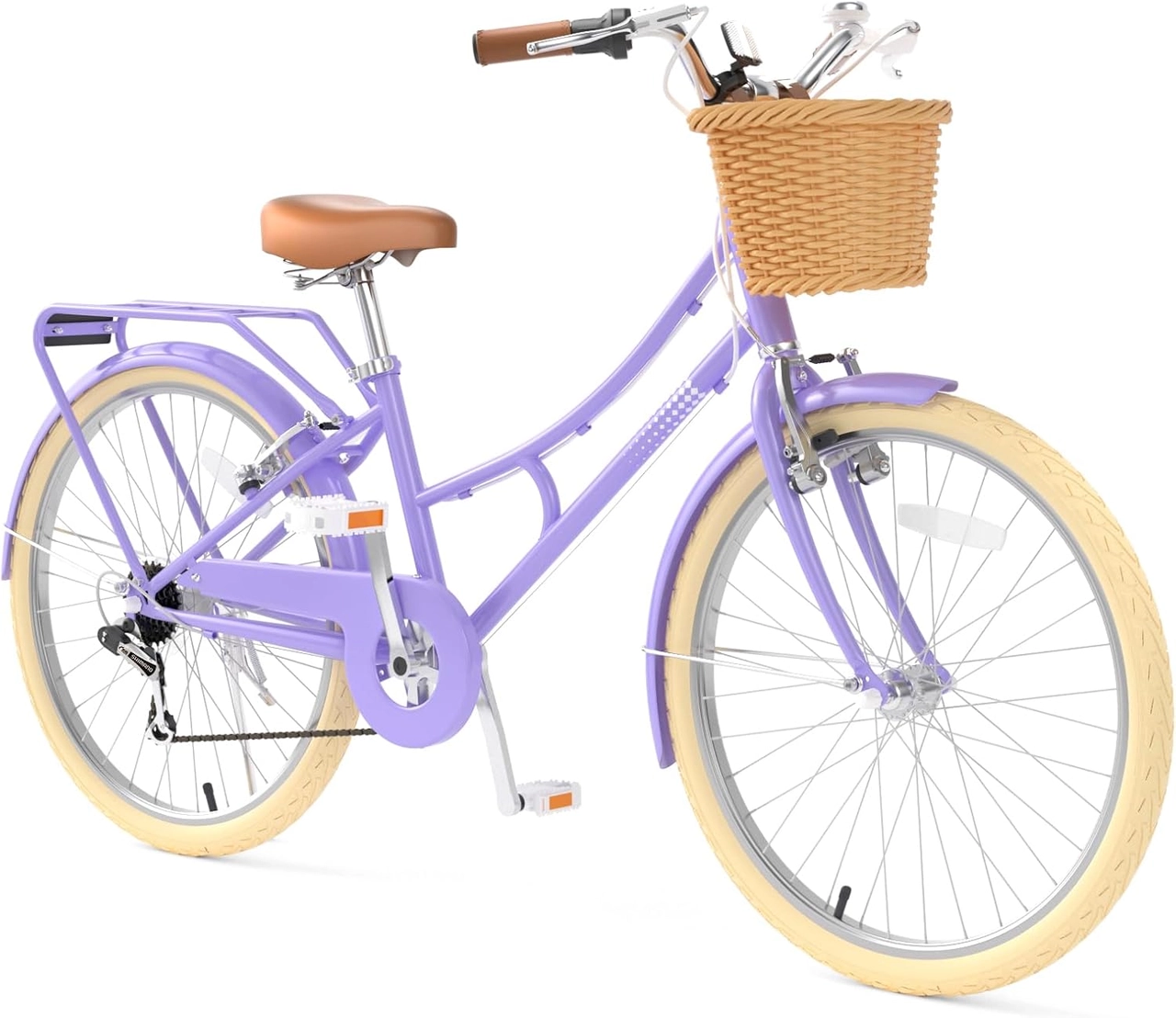 24-Inch Purple XJD Beach Cruiser Bike with U-Brake
Its exact title identifies a 24-inch bicycle, relevant to riders measuring 54–64 inches (137–163 cm) who can pass the stand-over, reach and control checks.
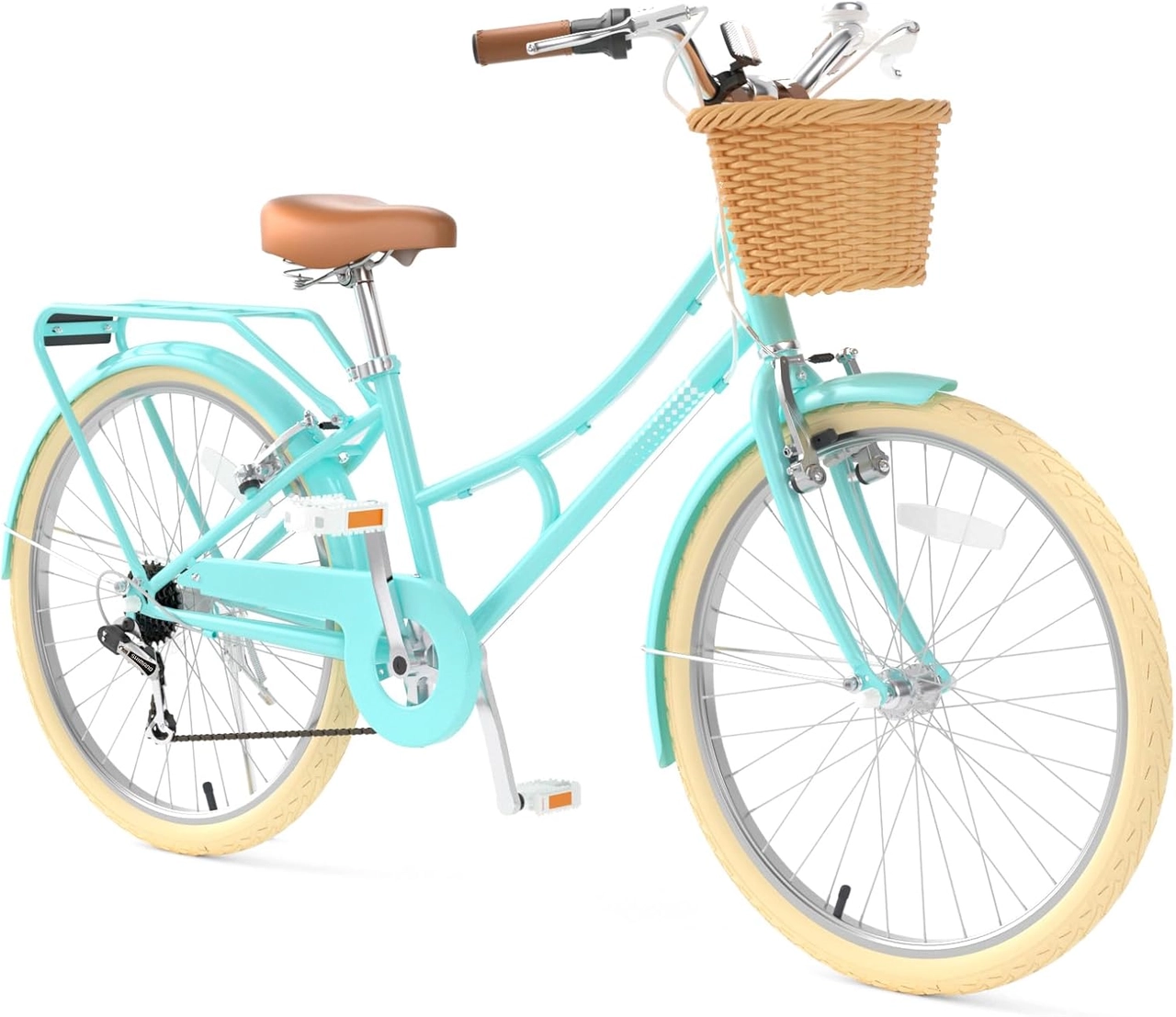 XJD 24-Inch Green Beach Cruiser Bike with U-Brake
Supplied SKU labels include 24 Inch and 26 Inch versions, allowing comparison where the XBikes height ranges overlap, while color and size must be selected carefully.
XJD Kids Beach Cruiser Bicycle, Rear Rack & V-Brakes, Mint Green offers 20 Inch, 24 Inch and 26 Inch SKU labels. It is the broadest supplied option for comparing the three wheel-size starting points against one rider’s measurements.
24-Inch Purple XJD Beach Cruiser Bike with U-Brake has a Default SKU label; its exact title identifies it as a 24-inch bicycle. Consider it when the rider falls in the 24-inch height range, subject to the complete fit check.
XJD 24-Inch Green Beach Cruiser Bike with U-Brake has Green / 24 Inch, Pink / 24 Inch and Pink / 26 Inch SKU labels. It can support a 24-versus-26-inch comparison for a rider over 60 in (153 cm), provided the relevant version is selected.
Make the final decision
For a 13-year-old boy, measure height and inseam first. Start with 24 Inch at 54–64 in (137–163 cm), compare 26 Inch once he is over 60 in (153 cm), or start with 20 Inch at 48–60 in (122–152 cm). Choose only after he demonstrates comfortable stand-over, reach, braking, steering and stopping.
Complete the setup with a properly fitting bicycle helmet. The U.S. Consumer Product Safety Commission says it should sit level and its straps should be used according to the helmet manufacturer’s instructions. The right decision is the size he can control confidently now—not the largest bicycle he might grow into.
Bikes for your next adventure
-

Kids Bike Helmet by XJD for Boys & Girls – Black, Blue, Green, Pink, Purple
The XJD Kids Bike Helmet covers a wide 2-to-8-year age range thanks to two head-…$59.99
-

Kids Bike Helmet by XJD for Girls – Pink
The XJD Kids Bike Helmet in Pink is a lightweight multi-sport helmet for girls r…$59.99
$99 -

XJD Kids Bike for Girls – Pink, 12/14/16/20 Inch with Training Wheels
The XJD Kids Bike for Girls in Pink is a training-wheel bike built to carry your…$139
$159