

What size of bike for 54 inch boy
For a boy who is 54 inches tall, compare a 20-inch bike with a 24-inch bike. He is at the overlap: 20-inch bikes cover 48–60 inches, while 24-inch bikes start at 54 inches. Choose only after checking his inseam, stand-over clearance, reach, brake control and confidence.
Why 54 inches falls between two sizes
Height gives you a useful shortlist, but it does not settle the choice. The XBikes starting points place a 54-inch rider inside both relevant ranges:
| Wheel size | Rider-height starting point | What it means at 54 inches |
|---|---|---|
| 20 Inch | 48–60 in / 122–152 cm | Still within the stated range |
| 24 Inch | 54–64 in / 137–163 cm | At the very bottom of the stated range |
A 20-inch bike may suit a rider who needs easier handling or has a shorter inseam. A 24-inch bike may fit if he can comfortably clear, reach and control that particular frame. Wheel size alone does not reveal frame shape, saddle range or handlebar reach.
Measure before comparing bikes
Measure the child without shoes, preferably with another person helping. Record his current height rather than relying on an old measurement.
- Height: Have him stand straight against a wall and measure from the floor to the top of his head.
- Inseam: Place a firm, thin book between his legs with gentle upward contact, keeping it level. Measure from the floor to the top edge of the book.
- Current confidence: Note whether he starts, stops, turns and brakes calmly on his present bike. Confidence affects which borderline size is manageable.
Use these measurements when checking the geometry and adjustment information in the exact product manual. If that information is unclear, ask a qualified bicycle mechanic to assess the fit.
Do a real fit check
Have the child try the fully assembled bicycle. Do not buy an oversized bike merely so he can grow into it. While standing over the bike, he should have practical clearance rather than being pressed against the frame. Because frame designs differ, compare his inseam with the actual bicycle instead of assuming every bike with the same wheel size fits alike.
With him seated in a normal riding position, check that he can reach the handlebars without an exaggerated stretch. He should be able to steer smoothly, look ahead and remain balanced. Ask him to operate each brake control several times: his hands must reach and use the controls deliberately without losing his grip.
Finally, let him start, ride slowly, turn and stop in a controlled area with close adult supervision. If the 24-inch bike makes any of these tasks awkward, it is not the right present fit even though 54 inches appears in its height range. Compare a 20-inch option instead.
How the supplied 24-inch cruisers help
The supplied catalog options are useful because both provide a 24-inch comparison at the exact lower boundary for a 54-inch rider. They cannot establish fit from their titles or wheel labels alone, and their 26-inch variants are not equivalent alternatives for this height.
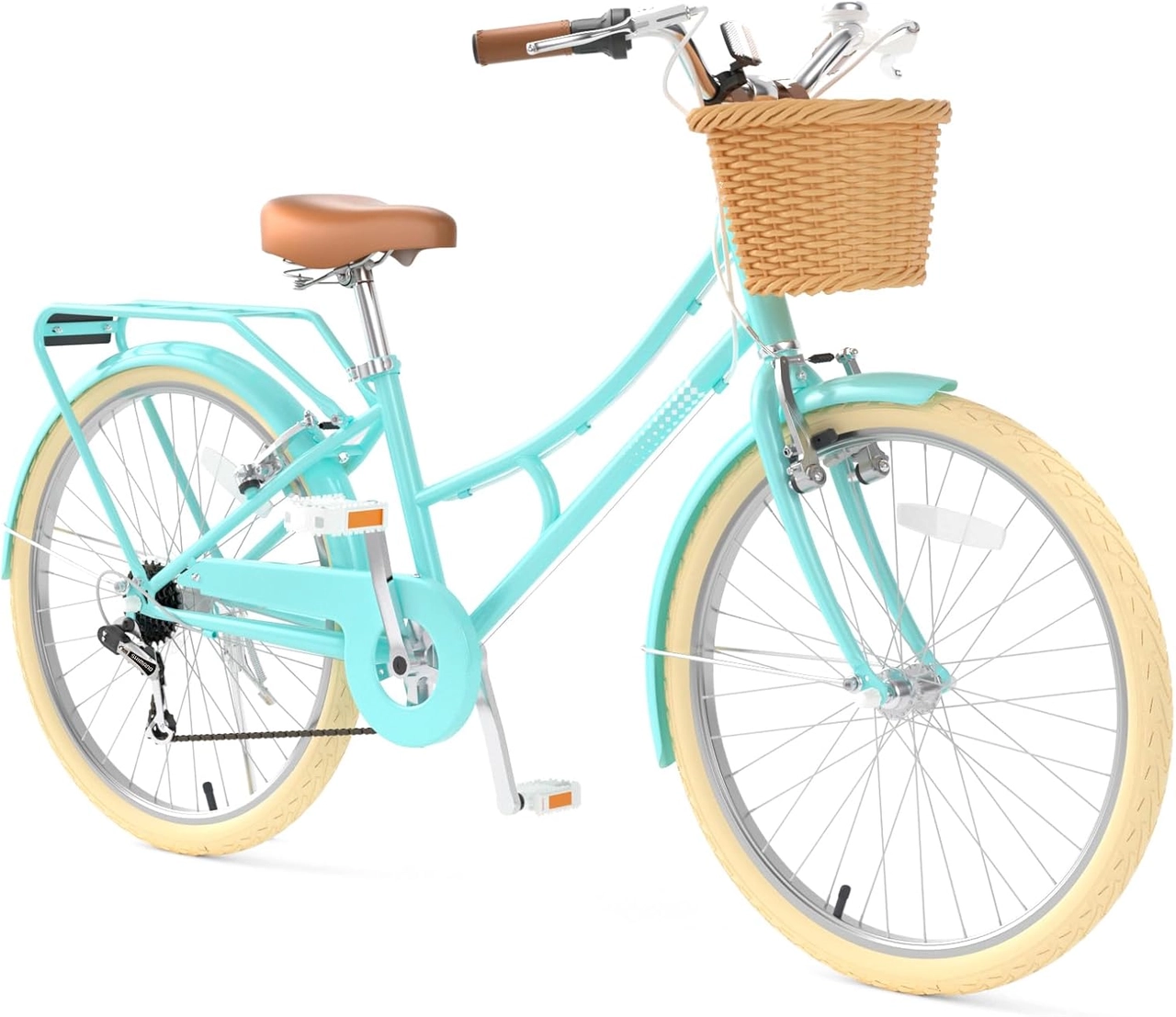 XJD 24-Inch Green Beach Cruiser Bike with U-Brake
A 24-inch variant is relevant because 54 inches is the lower edge of the XBikes 24-inch height range. Its 26-inch variant is a comparison only for riders over 60 inches, not a growth substitute.
 Pink XJD Beach Cruiser Bike, 24"/26", U-Brake
The 24 Inch label makes this cruiser worth an individual fit check at 54 inches. The 26 Inch option is outside the supplied starting point for this rider height and should not replace a properly fitting size.
The XJD 24-Inch Green Beach Cruiser Bike with U-Brake has catalog labels for Green / 24 Inch, Pink / 24 Inch and Pink / 26 Inch. Only its 24-inch variants belong in the immediate size comparison. Its 26-inch variant follows the XBikes starting point for riders over 60 inches, so it is not supported as a starting size for a 54-inch child.
The Pink XJD Beach Cruiser Bike, 24"/26", U-Brake likewise has 24 Inch and 26 Inch labels. Compare its 24-inch version only if the child passes the individual stand-over, reach and brake-control checks. Do not select its 26-inch version as room for growth.
Both titles identify U-Brakes, but that fact does not show whether a particular child can comfortably reach or operate them. Confirm control at the bicycle itself. Follow the exact product manual or use a qualified bicycle mechanic for assembly, adjustment, maintenance, compatibility or torque questions.
Make the 20-inch versus 24-inch decision
Choose the size on which the child can control the complete bike now. A 20-inch bike remains within the XBikes height range at 54 inches and deserves comparison, especially if the 24-inch frame is too tall, long or demanding. A 24-inch bike is reasonable only when the particular model provides suitable stand-over clearance, comfortable reach and confident braking.
- Favor the 20-inch comparison if he struggles to clear the frame, stretches for the bars or brakes, or becomes less controlled on the 24-inch bike.
- Keep the 24-inch option in consideration if he clears the frame, reaches naturally, operates the brakes securely and handles the bike with current confidence.
Before the first ride
Use a properly fitting bicycle helmet. It should sit level, fit securely and have its straps adjusted according to the helmet manufacturer’s instructions. Check the bicycle according to its exact manual, and resolve uncertain assembly or adjustment work with a qualified bicycle mechanic.
For a 54-inch boy, the next action is simple: measure his inseam, then have him try both 20-inch and 24-inch bikes. Select the one he can stand over, reach, brake and ride confidently today—not the larger one chosen only for future growth.
Bikes for your next adventure
-
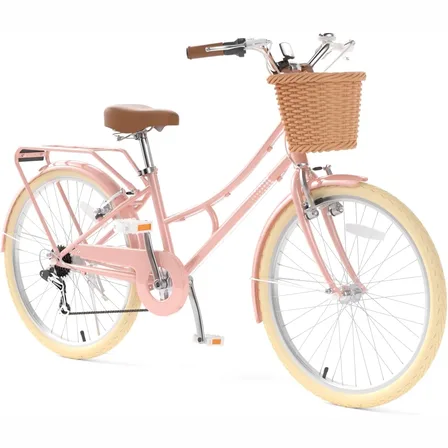
XJD Pink Beach Cruiser for Girls – Rear Rack & V-Brake
The XJD Pink Beach Cruiser for girls is the step-up bike for riders who've outgr…$179.99
$209.99 -
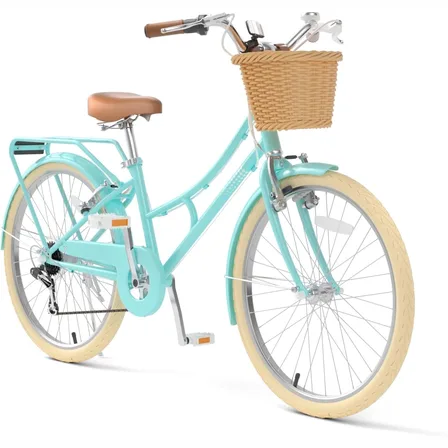
XJD Kids Beach Cruiser Bicycle, Rear Rack & V-Brakes, Mint Green
The XJD Beach Cruiser in Mint Green is a geared, multi-speed cruiser bike for ol…$179.99
$209.99 -
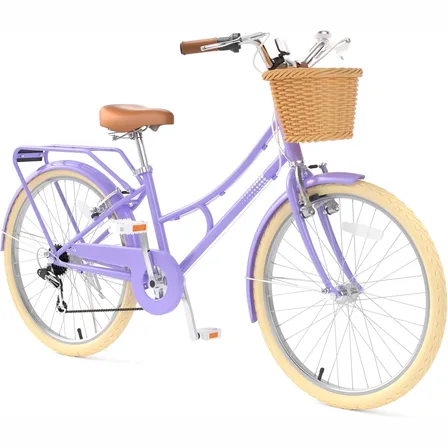
24-Inch Purple XJD Beach Cruiser Bike with U-Brake
The XJD 24-Inch Purple Beach Cruiser is built for girls and young women roughly …$159.99