

A 24 inch bike
A 24 inch bike is a starting point for riders about 54–64 in (137–163 cm) tall, commonly ages 10–14, but it is suitable only if the individual rider can stand over, reach, steer and brake with control.
Measure the rider before choosing
Measure the child’s current height without shoes. Then measure inseam from the floor to the crotch while the child stands straight with feet slightly apart. Height places the rider in the XBikes starting range; inseam helps you judge clearance when the actual bicycle is available.
For a 24 inch bike, use 54–64 in (137–163 cm) as the height starting point. Age 10–14 is only a broad reference. A younger or older rider may fit, while a child inside that age range may need another size because proportions, reach and confidence differ.
Do not select an oversized bicycle simply to leave room for growth. The rider should try the exact bike whenever possible. Confirm comfortable stand-over clearance, a natural reach to the handlebar and the ability to operate the brakes without stretching or changing hand position awkwardly.
Compare 20, 24 and 26 inch starting points
| Wheel size | XBikes height starting point | How to interpret it |
|---|---|---|
| 20 Inch | 48–60 in / 122–152 cm | Compare when a 24 inch bike feels tall, long or difficult to control. |
| 24 Inch | 54–64 in / 137–163 cm | The requested size; confirm it through an individual fit check. |
| 26 Inch | Over 60 in / 153 cm | A youth-and-adult starting point, not an automatic next choice. |
The ranges overlap, so height alone cannot settle a borderline decision. If the rider falls within both the 20 and 24 inch ranges, compare the actual bicycles. Favor the size on which starting, stopping, turning and braking remain calm and controlled. Likewise, being over 60 in does not make a 26 inch bicycle equivalent to a properly fitting 24 inch model.
What the rider should demonstrate
On level ground in a controlled setting, have the rider try the bicycle with adult supervision. The right fit should let the rider:
- Stand over the frame without feeling trapped or forced onto tiptoe.
- Reach the handlebar while keeping a balanced, comfortable posture.
- Turn the handlebar without the knees, arms or body becoming awkwardly crowded.
- Reach and operate both brake controls confidently.
- Start, stop and place a foot down without panic or loss of balance.
If the child cannot complete these checks comfortably, do not treat age or future growth as a reason to accept the bike. Compare another size or geometry. Current control matters more than how long the bicycle might last.
How the supplied catalog option helps
The XJD Kids Beach Cruiser Bicycle, Rear Rack & V-Brakes, Mint Green is directly relevant because its available SKU labels include 20 Inch, 24 Inch and 26 Inch. Those labeled options let you compare the requested 24 Inch version with adjacent wheel sizes within the same catalog listing. They are comparison choices, not interchangeable fits.

The title also identifies this model as a beach cruiser bicycle with a rear rack and V-brakes. Those details may help decide whether its listed configuration matches the intended use, but they do not prove fit. In particular, verify that the rider can comfortably reach and operate the V-brake controls on the exact 24 Inch bicycle.
No supplied facts establish price, stock, bicycle weight, rack load limit, assembly details or component compatibility. Check the current product page for selectable SKU information, and follow the exact product manual for assembly, maintenance, adjustments and load limits. Use a qualified bicycle mechanic when the manual does not resolve a fit or mechanical concern.
Check control beyond the first fitting
A bicycle that appears acceptable while stationary can still be too demanding once moving. Watch the rider begin pedaling, make gentle turns, stop in a chosen place and restart. Hesitation caused by unfamiliarity may improve with practice, but persistent difficulty reaching the brakes, steering smoothly or putting a foot down points to a fit problem.
Recheck fit as the child grows and after adjustments. Do not make an unsupported adjustment or use an incompatible part to force the bicycle to fit; consult the product manual or a qualified bicycle mechanic.
Complete the 24 inch bike decision
Before riding, add a bicycle helmet that fits properly, sits level and has straps positioned according to the helmet manufacturer’s instructions. A helmet does not correct an oversized or poorly controlled bicycle.
Choose the 24 inch bike only after measuring the rider, confirming the 54–64 in (137–163 cm) starting range, and watching the child demonstrate stand-over comfort, suitable reach, reliable brake operation and confident low-speed control. If any check fails, compare the 20 Inch or 26 Inch labeled option as appropriate—but select a different size only after repeating the same individual fit test.
Bikes for your next adventure
-

26-Inch XJD Beach Cruiser Bike for Girls – Purple, V-Brake
This XJD 26-inch purple beach cruiser is sized for big kids and teens — suggeste…$218.49
$229.99 -
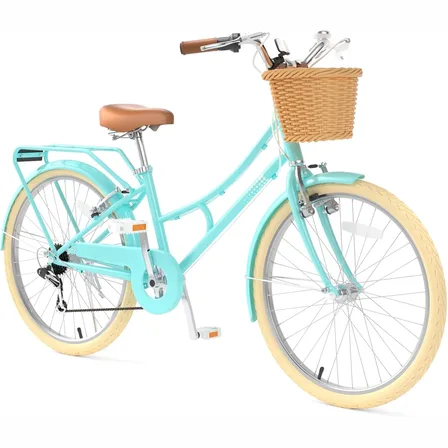
XJD 24-Inch Green Beach Cruiser Bike with U-Brake
This XJD 24-inch beach cruiser in green is made for riders about 4'8" to 5'4" ta…$159.99
$199.99 -
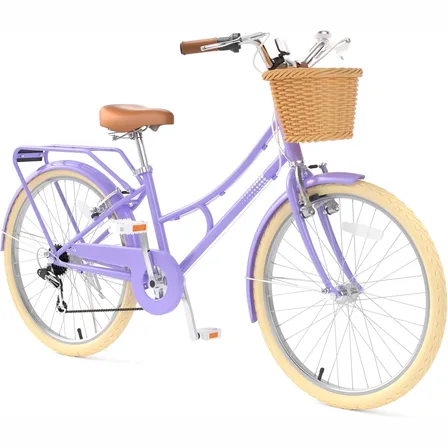
24-Inch Purple XJD Beach Cruiser Bike with U-Brake
The XJD 24-Inch Purple Beach Cruiser is built for girls and young women roughly …$159.99