

Are 26 inch bicycles goeing away
No—26-inch bicycles are not going away. They remain a practical option for youth and adults over 60 inches (153 cm), provided the individual bike fits.
Why 26-inch bikes can seem less common
A wheel size can appear to be disappearing when a shop, category or model line shows more alternatives than before. That does not make the size obsolete. In the supplied XBikes catalog, several beach cruiser configurations still carry a 26 Inch label alongside smaller choices.
For a parent, availability is only half the question. The more important issue is whether a 26-inch bicycle gives the rider comfortable stand-over, manageable reach, reliable brake control and confident handling. Wheel diameter alone cannot establish those things.
Start with the rider, not the age label
Measure the child’s current height without shoes and record it in inches or centimetres. Then measure inseam: have the child stand straight with feet slightly apart, place a firm book between the legs as a saddle reference, and measure from the floor to the top edge. Use that measurement to compare the rider with the stand-over space and saddle adjustment information for the exact bicycle.
XBikes uses these wheel-size starting points for the sizes relevant to this decision:
| Wheel size | Starting age range | Starting rider height |
|---|---|---|
| 20 Inch | Ages 7–12 | 48–60 in / 122–152 cm |
| 24 Inch | Ages 10–14 | 54–64 in / 137–163 cm |
| 26 Inch | Youth and adults | Over 60 in / 153 cm |
These ranges overlap and are starting points, not a promise of fit. Prioritize measured height, inseam, reach, brake control and present confidence over age alone. Do not move a child to a 26-inch bike merely because they fall within a broad age group or may grow soon.
What to check on a real 26-inch bicycle
Have the rider try the exact bicycle whenever possible. With the child standing over it, check that they can position themselves comfortably rather than being forced against the frame. Seated in a normal riding position, they should reach the handlebar without an awkward stretch or cramped posture.
Ask the rider to operate the brakes while maintaining a secure grip. Brake reach is not acceptable merely because fingertips can touch the controls; the rider needs deliberate, confident control. Also observe mounting, starting, steering at low speed, stopping and getting off. Hesitation or loss of control is a reason to compare a smaller option, even when height suggests 26 inches might work.
Do not buy an oversized bicycle solely for growth. A bike that may fit later does not solve unsafe or uncomfortable control now.
How the supplied XBikes options answer the question
The catalog provides direct evidence that 26-inch choices remain available within these model configurations. XJD Kids Beach Cruiser Bicycle, Rear Rack & V-Brakes, Mint Green and XJD Pink Beach Cruiser for Girls – Rear Rack & V-Brake each list 20 Inch, 24 Inch and 26 Inch SKU labels. That makes them useful for comparing the same catalog model across three labeled wheel sizes.
26-Inch XJD Beach Cruiser Bike for Girls – Purple, V-Brake includes Mint Green configurations labeled 20, 24 and 26 Inch, Pink configurations labeled 20, 24 and 26 Inch, and a Purple / 26 Inch configuration. These particular catalog options help answer the title because all three products explicitly include a 26-inch choice, while their smaller labeled configurations provide relevant comparison points for riders who are not ready for that size.
 XJD Kids Beach Cruiser Bicycle, Rear Rack & V-Brakes, Mint Green
Available with 20 Inch, 24 Inch and 26 Inch SKU labels, this mint green beach cruiser provides direct size-comparison options; individual fit still requires measurements and a control check.
 XJD Pink Beach Cruiser for Girls – Rear Rack & V-Brake
This pink beach cruiser lists 20 Inch, 24 Inch and 26 Inch choices, making it relevant when comparing wheel-size labels without assuming that age alone determines fit.
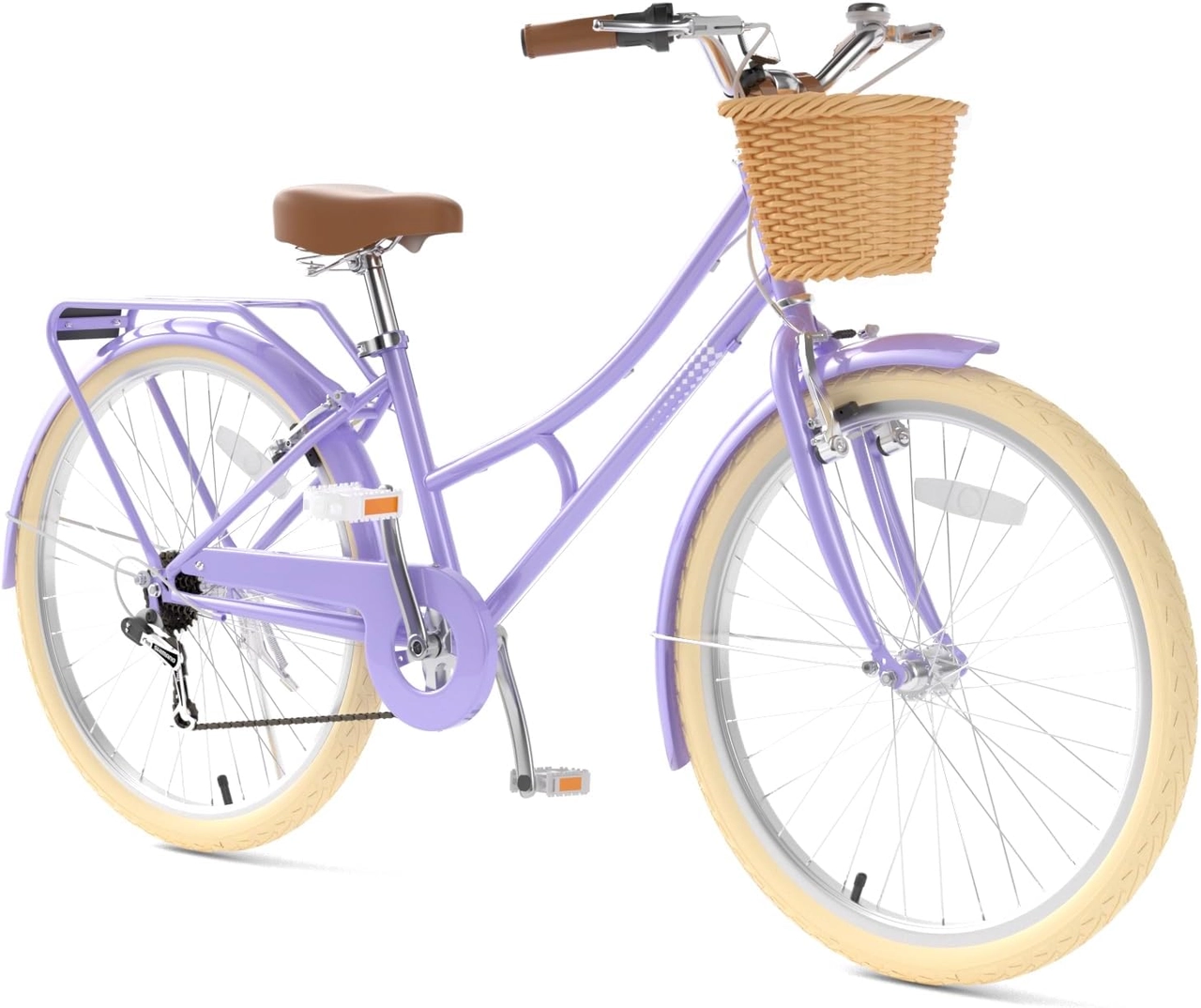 26-Inch XJD Beach Cruiser Bike for Girls – Purple, V-Brake
This product includes Mint Green and Pink configurations in 20, 24 and 26 Inch labels, plus Purple / 26 Inch, confirming a cataloged 26-inch option while still requiring an individual fit check.
Those labels establish available size configurations only. They do not establish fit, stock status, geometry, adjustment range or suitability for a particular child. Confirm the selected SKU label before ordering, then consult the exact product information and manual.
When these products are relevant—and when they are not
They are relevant when the rider is over 60 inches (153 cm), wants to evaluate a beach cruiser, and can pass an individual fit and control check. The 20- and 24-inch configurations are relevant comparison options when the rider’s measurements, reach or confidence make 26 inches questionable.
They are not automatically appropriate just because a child likes a color, reaches a stated age or is expected to grow. They may also be irrelevant when the intended riding style calls for a different bicycle category. The supplied facts do not establish weight, frame material, load limits, assembly details, compatibility or maintenance procedures. Follow the exact product manual for those matters or ask a qualified bicycle mechanic.
Make the decision now
- Measure current height and inseam.
- Compare 20-, 24- and 26-inch starting points without treating age as decisive.
- Try the exact size and check stand-over, reach, braking, starting and stopping.
- Choose the size the rider controls confidently today, not an oversized bike intended for future growth.
- Fit a bicycle helmet so it sits level, fits properly and uses its straps according to the helmet manufacturer’s instructions.
So, 26-inch bicycles are not going away in these XBikes options. If the rider is over 60 inches and controls one comfortably, keep 26 inches on the shortlist; otherwise, compare the available smaller size rather than forcing the move.
Bikes for your next adventure
-

Kids Bike Helmet by XJD for Boys & Girls – Black, Blue, Green, Pink, Purple
The XJD Kids Bike Helmet covers a wide 2-to-8-year age range thanks to two head-…$59.99
-

Kids Bike Helmet by XJD for Girls – Pink
The XJD Kids Bike Helmet in Pink is a lightweight multi-sport helmet for girls r…$59.99
$99 -

XJD Kids Bike for Girls – Pink, 12/14/16/20 Inch with Training Wheels
The XJD Kids Bike for Girls in Pink is a training-wheel bike built to carry your…$139
$159