

Can you attach a baby seat to any bike
No—you cannot attach a baby seat safely to every bike. The bicycle, seat and mounting system must all be compatible, with enough clearance and load capacity.
What determines whether a baby seat will fit?
Start with the instructions for both the bicycle and the exact baby seat. A seat may attach to a rear rack, the bicycle frame or another manufacturer-specified mounting point. The presence of a rack, seat tube or open space does not by itself prove compatibility.
Confirm that the bicycle manufacturer permits child-seat use and that the seat manufacturer approves its mounting system for your bicycle’s frame shape and components. Carbon or unusually shaped frames, suspension movement, cables, batteries and accessories can affect mounting, but compatibility must be decided from the applicable manuals rather than appearance alone.
What to measure and compare
Measure the actual bicycle instead of relying only on its wheel size or category. Compare these measurements and limits with the baby-seat manual:
- Mounting area: Measure the specified frame tube or rack attachment area, including its shape and unobstructed length.
- Clearance: Check the space around the rear wheel, saddle, pedals, cables and any moving suspension parts throughout their normal movement.
- Rack specification: For a rack-mounted seat, verify that the rack itself is approved for the seat and matches every required dimension and attachment condition.
- Total permitted load: Compare the bicycle and rack limits with the combined load of the adult rider, child, seat and anything else carried.
- Rider control: Make sure the adult can mount, stop, steer and operate the brakes confidently with the extra weight and changed balance.
Do not guess about hardware, adapters, load limits or tightening torque. If any required specification is missing, use the exact product manuals or ask a qualified bicycle mechanic to inspect the complete bicycle-and-seat combination.
A practical compatibility check
- Identify the bicycle’s exact model and the baby seat’s exact model and mounting type.
- Read both manuals for permission, exclusions, required mounting dimensions and load limits.
- Measure the proposed mounting point and all required clearances.
- Account for every part of the carried load, not just the child.
- Have the installation checked by a qualified bicycle mechanic if the instructions conflict, the mounting point is unclear or an adapter seems necessary.
- Before carrying a child, confirm that nothing contacts the wheel, interferes with steering or braking, or loosens during the checks required by the manuals.
The child must also meet the baby-seat manufacturer’s eligibility and restraint requirements. A properly fitting bicycle helmet should sit level and use its straps according to the helmet manufacturer’s instructions.
Are the supplied XBikes products suitable?
The supplied catalog items are training-wheel bicycles in 12, 14 and 16 Inch sizes. They are useful only as child-rider size comparison points; their catalog facts do not state baby-seat mounting compatibility, load limits, rack approval or mounting hardware. Do not treat them as confirmed bicycles for carrying a baby.
XJD Pink Girls' Bike – Kids 12/14/16 Inch Training Wheel Bicycle, XJD Girls Bike for Kids Ages 3-8, 12/14/16 Inch with Training Wheels – Purple, and Girls 12/14/16 Inch Kids Bike by XJD with Training Wheels – Peach each offer 12 Inch, 14 Inch and 16 Inch labels. These particular catalog options help answer the title by showing the difference between a child’s own training-wheel bicycle and an adult bicycle whose manual may permit a mounted baby seat.
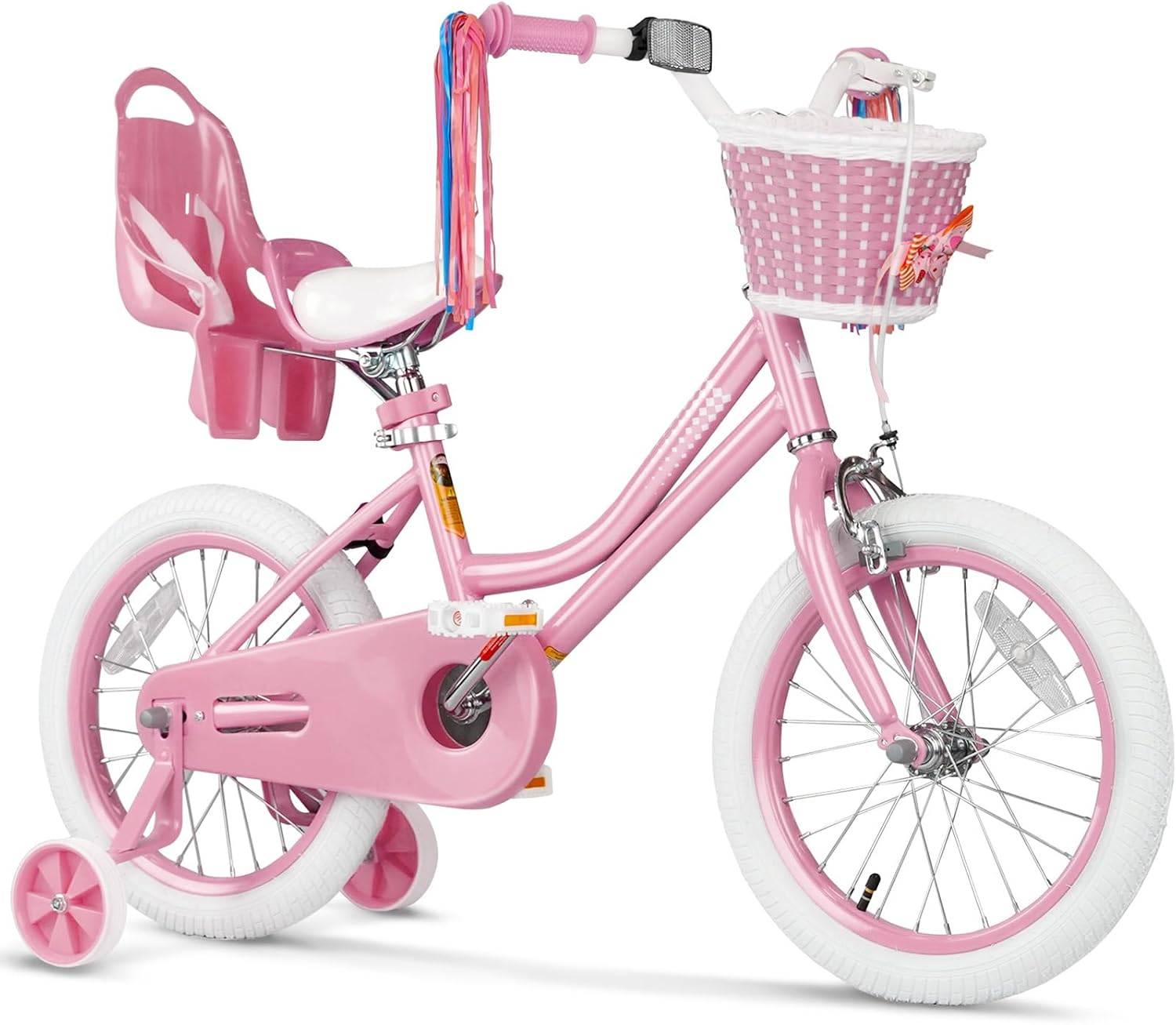 XJD Pink Girls' Bike – Kids 12/14/16 Inch Training Wheel Bicycle
Available in 12, 14 and 16 Inch labels as a training-wheel bicycle. It is relevant for child-rider sizing comparison, but the supplied facts do not confirm baby-seat compatibility or load limits.
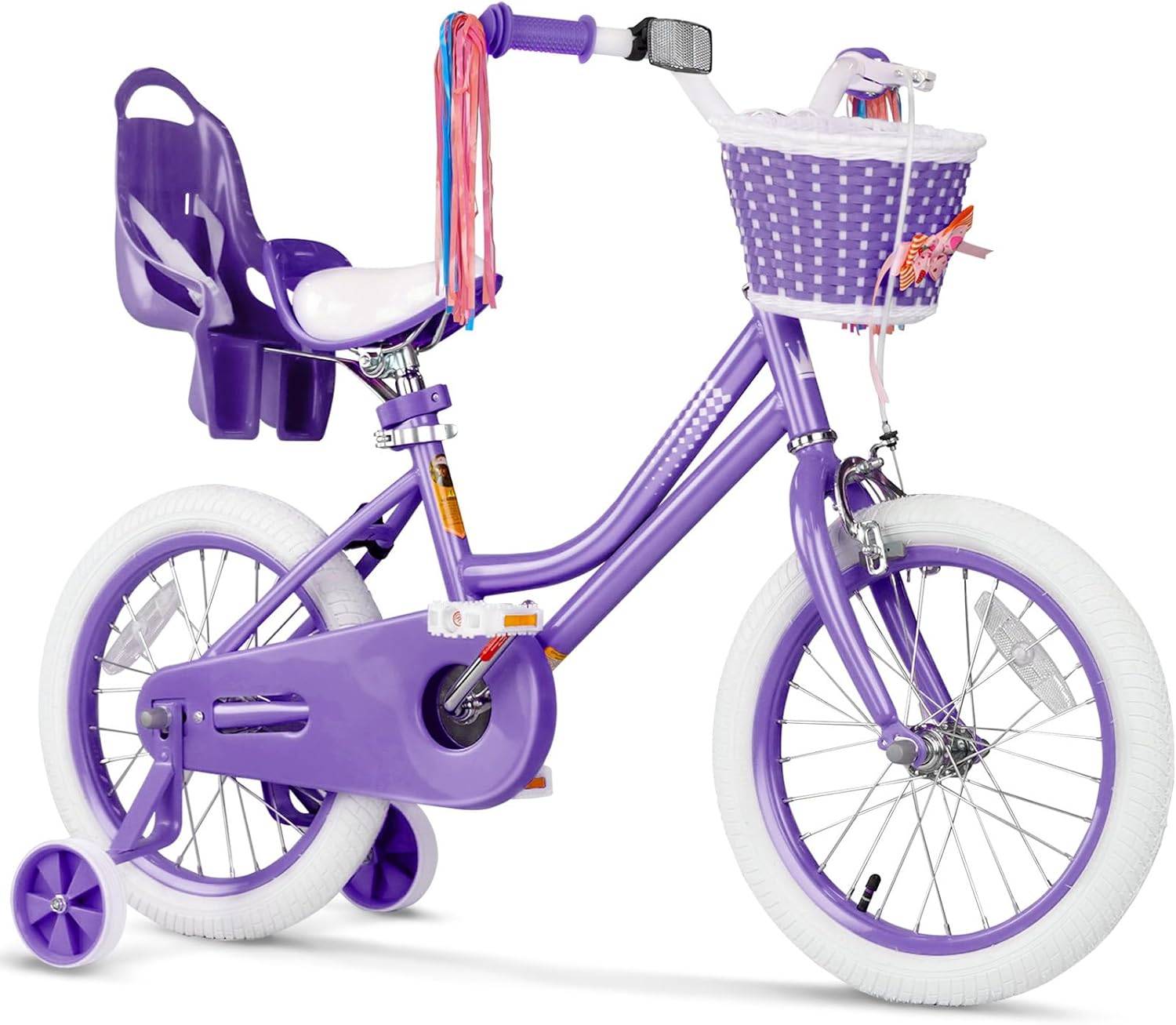 XJD Girls Bike for Kids Ages 3-8, 12/14/16 Inch with Training Wheels – Purple
This purple training-wheel bicycle has 12, 14 and 16 Inch options. Its “Ages 3-8” wording is only a catalog title label; individual fit and any baby-seat compatibility require separate verification.
 Girls 12/14/16 Inch Kids Bike by XJD with Training Wheels – Peach
Offered as a peach training-wheel bicycle in 12, 14 and 16 Inch labels. It can inform a child-bike size comparison, but its supplied facts provide no baby-seat mounting or capacity details.
The phrase “Ages 3-8” within one exact product title is a catalog label, not individual fit evidence. None of these listings supplies the information needed to approve a baby-seat installation.
If the older child needs their own bicycle
When comparing these products for a child rider, use measured height as the starting point: 12 Inch corresponds to 34–40 in (86–102 cm), generally ages 3–4; 14 Inch to 37–45 in (94–114 cm), generally ages 3–6; and 16 Inch to 40–48 in (102–122 cm), generally ages 4–7.
Those ranges overlap and are not a substitute for trying the bicycle. Check the child’s stand-over clearance, inseam, reach, brake control and current confidence. Do not choose an oversized bicycle merely to allow room for growth.
Your next decision
Proceed only when the exact bicycle manual permits a child seat and every mounting dimension, clearance and load requirement matches the exact seat manual. If those facts cannot be confirmed, do not attach the seat; choose a verified compatible bicycle-and-seat combination or have a qualified mechanic identify one.
Bikes for your next adventure
-

Blue XJD Girls Bike with Training Wheels – 12/14/16 Inch
If you're shopping for a first pedal bike for a daughter roughly 3 to 8 years ol…$149
$169 -

Light Pink XJD Girls' Bicycle with Basket & Training Wheels
The Light Pink XJD Girls' Bicycle with Basket & Training Wheels is a retro-style…$109.99
$129.99 -

Kids Bike Helmet by XJD for Boys & Girls – Black, Blue, Green, Pink, Purple
The XJD Kids Bike Helmet covers a wide 2-to-8-year age range thanks to two head-…$59.99