

Can you wear a baby carrier on a bike
No—do not ride a bicycle while wearing a baby in a body-mounted carrier. It can affect balance and control, and a fall could expose the baby to direct impact. Use only a purpose-built child-carrying system that the bicycle and accessory manufacturers explicitly approve.
Why a wearable carrier is the wrong equipment
A baby carrier may be designed for walking, but that does not establish that it is suitable for cycling. On a bicycle, the carrier and baby can change your centre of mass, restrict how you look behind you, interfere with steering or braking, and make mounting or stopping less predictable.
A normal carrier also does not provide the enclosure, bicycle attachment or impact protection expected from purpose-built cycling equipment. An adult bicycle helmet cannot protect a baby held against the rider, and the baby’s position may complicate an otherwise minor fall. Front packs, back carriers, wraps and slings all present the same basic issue: they attach the child to the rider rather than to an approved bicycle passenger system.
What to check before carrying a child by bicycle
Consider a bicycle child seat, trailer or other dedicated system only when its manufacturer says the child meets every developmental and fit requirement. Do not guess readiness from age alone. Compare the child’s posture and measurements with the accessory manual, and confirm that the exact bicycle is compatible.
- Child readiness: Check the manufacturer’s requirements for stable head and neck control, sitting ability, minimum or maximum size, and helmet use.
- Measured fit: Measure the child as directed by the manual and confirm that the harness, foot restraints and head space fit correctly.
- Bicycle compatibility: Verify the exact frame, rack, axle or mounting arrangement named by both manuals.
- Limits and setup: Follow the stated load limits, assembly instructions, fastener checks and torque values. If any information is missing or unclear, use a qualified bicycle mechanic.
Local rules may restrict where or how young passengers can be carried, so check the requirements that apply where you ride. If the child is too small for the approved system, wait rather than adapting a wearable carrier.
Helmet fit still matters
Every rider who should wear a helmet needs one that fits that individual properly. A bicycle helmet should sit level and use its straps according to the manufacturer’s instructions. Do not use an adult helmet for a child, and do not assume a helmet makes a body-worn baby carrier suitable for cycling.
For a child passenger system, confirm that the helmet and the seat or trailer work together without forcing the child’s head forward. Follow the instructions for both products; if they conflict, do not ride until the manufacturer or a qualified bicycle mechanic resolves the issue.
When a child is ready for a separate bike
The supplied XBikes products are not baby carriers, passenger seats or substitutes for them. They become relevant only when an older child is learning to ride a separate bicycle. Measure the child’s standing height and inseam, then check stand-over clearance, reach, brake control and present confidence on the actual bicycle. Never select an oversized bike merely to allow room for growth.
| Wheel size | Starting age | Rider height |
|---|---|---|
| 12 Inch | 3–4 | 34–40 in / 86–102 cm |
| 14 Inch | 3–6 | 37–45 in / 94–114 cm |
| 16 Inch | 4–7 | 40–48 in / 102–122 cm |
These are starting points, not proof of fit. Overlapping ranges mean wheel size cannot be chosen from age alone. Have the child try the bike and verify that they can stand over it, reach the controls comfortably, steer without stretching and operate the brakes reliably.
How the two catalog options are relevant
The XJD Girls BMX Bike 12/14/16 Inch with Training Wheels – Pink Blue and the XJD Boys & Girls BMX Bike with Training Wheels, 12/14/16" – Blue are both Kids’ BMX Bikes offered in 12 Inch, 14 Inch and 16 Inch SKU labels. They provide size options to compare for a child riding independently; they do not solve the question of carrying a baby on an adult’s body.
These particular catalog options help by letting a family compare the same three wheel-size starting points against a measured child’s height, inseam, reach, brake control and confidence. Choose between them only after an individual fit check and review of the exact product manual.
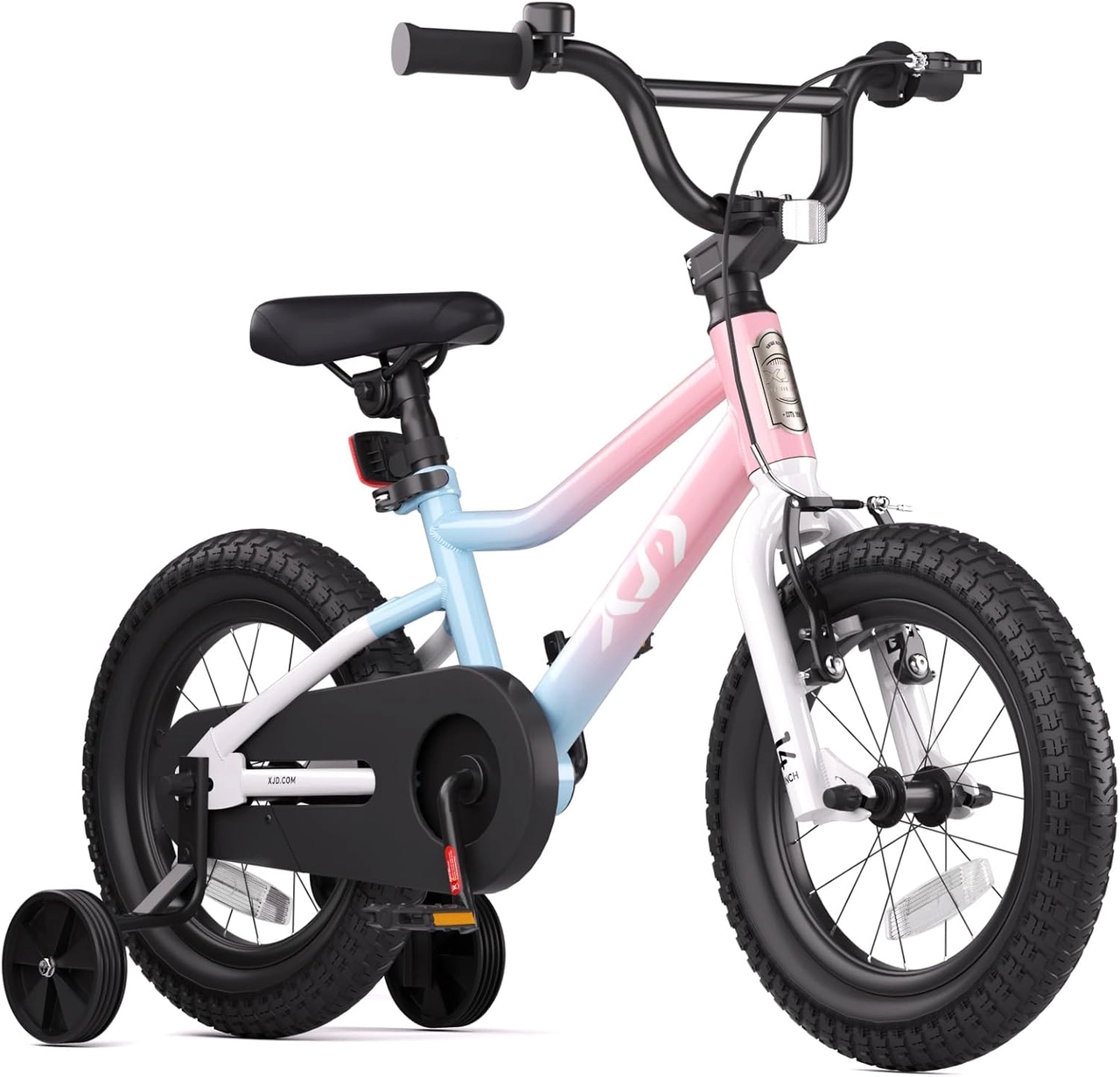 XJD Girls BMX Bike 12/14/16 Inch with Training Wheels – Pink Blue
A Kids’ BMX Bike offered in 12 Inch, 14 Inch and 16 Inch labels with training wheels; relevant only for a measured child riding separately, not for carrying a baby.
 XJD Boys & Girls BMX Bike with Training Wheels, 12/14/16" – Blue
A blue Kids’ BMX Bike offered in 12 Inch, 14 Inch and 16 Inch labels with training wheels; use it as an independent-rider fit comparison, not as baby-carrying equipment.
The factual comparison is therefore limited: both listings offer the same supplied wheel-size labels and include training wheels in their exact titles, while their titles describe different colour presentations. No supplied fact establishes load limits, brake type, materials, assembly details or compatibility, so consult the exact manual or a qualified bicycle mechanic for those points.
Your next decision
- If you mean a wearable baby carrier, leave it off the bike and do not ride with the baby attached to your body.
- If you are considering a dedicated child seat or trailer, check child readiness, measured fit, bicycle compatibility, local rules and every manufacturer instruction before riding.
- If the child will ride separately, measure height and inseam, compare the 12, 14 and 16 Inch starting ranges, and conduct an in-person control and brake-reach check.
The title-specific answer remains simple: do not wear a baby carrier on a bike; wait or use only a purpose-built, fully compatible child-carrying system when the child meets its stated requirements.
Bikes for your next adventure
-
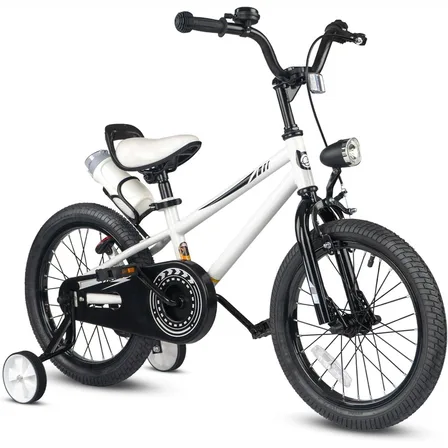
XJD Kids' Training Wheel Bike for Boys & Girls, 12/14/16 Inch – White
The XJD kids' training wheel bike in White is made for riders ages 3–8 (roughly …$169
$199 -

XJD Pink Beach Cruiser for Girls – Rear Rack & V-Brake
The XJD Pink Beach Cruiser for girls is the step-up bike for riders who've outgr…$179.99
$209.99 -

Kids Bike Helmet by XJD for Boys & Girls – Black, Blue, Green, Pink, Purple
The XJD Kids Bike Helmet covers a wide 2-to-8-year age range thanks to two head-…$59.99