

Can you use a baby carrier on a bike
No—do not ride a bike while a baby is strapped to your body in a wearable carrier. Use only a purpose-built bicycle child seat or trailer that is approved for your bicycle, child and riding conditions.
Why a wearable baby carrier is the wrong equipment
A sling, wrap or front/back baby carrier is designed for carrying a child while walking, not for managing cycling forces or a bicycle fall. It may restrict your balance, steering or view, and it gives the baby no bicycle-specific protective structure. A backpack-style carrier is not a substitute for a bicycle child seat or trailer.
Before carrying a child by bicycle, check the child-restraint maker’s instructions, the bicycle manual and applicable local rules. Confirm that the child meets every stated developmental and fit requirement. If any requirement is unclear—or the manual does not explicitly permit the proposed setup—do not ride with it. Ask the manufacturer or a qualified bicycle mechanic rather than improvising.
What to compare before choosing a child seat or trailer
The relevant comparison is not simply carrier versus bicycle. The entire combination must work together. Record the exact bicycle model, frame configuration, wheel size and any installed accessories, then compare them with the restraint manufacturer’s compatibility instructions.
- Child fit: Check every stated height, weight, posture and developmental requirement in the restraint manual.
- Bicycle compatibility: Verify the permitted frame or rack mounting method and all exclusions.
- Load limits: Include the child and anything else carried. Use only the limits printed in the exact bicycle, rack and restraint manuals.
- Secure fit: The harness, foot restraints and other retention parts must adjust exactly as directed.
- Rider control: Make sure the setup does not prevent stable mounting, dismounting, steering, braking or placing a foot down.
Do not infer compatibility from the presence of a rear rack. Rack construction, mounting points and load limits vary. Installation details and torque values must come from the exact manuals; otherwise, use a qualified bicycle mechanic.
When the supplied XBikes bicycle is relevant
The XJD Kids Beach Cruiser Bicycle, Rear Rack & V-Brakes, Mint Green is offered with 20 Inch, 24 Inch and 26 Inch SKU labels. It is relevant only as an alternative for a child who is ready to ride an individually fitted bicycle—not as equipment for transporting a baby. Its listed rear rack does not establish child-seat compatibility or a carrying capacity.
This catalog option helps answer the question by showing the independent-riding path available in larger wheel sizes, while making clear that a kids bicycle and a baby-carrying system serve different purposes.

Measure for independent riding instead
If the child is ready to ride rather than be carried, measure standing height and inseam without shoes. At a hands-on fit check, compare stand-over clearance, reach to the handlebar, access to the controls and the child’s ability to operate the brakes confidently. Age is only a starting point; never buy an oversized bicycle simply for future growth.
| Wheel size | Starting age | Rider height |
|---|---|---|
| 12 Inch | 3–4 | 34–40 in / 86–102 cm |
| 14 Inch | 3–6 | 37–45 in / 94–114 cm |
| 16 Inch | 4–7 | 40–48 in / 102–122 cm |
| 18 Inch | 5–9 | 43–52 in / 109–132 cm |
| 20 Inch | 7–12 | 48–60 in / 122–152 cm |
| 24 Inch | 10–14 | 54–64 in / 137–163 cm |
| 26 Inch | Youth and adults | Over 60 in / 153 cm |
For the supplied XJD model, compare the measured rider only with its available 20, 24 and 26 Inch options. Those sizes are not interchangeable. Height, inseam, reach, brake control and current confidence must confirm the choice.
Complete a stationary safety check
Whether evaluating a bicycle child restraint or an independently ridden kids bicycle, perform the full fit and setup check while stationary. Follow each manufacturer’s instructions for assembly, maintenance and fasteners. Stop if parts move unexpectedly, interfere with a wheel or controls, or lack confirmed compatibility.
A bicycle helmet must fit properly, sit level and have its straps adjusted according to the helmet manufacturer’s instructions. A helmet does not make a wearable baby carrier suitable for cycling, and protective equipment does not replace correct bicycle-specific transportation equipment.
Make the title-specific decision
If “baby carrier” means a carrier worn on your body, leave it off the bike. If you mean a bicycle child seat or trailer, proceed only after its manual confirms the child’s eligibility, bicycle compatibility, mounting method and load limits. Consider the supplied XJD bicycle only when the child is independently ready and can pass an in-person fit and control check in one of its listed wheel sizes.
Bikes for your next adventure
-
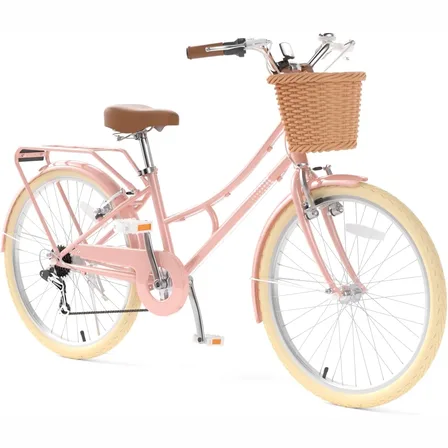
XJD Pink Beach Cruiser for Girls – Rear Rack & V-Brake
The XJD Pink Beach Cruiser for girls is the step-up bike for riders who've outgr…$179.99
$209.99 -
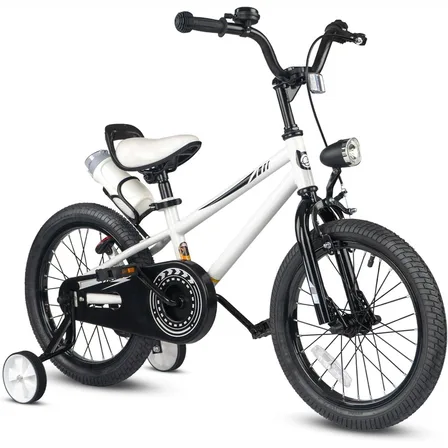
XJD Kids' Training Wheel Bike for Boys & Girls, 12/14/16 Inch – White
The XJD kids' training wheel bike in White is made for riders ages 3–8 (roughly …$169
$199 -

Kids Bike Helmet by XJD for Boys & Girls – Black, Blue, Green, Pink, Purple
The XJD Kids Bike Helmet covers a wide 2-to-8-year age range thanks to two head-…$59.99