

Can you transport baby while riding bike
You can transport a baby by bike only in a purpose-designed child seat or bicycle trailer that is approved for your baby and compatible with your bicycle. Do not carry a baby in a basket, on handlebars or on an ordinary rear rack.
What must be confirmed before riding
A baby must meet the child carrier manufacturer’s stated requirements, including developmental readiness and any minimum or maximum limits. Those requirements are not supplied here, so check the exact seat or trailer manual rather than relying on age alone. If the instructions are missing or unclear, do not ride with the baby.
Next, confirm that the carrier is approved for the bicycle’s frame, wheel size, brakes and mounting points. Check the bicycle and carrier manuals for compatibility, load limits, assembly instructions, fastener settings and maintenance. A rear rack does not automatically accept a child seat, and a basket is not a passenger carrier. Ask a qualified bicycle mechanic to inspect the installation if any requirement is uncertain.
Measure and compare the complete setup
Record the baby’s current measurements requested by the carrier maker and compare them with every stated limit. Include the carrier and anything carried in it when checking the bicycle or rack limits specified by their manufacturers. Never invent a limit or assume that visible mounting points are suitable.
The adult rider also needs enough reach and control to start, steer, brake and stop with the added load. Before carrying a baby, practise with the empty carrier in a traffic-free area. Check that the rider can mount and dismount without tilting the bicycle dangerously, operate both brakes comfortably and place a foot down promptly. If balance or braking feels uncertain, use another transport method until the setup is assessed.
Helmet and restraint checks
Use every harness, buckle and restraint exactly as the carrier manufacturer directs. Loose clothing, straps and small objects must stay away from wheels and moving parts. A bicycle helmet must fit properly, sit level and have its straps adjusted according to its manufacturer’s instructions. Confirm whether and how the carrier instructions address helmet use for a baby; do not guess where fit and developmental readiness are involved.
Before each trip, inspect the carrier attachment, restraints, tires, brakes and any rack or hitch involved. Stop immediately if the carrier shifts, a fastener loosens, a restraint does not close correctly or bicycle handling changes unexpectedly.
How the supplied XBikes products relate
The supplied catalog options help distinguish a child’s own bicycle from equipment designed to transport a baby. They provide wheel-size comparison points for older riders, but none is identified in the supplied facts as a baby carrier, trailer or carrier-compatible adult bicycle.
 XJD Light Purple Girls Bike with Basket, Training Wheels, 12/14/16/20 Inch
A Training Wheel Bike offered in 12, 14 and 16 Inch labels. Its supplied basket information does not establish approval for carrying a baby, so it is relevant only as a child-bike comparison.
 XJD Kids Beach Cruiser Bicycle, Rear Rack & V-Brakes, Mint Green
A Beach Cruiser Bike offered in 20, 24 and 26 Inch labels. Its title lists a rear rack and V-brakes, but no child-seat compatibility or rack load limit is supplied.
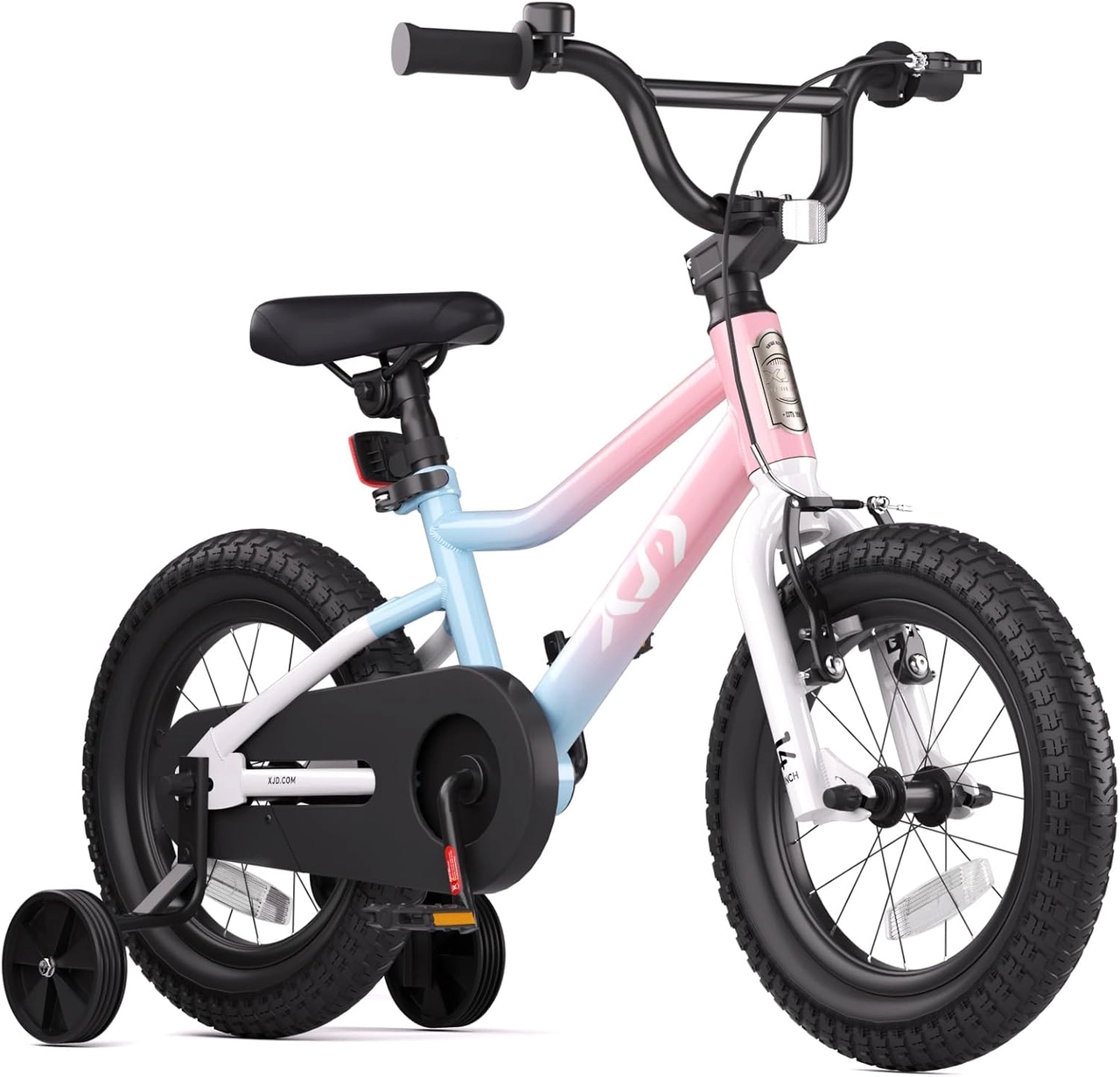 XJD Girls BMX Bike 12/14/16 Inch with Training Wheels – Pink Blue
A Kids’ BMX Bike offered in 12, 14 and 16 Inch labels with training wheels. It is a comparison for a child’s own bicycle, not a supplied baby-transport product.
The XJD Light Purple Girls Bike with Basket, Training Wheels, 12/14/16/20 Inch is listed under Training Wheel Bikes, with available 12, 14 and 16 Inch labels. Its basket must not be treated as a baby seat because no passenger-carrying approval or limit is supplied.
The XJD Kids Beach Cruiser Bicycle, Rear Rack & V-Brakes, Mint Green is a Beach Cruiser Bike offered in 20, 24 and 26 Inch labels. Although its title specifies a rear rack, the supplied facts do not establish that the rack accepts a child seat or state any load limit. Consult the exact manual and a qualified mechanic before considering any attachment.
The XJD Girls BMX Bike 12/14/16 Inch with Training Wheels – Pink Blue is listed as a Kids’ BMX Bike with 12, 14 and 16 Inch labels. It is relevant for comparing a child’s independent bicycle, not for carrying a baby.
If choosing a bicycle for an older child
When the child is ready for an independent bike, measure height first and use age only as a starting point. The XBikes reference ranges are:
| Wheel size | Starting age | Rider height |
|---|---|---|
| 12 Inch | 3–4 | 34–40 in / 86–102 cm |
| 14 Inch | 3–6 | 37–45 in / 94–114 cm |
| 16 Inch | 4–7 | 40–48 in / 102–122 cm |
| 18 Inch | 5–9 | 43–52 in / 109–132 cm |
| 20 Inch | 7–12 | 48–60 in / 122–152 cm |
| 24 Inch | 10–14 | 54–64 in / 137–163 cm |
| 26 Inch | Youth and adults | Over 60 in / 153 cm |
Have the child try the bicycle. Check stand-over clearance, reach, brake control and present confidence, and do not buy an oversized bicycle merely for growth. The listed ranges cannot replace an individual fit check.
Your next decision
For transporting a baby now, set these children’s bicycles aside unless their exact manuals explicitly support the intended carrier and every requirement is met. Choose a purpose-designed baby seat or trailer, verify the baby’s readiness and all compatibility and load limits, have uncertain installation checked by a qualified mechanic, then practise the complete setup before the first passenger ride.
Bikes for your next adventure
-

Kids Bike Helmet by XJD for Boys & Girls – Black, Blue, Green, Pink, Purple
The XJD Kids Bike Helmet covers a wide 2-to-8-year age range thanks to two head-…$59.99
-

Kids Bike Helmet by XJD for Girls – Pink
The XJD Kids Bike Helmet in Pink is a lightweight multi-sport helmet for girls r…$59.99
$99 -

XJD Kids Bike for Girls – Pink, 12/14/16/20 Inch with Training Wheels
The XJD Kids Bike for Girls in Pink is a training-wheel bike built to carry your…$139
$159