

How big is a 15.5 inch bike
A 15.5-inch bike is not one standard physical size: 15.5 inches usually describes the frame, while children’s bikes are commonly compared by wheel diameter. Confirm which measurement the label means before deciding whether it fits.
First, identify what the 15.5 inches measures
Look at the bicycle label, listing or manual. If 15.5 inches is the frame size, it does not tell you the wheel diameter, overall length, saddle height or suitable rider height. Frame geometry can also differ between bicycles, so two bikes carrying the same frame measurement may not fit identically.
If the figure is intended as a wheel measurement, verify the marked wheel size rather than rounding it automatically. A 15.5-inch measurement is not the same as the 16-inch category in the XBikes sizing chart. The exact model information should resolve whether you are looking at a nominal wheel size, a frame size or a measurement someone took manually.
Measure the child, not just the bicycle
Measure the rider’s height without shoes, standing straight against a wall. Then measure inseam from the floor to the crotch while the child stands naturally. These figures provide a better starting point than age alone.
Next, have the child try the exact bicycle. With the bike upright, check that the child can stand over it with usable clearance. Seated in a normal riding position, the rider should be able to reach the handlebar without stretching, steer comfortably and operate the brakes with control. Current confidence matters too: a hesitant beginner may struggle with a bicycle that is technically within a broad size range but difficult to manage.
Do not choose an oversized bicycle simply to allow room for growth. A child needs control now, including comfortable mounting, stopping and brake reach.
Compare the verified wheel-size starting points
| Wheel size | Starting age range | Rider height |
|---|---|---|
| 12 Inch | 3–4 | 34–40 in / 86–102 cm |
| 14 Inch | 3–6 | 37–45 in / 94–114 cm |
| 16 Inch | 4–7 | 40–48 in / 102–122 cm |
| 18 Inch | 5–9 | 43–52 in / 109–132 cm |
| 20 Inch | 7–12 | 48–60 in / 122–152 cm |
| 24 Inch | 10–14 | 54–64 in / 137–163 cm |
| 26 Inch | Youth and adults | Over 60 in / 153 cm |
These ranges are starting points, not guarantees. If “15.5 inch” refers to the frame, find its wheel diameter and compare that wheel size with the table. If it truly refers to a nonstandard wheel measurement, consult the exact manual or manufacturer’s size designation rather than assigning it to the 16-inch row.
How the available 24-inch bicycle helps
The 24-Inch Purple XJD Beach Cruiser Bike with U-Brake is useful as a clearly identified 24-inch comparison. The XBikes starting point for a 24-inch bike is ages 10–14 and rider height 54–64 inches / 137–163 cm, followed by an individual fit check. Because this catalog option is 24-inch rather than 15.5-inch, it is a nearest available size comparison point, not a substitute or an equivalent.

If the rider falls around the 16-inch starting range of 40–48 inches / 102–122 cm, the supplied 24-inch model should not be treated as an alternative merely because it is available. If the rider is 54–64 inches / 137–163 cm, it may be relevant to try, but height alone still does not establish fit.
Perform a practical fit check
- Confirm the label: establish whether 15.5 inches means frame size or wheel diameter.
- Record height and inseam: use actual measurements rather than estimating from age.
- Check stand-over: the child should be able to straddle the bicycle with practical clearance and stability.
- Check reach: the rider should hold the handlebar and steer without being pulled forward or cramped.
- Check braking: confirm that the child can reach and operate the brakes reliably while maintaining control.
- Observe confidence: ask the child to start, turn and stop in a suitable controlled area.
If assembly, adjustment, compatibility, load limits or maintenance information is unclear, follow the exact product manual or use a qualified bicycle mechanic. Do not improvise specifications or adjustment limits.
Finish with the helmet and the decision
A bicycle helmet must fit properly, sit level and have its straps used according to the helmet manufacturer’s instructions. Helmet fit does not correct a poorly fitting bicycle; both checks are necessary.
Your next step is therefore specific: verify what “15.5 inch” describes, measure the rider’s height and inseam, identify the actual wheel size, and arrange a hands-on stand-over, reach and brake-control check. Choose the bicycle only if the child can control that exact bike now; otherwise, move to the wheel-size starting point that matches the rider and repeat the fit check.
Bikes for your next adventure
-

26-Inch XJD Beach Cruiser Bike for Girls – Purple, V-Brake
This XJD 26-inch purple beach cruiser is sized for big kids and teens — suggeste…$218.49
$229.99 -
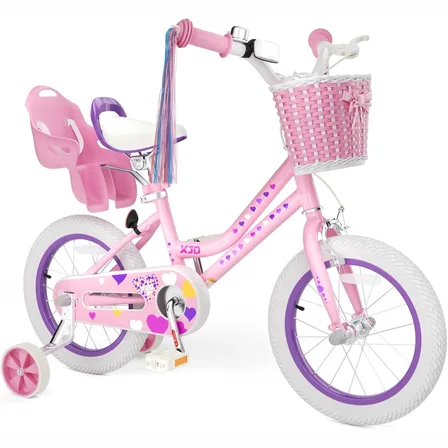
Light Pink XJD Girls' Bicycle with Basket & Training Wheels
The Light Pink XJD Girls' Bicycle with Basket & Training Wheels is a retro-style…$109.99
$129.99 -
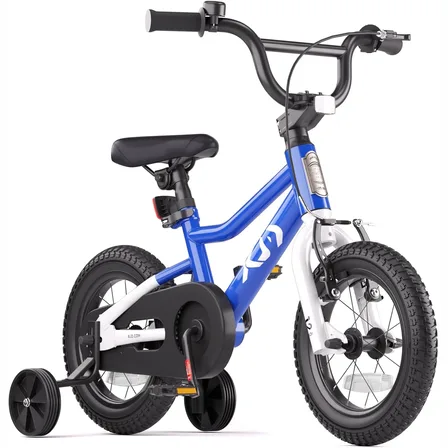
XJD Boys & Girls BMX Bike with Training Wheels, 12/14/16" – Blue
The XJD Boys & Girls BMX Bike in Blue is a first pedal bike for kids roughly age…$99.99
$119.99