

What age is 16 inch bike for
A 16 inch bike is generally for children ages 4–7 who are 40–48 inches (102–122 cm) tall, but measurements and a hands-on fit check matter more than age.
Start with height, not the birthday
Age gives you a quick starting point, but children of the same age can differ considerably in size, proportions and riding confidence. Measure the child’s height without shoes, standing straight against a wall. If the result falls within 40–48 inches (102–122 cm), a 16 inch bike belongs on the shortlist.
For a child near either end of that range, compare adjacent sizes rather than assuming. XBikes places a 14 inch bike at ages 3–6 and 37–45 inches (94–114 cm), while an 18 inch bike starts at ages 5–9 and 43–52 inches (109–132 cm). These overlaps are reasons to check the actual fit, not permission to choose by age alone.
Measure the inseam and check stand-over space
Measure inseam with the child standing upright in the shoes they will normally wear while riding. Place a straight, firm object between the legs to represent the saddle, then measure from its top edge to the floor. Keep that measurement available when checking the dimensions in the exact bicycle’s product information or manual.
Have the child straddle the bicycle’s frame with both feet flat on the ground. There should be usable clearance rather than uncomfortable contact with the frame. Frame shapes and saddle adjustment ranges can vary even when two bicycles share a 16 inch wheel label, so wheel size alone cannot confirm fit.
Make sure the child can control the bike
A suitable bike lets the rider get into position without stretching excessively or feeling cramped. Ask the child to sit, hold the grips and turn the handlebar in both directions. Their posture should remain controlled, and they should be able to look ahead comfortably.
Check that the child can operate the fitted brakes confidently. If the bicycle has hand-operated brake controls, the rider must be able to reach and use them without losing a secure grip. Also consider current confidence: a hesitant beginner may need a different setup from a practiced rider of the same height.
The American Academy of Pediatrics advises having the child try the bicycle, checking stand-over space, control and brake reach, and avoiding an oversized bike bought merely for future growth.
How the supplied 16 inch options compare
All three catalog options are offered with a 16 Inch SKU, so they are directly relevant to this question. They also have 12 Inch and 14 Inch SKU labels, which can help when a measured child needs an adjacent smaller comparison. Select the exact size deliberately; the shared product title does not make the sizes interchangeable.
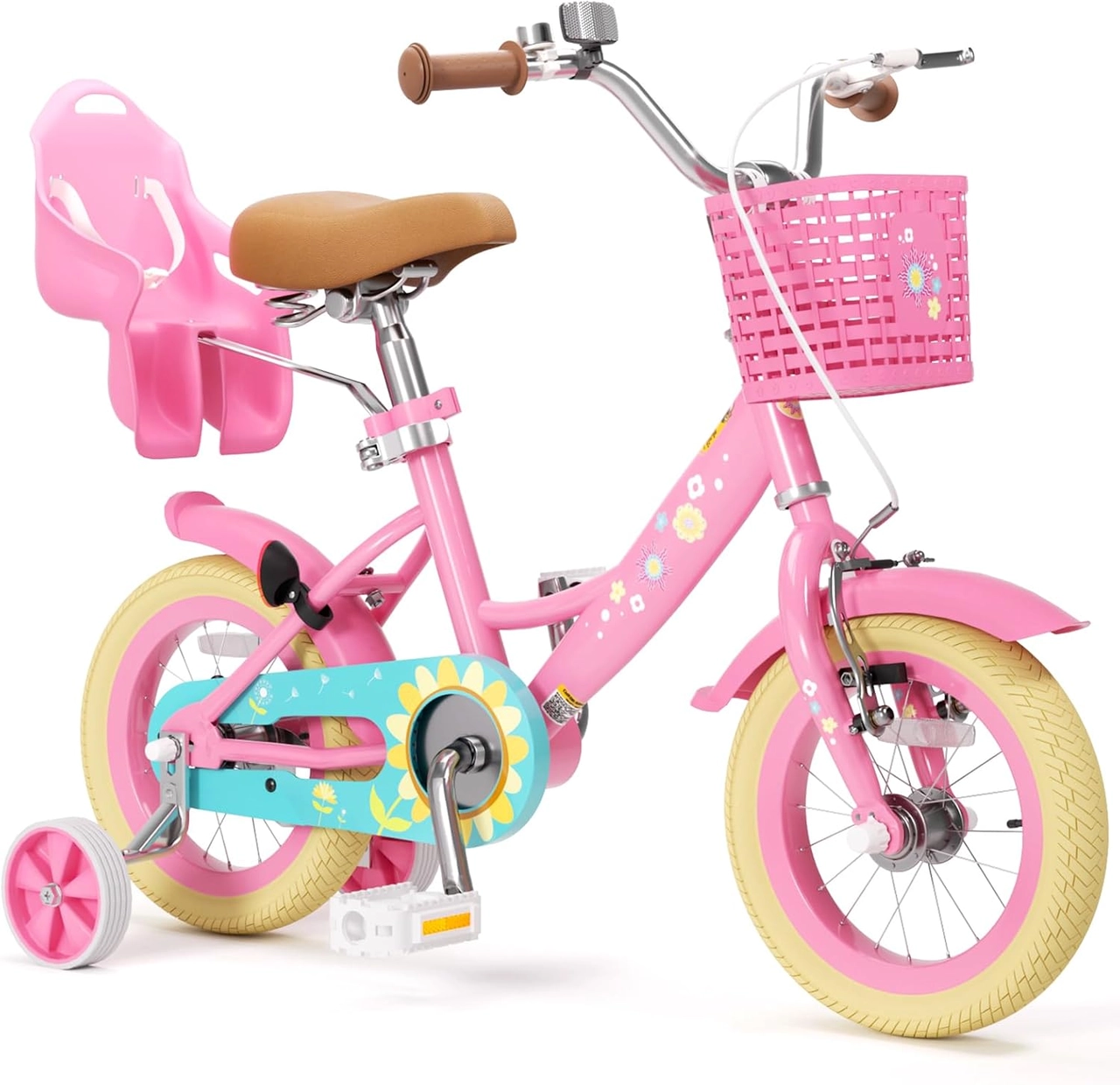 Flower Pink XJD Girls Bike with Doll Seat & Basket
Offered in 12 Inch, 14 Inch and 16 Inch SKUs. This Training Wheel Bikes option is relevant when a child’s measurements and hands-on fit check support the selected size.
 Purple XJD Girls' Bike with Doll Seat & Basket
This Training Wheel Bikes model lists 12 Inch, 14 Inch and 16 Inch SKUs, allowing a direct 16 inch choice and smaller-size comparison when the rider’s measurements overlap.
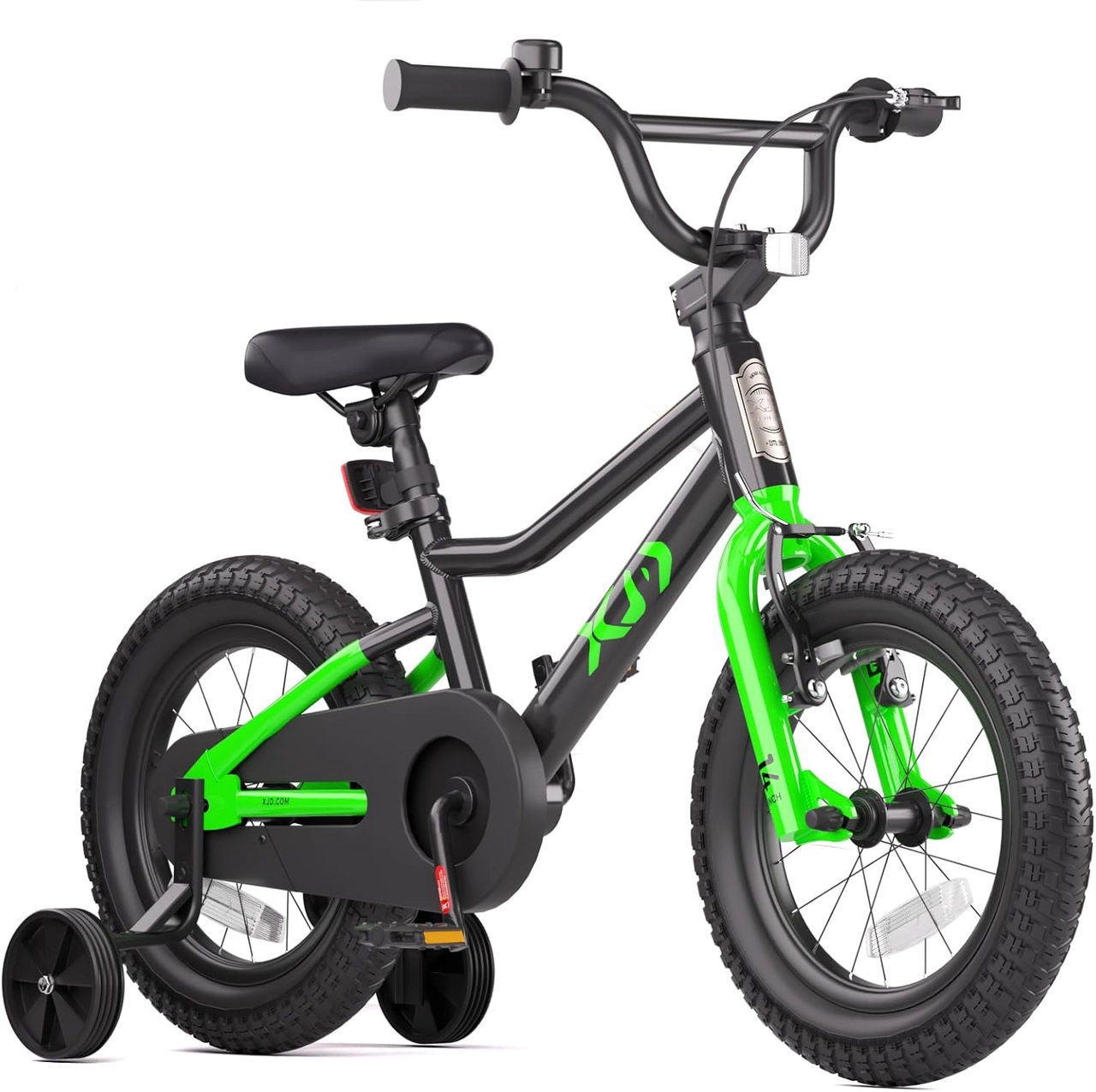 Black XJD Kids' BMX Bicycle with Training Wheels
Categorized as a Kids' BMX Bike with 12 Inch, 14 Inch and 16 Inch SKUs. Its 16 Inch option is relevant only after checking the individual rider’s measurements and control.
The Flower Pink XJD Girls Bike with Doll Seat & Basket and Purple XJD Girls' Bike with Doll Seat & Basket are both categorized as Training Wheel Bikes. Their supplied catalog facts list 12 Inch, 14 Inch and 16 Inch size choices.
The Black XJD Kids' BMX Bicycle with Training Wheels is categorized as a Kids' BMX Bike and likewise lists 12 Inch, 14 Inch and 16 Inch choices. These facts allow comparison by catalog category, title and labeled wheel size only. They do not establish differences in geometry, brakes, weight, materials, adjustment range or current availability.
When these products are and are not relevant
These products are relevant when the child’s measurements point toward a 16 inch bike and the child can demonstrate appropriate stand-over clearance, reach, brake operation and control on the exact model. Their smaller listed SKUs may also be useful comparison points for a child who falls within the 14 inch starting range.
They are not automatically suitable simply because the child is between ages 4 and 7. If the rider is outside the 40–48 inch (102–122 cm) starting range, cannot stand over the frame comfortably, must overreach, cannot operate the brakes, or lacks control, do not force the 16 inch choice. Compare the appropriate neighboring size and repeat the fit check.
Do not choose a larger size solely to leave growing room. A child needs a bicycle they can control now. For model-specific adjustment, assembly, compatibility, maintenance, load limits or torque requirements, follow the exact product manual or ask a qualified bicycle mechanic.
What to do before choosing
- Measure the child’s standing height and inseam in their usual riding shoes.
- Use 40–48 inches (102–122 cm) and ages 4–7 only as the 16 inch starting point.
- Have the child try the exact bicycle and check stand-over clearance, reach, steering and brake control.
- Compare a neighboring wheel size when measurements overlap or control is uncertain.
- Fit a bicycle helmet so it sits level and use its straps according to the manufacturer’s instructions, consistent with U.S. Consumer Product Safety Commission guidance.
Choose the 16 inch bike only if the child’s measurements fall in range and the exact bicycle passes the hands-on fit and control checks today.
Bikes for your next adventure
-
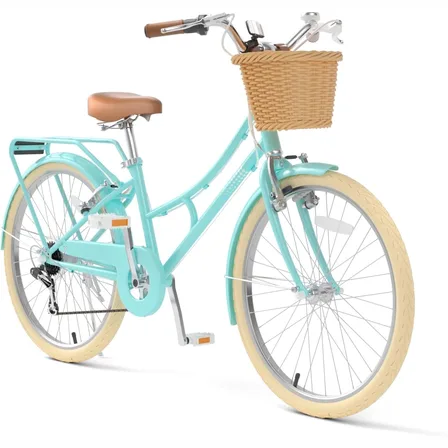
XJD Kids Beach Cruiser Bicycle, Rear Rack & V-Brakes, Mint Green
The XJD Beach Cruiser in Mint Green is a geared, multi-speed cruiser bike for ol…$179.99
$209.99 -
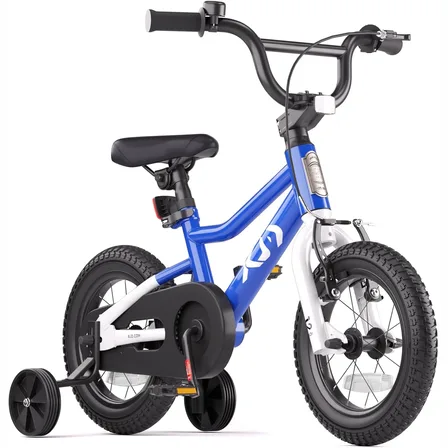
XJD Boys & Girls BMX Bike with Training Wheels, 12/14/16" – Blue
The XJD Boys & Girls BMX Bike in Blue is a first pedal bike for kids roughly age…$99.99
$119.99 -
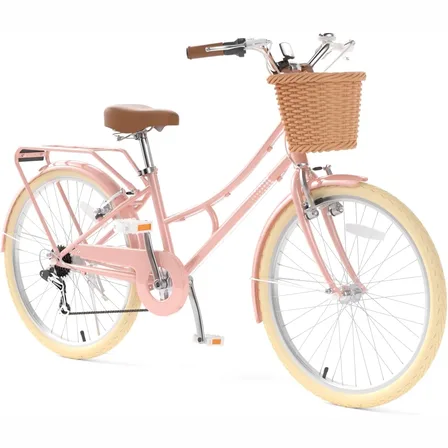
XJD Pink Beach Cruiser for Girls – Rear Rack & V-Brake
The XJD Pink Beach Cruiser for girls is the step-up bike for riders who've outgr…$179.99
$209.99