

How tall is a 16 inch bike
A 16-inch bike has 16-inch wheels; it is not 16 inches tall overall. Its total height varies by model. XBikes uses 40–48 in (102–122 cm) rider height and ages 4–7 only as starting points, followed by an individual fit check.
What “16 inch” actually measures
The 16-inch label identifies the nominal wheel size, not the height of the frame, saddle, handlebars or complete bicycle. Consequently, there is no single overall height that applies to every 16-inch bike. Frame shape, saddle adjustment and handlebar position can differ between models even when their wheel labels match.
For a parent choosing a bicycle, measuring the child is more useful than trying to compare the child’s height with the bike’s total height. The key question is whether the rider can stand over, reach and control that particular bicycle comfortably.
Measure the child before comparing sizes
- Measure standing height: Have the child stand without shoes, upright against a wall. Record the floor-to-top-of-head measurement.
- Measure inseam: With feet slightly apart, measure from the floor to the crotch. This helps assess clearance over the bicycle when the child stands.
- Note current confidence: A new or cautious rider may need especially easy starts, stops and foot placement. Experience does not replace a physical fit check.
Compare standing height with the XBikes starting point: a 16-inch bike corresponds to a rider height of 40–48 in (102–122 cm) and an age guide of 4–7. Height should take priority over age because children of the same age can have different proportions and reach.
Check the actual 16-inch bike
Have the child try the assembled bicycle rather than selecting solely from the wheel label. With the child standing over it, confirm adequate clearance and a stable stance. When seated in a normal riding position, the child should be able to reach the handlebars without an awkward stretch and steer without losing balance.
Check that the rider can reach and operate the brake controls fitted to the exact bicycle. They should also be able to start, stop and put a foot down with confidence. If the child cannot control the bike during these simple checks, the nominal age range does not make it a suitable fit.
Do not choose an oversized bicycle merely to leave room for growth. If the child is below the height starting point, has inadequate stand-over clearance, must overreach or cannot use the brakes confidently, compare a smaller size. If the child is above the range or looks cramped at a proper adjustment, compare the next size up and repeat the same checks.
How nearby wheel sizes compare
| Wheel label | XBikes age starting point | XBikes rider-height starting point |
|---|---|---|
| 14 Inch | Ages 3–6 | 37–45 in / 94–114 cm |
| 16 Inch | Ages 4–7 | 40–48 in / 102–122 cm |
| 20 Inch | Ages 7–12 | 48–60 in / 122–152 cm |
The ranges overlap because height alone cannot capture inseam, arm reach, control or confidence. A child near a boundary should try the relevant sizes; a larger wheel label is not automatically the better choice.
Which supplied products are relevant?
Both supplied catalog options include a 16 Inch SKU label, so they are relevant models to compare after measuring the rider. Their other listed sizes also help a parent investigate an adjacent size when the 16-inch fit check shows that one is needed.
 Girls' Training Wheel Bike by XJD with Basket – Purple
Available with 14 Inch, 16 Inch and 20 Inch SKU labels, this Training Wheel Bike includes the requested size and adjacent catalog comparison points; the rider still needs an individual fit check.
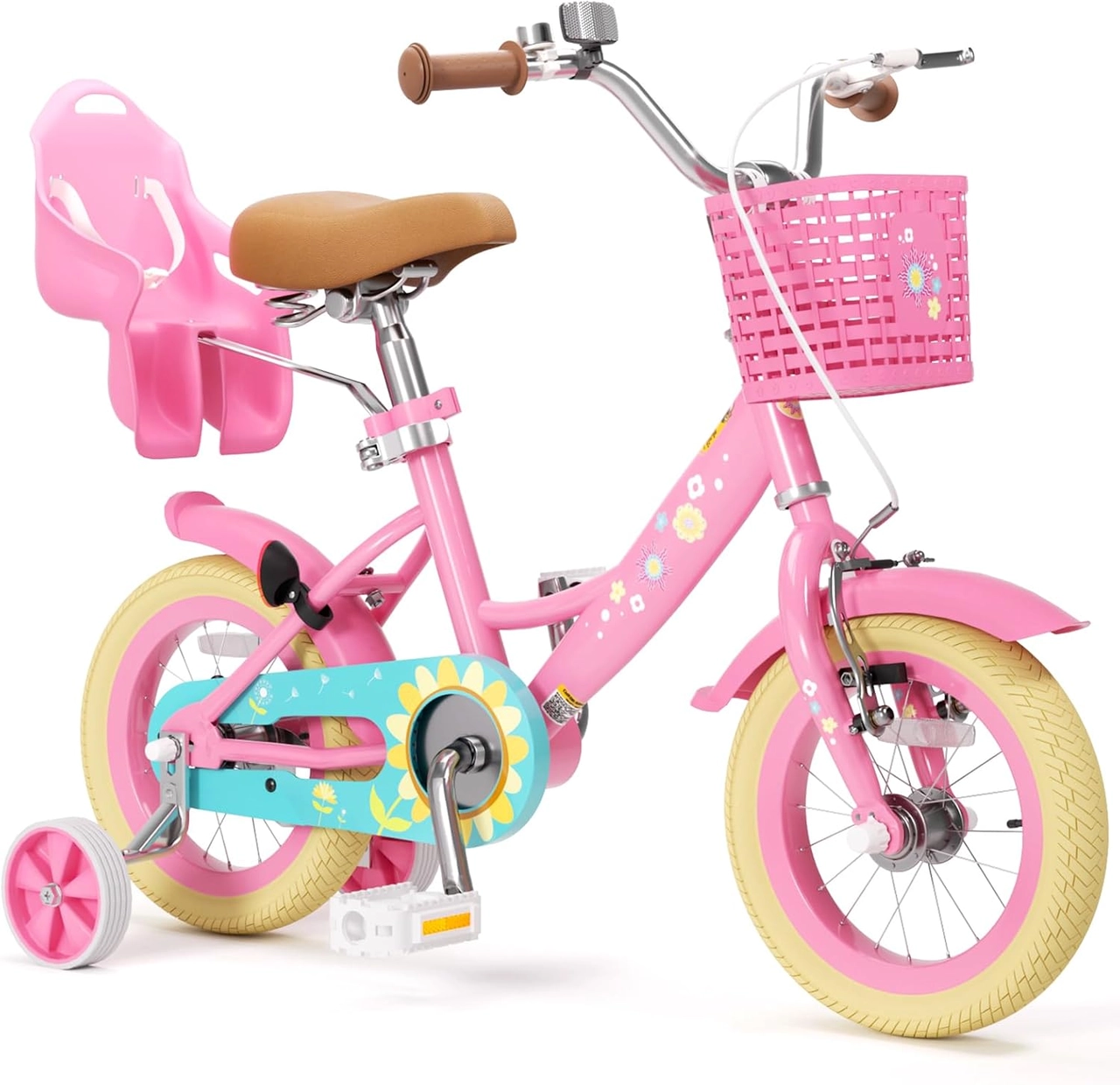 Flower Pink XJD Girls Bike with Doll Seat & Basket
This Training Wheel Bike offers 12 Inch, 14 Inch and 16 Inch SKU labels. Its 16 Inch option is directly relevant, while the smaller labels provide comparison choices if the requested size does not fit.
Girls' Training Wheel Bike by XJD with Basket – Purple is categorized as a Training Wheel Bike and is offered with 14 Inch, 16 Inch and 20 Inch SKU labels. It therefore provides the requested wheel label plus smaller and larger catalog comparison points. Those labels do not establish that any version fits a particular child.
Flower Pink XJD Girls Bike with Doll Seat & Basket is also categorized as a Training Wheel Bike. Its available SKU labels are 12 Inch, 14 Inch and 16 Inch, making its 16 Inch option relevant to the title while its smaller labels may help when a child does not fit the 16-inch version.
Choose between them only after confirming the exact size selected and checking the individual rider. Use the exact product manual or a qualified bicycle mechanic for assembly, maintenance, compatibility, load limits and torque information not provided in the catalog facts.
Make the final 16-inch decision
A properly fitting helmet is part of the check: it should sit level, fit correctly and have its straps adjusted according to the helmet manufacturer’s instructions. A helmet cannot compensate for a bicycle that is too large or difficult to control.
Next, record the child’s standing height and inseam. Consider a 16-inch bike when height falls near the 40–48 in (102–122 cm) starting range, then have the child try the exact model. Select it only if stand-over clearance, reach, brake operation and confident starts and stops all work for that rider; otherwise compare the adjacent size indicated by the failed check.
Bikes for your next adventure
-
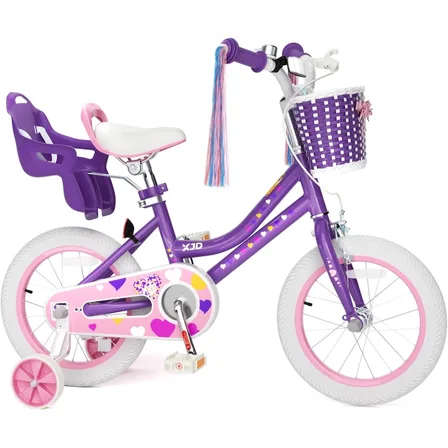
Purple XJD Girls' Bike with Doll Seat & Basket
For girls 71–122 cm tall (about ages 3–7), this XJD girls' bike in Purple pairs …$75.99
$99.99 -

Blue XJD Girls Bike with Training Wheels – 12/14/16 Inch
If you're shopping for a first pedal bike for a daughter roughly 3 to 8 years ol…$149
$169 -
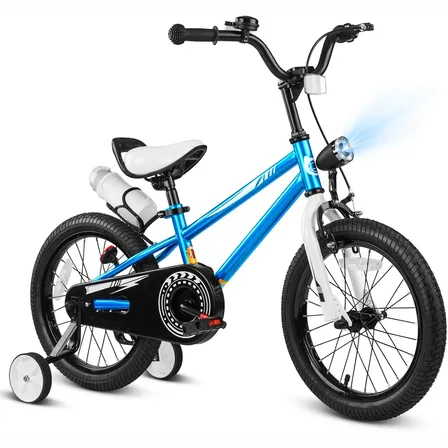
XJD Boys 12/14/16" Training Wheel Bike – Blue
The XJD Boys Bike in Blue is a training wheel bike for riders 71–122 cm tall—rou…$169
$199