

How do i teach my kid to ride a bike
Teach your child to ride by checking bike fit first, then practising balance, braking, starting and turning in a flat, traffic-free area.
Measure before the first lesson
Measure your child’s height and inseam while they wear the shoes they will ride in. Use height to choose a starting wheel-size range, then have them try the actual bicycle. Age is only a rough reference.
| Wheel size | Starting age | Rider height |
|---|---|---|
| 12 Inch | 3–4 | 34–40 in / 86–102 cm |
| 14 Inch | 3–6 | 37–45 in / 94–114 cm |
| 16 Inch | 4–7 | 40–48 in / 102–122 cm |
| 18 Inch | 5–9 | 43–52 in / 109–132 cm |
| 20 Inch | 7–12 | 48–60 in / 122–152 cm |
| 24 Inch | 10–14 | 54–64 in / 137–163 cm |
| 26 Inch | Youth and adults | Over 60 in / 153 cm |
These XBikes ranges are starting points, not proof of fit. Do not buy an oversized bicycle for a child to grow into. On the actual bike, check that the child can stand over it comfortably, reach the controls without stretching, turn the handlebar without losing posture and operate the brakes reliably. Their inseam, reach and confidence can make a nominally suitable wheel size unsuitable.
Prepare the bike, helmet and practice space
Choose a wide, level, traffic-free paved area without obstacles or a steep slope. Avoid beginning where the child must also watch cars, pedestrians or tight boundaries. A properly fitting bicycle helmet should sit level, with its straps adjusted according to the helmet manufacturer’s instructions.
Before riding, confirm that the bicycle is assembled and functioning as its exact product manual requires. Check that the child can use its braking system while seated and while walking beside the bike. For assembly details, maintenance, torque, load limits or compatibility questions not stated in the catalog, follow the product manual or ask a qualified bicycle mechanic.
Teach balance before pedalling
Start with the saddle positioned so the learner can put their feet down confidently while seated, provided that adjustment is permitted by the manual. Have the child walk the bike, then take longer strides and brief glides. Ask them to look toward where they want to go rather than down at the front wheel.
- Practise stopping with both feet under control.
- Glide for gradually longer stretches without weaving.
- Make broad turns in both directions.
- Use the brakes to stop at a chosen marker.
Do not rush to the pedals while balance still feels frightening. Short, calm sessions usually make it easier to repeat a successful skill and stop before fatigue turns into frustration.
Add starting, pedalling and controlled stops
Once gliding is steady, position one pedal slightly forward and high enough for a firm first push. Have the child look ahead, press that pedal, bring the other foot onto its pedal and continue smoothly. Stand nearby at the child’s side; if support is needed, steady the torso gently rather than steering the handlebar for them.
Practise a simple sequence: start, ride straight, brake smoothly and put a foot down only as the bike finishes stopping. Then add wide turns and predictable stop points. Progress when the child can repeat the current step calmly, not merely because they completed it once.
Know when the catalog option is relevant
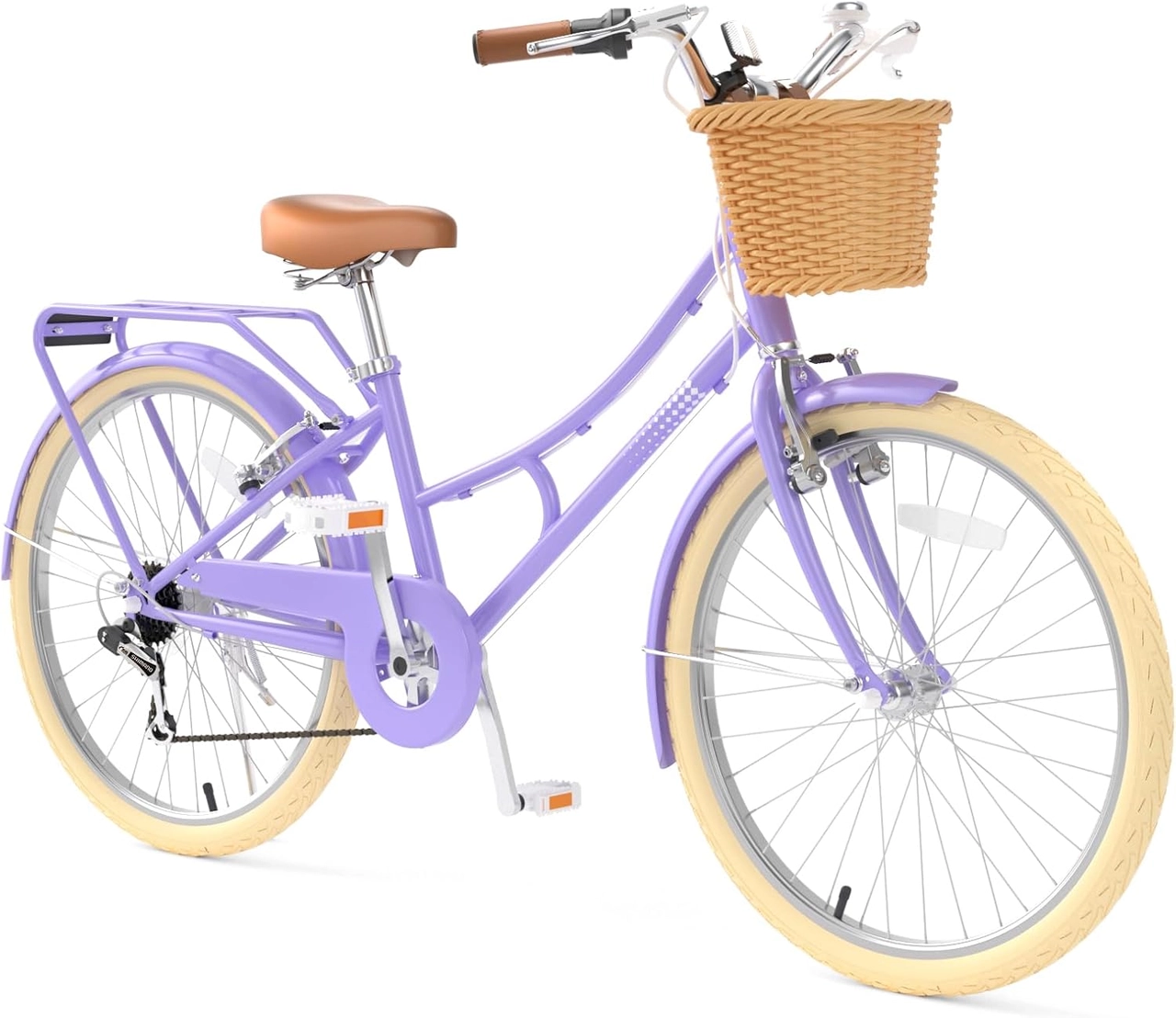
The 24-Inch Purple XJD Beach Cruiser Bike with U-Brake is a 24-inch Beach Cruiser Bikes option. The XBikes starting range for 24-inch bicycles is ages 10–14 and heights of 54–64 in / 137–163 cm. It is relevant only when your child’s measured height points toward that range and an individual try-on confirms stand-over clearance, comfortable reach, controllable steering and dependable access to the U-brake. It is not a suitable teaching choice merely because a child may grow into it.
This catalog option helps parents compare the learner’s measurements and control needs with a specific 24-inch bicycle; it should be considered only after the fit and confidence checks above.
Decide what to do next
If your child cannot stand over the bike comfortably, reach the handlebar naturally or operate the brake with confidence, pause the lesson and try a more appropriate fit. If fit is sound but balance is uncertain, return to walking and gliding. If balance, braking and steering are repeatable, practise short starts and stops before moving to longer rides. The next step is the smallest skill your child can attempt while remaining relaxed and in control.
Bikes for your next adventure
-

Kids Bike Helmet by XJD for Boys & Girls – Black, Blue, Green, Pink, Purple
The XJD Kids Bike Helmet covers a wide 2-to-8-year age range thanks to two head-…$59.99
-

Kids Bike Helmet by XJD for Girls – Pink
The XJD Kids Bike Helmet in Pink is a lightweight multi-sport helmet for girls r…$59.99
$99 -

XJD Kids Bike for Girls – Pink, 12/14/16/20 Inch with Training Wheels
The XJD Kids Bike for Girls in Pink is a training-wheel bike built to carry your…$139
$159