

How much weight can a 26 inch bike hold
A 26-inch bike has no universal weight limit. Use the exact model and size’s stated load rating, then compare it with the rider and every carried item.
Why wheel diameter does not answer the load question
“26 inch” identifies a wheel-size class, not a structural capacity. Two bicycles with 26-inch wheels may have different frames, wheels, components and intended uses. A limit from another 26-inch bicycle, or from a different size of the same-looking bicycle, is not a reliable substitute.
Find the limit in the exact bicycle’s product manual or manufacturer documentation. If it is absent or unclear, ask the manufacturer or a qualified bicycle mechanic. Do not estimate a safe number from appearance, wheel size or category.
Measure the load that the bike must carry
Weigh the rider in normal riding clothes, including shoes, helmet and anything worn in a backpack. Then account for anything placed on or attached to the bicycle, such as luggage, a basket or rack cargo. If an accessory has its own limit, that does not automatically raise the bicycle’s limit.
Write down these figures separately so they can be checked against the manual:
- Ready-to-ride rider weight: the rider plus worn or carried belongings.
- Cargo weight: everything carried by the bicycle rather than worn by the rider.
- Accessory weight: added equipment that the manufacturer includes in its load calculation.
Manuals do not always define load in the same way. Check whether a figure means maximum rider weight, maximum cargo, rack capacity or total permitted load. Follow the exact wording rather than combining separate ratings yourself.
Compare capacity and fit as separate checks
Being below the stated load limit does not prove that a rider fits or controls the bicycle. XBikes uses 26 inches as a starting point for youth and adults over 60 inches (153 cm), but height is only the beginning of the check.
Measure the rider’s standing height and inseam. Have the rider try the bicycle and confirm suitable stand-over clearance, comfortable reach, reliable access to both brake controls and confident starting, steering and stopping. Prioritize those observations over age alone, and do not buy an oversized bicycle merely to allow room for growth.
If either test fails—capacity or physical control—the bicycle is not an appropriate choice for that rider, even if the other test passes.
How the supplied 26-inch catalog options help
The three supplied beach-cruiser listings all include a 26-inch option, so they are relevant models to investigate rather than nearest-size substitutes. Their catalog details help identify the exact variant whose manual and load rating you need; they do not provide a weight limit.
 XJD Kids Beach Cruiser Bicycle, Rear Rack & V-Brakes, Mint Green
Available with a 26 Inch SKU alongside 20 Inch and 24 Inch versions. Its rear rack and V-brakes identify the variant, but no bicycle or rack load rating is supplied.
 XJD Pink Beach Cruiser for Girls – Rear Rack & V-Brake
Its available labels include 26 Inch, making it relevant to the question. The supplied facts list a rear rack and V-brake but provide no rider, cargo or total-load capacity.
 26-Inch XJD Beach Cruiser Bike for Girls – Purple, V-Brake
Offers Mint Green, Pink and Purple 26 Inch labels, allowing exact variant comparison. The supplied catalog information does not state a load limit, so consult that variant’s manual.
XJD Kids Beach Cruiser Bicycle, Rear Rack & V-Brakes, Mint Green lists 20 Inch, 24 Inch and 26 Inch SKU labels. Select the 26 Inch variant when requesting its documentation. The listed rear rack needs its own verified rating and must not be assumed to carry any particular load.
XJD Pink Beach Cruiser for Girls – Rear Rack & V-Brake also lists 20 Inch, 24 Inch and 26 Inch choices. Its 26 Inch choice is relevant to this question, but the supplied catalog facts do not establish rider, total-load or rear-rack capacity.
26-Inch XJD Beach Cruiser Bike for Girls – Purple, V-Brake offers several color-and-size labels, including Mint Green / 26 Inch, Pink / 26 Inch and Purple / 26 Inch. Color does not establish capacity; verify the manual for the exact selected variant.
Inspect condition and confirm the rating
A printed limit cannot compensate for damage, loose parts, incorrect assembly or unsuitable accessories. Before use, follow the model’s manual for assembly, inspection, maintenance, compatibility and any torque requirements. If the history or condition of the bicycle is uncertain, have a qualified bicycle mechanic inspect it.
Also equip the rider with a properly fitting bicycle helmet. It should sit level and its straps should be adjusted according to the helmet manufacturer’s instructions.
Your next decision
- Choose the exact 26-inch model and SKU, not merely a bicycle with 26-inch wheels.
- Obtain that variant’s manual and identify how it defines rider, cargo, rack and total load.
- Measure the complete intended load and remain within every applicable stated limit.
- Have the rider perform an individual stand-over, reach, brake-control and confidence check.
If you cannot verify the exact load rating, or the rider cannot control the bicycle comfortably, do not use that 26-inch bike for the intended rider and load; obtain written guidance or ask a qualified bicycle mechanic.
Bikes for your next adventure
-
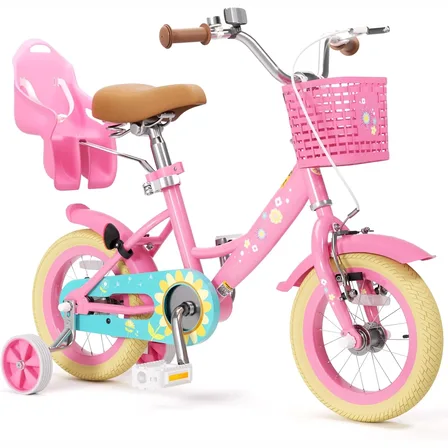
Flower Pink XJD Girls Bike with Doll Seat & Basket
The XJD Flower Pink girls' bike is made for riders 71–122 cm tall (roughly ages …$69.99
-
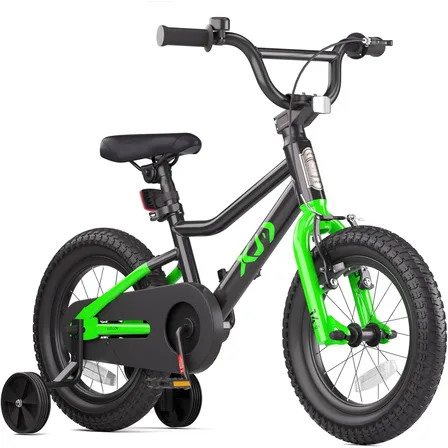
Black XJD Kids' BMX Bicycle with Training Wheels
The XJD Kids' BMX Bicycle with Training Wheels is built for children roughly 3 t…$99.99
$119.99 -

XJD Boys 12/14/16" Training Wheel Bike – Blue
The XJD Boys Bike in Blue is a training wheel bike for riders 71–122 cm tall—rou…$169
$199