

How old before.kid can.ride a bike
Most children can start riding a bike around age 3, but age alone cannot determine readiness. Measure height and inseam, then check balance, reach, brake control and confidence on the actual bike.
When is a child ready to ride?
There is no single correct birthday. A child is ready when an appropriately sized bicycle fits their body and they can follow simple directions, hold the handlebar, look ahead and practise without becoming overwhelmed. Some children are comfortable at three; others need more time.
Start with the child’s current measured height rather than an expected growth spurt. Inseam matters too because two children of the same height can have different leg lengths. Record both measurements, then have the child try the bicycle before deciding.
Compare height with these starting points
Use the XBikes ranges to identify wheel sizes worth trying. Overlapping ranges are intentional: they narrow the options but do not replace an individual fit check.
| Wheel size | Starting age | Rider height |
|---|---|---|
| 12 Inch | 3–4 | 34–40 in / 86–102 cm |
| 14 Inch | 3–6 | 37–45 in / 94–114 cm |
| 16 Inch | 4–7 | 40–48 in / 102–122 cm |
| 18 Inch | 5–9 | 43–52 in / 109–132 cm |
| 20 Inch | 7–12 | 48–60 in / 122–152 cm |
| 24 Inch | 10–14 | 54–64 in / 137–163 cm |
| 26 Inch | Youth and adults | Over 60 in / 153 cm |
If the child falls within two ranges, try both wheel sizes. Do not automatically choose the larger one: the American Academy of Pediatrics advises against buying an oversized bicycle merely for future growth.
What to check on the actual bicycle
A promising number on the table is only the beginning. With an adult stabilizing the bicycle, check whether the child can stand over it, mount and dismount without struggling, and sit in a controlled riding position.
- Stand-over: The child should be able to straddle the bicycle rather than being forced against its frame.
- Reach: Hands should reach the handlebar comfortably without an extreme stretch or cramped posture.
- Brake control: If the bicycle has hand-operated controls, the child must be able to reach and operate them reliably.
- Steering and balance: The child should be able to turn the handlebar while remaining composed and looking ahead.
- Confidence: Hesitation is useful information. Step back to easier, closely supervised practice if the bicycle feels intimidating.
Reject a bicycle that fails these checks even when the child’s age or height appears in its starting range.
How the supplied 12, 14 and 16 Inch bikes apply
The catalog options are relevant to children whose measurements lead to a 12, 14 or 16 Inch trial. Both offer those same three wheel-size labels, so they help compare the appropriate listed size after height and hands-on fit have narrowed the choice.
 Blue XJD Girls Bike with Training Wheels – 12/14/16 Inch
A training wheel bike offered with 12 Inch, 14 Inch and 16 Inch SKU labels, relevant when the child’s measured height and individual fit check point to one of those sizes.
 XJD Boys 12/14/16" Training Wheel Bike – Blue
A blue training wheel bike with 12 Inch, 14 Inch and 16 Inch SKU labels; compare only the size supported by the rider’s measured height, reach, control and confidence.
Blue XJD Girls Bike with Training Wheels – 12/14/16 Inch is categorized as a training wheel bike and has 12 Inch, 14 Inch and 16 Inch SKU labels. XJD Boys 12/14/16" Training Wheel Bike – Blue is also categorized as a training wheel bike with those three size labels.
Their gender wording is part of each exact catalog title, not evidence of fit. Choose between relevant sizes by the child’s measurements and control, not the title. The supplied facts do not establish brake type, weight, load limit, materials, certification or assembly details, so consult the exact product manual or a qualified bicycle mechanic for those points.
If measurements indicate 18, 20, 24 or 26 Inch, neither supplied product provides that size. These products are then comparison points for smaller wheel options, not equal substitutes for the required size.
Prepare for the first ride
Use a quiet, open area away from traffic and obstacles, with close adult supervision. Keep early sessions short enough that the child can remain attentive. Training wheels can provide support, but they do not override poor sizing, uncomfortable reach or limited brake control.
A bicycle helmet is essential. Following U.S. Consumer Product Safety Commission guidance, select one that fits properly, sits level and has straps adjusted according to the helmet manufacturer’s instructions. Check the fit each time rather than assuming yesterday’s adjustment still works.
Your next decision
Measure the child’s height and inseam today, identify the one or two wheel sizes suggested by the table, and arrange a supervised try-on. Buy only when the child can stand over, reach, steer and control the brakes confidently; otherwise choose a smaller fitting option or wait before starting.
Bikes for your next adventure
-
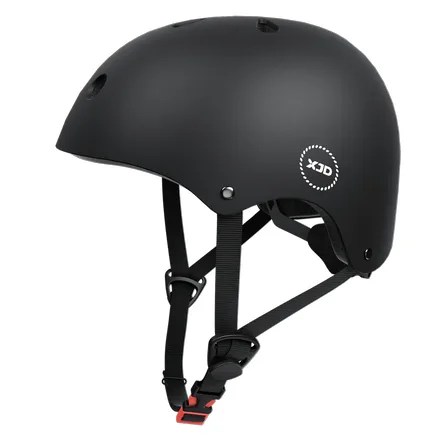
7-in-1 Kids Helmet & Protective Gear Set from XJD – Black or Blue
If you're outfitting one kid (or a couple of siblings) for biking, scootering, o…$59.99
-
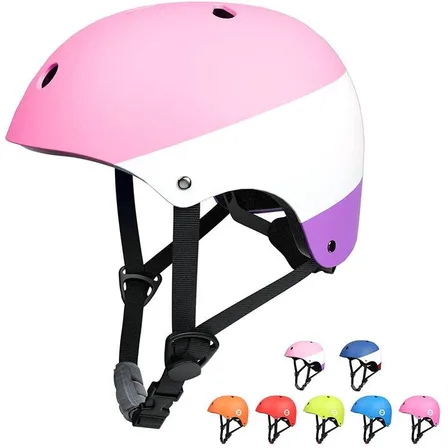
XJD Kids Bike Helmet for Boys & Girls, B White / Pink White
The XJD Kids Bike Helmet covers a wide age range — suggested for ages 2 through …$59.99
-

Blue XJD Girls Bike with Training Wheels – 12/14/16 Inch
If you're shopping for a first pedal bike for a daughter roughly 3 to 8 years ol…$149
$169