

How old for baby bike carrier
There is no single safe age for every baby bike carrier. Use the carrier maker’s minimum age, weight and developmental requirements, then confirm that the child, carrier, bicycle and adult rider meet every instruction before riding.
Start with the exact type of carrier
“Baby bike carrier” can mean a bicycle-mounted child seat or a cycle trailer. These products can have different entry requirements, restraint systems, load limits and bicycle compatibility rules. The child’s birthday alone therefore cannot decide readiness.
Find the exact model manual and compare its requirements with your child’s current measurements and abilities. If the label or manual is missing, do not estimate its limits. Contact the manufacturer or ask a qualified bicycle mechanic to identify and assess the equipment.
What to measure and compare
Before using a carrier, record the child’s current age, weight and height. Compare each figure with the carrier’s stated limits, including any minimum as well as maximum. Also check every developmental requirement in the manual; do not assume that reaching a particular birthday automatically satisfies it.
- Child: Confirm the stated age, size and developmental conditions.
- Carrier: Check its restraints, passenger limits and required setup against the exact manual.
- Bicycle: Verify that the bicycle and carrier are explicitly compatible.
- Adult rider: Confirm comfortable stand-over clearance, reach, steering and brake control with the carrier fitted.
If any condition is unclear or unmet, wait. A pediatrician can help with questions about the child’s developmental readiness, while a qualified bicycle mechanic can check installation and bicycle compatibility.
Why bicycle fit still matters
A correctly sized carrier does not make an ill-fitting bicycle suitable. The adult rider must be able to start, stop, balance, steer and reach the brakes confidently. Follow the HealthyChildren approach to bicycle fit: try the bicycle, check stand-over and controls, and do not choose an oversized cycle merely to allow room for growth.
The XBikes wheel-size figures are starting points for the person riding the bicycle, not passenger-carrier age rules. A 24-inch bicycle starts at ages 10–14 and rider heights of 54–64 inches (137–163 cm). A 26-inch bicycle is a starting point for youth and adults over 60 inches (153 cm). Measured height, inseam, reach, brake control and present confidence take priority over age.
Are the supplied XBikes products relevant?
The XJD 24-Inch Green Beach Cruiser Bike with U-Brake is offered in Green / 24 Inch, Pink / 24 Inch and Pink / 26 Inch labels. The Pink XJD Beach Cruiser Bike, 24"/26", U-Brake is offered in 24 Inch and 26 Inch. These options help compare rider wheel-size starting points, but neither catalog entry is a baby carrier or supplies carrier compatibility, passenger limits or installation details. They are comparison points only, not substitutes for a purpose-designed carrier.
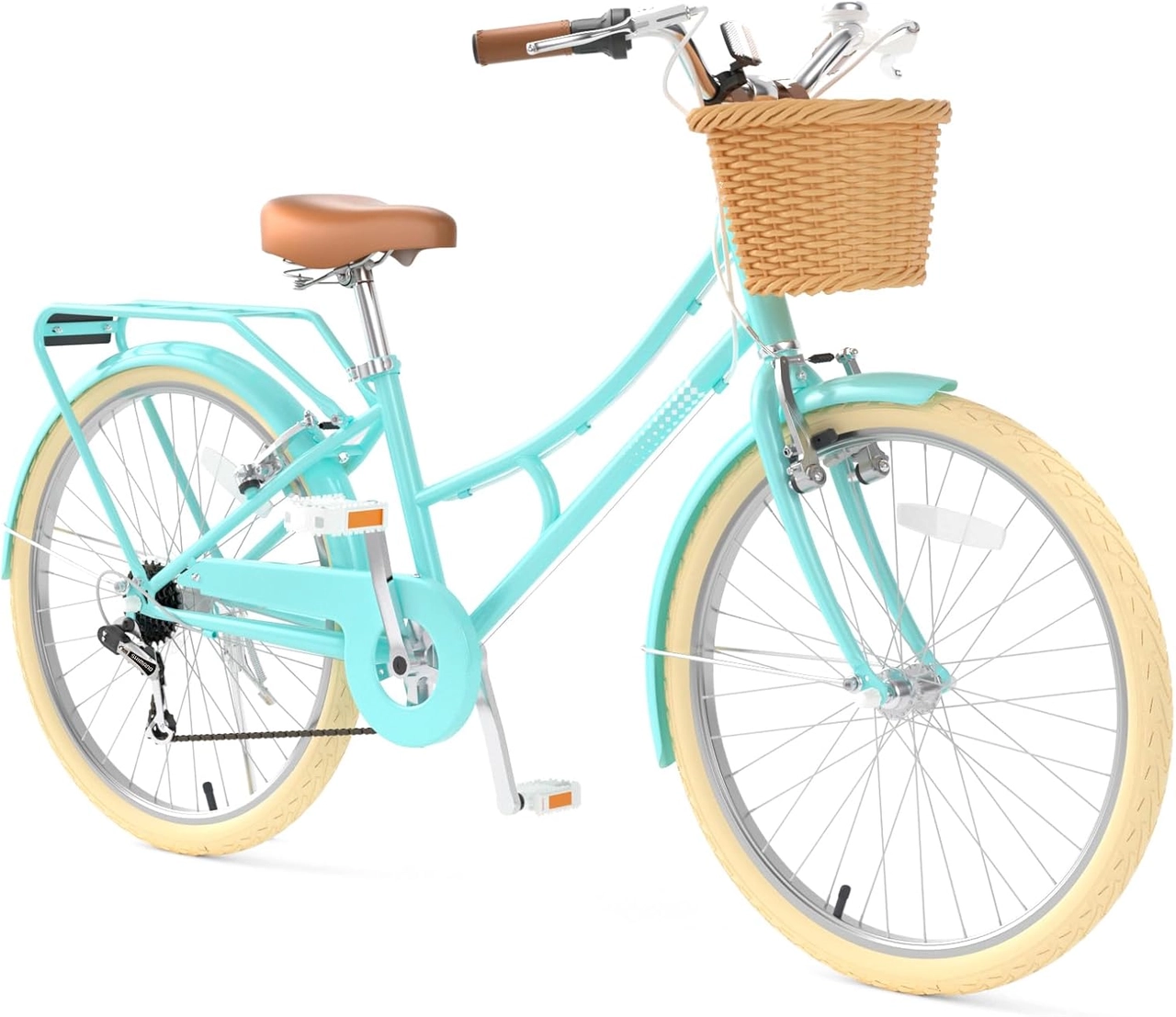 XJD 24-Inch Green Beach Cruiser Bike with U-Brake
A 24- or 26-inch beach cruiser comparison point for rider fit. The supplied facts do not establish baby-carrier compatibility, passenger limits or installation requirements.
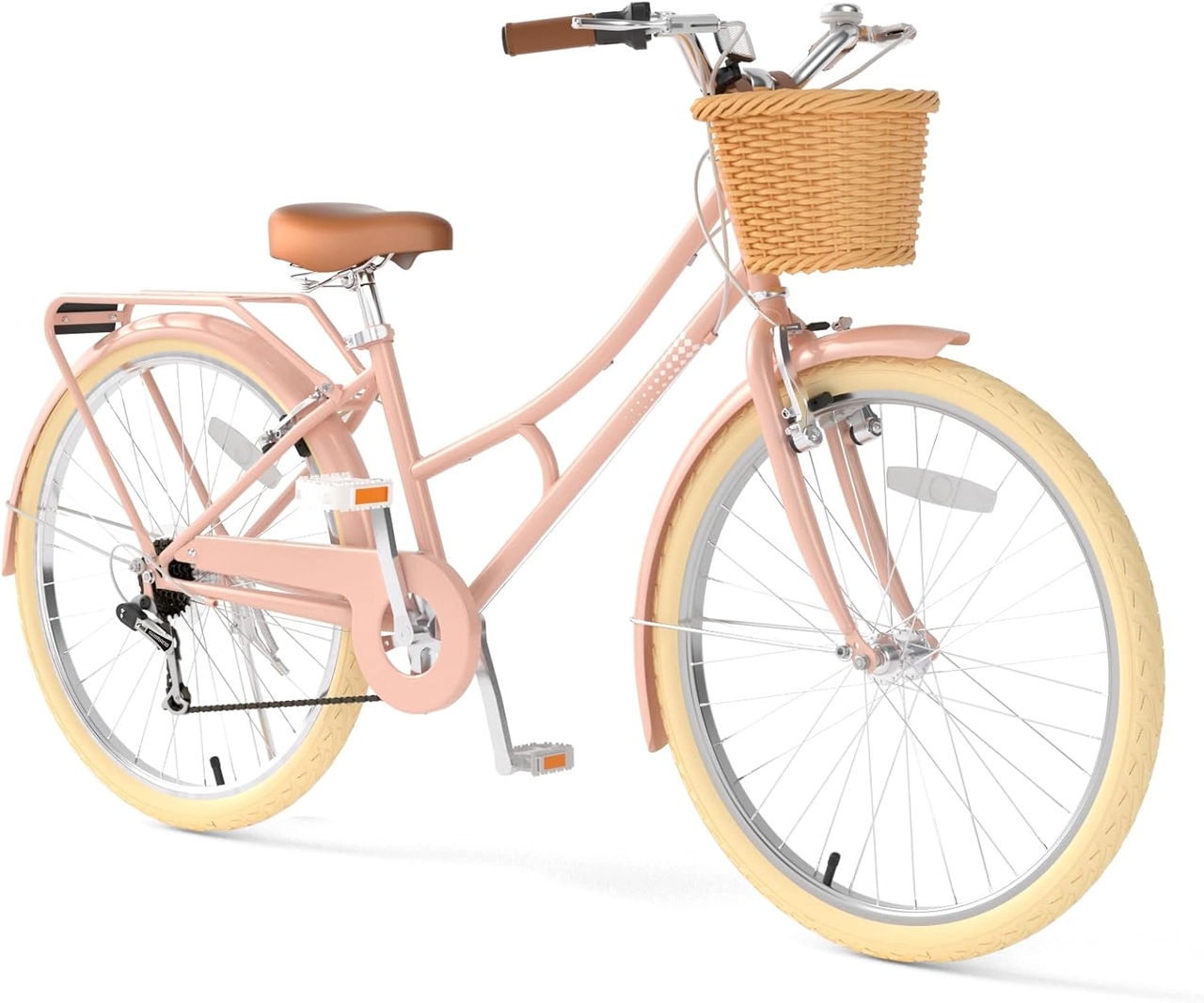 Pink XJD Beach Cruiser Bike, 24"/26", U-Brake
Available in 24- and 26-inch labels with a U-brake. It can illustrate rider sizing, but the catalog facts do not verify use with any baby seat or trailer.
For a 24-inch option, compare the intended rider with the 54–64-inch (137–163 cm) starting range and then perform an individual fit check. For a 26-inch option, the rider-height starting point is over 60 inches (153 cm), again subject to inseam, reach, brake control and confidence. The catalog information alone does not establish that either bicycle can accept a child seat or tow a trailer.
Do not infer carrier compatibility from wheel size or the presence of a U-brake. Use the manual for the exact bicycle and carrier, including all assembly, maintenance, load and torque instructions. Where the documentation does not confirm the combination, ask a qualified bicycle mechanic rather than improvising an attachment.
Helmet and pre-ride checks
The child and rider should use bicycle helmets appropriate to the ride and applicable rules. Following U.S. Consumer Product Safety Commission guidance, each helmet must fit properly, sit level and have its straps adjusted according to the helmet manufacturer’s instructions. A helmet does not override a carrier’s readiness requirements.
Before every outing, inspect the carrier and bicycle as directed by their manuals. Confirm that restraints and permitted attachments are correctly secured, and test handling in a controlled area without taking the child into traffic. Stop if the bicycle feels difficult to balance, steer or brake.
Your decision
Use the carrier only when your child meets every stated minimum, the exact bicycle–carrier pairing is approved by the manufacturers, installation has been checked, helmets fit correctly and the adult can control the loaded setup confidently. Otherwise, wait or choose equipment whose documentation clearly matches the child and bicycle.
Bikes for your next adventure
-
XJD Pink Beach Cruiser for Girls – Rear Rack & V-Brake
The XJD Pink Beach Cruiser for girls is the step-up bike for riders who've outgr…$179.99
$209.99 -
XJD Kids' Training Wheel Bike for Boys & Girls, 12/14/16 Inch – White
The XJD kids' training wheel bike in White is made for riders ages 3–8 (roughly …$169
$199 -

Kids Bike Helmet by XJD for Boys & Girls – Black, Blue, Green, Pink, Purple
The XJD Kids Bike Helmet covers a wide 2-to-8-year age range thanks to two head-…$59.99