

How old kid ride 20 inch bike
Most children are ready for a 20-inch bike at about ages 7–12 and 48–60 inches (122–152 cm) tall. Age is only a starting point: measure the child and confirm stand-over, reach, braking and control on the actual bike before buying.
Start with height, not birthday
XBikes lists a 20-inch wheel bike as a starting point for riders ages 7–12 who are 48–60 inches (122–152 cm) tall. A tall, confident six-year-old and a shorter ten-year-old may therefore need different sizes despite their ages. Do not move a child up to a 20-inch bike merely because it will leave room to grow; an oversized bicycle can make starting, stopping and steering harder.
Measure the child without shoes, standing straight against a wall. Record total height from the floor to the top of the head. Then measure inseam from the floor to the crotch, using a firm book held level to represent the pressure of a saddle. Height identifies a sensible wheel-size range, while inseam helps you evaluate stand-over and saddle position on a particular frame.
Compare the 20-inch starting point
| Wheel size | XBikes age starting point | Rider-height starting point |
|---|---|---|
| 16 Inch | Ages 4–7 | 40–48 in / 102–122 cm |
| 20 Inch | Ages 7–12 | 48–60 in / 122–152 cm |
| 24 Inch | Ages 10–14 | 54–64 in / 137–163 cm |
The overlapping ages show why a birthday cannot settle the choice. If the rider is below 48 inches, compare a smaller wheel size rather than assuming a 20-inch bike will work. If the rider is within the 20-inch height range, proceed to an individual fit check. Riders near the upper end may also compare a 24-inch bike, but only if they can control it comfortably.
Check the actual bicycle fit
Have the child try the exact bicycle whenever possible. With the child straddling the frame, verify that they can stand over it without the frame preventing stable footing. Seated in a normal riding position, they should reach the handlebar without stretching, locking their arms or leaning awkwardly forward.
Next, check the controls. The child should be able to place their hands securely on the grips, reach the brake controls and apply them with confidence. Watch for easy steering at walking speed, a controlled start and a predictable stop. The saddle and handlebar adjustments must remain within the limits marked by the manufacturer; follow the exact product manual or ask a qualified bicycle mechanic if the correct setup is unclear.
How the supplied XBikes options compare
The catalog includes one available 20-inch option and one smaller-size comparison. This helps you compare a rider who falls within the 20-inch starting range with a child whose measurements or confidence point toward a smaller bicycle.
 XJD Light Purple Girls Bike with Basket, Training Wheels, 12/14/16/20 Inch
Despite “20 Inch” appearing in its catalog title, the supplied available labels are 12, 14 and 16 Inch. Its 16 Inch option is a smaller comparison point, not a substitute for a 20-inch bike.
 XJD Kids Beach Cruiser Bicycle, Rear Rack & V-Brakes, Mint Green
Available in 20, 24 and 26 Inch labels. The 20 Inch SKU is relevant to riders in the 48–60 inch starting range, subject to an individual stand-over, reach, brake-control and confidence check.
XJD Kids Beach Cruiser Bicycle, Rear Rack & V-Brakes, Mint Green is offered in 20 Inch, 24 Inch and 26 Inch labels. Its 20 Inch SKU is relevant when the rider measures 48–60 inches and passes the individual fit and control checks. The title also identifies a rear rack and V-brakes, but suitability still depends on the child being able to reach and operate those brakes on the actual bicycle.
XJD Light Purple Girls Bike with Basket, Training Wheels, 12/14/16/20 Inch includes “20 Inch” in its exact catalog title, but the supplied available SKU labels are only 12 Inch, 14 Inch and 16 Inch. It is therefore not currently an exact 20-inch option in the provided catalog facts. Its 16 Inch label is a smaller comparison point for the XBikes starting range of ages 4–7 and heights 40–48 inches (102–122 cm); it must not be treated as equivalent to a 20-inch bicycle.
Run a short control check
- Confirm the measured height against the 48–60 inch (122–152 cm) starting range.
- Check that the child can straddle the frame and stabilize the bicycle.
- Confirm a relaxed reach to the handlebar and dependable access to the brake controls.
- Let the child start, steer, slow and stop in a flat area away from traffic, with close adult supervision.
- Reject the size if the child appears stretched, cannot manage the brakes, struggles to start or stop, or lacks confidence controlling the bicycle.
A properly fitting bicycle helmet is also essential. It should sit level, fit properly and use its straps according to the helmet manufacturer’s instructions. Consult the bicycle’s exact manual or a qualified bicycle mechanic for assembly, maintenance, adjustment limits, load limits, compatibility and any torque requirements not stated here.
Make the 20-inch decision
Choose a 20-inch bike only when the child is around the XBikes starting range of ages 7–12 and 48–60 inches tall, and the real-bike check confirms comfortable stand-over, reach, brake use and control. If those checks fail, compare the adjacent size indicated by the child’s measured height instead of buying a 20-inch bike for future growth.
Bikes for your next adventure
-
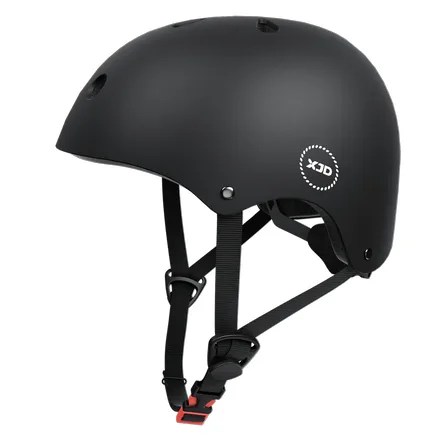
7-in-1 Kids Helmet & Protective Gear Set from XJD – Black or Blue
If you're outfitting one kid (or a couple of siblings) for biking, scootering, o…$59.99
-
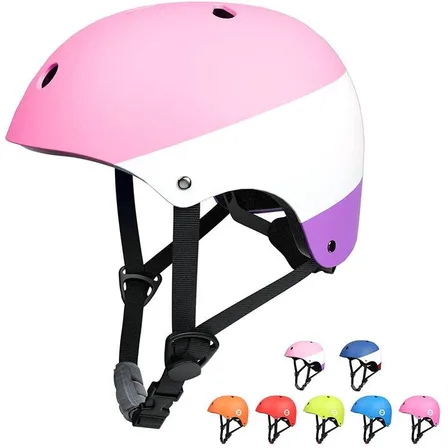
XJD Kids Bike Helmet for Boys & Girls, B White / Pink White
The XJD Kids Bike Helmet covers a wide age range — suggested for ages 2 through …$59.99
-

Blue XJD Girls Bike with Training Wheels – 12/14/16 Inch
If you're shopping for a first pedal bike for a daughter roughly 3 to 8 years ol…$149
$169