

How old to bike with baby
There is no single age when every baby is ready to ride on an adult bicycle. Wait until your baby meets the child seat or trailer manual’s requirements, can maintain the required riding posture, and can wear a properly fitted bicycle helmet; then confirm the plan with your pediatrician and local rules.
What to check before biking with your baby
Age alone cannot answer this safely. Before the first ride, compare your baby’s development and measurements with the instructions for the exact child carrier or trailer. If the manual gives a minimum age, height, weight, seating ability or helmet requirement, every condition applies. Do not estimate or substitute guidance from a different model.
- Posture: Check that your baby can remain in the position required by the carrier throughout a ride, including while wearing a helmet.
- Helmet fit: The helmet should be the correct size, sit level and use its straps exactly as its manufacturer directs.
- Carrier fit: Confirm that the harness and supports fit your baby according to the carrier manual.
- Bicycle compatibility: Verify that the carrier is approved for your bicycle and installation location.
- Adult control: Make sure you can mount, stop, balance and handle the bicycle with the added equipment and load.
If your baby cannot satisfy every applicable requirement, wait. A larger helmet, extra padding or an improvised attachment does not turn an unsuitable setup into a suitable one.
Compare a child seat with a bicycle trailer
A bicycle-mounted child seat and a trailer create different fit, handling and compatibility questions. The correct choice is the one whose manual permits your baby’s measurements and developmental readiness, whose hardware is compatible with the adult bicycle, and whose complete loaded setup the adult can control confidently.
Inspect the exact product instructions for assembly, permitted load, attachment points and ongoing maintenance. Those details vary by model. When the instructions are missing, unclear or incompatible with the bicycle, do not ride; contact the manufacturer or use a qualified bicycle mechanic.
Make the first ride a controlled check
- Install and inspect the equipment exactly as its manual specifies.
- Practice mounting, starting, turning and braking without the baby, using an appropriate test load only if the manufacturer permits it.
- Fit the baby’s helmet level and adjust the straps according to the helmet instructions.
- Secure the baby exactly as the carrier manual directs, then recheck posture and harness fit.
- Choose a short, low-speed ride away from traffic and difficult surfaces. Stop if posture, helmet position, equipment attachment or adult control changes.
Repeat the fit and equipment checks before later rides because children grow and adjustments can shift. For torque settings, fastener checks or maintenance procedures, follow the exact manual or ask a qualified bicycle mechanic rather than relying on a general procedure.
Why the supplied kids’ bikes are not baby carriers
The supplied products are training-wheel bicycles in 12, 14 and 16 Inch sizes. They do not answer whether a baby is ready to ride as a passenger, and the catalog facts do not establish that any can accept a child seat or tow a trailer. They become relevant only later, when measuring a child for an independently ridden bicycle.
The three catalog options help show those later wheel-size starting points: XJD Pink Girls' Bike – Kids 12/14/16 Inch Training Wheel Bicycle, XJD Girls Bike for Kids Ages 3-8, 12/14/16 Inch with Training Wheels – Purple, and Girls 12/14/16 Inch Kids Bike by XJD with Training Wheels – Peach. Each is listed in 12, 14 and 16 Inch versions with training wheels; none is a substitute for approved baby-passenger equipment.
 XJD Pink Girls' Bike – Kids 12/14/16 Inch Training Wheel Bicycle
A training-wheel bicycle offered in 12, 14 and 16 Inch versions. It is relevant only as a later independent-riding comparison, not as baby-passenger equipment.
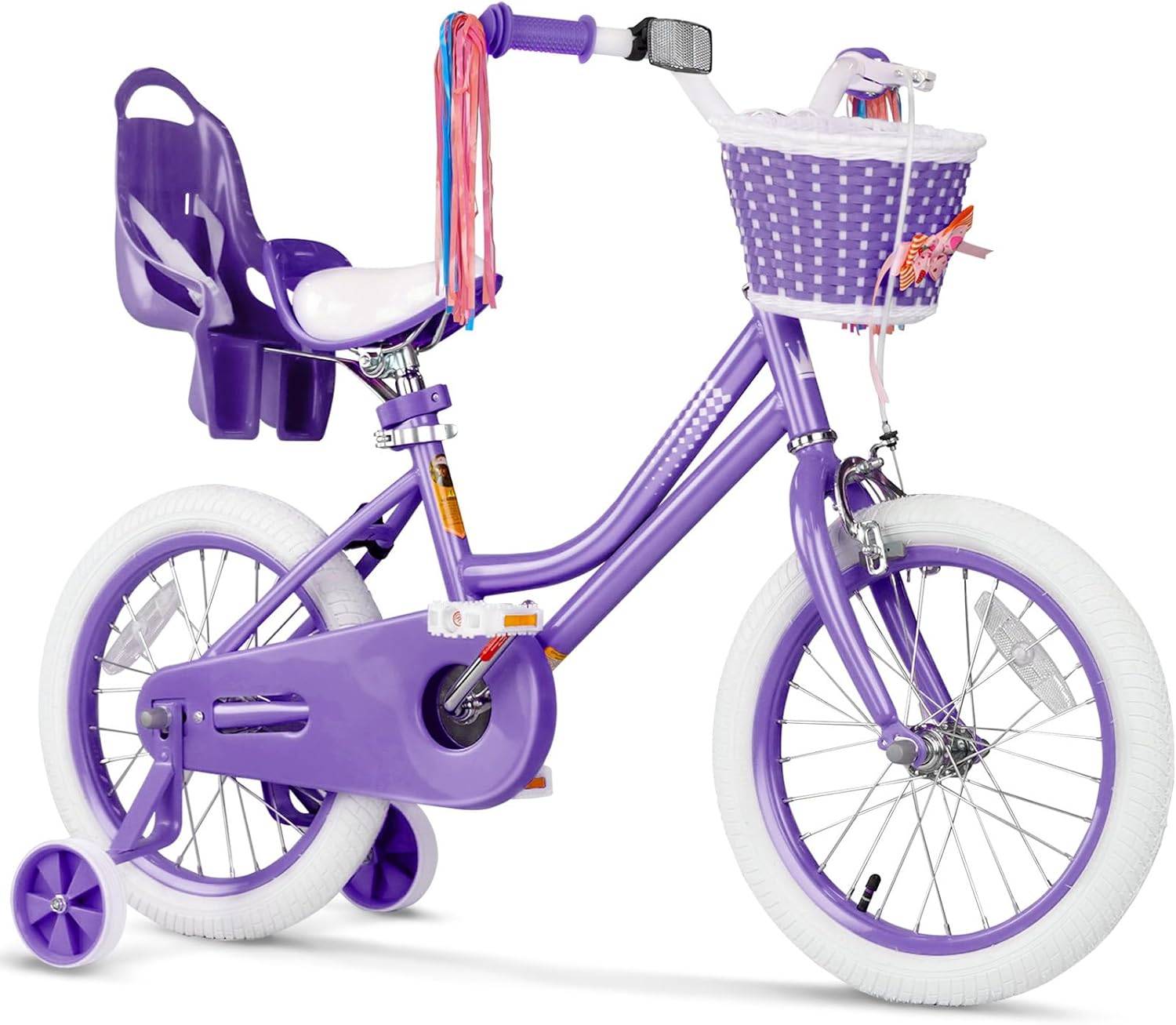 XJD Girls Bike for Kids Ages 3-8, 12/14/16 Inch with Training Wheels – Purple
This purple training-wheel bike is listed in 12, 14 and 16 Inch sizes. The age wording in its title is a catalog label, so measured fit still takes priority.
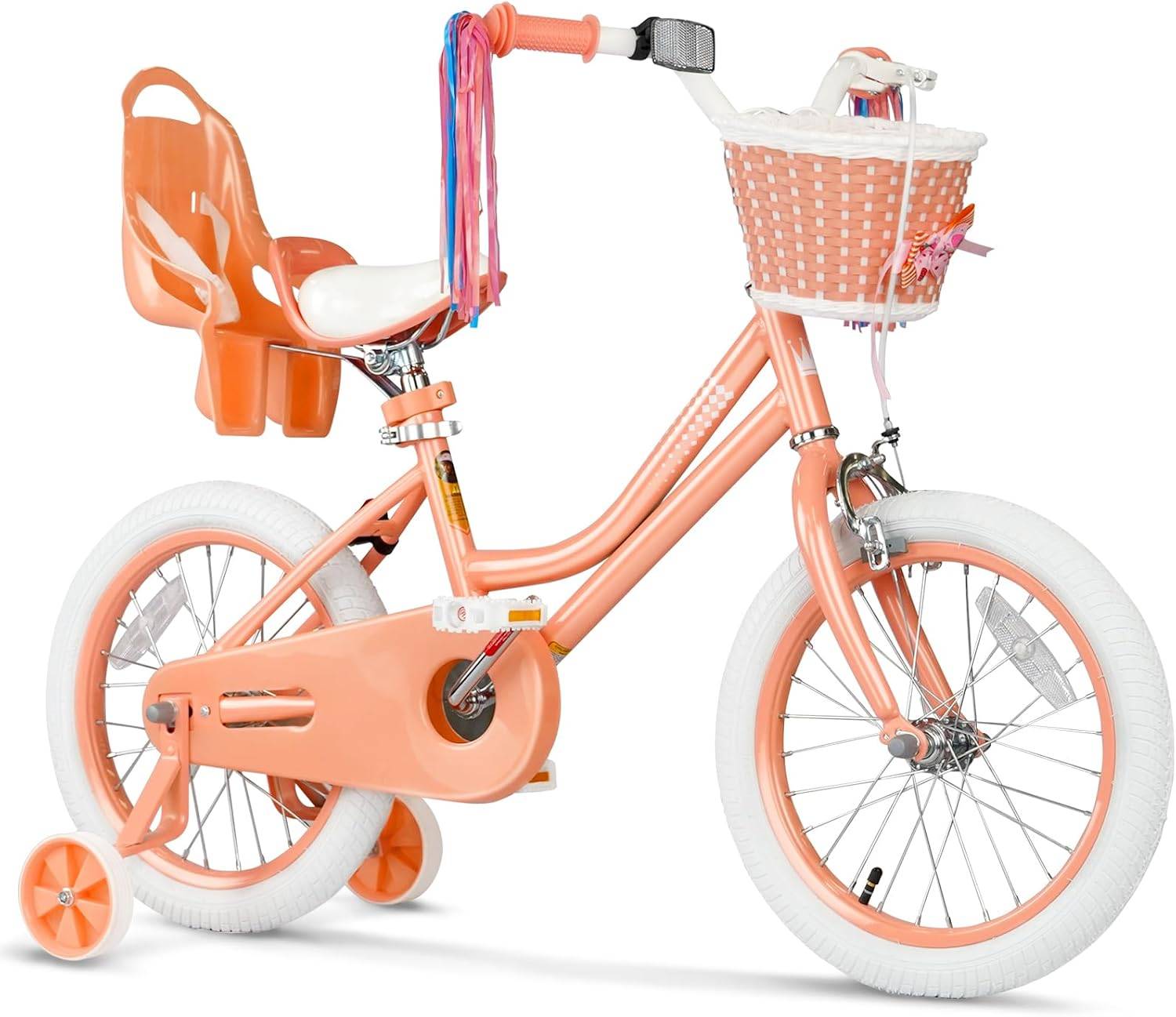 Girls 12/14/16 Inch Kids Bike by XJD with Training Wheels – Peach
A peach XJD training-wheel bike available in 12, 14 and 16 Inch versions. Compare the child’s measured height and individual control when independent riding becomes appropriate.
How to size those bikes when the child is older
For independent riding, measure the child’s standing height and inseam, then check stand-over clearance, reach, brake control and present confidence on the actual bicycle. Have the child try it, and do not select an oversized bicycle merely to allow room for growth.
| Wheel size | XBikes starting age | Rider height |
|---|---|---|
| 12 Inch | 3–4 | 34–40 in / 86–102 cm |
| 14 Inch | 3–6 | 37–45 in / 94–114 cm |
| 16 Inch | 4–7 | 40–48 in / 102–122 cm |
These ranges are starting points, not proof of fit. The “Ages 3-8” wording within one exact product title is a catalog label and should not override measured height or an individual fit check.
Your next decision
For biking with a baby now, find the exact carrier or trailer manual and check its age, development, measurement, helmet and bicycle-compatibility requirements. If any requirement is unmet or uncertain, postpone the ride. Consider the supplied 12, 14 and 16 Inch training-wheel bikes only when the child is developmentally ready to pedal independently and can pass an in-person fit and control check.
Bikes for your next adventure
-

Kids Bike Helmet by XJD for Boys & Girls – Black, Blue, Green, Pink, Purple
The XJD Kids Bike Helmet covers a wide 2-to-8-year age range thanks to two head-…$59.99
-

Kids Bike Helmet by XJD for Girls – Pink
The XJD Kids Bike Helmet in Pink is a lightweight multi-sport helmet for girls r…$59.99
$99 -

XJD Kids Bike for Girls – Pink, 12/14/16/20 Inch with Training Wheels
The XJD Kids Bike for Girls in Pink is a training-wheel bike built to carry your…$139
$159