

How old to put baby in bike trailer
Put a baby in a bike trailer only when they can sit upright independently, hold their head steady while wearing a properly fitted helmet, and meet the trailer maker’s minimum age and size rules. If any condition is unmet, wait.
Age alone does not decide readiness
There is no single age that makes every baby ready for every bike trailer. Development varies, and trailers differ in their permitted passengers, restraint systems and compatibility. The exact trailer manual must therefore be your starting point. Check its minimum passenger age, height or weight requirements and any instructions for infant accessories. Do not improvise with a car seat, cushion or insert unless the trailer manufacturer explicitly approves it for that model.
A baby must also have enough neck and trunk control to remain stable through normal riding movement. Test this while the child is awake and wearing the helmet they will use. If the helmet causes the head to slump, the child leans persistently, or they cannot stay upright without support, they are not ready to ride in the trailer.
What to measure and compare
Before the first ride, measure the child’s current height and weight and compare both with the exact trailer manual. Then make these direct checks:
- Manual requirements: Confirm every minimum and maximum passenger limit stated for the trailer and its seating position.
- Upright control: The child should sit independently and keep their head steady with the helmet on.
- Harness fit: Use the supplied restraint exactly as its instructions describe. It should hold the passenger in the intended position without improvised padding.
- Helmet fit: Use a bicycle helmet that fits properly, sits level and has straps adjusted according to its manufacturer’s instructions.
- Helmet clearance: Check that the trailer seat and enclosure do not push the helmet forward or force the child’s chin toward the chest.
If the manual is missing or unclear about age, seating, accessories, load limits, hitch compatibility, assembly or maintenance, contact the manufacturer or use a qualified bicycle mechanic. Do not guess at limits or attachment procedures.
Do a stationary fit check first
Attach and prepare the trailer exactly as directed, but keep the towing bicycle stationary. Seat and secure the child, fit the helmet, and observe their posture from several angles. Confirm that the child remains centered, can breathe comfortably, and is not compressed by the harness or enclosure.
Next, move the trailer slowly by hand on a flat, controlled surface while another adult observes the passenger. Stop if the head tips repeatedly, the body slides, the helmet shifts, or the child becomes distressed. Passing a stationary check does not override the manual’s minimum requirements.
Plan a cautious first ride
For a child who meets every requirement, begin with a brief ride on a smooth, flat route away from traffic. Ride conservatively, because a trailer changes the bicycle’s width, length, braking response and turning path. Recheck the hitch, restraints and helmet before each outing using the manufacturers’ instructions.
Stop and inspect the setup if the child’s position changes or any attachment becomes loose. Follow the trailer and bicycle manuals for assembly, maintenance, compatibility and load limits; where instructions require technical judgment, ask a qualified bicycle mechanic.
How the supplied kids’ bicycle relates
The catalog item supplied with this article is not a bike trailer and does not establish when a baby is ready to ride as a passenger. The XJD Girls Bike for Kids Ages 3-8, 12/14/16 Inch with Training Wheels – Purple is a training-wheel bicycle offered in 12 Inch, 14 Inch and 16 Inch labels. It becomes relevant later, when a child is being fitted to ride their own bicycle rather than carried in a trailer.
These catalog options help answer the title by making that distinction clear: trailer readiness depends on passenger development and the trailer manual, while a child’s own bicycle requires a separate rider fit check.
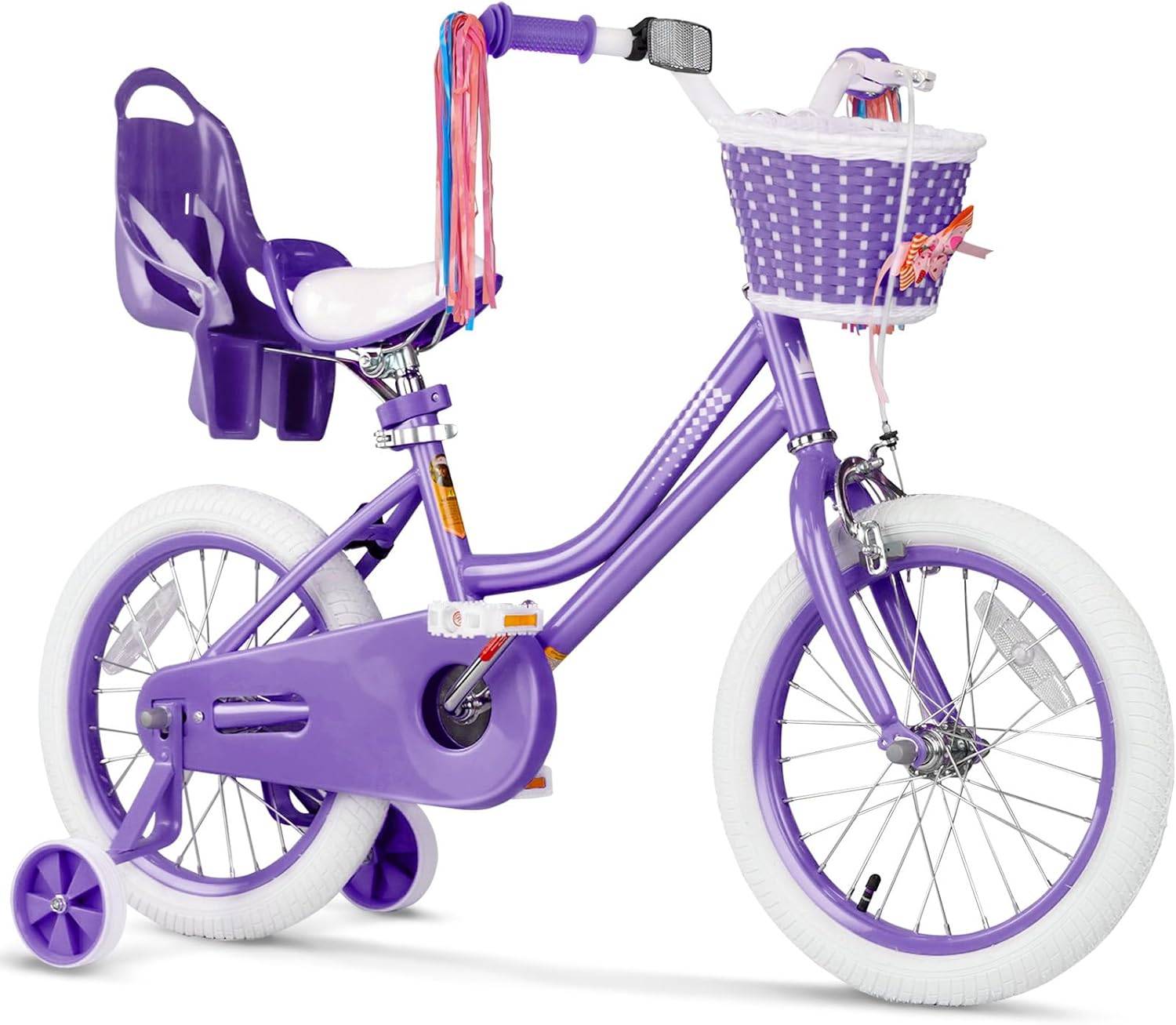
The age wording in the product title is a catalog label, not proof of fit. XBikes uses these starting points: 12 Inch for heights 34–40 in (86–102 cm), generally ages 3–4; 14 Inch for 37–45 in (94–114 cm), generally ages 3–6; and 16 Inch for 40–48 in (102–122 cm), generally ages 4–7. Measure the rider and check inseam, stand-over clearance, reach, brake control and current confidence. Have the child try the bicycle, and never choose an oversized bike merely for growth.
Your decision before riding
Use a three-part decision: the child meets every rule in the exact trailer manual, sits upright independently with steady head control, and maintains a level, properly strapped helmet without slumping. If all three are clearly true, perform the stationary check and take a short controlled first ride. If one is uncertain or false, do not put the baby in the bike trailer yet.
Bikes for your next adventure
-

Kids Bike Helmet by XJD for Girls – Pink
The XJD Kids Bike Helmet in Pink is a lightweight multi-sport helmet for girls r…$59.99
$99 -

Blue XJD Kids Bike Helmet for Boys & Girls
The Blue XJD Kids Bike Helmet is a lightweight, adjustable multi-sport helmet fo…$59.99
$99 -
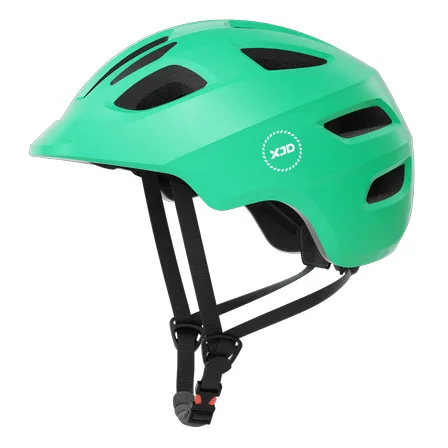
Green XJD Kids Bike Helmet for Boys & Girls
The Green XJD Kids Bike Helmet is a lightweight multi-sport helmet for toddlers …$59.99
$99