

How old toddler in bike carrier
A toddler is old enough for a bike carrier only when the carrier manual says so and the child meets every developmental, fit and load requirement. Do not decide by age alone.
Check the carrier manual before measuring the child
There is no single age that applies to every front seat, rear seat, trailer or cargo-bike passenger setup. Find the exact make and model, then compare your child with the manufacturer’s minimum and maximum requirements. These may address age, body weight, seated height, helmet clearance, posture, harness fit and where the carrier may be mounted.
If the manual is missing, the model cannot be identified, or a stated limit is unclear, do not carry the child until the manufacturer or a qualified bicycle mechanic confirms the setup. Never estimate a load limit, substitute instructions from a similar-looking carrier or assume a mounting point is compatible.
What to measure and observe
Use current measurements, not clothing sizes or an old health record. Record the child’s weight and seated height, then compare them directly with the carrier manual. With the carrier stationary and supported, check all of the following:
- Posture: The child can maintain the position required by the manual for the entire ride, including while wearing a helmet.
- Harness fit: The supplied restraint adjusts correctly and remains positioned as its instructions specify.
- Helmet clearance: The helmet does not force the head forward or strike the carrier structure.
- Leg and foot containment: Feet and clothing remain within the guards or restraints provided for that model.
- Total load: The child and anything else carried stay within every applicable limit stated by the bicycle and carrier manufacturers.
If even one check fails, the child is not ready for that carrier, regardless of birthday. Repeat the check after growth, a helmet change or any adjustment to the bicycle or carrier.
Inspect the complete bike-and-carrier combination
A child may meet the carrier’s requirements while the installation itself remains unsuitable. Confirm that the bicycle, rack or cargo area is approved for that exact carrier and load. Follow the manuals for assembly, fastener checks, maintenance and permitted accessories. Because no carrier-specific compatibility or torque information is supplied here, use the exact manuals or ask a qualified bicycle mechanic rather than improvising.
Before carrying a child, practise mounting, stopping, starting, turning and parking the loaded bicycle in a traffic-free area. A passenger changes balance and handling. If the bicycle cannot be held and controlled confidently, postpone the ride or choose a different transport arrangement.
Helmet fit is a separate decision
A bicycle helmet must fit properly, sit level and have its straps adjusted according to the helmet manufacturer’s instructions. Carrier eligibility does not prove helmet fit, and a correctly sized helmet does not prove that the carrier is suitable.
Check the child in the actual riding position. If the carrier pushes the helmet out of position, prevents a level fit or makes correct strap adjustment impossible, do not ride with that combination.
How the supplied kids’ bikes relate
The supplied products are training-wheel bicycles, not toddler carriers. They become relevant when comparing a child’s readiness for an independently ridden bike, but they cannot replace a carrier or answer its passenger limits. The Black XJD Kids Bike for Boys – 12, 14 & 16 Inch Sizes and the XJD Kids' Training Wheel Bike for Boys & Girls, 12/14/16 Inch – White both offer catalog-labelled 12, 14 and 16 Inch choices, giving the same three wheel-size starting points for an individual fit check.
 Black XJD Kids Bike for Boys – 12, 14 & 16 Inch Sizes
A training-wheel bicycle offered in 12, 14 and 16 Inch sizes. It is relevant only when assessing readiness to ride independently, not as a toddler carrier or evidence of carrier eligibility.
 XJD Kids' Training Wheel Bike for Boys & Girls, 12/14/16 Inch – White
This white training-wheel bicycle has 12, 14 and 16 Inch size choices. Use those sizes as starting points for an individual riding fit check; the product does not supply bike-carrier limits.
| Wheel size | XBikes starting point | What still needs checking |
|---|---|---|
| 12 Inch | Ages 3–4; 34–40 in / 86–102 cm | Height, inseam, reach, brake control and confidence |
| 14 Inch | Ages 3–6; 37–45 in / 94–114 cm | Height, inseam, reach, brake control and confidence |
| 16 Inch | Ages 4–7; 40–48 in / 102–122 cm | Height, inseam, reach, brake control and confidence |
These age and height ranges are starting points, not proof of fit. Have the child try the bicycle. Do not buy an oversized bike for growth; check stand-over clearance, comfortable reach, reliable control and whether the child can reach and operate the brakes. The age wording in a product title or category is a catalog label, not individual fit evidence.
Make the decision now
- Identify the exact carrier and bicycle models.
- Read both manuals and confirm mounting compatibility and every passenger and load requirement.
- Measure the child’s current weight and seated height, then check posture, harness fit, foot containment and helmet clearance.
- Have a qualified bicycle mechanic inspect anything uncertain.
Use the carrier only if the child and the complete installation pass every check today. If the manual’s limits are unavailable or any fit, control or compatibility check fails, wait; if the child is instead ready to ride, compare the supplied 12, 14 and 16 Inch bikes by measured fit rather than age alone.
Bikes for your next adventure
-
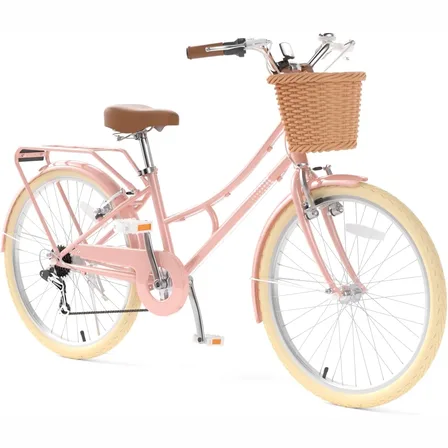
XJD Pink Beach Cruiser for Girls – Rear Rack & V-Brake
The XJD Pink Beach Cruiser for girls is the step-up bike for riders who've outgr…$179.99
$209.99 -
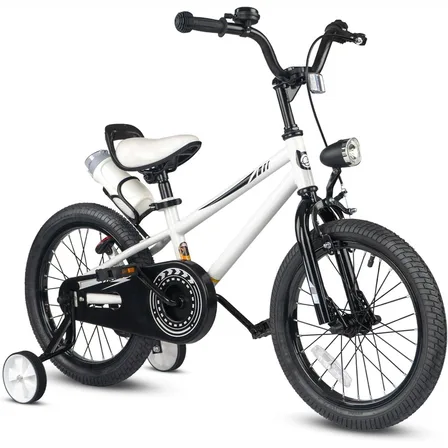
XJD Kids' Training Wheel Bike for Boys & Girls, 12/14/16 Inch – White
The XJD kids' training wheel bike in White is made for riders ages 3–8 (roughly …$169
$199 -

Kids Bike Helmet by XJD for Boys & Girls – Black, Blue, Green, Pink, Purple
The XJD Kids Bike Helmet covers a wide 2-to-8-year age range thanks to two head-…$59.99