

How should kids be for a bike trailer
Kids should use a bike trailer only when they meet the trailer manual’s requirements, can ride in its restraint correctly, and fit below every stated limit.
What to check before putting a child in a trailer
Age alone cannot determine whether a child is ready. Start with the exact trailer and bicycle manuals because passenger position, required support, permitted configurations, compatibility and load limits vary. If a requirement or label is missing or unclear, ask the manufacturer or a qualified bicycle mechanic rather than estimating.
Before each ride, confirm that the child can sit in the intended position with the restraint secured exactly as instructed. Check that the child’s body and helmet do not crowd the enclosure and that no part of the restraint rubs the neck or face. The child must remain within every passenger-height, weight and developmental requirement in the trailer manual. Do not substitute a general age estimate for those limits.
Measure and compare these points
- Standing height: Measure without shoes, with the child standing straight against a wall. Compare the result with the trailer manufacturer’s passenger-height rule.
- Seated fit: Place the child in the stationary trailer and check headroom, shoulder room, leg position and restraint routing according to the manual.
- Weight: Use a current measurement and compare it with the manual’s passenger and total-load limits. Include anything else the manual says counts toward the load.
- Helmet fit: Use a properly fitting bicycle helmet. It should sit level, with its straps adjusted according to the helmet manufacturer’s instructions.
- Behavior and comfort: The child should tolerate the required seated position and keep hands, feet and belongings inside throughout the trip.
A child who exceeds one limit has outgrown that trailer even if the other measurements still appear acceptable. Likewise, visible room inside does not override the stated limit.
Check the towing setup separately
A correct passenger fit does not establish that the trailer can be attached to any bicycle. Follow both manuals for hitch compatibility, assembly, inspection and maintenance. Do not improvise attachment hardware or an unsupported seating arrangement. Have a qualified bicycle mechanic inspect the setup if the hitch, bicycle interface or assembly instructions are uncertain.
With the trailer empty, confirm that the bicycle and connection operate as their manufacturers describe. Then begin with a short, calm route and reassess the child’s restraint, comfort and helmet position before continuing. Stop if the child cannot remain correctly seated or if any part of the setup shifts.
When an individual bicycle becomes relevant
The supplied catalog items are bicycles, not bike trailers, so they do not establish trailer-passenger eligibility or replace a trailer manual. They become useful comparison points when a child is ready to ride an individually fitted bicycle. Their available wheel sizes let you compare the child’s measured height with XBikes starting ranges before arranging a hands-on fit check.
These particular catalog options show 12-, 14-, 16-, 20-, 24- and 26-inch bicycle choices across training-wheel, beach-cruiser and kids’ BMX categories, helping parents compare the next independent-riding step without confusing bicycle sizing with trailer limits.
 XJD Light Purple Girls Bike with Basket, Training Wheels, 12/14/16/20 Inch
A Training Wheel Bikes option with available 12-, 14- and 16-inch SKUs. It is relevant only when comparing a separately fitted bicycle for independent riding, not for deciding trailer eligibility or compatibility.
 XJD Kids Beach Cruiser Bicycle, Rear Rack & V-Brakes, Mint Green
A Beach Cruiser Bikes option with available 20-, 24- and 26-inch SKUs. These sizes can inform an individual-bicycle fit comparison but provide no evidence about trailer passenger limits or hitch compatibility.
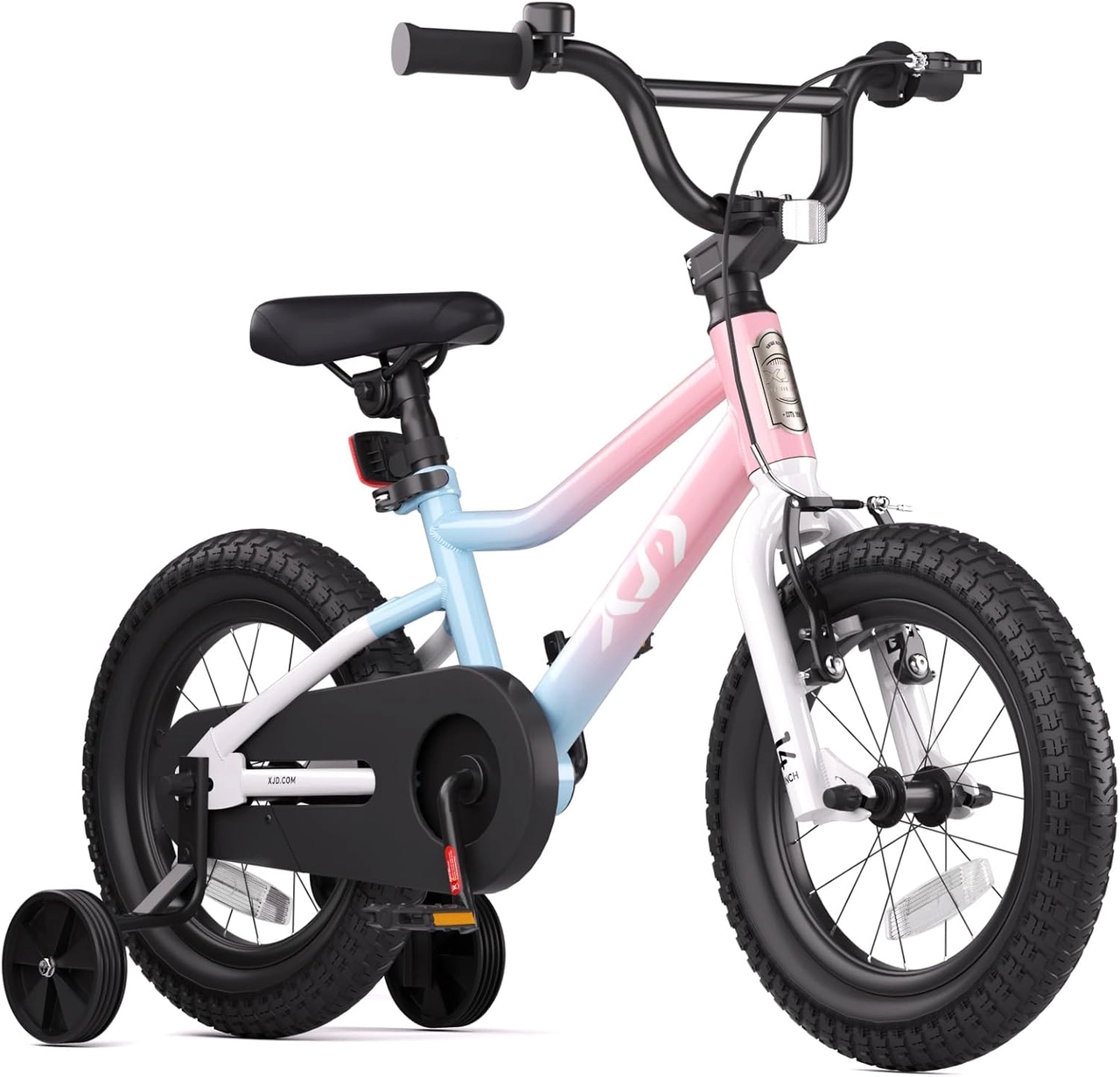 XJD Girls BMX Bike 12/14/16 Inch with Training Wheels – Pink Blue
A Kids’ BMX Bikes option with available 12-, 14- and 16-inch SKUs and training wheels in its catalog title. It is an independent-bicycle comparison, not a substitute for trailer-manual requirements.
The XJD Light Purple Girls Bike with Basket, Training Wheels, 12/14/16/20 Inch is listed under Training Wheel Bikes, with 12-, 14- and 16-inch SKUs available. The XJD Girls BMX Bike 12/14/16 Inch with Training Wheels – Pink Blue is a Kids’ BMX Bikes option with the same three available size labels.
The XJD Kids Beach Cruiser Bicycle, Rear Rack & V-Brakes, Mint Green is listed under Beach Cruiser Bikes and has 20-, 24- and 26-inch SKUs available. Those catalog facts describe bicycles only; they say nothing about trailer compatibility or passenger capacity.
Bicycle size is a starting point, not proof of fit
| Wheel size | XBikes age starting point | Rider-height starting point |
|---|---|---|
| 12 Inch | 3–4 | 34–40 in / 86–102 cm |
| 14 Inch | 3–6 | 37–45 in / 94–114 cm |
| 16 Inch | 4–7 | 40–48 in / 102–122 cm |
| 18 Inch | 5–9 | 43–52 in / 109–132 cm |
| 20 Inch | 7–12 | 48–60 in / 122–152 cm |
| 24 Inch | 10–14 | 54–64 in / 137–163 cm |
| 26 Inch | Youth and adults | Over 60 in / 153 cm |
For an individual bicycle, prioritize measured height, inseam, reach, brake control and current confidence over age. Have the child try the bicycle, check stand-over clearance and confirm comfortable control and brake reach. Do not buy an oversized bicycle merely to allow room for growth.
Make the decision
Use the child’s current measurements and seated restraint fit against the exact trailer manual today. Proceed only if every requirement is met and the towing setup is compatible; otherwise, do not use that trailer. Consider the listed bicycles only for a separately checked transition to independent riding.
Bikes for your next adventure
-

Kids Bike Helmet by XJD for Girls – Pink
The XJD Kids Bike Helmet in Pink is a lightweight multi-sport helmet for girls r…$59.99
$99 -

Blue XJD Kids Bike Helmet for Boys & Girls
The Blue XJD Kids Bike Helmet is a lightweight, adjustable multi-sport helmet fo…$59.99
$99 -
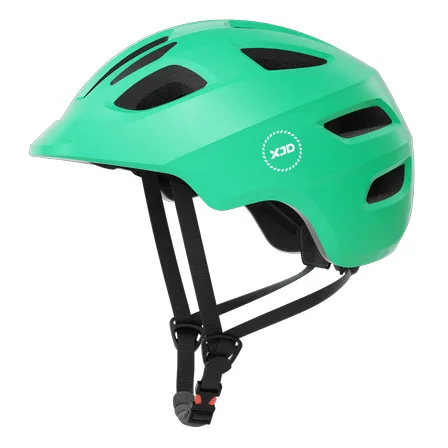
Green XJD Kids Bike Helmet for Boys & Girls
The Green XJD Kids Bike Helmet is a lightweight multi-sport helmet for toddlers …$59.99
$99