

How tall for 20 inch bike
A 20-inch bike generally fits a child who is 48–60 inches (122–152 cm) tall, often around ages 7–12, but an individual fit check decides.
Measure height and inseam first
Measure the child without shoes, standing straight against a wall. Record total height from the floor to the top of the head. Then measure inseam from the floor to the crotch while the child stands with feet slightly apart. Height places the rider in the XBikes starting range; inseam helps you judge clearance when the actual bicycle is present.
For a 20-inch bike, compare the measured height with the 48–60 inch (122–152 cm) range. Age 7–12 is only a starting point. A tall younger child or a shorter older child may need a different wheel size, and bicycles with the same wheel diameter can still feel different because their frames and riding positions differ.
Compare the measurement with nearby sizes
| Wheel size | Starting age | Rider-height starting point |
|---|---|---|
| 18 Inch | 5–9 | 43–52 in / 109–132 cm |
| 20 Inch | 7–12 | 48–60 in / 122–152 cm |
| 24 Inch | 10–14 | 54–64 in / 137–163 cm |
Overlap is expected, so wheel size cannot settle the choice by itself. If the child is near 48 or 60 inches tall, compare the neighboring size as well. Do not move up merely because the child will grow. The right choice is the bicycle the child can straddle, reach and control now.
Perform the fit check on the actual bike
Have the child try the bicycle while wearing the shoes normally used for riding. First check stand-over: the child should be able to stand over the frame with stable footing and usable clearance. A frame that presses into the rider or forces tiptoe balancing is too large for confident starts and stops.
Next, let the child sit in the normal riding position. Check that the handlebar can be reached without an extreme stretch and that steering does not pull the rider awkwardly forward. Ask the child to turn the handlebar both ways while remaining balanced.
Finally, verify brake control. The rider must be able to reach and operate the bicycle’s brakes without losing grip or shifting into an unstable position. Observe a controlled start, turn and stop in a traffic-free area. Current confidence matters: a rider who freezes, wobbles or cannot stop predictably is not ready for that particular fit, even when height falls within the range.
How the supplied 20-inch options compare
These catalog options are useful because each provides a 20-inch reference in a different supplied category: beach cruiser, training-wheel and kids’ BMX. Their listings help narrow the style and available size to examine, but the title, category and SKU label do not replace an in-person fit check.
 XJD Pink Beach Cruiser for Girls – Rear Rack & V-Brake
A beach cruiser option with 20 Inch, 24 Inch and 26 Inch SKU labels. The 20 Inch SKU is relevant here; the larger sizes are distinct comparison choices.
 Girls' Training Wheel Bike by XJD with Basket – Purple
A training-wheel bike offered with 14 Inch, 16 Inch and 20 Inch SKU labels, allowing the 20 Inch version to be considered after measuring and checking fit.
 Blue XJD Freestyle BMX Bike, 20-Inch – No Pegs
A kids’ BMX bicycle whose exact title specifies 20-inch. Its available SKU label is Default, so confirm the selection and perform the individual fit checks described.
XJD Pink Beach Cruiser for Girls – Rear Rack & V-Brake is listed under Beach Cruiser Bikes and offers 20 Inch, 24 Inch and 26 Inch SKU labels. Select the 20 Inch SKU when evaluating it for this question; the larger labels are different sizes, not equivalent fits.
Girls' Training Wheel Bike by XJD with Basket – Purple is listed under Training Wheel Bikes with 14 Inch, 16 Inch and 20 Inch SKU labels. Its 20 Inch SKU is the relevant comparison for a rider in the stated range. The smaller SKUs may be comparison points when measurements and the trial indicate that 20 inches is too large.
Blue XJD Freestyle BMX Bike, 20-Inch – No Pegs is listed under Kids' BMX Bikes. Its exact title identifies it as a 20-inch model, while its available SKU label is “Default.” Confirm the exact selection and then judge stand-over, reach, braking and control on that bicycle rather than assuming every 20-inch frame fits alike.
Know when a 20-inch bike is not the answer
Do not choose a 20-inch bicycle when the rider is outside the starting height range unless trying the actual bike demonstrates an appropriate fit. It is also unsuitable when the child cannot stand over it steadily, comfortably reach the handlebar, operate the brakes correctly, or start and stop under control. Never accept an oversized fit as a way to postpone the next purchase.
Before riding, use a properly fitting bicycle helmet. It should sit level, with its straps adjusted according to the helmet manufacturer’s instructions. For assembly, adjustments, maintenance, compatibility, load limits or torque values, follow the exact bicycle’s manual or consult a qualified bicycle mechanic.
Make the decision
If the child measures 48–60 inches (122–152 cm), try the exact 20-inch bicycle and approve it only after stand-over, reach, brake operation and a controlled ride all work now. If any check fails, compare an adjacent wheel size instead of waiting for the child to grow into the 20-inch bike.
Bikes for your next adventure
-
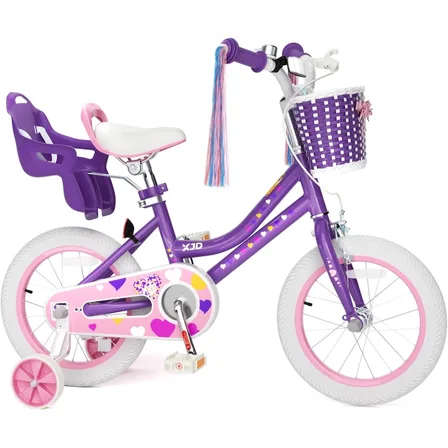
Purple XJD Girls' Bike with Doll Seat & Basket
For girls 71–122 cm tall (about ages 3–7), this XJD girls' bike in Purple pairs …$75.99
$99.99 -

Blue XJD Girls Bike with Training Wheels – 12/14/16 Inch
If you're shopping for a first pedal bike for a daughter roughly 3 to 8 years ol…$149
$169 -
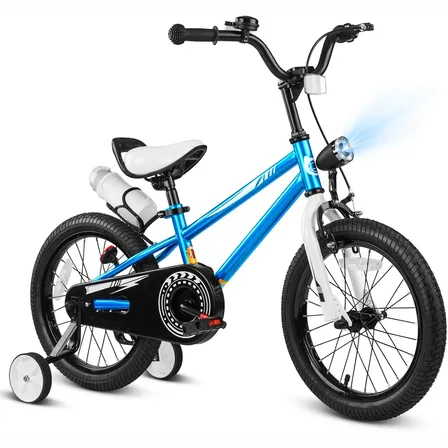
XJD Boys 12/14/16" Training Wheel Bike – Blue
The XJD Boys Bike in Blue is a training wheel bike for riders 71–122 cm tall—rou…$169
$199