

How tall is 26 inch bike
A 26-inch bike is not 26 inches tall: the number describes its wheel size. XBikes uses 26-inch wheels as a starting point for youth and adults over 60 in (153 cm), but the rider must still pass an individual fit check.
What “26 inch” actually measures
The label refers to the bicycle’s nominal wheel size, not its frame height, saddle height, or total height from the ground. Two 26-inch bicycles can therefore stand at different heights and place their saddles and handlebars differently.
There is no single overall-height figure that applies to every 26-inch bike. To find the physical height of a particular model, consult that exact bicycle’s specifications or manual. For fit, measuring the rider is more useful than measuring the bicycle from floor to handlebar.
Who should start by considering a 26-inch bike?
The XBikes wheel-size starting point for a 26-inch bike is a rider over 60 in (153 cm), including youth and adults. Age alone should not determine the choice. Body proportions, skill and the geometry of the particular bicycle can change how well it fits.
For comparison, the XBikes starting point for a 24-inch bike is ages 10–14 and a rider height of 54–64 in (137–163 cm). These ranges overlap around the transition, so a rider near 60–64 in should not automatically move to 26-inch wheels without trying the bicycle.
Measure the rider before comparing bikes
- Measure standing height: Have the rider stand barefoot against a wall, looking straight ahead, and measure from the floor to the top of the head.
- Measure inseam: With feet slightly apart, measure from the floor to the crotch. This helps assess clearance over the bicycle when standing.
- Compare the starting point: Over 60 in suggests considering a 26-inch bike; 54–64 in also falls within the 24-inch starting range.
- Try the exact bicycle: Wheel size narrows the search, but it does not prove that the frame, saddle position, reach or controls fit.
Do not round a borderline measurement upward simply to allow growing room. The American Academy of Pediatrics advises having a child try the bicycle and avoiding an oversized bike bought for future growth.
Use a hands-on fit check
Ask the rider to stand over the bicycle and confirm that there is comfortable clearance rather than contact with the frame. Seated, the rider should be balanced and able to reach the handlebars without an awkward stretch.
Next, check control. The rider should be able to steer smoothly, start, stop and place a foot down with confidence. They must be able to reach and operate the brake controls reliably. If they look tense, cannot manage the bicycle at low speed, or struggle to reach the brakes, the bike is too demanding in its current fit even if the height chart points toward 26 inches.
Saddle and handlebar adjustments must remain within the limits in the exact product manual. For assembly, maintenance, load limits, compatibility and any torque requirements, follow that manual or use a qualified bicycle mechanic.
How the supplied 24- and 26-inch options help
The catalog choices below are useful because both provide 24-inch and 26-inch size labels for a direct wheel-size comparison. They help a rider near the overlap examine two distinct sizes, but a catalog size label still cannot replace an in-person fit and control check.
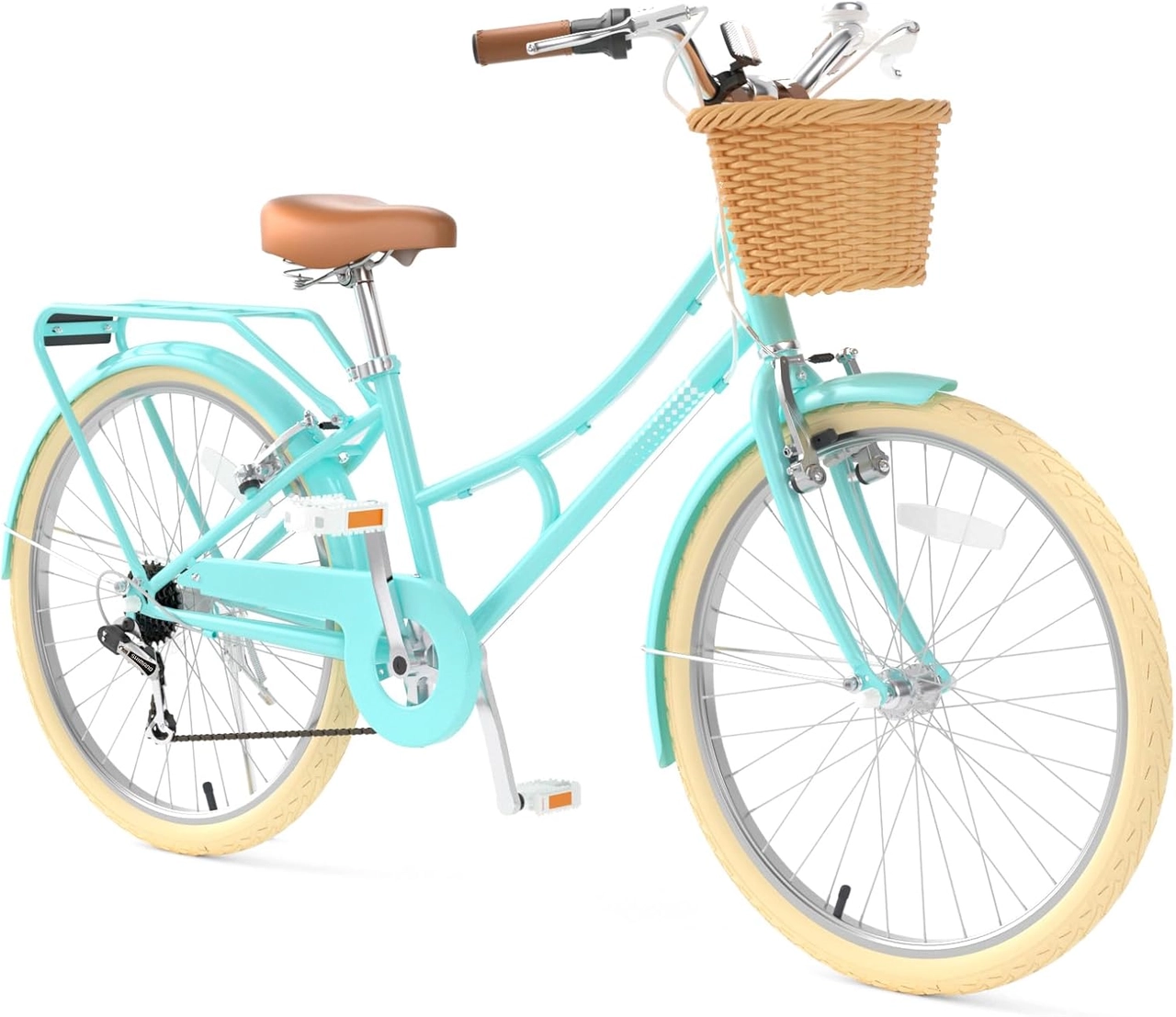 XJD 24-Inch Green Beach Cruiser Bike with U-Brake
Offers Green / 24 Inch and Pink / 24 Inch variants for smaller-size comparison, plus a Pink / 26 Inch variant relevant to riders over 60 inches who still pass an individual fit check.
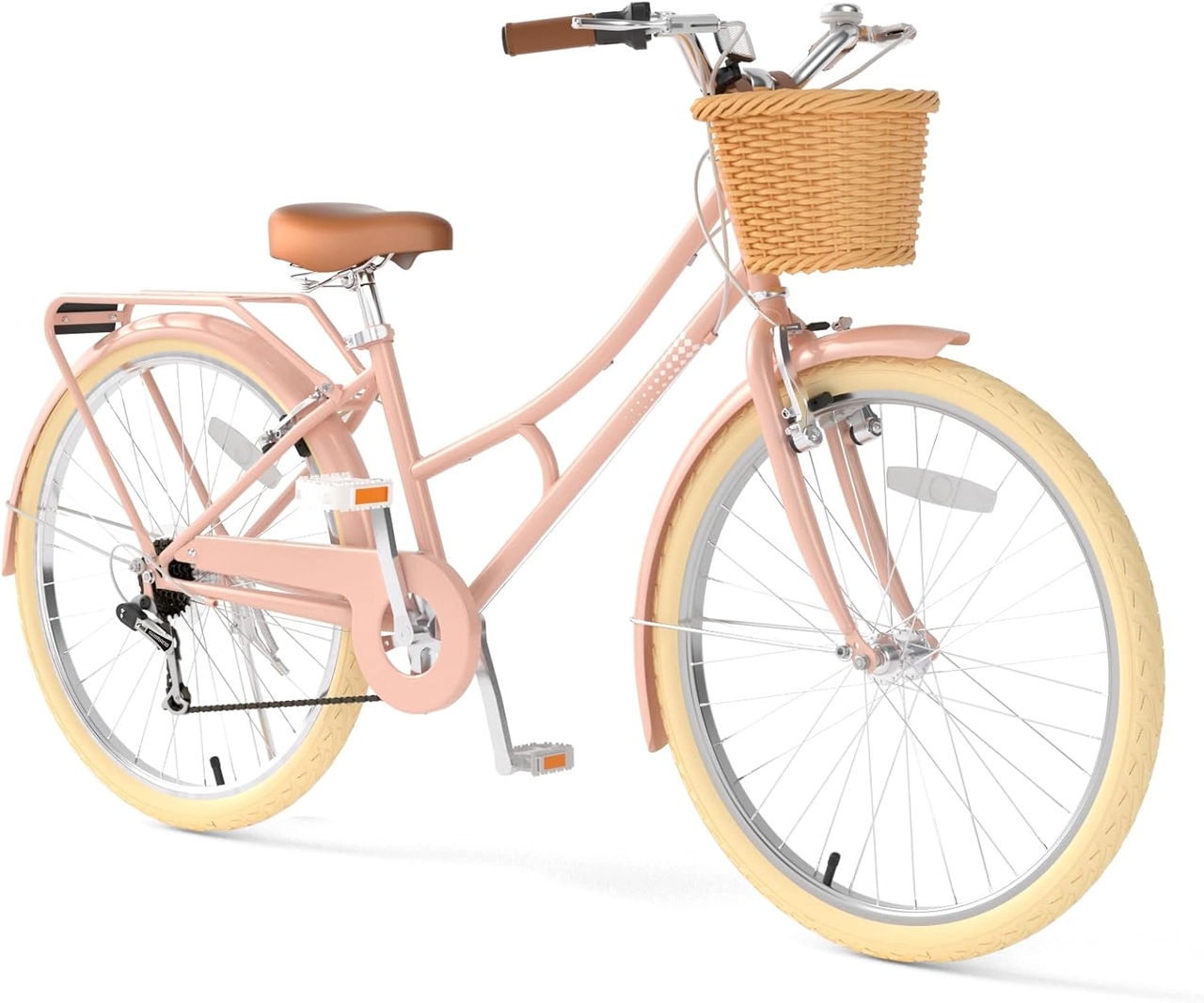 Pink XJD Beach Cruiser Bike, 24"/26", U-Brake
Lists both 24 Inch and 26 Inch variants, allowing a direct wheel-size comparison for riders near the overlapping height ranges; the exact variant and hands-on fit must be confirmed.
The XJD 24-Inch Green Beach Cruiser Bike with U-Brake lists Green / 24 Inch, Pink / 24 Inch and Pink / 26 Inch variants. The 24-inch variants suit comparison with the 54–64 in starting range, while the Pink / 26 Inch variant is the relevant catalog option when evaluating a rider over 60 in.
The Pink XJD Beach Cruiser Bike, 24"/26", U-Brake lists both 24 Inch and 26 Inch variants. That makes the exact variant important: selecting the product title without confirming the wheel-size label does not establish which size the rider will receive or whether it fits.
These are beach cruiser options with U-brakes according to the supplied catalog facts. No conclusion about frame dimensions, total bicycle height, brake reach or current availability can be drawn from those facts; confirm such details for the exact variant before choosing.
Make the final 26-inch decision
- If the rider is 60 in (153 cm) or shorter, do not assume a 26-inch bike fits from wheel size alone; compare the appropriate smaller starting point.
- If the rider is over 60 in, use 26 inches as a starting point, then verify stand-over clearance, reach, brake operation and confident control.
- If both 24- and 26-inch bikes appear plausible, choose the one the rider can presently control—not the larger one intended only for growth.
Before riding, add a properly fitted bicycle helmet. U.S. Consumer Product Safety Commission guidance calls for the helmet to sit level and for its straps to be used according to the manufacturer’s instructions. The practical answer is therefore: measure the rider now, try the exact 26-inch variant, and proceed only if its clearance, reach, braking and handling all work today.
Bikes for your next adventure
-
Purple XJD Girls' Bike with Doll Seat & Basket
For girls 71–122 cm tall (about ages 3–7), this XJD girls' bike in Purple pairs …$75.99
$99.99 -

Blue XJD Girls Bike with Training Wheels – 12/14/16 Inch
If you're shopping for a first pedal bike for a daughter roughly 3 to 8 years ol…$149
$169 -

XJD Boys 12/14/16" Training Wheel Bike – Blue
The XJD Boys Bike in Blue is a training wheel bike for riders 71–122 cm tall—rou…$169
$199